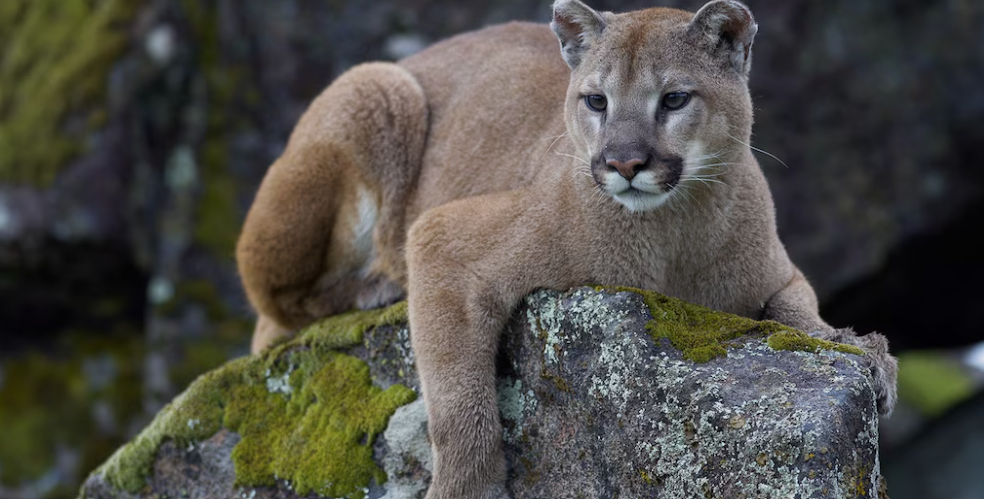
The types of mountain lions are really regional populations of one remarkably adaptable big cat, which is also called the cougar, puma, panther and catamount. It has more than 40 English names, and it holds the title of the most widely distributed wild land mammal in the Western Hemisphere. Its range stretches from the Yukon in Canada to the southern tip of Patagonia, covering over 110 degrees of latitude. Adults typically weigh 64 to 200 pounds, making the mountain lion the second-largest cat in the Americas after the jaguar.
Mountain lions are solitary ambush predators that hunt mainly deer, along with elk, guanaco, wild pigs and smaller prey. They live in nearly every habitat, including mountains, forests, deserts, swamps and even the edges of big cities. The word puma comes from the Quechua language, while mountain lion is used mostly in Canada and the western United States. Wild cats live about 8 to 13 years.
Scientists once described 32 subspecies, but genetic work showed that most were nearly identical. Mammal Species of the World recognized six in 2005, and in 2017 the IUCN Cat Specialist Group reduced the list to just two: the North American cougar and the South American puma. Each of those two includes distinct regional populations that biologists still study and manage separately.
Because the official list is so short, this article reaches 16 by covering the 2 recognized subspecies, the 6 groups proposed earlier and 8 well-known regional populations. The species is listed as least concern overall, but some populations are in serious trouble. Here are the 16 types of mountain lions, along with where each is found.
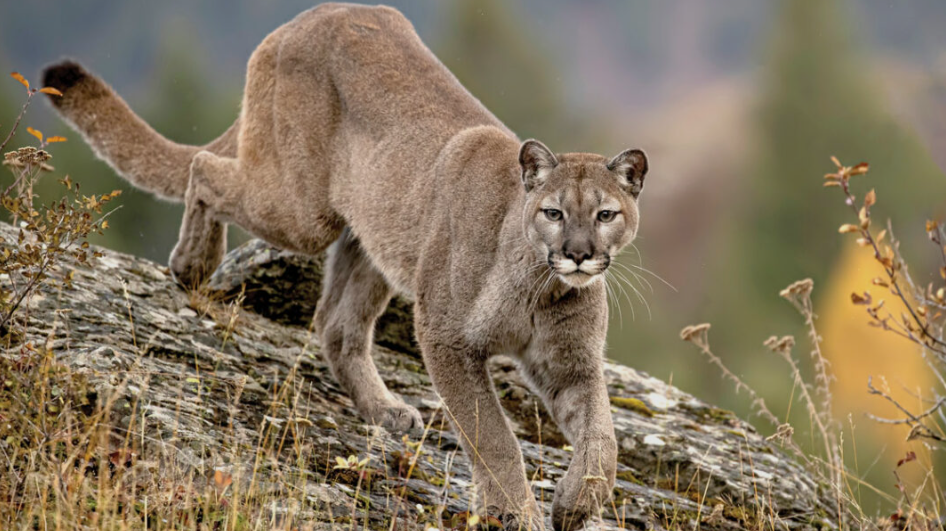
1. North American Cougar
The North American cougar is one of the two subspecies recognized today. It covers a huge area and includes the Florida panther. Adults have a uniform tawny coat, a long tail and a rounded head. Males in the north can weigh well over 150 pounds.
It lives in western Canada, the western United States, a small isolated group in Florida, Mexico and Central America, and possibly northwestern South America. Cougars are now spreading east of the Rockies, with breeding groups in the Black Hills, North Dakota Badlands and western Nebraska. The cats disappeared from most of the eastern United States by the 1940s. Western populations have grown since the 1960s and 1970s.
2. South American Puma
The South American puma is the second recognized subspecies and covers an enormous range. It includes populations from the tropical north to the cold south, so size and color vary widely. Pumas tend to be larger farther from the equator. Their coats range from gray to reddish-brown.
It lives in nearly every country in South America, from Colombia and Venezuela to Argentina and Chile. Habitats include rainforest, grassland, high Andes and Patagonian steppe. It is probably absent west of the Andes in the far north. Populations are better known in the south than in the Amazon basin.
3. Florida Panther
The Florida panther is the most endangered mountain lion in the United States and the only established population of pumas east of the Mississippi River. It has been federally endangered since 1967. By the mid-1990s, only about 20 to 30 animals remained, suffering from inbreeding. In 1995, eight female pumas from Texas were brought in, which helped boost the population to roughly 120 to 230 adults.
It lives in southern Florida, with its core south of Lake Okeechobee, in cypress swamps, pine flatwoods and hardwood hammocks. Vehicle collisions are the leading cause of death, with 36 panther deaths in 2024, of which 29 were from vehicles. Females with kittens have been documented north of the Caloosahatchee River in recent years. Protecting corridors in the Florida Wildlife Corridor is central to recovery.
4. Eastern Cougar
The eastern cougar was a subspecies proposed in 1946 for cougars of the eastern United States and Canada. It is now extinct. The US Fish and Wildlife Service concluded in 2011 that it had probably vanished in the 1930s, and the last record is from Maine in 1938. It was formally delisted in 2018.
It once lived from eastern Ontario and Michigan east to Maine and south to Georgia, Tennessee and Missouri. Systematic hunting wiped out most animals by 1900. The agency confirmed 108 sightings between 1900 and 2010, but all were escaped captives or wanderers from the West. Some biologists now doubt that the eastern cougar was ever genetically distinct.
5. Black Hills Cougar
The Black Hills cougar is a recolonizing population from South Dakota that has become the source of cougars heading east. Young males can travel huge distances. One animal walked more than 1,500 miles through Minnesota, Wisconsin and New York before being hit by a car in Connecticut in 2011. DNA proved it came from the Black Hills.
Three breeding groups now live in the Black Hills, the North Dakota Badlands and western Nebraska. The Niobrara River Valley in central Nebraska became the easternmost breeding colony north of Florida as of 2018. Young females with Black Hills DNA have turned up in Tennessee, Missouri and Iowa since 2015. Recolonization is slow, since females rarely travel far.
6. Rocky Mountain Cougar
The Rocky Mountain cougar is a large, powerful form of the northern Rockies and the Greater Yellowstone region. It is a stronghold of the species in the northern United States. Males often weigh 130 to 160 pounds. It is built for deep snow and rugged terrain.
It lives in Montana, Wyoming, Idaho and neighboring areas, hunting elk, mule deer and white-tailed deer. Studies of kills in the Yellowstone area have shown how cougars affect the ground and plant life around their prey. It shares territory with wolves and grizzly bears. Cougars are hunted under state-managed seasons in most states of the region.
7. Vancouver Island Cougar
The Vancouver Island cougar lives in the damp coastal rainforest of British Columbia. It is a rainforest specialist that hunts black-tailed deer and elk. The island is often described as having one of the highest cougar densities in North America. Conflict with people occurs because cougars live near towns.
Its habitat includes old-growth forest, shoreline and logged land across the island. It is a strong swimmer and sometimes crosses channels. Because the island’s population is isolated, genetic diversity is a concern. Local wildlife officers respond to sightings in suburban areas.
8. Southern California Cougar
The Southern California cougar is a boxed-in population living in and around Los Angeles. The Santa Monica Mountains group is hemmed in by freeways and the Pacific Ocean. It has the lowest genetic diversity ever documented in the West, along with a similar group in the Santa Ana Mountains. A young lion named P-81 showed a kinked tail and an undescended testicle, signs of inbreeding.
It lives in chaparral, oak woodland and canyon country. The most famous cat, P-22, crossed two major freeways to reach Griffith Park, where he lived for about a decade before he was euthanized in 2022. A 2016 study predicted a very high chance of extinction in the Santa Monica Mountains within 50 years. A wildlife overpass at Liberty Canyon over the 101 Freeway is meant to reconnect the population.
9. Southwestern Cougar
The southwestern cougar is a desert and mountain form found in Arizona, New Mexico and northern Mexico. Males typically weigh over 150 pounds, and females around 90 pounds. It lives in rocky, mountainous terrain. It hunts mule deer, javelina and smaller animals.
Arizona’s population is stable to slightly increasing. Cougars have moved into some mountain ranges from Mexico and southern Arizona. Breeding populations occur in at least 16 western states. Hunting is managed by zone, with thresholds that close seasons when reached.
10. Texas Cougar
The Texas cougar lives in the brush country of South Texas and the mountains and deserts of the Trans-Pecos, including Big Bend. It is a medium-sized, tawny cat. It has a thin population compared with other western states. Texas cougars are also valuable as a source of genetic material.
In 1995, eight females from Texas were brought to Florida to help save the Florida panther from inbreeding. That rescue helped lift the population from about 20 to 30 animals to roughly 200. In Texas, cougars hunt deer, javelina and feral hogs. They are legally hunted year-round in some areas.
11. Costa Rican Puma
The Costa Rican puma is the Central American form, once treated as a subspecies of its own. It is smaller and darker than northern cougars. It lives in tropical forests and shares its range with jaguars. The animals tend to be less bulky than those in colder places.
It lives from southern Mexico through Central America to Panama, in rainforest, cloud forest and dry forest. Costa Rica’s national parks, such as Corcovado, are important refuges. It is listed on Appendix I of CITES, along with the North American cougar. Habitat loss and livestock conflict are the main threats.
12. Northern South American Puma
The northern South American puma is the form of Colombia, Venezuela, the Guianas and the northern Andes. It lives in tropical lowlands and cloud forests. Its coat is often reddish or grayish. Pumas this close to the equator tend to be smaller.
It lives in rainforest, llanos grassland and highland forest, and it is poorly studied compared with the northern cats. Deer, peccaries, capybaras and agoutis are common prey. Deforestation and conflict with ranchers are major concerns. It is also the form that is sometimes grouped with Central American pumas.
13. Eastern South American Puma
The eastern South American puma lives across Brazil, including the Atlantic Forest, Cerrado and Pantanal. It is a medium-sized, rufous cat. It shares habitat with jaguars. It adapts to disturbed areas and hunts deer, capybaras and rheas.
Large parts of its habitat have been cleared for farming, leaving small forest patches. Roadkill and retaliation for livestock losses are common. In Uruguay, the puma is thought to be highly endangered. Protected areas and corridors are key to its survival.
14. Central South American Puma
The central South American puma is the form of the Gran Chaco, pampas and nearby regions of Argentina, Paraguay and Bolivia. It lives in dry forest, savanna, scrub and grassland. It is a lean, buff-colored cat. It hunts deer, peccaries and armadillos.
Ranching and agriculture have changed much of its range, and persecution is common where pumas take livestock. Some populations are isolated. It is lesser known than the northern and southern forms. Protected areas such as national parks in northern Argentina offer refuge.
15. Patagonian Puma
The Patagonian puma is the southernmost mountain lion in the world. It lives in cold, windswept steppe, beech forest and mountains in southern Chile and Argentina. Its main prey is the guanaco, a wild relative of the llama. In one Torres del Paine study, about a third of guanaco skulls showed signs of puma kills.
Its stronghold is Torres del Paine National Park in Chile, where the puma population has been rebounding for at least a decade. Chilean law protects pumas, though the law is not enforced outside the park. Puma tracking tours are now a popular attraction. The rise in puma numbers has also increased encounters with visitors and conflict with sheep ranchers.
16. Andean Puma
The Andean puma is a high-altitude form that lives in the rocky mountains of the Andes. It is a sturdy cat with a thick coat. It uses cliffs, crags and mountain pastures. It hunts vicuñas, viscachas, deer and livestock.
It lives from Colombia through Ecuador, Peru and Bolivia to Chile and Argentina, often above 4,000 meters. It follows prey up mountain slopes in summer and down in winter. Herders often kill pumas to protect llamas and sheep. It is among the least studied pumas.
Sources:
- Cougar, Wikipedia
- Puma, IUCN Cat Specialist Group
- Cougar, World Atlas
- All Types of Cougars, AnimalWised
- Puma, IBCA
- Mountain Lion, Strange Animals
- Mountain Lion, Arizona Game and Fish Department
- Eastern Cougar, Wikipedia
- Fish and Wildlife Service Declares Eastern Cougar Extinct, NPR
- Eastern Cougars Declared Extinct, Earth.com
- Cougar Comeback: Cougars Are Moving into Their Historic Home Range in the Midwest, Audubon
- Florida Panther Mortality Update, Florida Fish and Wildlife Conservation Commission
- 36 Endangered Florida Panthers Killed This Year, CBS News
- The Endangered Florida Panther Faces Dual Threats, Florida Politics
- SoCal Mountain Lions: Biologists Identify Abnormalities Linked to Inbreeding, ABC7
- California Will Build the Largest Wildlife Crossing in the World, Smithsonian Magazine
- P-22, the Famous Mountain Lion of Griffith Park, LAist
- Ecology of the Patagonia Puma in Southern Chile, Franklin et al., Biological Conservation
- The Puma Population in Patagonia Is Booming, Sierra Club