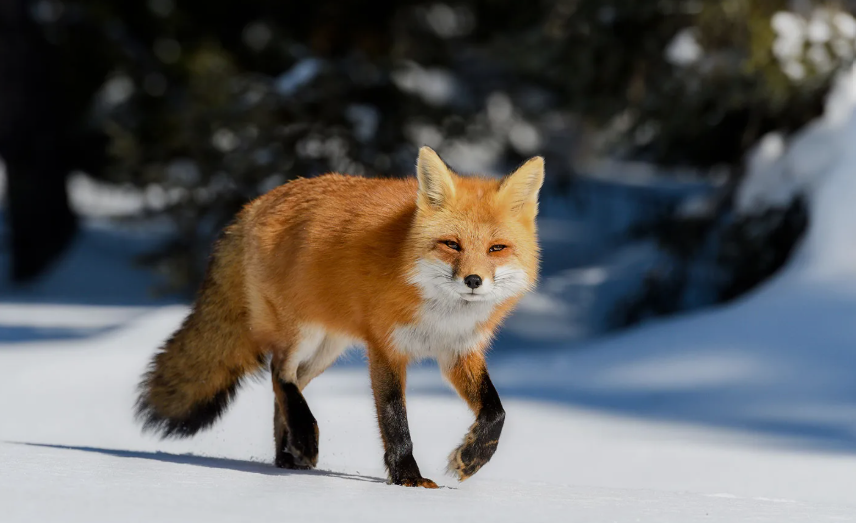
The types of foxes include about two dozen species, along with color morphs, regional subspecies and a few extinct or vanishing forms, spread across every continent except Antarctica. Foxes are small to medium-sized members of the dog family, with slender muzzles, pointed ears and bushy tails. Only 12 species belong to the genus of true foxes, and the rest, such as the South American zorros and the gray fox, belong to other groups that simply look like foxes. Some foxes, including the fennec and Arctic fox, have eyes whose pupils close to vertical slits in bright light.
Foxes are mostly solitary hunters that eat rodents, rabbits, birds, insects, fruit and carrion. They have remarkable hearing, and many species pounce on prey hidden in grass or under snow. They live in dens, and females raise litters of pups, called kits, in spring. Unlike wolves, most foxes live alone or in small family groups instead of large packs.
Foxes thrive in nearly every habitat, from Arctic tundra and Saharan dunes to high mountains, farmland and big cities. The red fox is one of the most widespread carnivores on Earth, and it is also listed among the world’s worst invasive species where it was introduced. At the other extreme, some foxes live on a single island or in a handful of mountain valleys. Several have been pushed to the edge of extinction by disease, predators and habitat loss.
Because fox classification is complicated, this article reaches 35 by covering 22 living species, 11 well-known forms (color morphs, mountain and island subspecies), 1 undescribed island fox and 1 extinct fox-like wolf. Here are the 35 types of foxes, along with where each is found.
1. Red Fox
The red fox is the largest of the true foxes and the most widespread. It is typically orange-red with black legs, white underparts and a white-tipped tail, though four color phases occur. It adapts to almost any environment and eats everything from mice to berries to garbage. Its success has made it a pest in places where it was introduced.
It lives across Europe, Asia, North Africa and North America, from mountains as high as 14,800 feet to forests, deserts, farms and cities. It is the only fox native to Western Europe. It was brought to Australia in the 1830s for hunting and is now invasive there. The International Union for Conservation of Nature lists it as least concern.
2. Arctic Fox
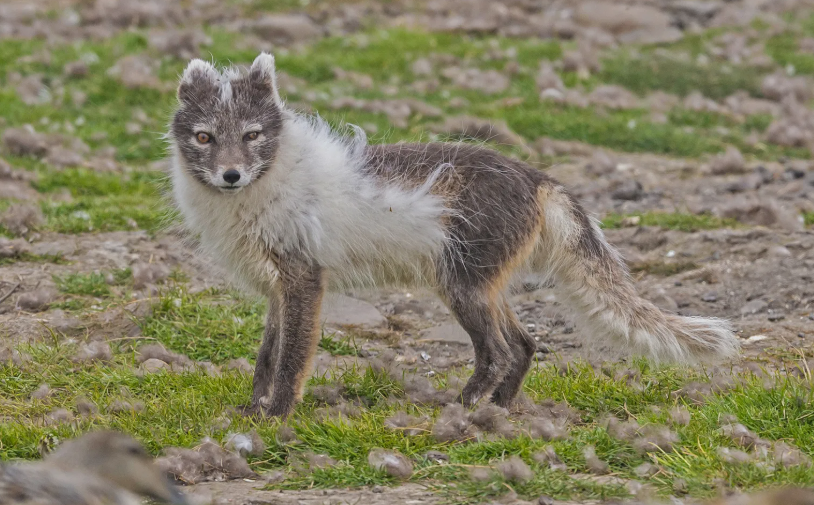
The Arctic fox is a small, compact fox built for extreme cold, with short ears, a short muzzle and thick fur. Its coat changes with the seasons, and it can tolerate temperatures of about minus 70 degrees Celsius. It hunts lemmings, birds and eggs, and it follows polar bears to scavenge scraps. Some individuals travel thousands of kilometers across the ice.
It lives around the Arctic, on the tundra of Alaska, Canada, Greenland, Scandinavia and Siberia. Its numbers in Scandinavia crashed to fewer than 40 adults by 2000 but have been boosted above 550 by a breeding and release program. Globally it is common. Climate change and competition with the red fox are growing concerns.
3. Fennec Fox
The fennec fox is the smallest fox in the world, with enormous ears that give off heat and detect prey underground. Its sand-colored fur reflects sunlight by day and keeps it warm at night. It weighs only 2 to 3 pounds. It digs dens in sand dunes.
It lives in the Sahara and other deserts of North Africa and the Sinai, in dunes and sparse scrub. It eats insects, small rodents, eggs, plants and fruit. It can survive with very little water. It is listed as least concern but is sometimes captured for the pet trade.
4. Gray Fox
The gray fox is a salt-and-pepper gray fox with a rusty neck and a black-tipped tail. It is one of the few foxes that can climb trees, using its curved claws to escape predators and find food. It belongs to a separate lineage from the true foxes. Adults weigh about 7 to 13 pounds.
It lives across the United States, southern Canada, Mexico and Central America, down to northern South America. It prefers woodland, brushy areas and rocky canyons. It eats rabbits, rodents, fruit, insects and birds. It is more common in the east and south than the red fox.
5. Kit Fox
The kit fox is a small desert fox with huge ears and a slender body. Adults weigh about 3 to 6 pounds, and their tan coats blend with desert soil. They hunt mostly at night, taking kangaroo rats, rabbits and insects. They spend the day in dens.
It lives in the arid lands of the southwestern United States and central and northern Mexico. The San Joaquin kit fox of California is federally endangered because of habitat loss. It uses dens that it digs itself or takes over from other animals. Pesticides and farming have reduced its habitat.
6. Swift Fox
The swift fox is a small, fast fox of the Great Plains that weighs about 4 to 7 pounds. It has black patches on the sides of its muzzle and a tan coat. It can sprint at about 25 miles per hour, hence the name. It feeds on rabbits, rodents, insects and birds.
It lives in the short-grass prairie of the central high plains, in Kansas, the Oklahoma panhandle, New Mexico, Texas, Nebraska, South Dakota, Wyoming and Colorado. It disappeared from most of Canada before a reintroduction program began in the 1980s. It is now listed as least concern. It is one of the success stories of North American conservation.
7. Island Fox
The island fox is the smallest wild canid in North America. It is about the size of a house cat, with a gray back and a rusty belly. It evolved on islands without large predators and has little fear of people. There are six subspecies, one on each of six islands.
It lives only on six of California’s eight Channel Islands. In the late 1990s, numbers fell by about 90 percent on four islands because of predation by golden eagles and disease. A recovery program has brought them back, and three subspecies were delisted in 2016. The subspecies are covered below.
8. Corsac Fox
The corsac fox is a medium-sized fox with gray to yellowish fur and pale markings on the face. It has small teeth and a wide skull. It is a nocturnal, nomadic hunter of the steppe. It eats rodents, birds, insects and carrion.
It lives in the deserts and steppes of Central Asia, from southern Russia and Kazakhstan to Mongolia and northeastern China. Its closest relative is probably the Tibetan sand fox. It avoids areas with human disturbance. It is listed as least concern.
9. Tibetan Sand Fox
The Tibetan sand fox has a square-looking face, narrow eyes and dense fur. It lives at some of the highest elevations of any fox. It hunts mostly pikas and sometimes marmots. A photo of one hunting a marmot won an international wildlife photography award in 2019.
It lives only on the Tibetan and Ladakh plateaus, in China, Nepal, India, Sikkim and Bhutan, up to about 17,000 feet. It prefers semi-arid and arid grassland. It is listed as least concern. Poisoning campaigns against pikas can hurt it.
10. Bengal Fox
The Bengal fox, also called the Indian fox, is a small, slender fox with a tan coat and a black-tipped tail. It lives in pairs and hunts at night. It eats insects, rodents, reptiles, fruit and eggs. It shelters in burrows.
It lives only on the Indian subcontinent, in scrub, grassland and semi-arid land. It is listed as least concern, though habitat loss, hunting and disease threaten it. It is protected in India. Some people hunt it for use in folk medicine.
11. Blanford’s Fox
Blanford’s fox is a small fox with large ears and a long, bushy tail. It was named after English naturalist William Blanford, who described it in 1877. It climbs rocks with agility and eats insects, fruit and small prey. It is also called the Afghan fox.
It lives in the mountains and rocky deserts of the Middle East and Central Asia. It prefers cliffs and steep terrain. Its population is considered stable, and it is listed as least concern. It is rarely seen.
12. Rüppell’s Fox
Rüppell’s fox is a sandy-colored desert fox with a white-tipped tail. It has an omnivorous diet that includes insects, rodents and plants. It is a good digger and lives in family groups. Genetic studies show it nests inside the red fox family tree.
It lives across the desert belt of North Africa and the Middle East, in sand and gravel plains and semi-desert. It overlaps with fennec and Blanford’s foxes. It is listed as least concern. Its range runs from Morocco to Pakistan.
13. Pale Fox
The pale fox is a small, sandy fox of the Sahel. Its coat is pale fawn, with a black tip on the tail. It lives in dry savanna and semi-desert. It eats rodents, insects, reptiles and plants.
It lives in a band across Africa south of the Sahara, from Senegal to Sudan. It is rarely studied. It is listed as least concern. Little is known about its numbers.
14. Cape Fox
The Cape fox is the only true fox found in southern Africa. It is a small, silvery-gray fox with a bushy tail. It hunts at night, eating rodents, insects, birds and fruit. It is widely hunted by farmers.
It lives in the semi-arid grasslands and scrubland of South Africa, Namibia, Botswana and Zimbabwe. Despite persecution, it is listed as least concern. It digs its own den or uses holes made by other animals. It often lives in pairs.
15. Bat-Eared Fox
The bat-eared fox is named for its huge ears, which help it hear insects moving underground. It has a black face mask and a dark brown to gray coat. It feeds mainly on termites and beetles. It is not a true fox but belongs to its own group.
It lives in two separate populations, one in East Africa and one in southern Africa, in open savanna and short grassland. Pairs and family groups share dens. It is common in places such as the Serengeti and Botswana. Hunting for fur and disease affect some groups.
16. Culpeo
The culpeo is the largest of the South American foxes and is also called the Andean fox. Despite its name, it is not a true fox but is more closely related to wolves and jackals. It eats rodents, rabbits, birds and lizards, and it may take young vicuñas and Andean flamingos. It dominates smaller foxes where they overlap.
It lives along the Andes from Ecuador and Peru to southern Patagonia and Tierra del Fuego, with some animals in southern Colombia. It uses high mountains, steppe and forest. Farmers sometimes kill it for attacking sheep. Its range overlaps with the puma’s.
17. Chilla
The chilla, also called the South American gray fox or Patagonian fox, is a small, gray-buff fox of southern South America. It is an omnivore that eats fruit, rodents, birds, reptiles and carrion. It has a black-tipped tail and a grizzled coat. Its pelts were exported in large numbers in the past.
It lives in Argentina and Chile, on both sides of the Andes, in semi-arid scrub and steppe. It is common in southern Chile, scarce in central Chile and frequent in the north. In Argentina, about 33,000 skins were exported in 1990. It is listed as least concern.
18. Pampas Fox
The pampas fox, also known as Azara’s fox, is a medium-sized fox with a gray-brown coat and a black muzzle. It eats rodents, birds, insects and fruit. It lives alone or in pairs. It can be a nuisance to poultry farms.
It lives in northern and central Argentina, Uruguay, eastern Bolivia, Paraguay and southern Brazil, in pampas grassland, wetlands, dry scrub and Chaco woodland. Some scientists question whether it is separate from the chilla. It is listed as least concern. Livestock conflict is a major issue.
19. Darwin’s Fox
Darwin’s fox is a small, dark fox with short legs and a broad head. Its coat is mottled black and gray with reddish ears and legs. It was first collected by Charles Darwin in 1834 from an island off Chile. It lives only in forest, unlike other zorros.
It lives in southern Chile, in Nahuelbuta National Park, the Valdivian Coastal Range and Chiloé Island. A 2004 estimate found about 78 foxes in Nahuelbuta and around 500 on Chiloé. It is endangered, the only South American fox with that status. Dogs, habitat loss and disease are the main threats.
20. Sechuran Fox
The Sechuran fox, also called the Peruvian desert fox, is the smallest of the South American foxes. It has a pale, buff-gray coat that matches its desert home. It is a nocturnal omnivore. It eats rodents, lizards, insects and fruit.
It lives along the coast of northwestern Peru and southwestern Ecuador, in the Sechura Desert and dry scrub. Its population trend is unknown. Some local people use its fat in traditional remedies. Habitat loss is a potential threat.
21. Hoary Fox
The hoary fox is a small, gray fox of Brazil’s grasslands, with a short muzzle and small teeth. Unlike most zorros, it feeds mainly on invertebrates, especially termites and dung beetles, along with some fruit and small animals. It is shy and nocturnal. It lives alone or in pairs.
It lives in south-central Brazil, in the cerrado savanna and open grassland. Farming has cleared much of its habitat. It has historically been poorly assessed. Roadkill and dogs also kill it.
22. Crab-Eating Fox
The crab-eating fox is a gray-brown, short-legged fox of northern and central South America. It eats crabs, fruit, insects, frogs and small mammals, though its name makes it sound like a specialist. It is often seen at dusk. It is not a true fox but belongs to a separate group.
It lives from Colombia and Venezuela through Brazil to northern Argentina and Uruguay, in savanna, forest edges and wetlands. It often lives near water. It is common in many areas. Roadkill is a major cause of death.
23. Silver Fox
The silver fox is a color form of the red fox with a black or silvery-gray coat and a white-tipped tail. It makes up about 10 percent of red foxes in some populations. The silver morph looks like a small wolf, with black patches on the nose, ears and legs. It was heavily prized by the fur industry.
It occurs wherever red foxes live, especially in colder northern areas of North America and Eurasia. Fur farmers bred silver foxes in captivity in the 1900s. In Siberia, scientists later bred a tame strain over decades. It is not a separate species.
24. Cross Fox
The cross fox is a color form of the red fox with a reddish body and a dark cross of fur over the shoulders and back. The face often mixes white, black and silver, with red ears. Its tail is often fluffy. Biologists once thought it was a separate species.
It is found throughout the red fox’s range, especially in Canada, where it may make up as much as 30 percent of red foxes. Several variations exist, including gold cross and silver cross. It lives in forests, tundra edges and farmland. It is a natural variation, not a different species.
25. Sierra Nevada Red Fox
The Sierra Nevada red fox is a rare, snow-adapted mountain subspecies of the red fox. It can be mostly red, mostly black or a grayish-brown cross phase. It lives in remote high-elevation habitat with heavy snow. It is one of the rarest mammals in North America.
It lives in California’s Sierra Nevada, near Yosemite and Kings Canyon, and in the southern Cascades. The Sierra Nevada population was listed as endangered in 2021, with only about 18 to 39 adults. A remnant group was rediscovered in 2010. Coyotes, climate change, wildfire and hybridization with non-native foxes are the main threats.
26. Sacramento Valley Red Fox
The Sacramento Valley red fox is a native lowland red fox subspecies of California’s Central Valley. Genetic studies beginning in 2010 showed it is more closely related to the Sierra Nevada red fox than to the non-native red foxes in the rest of the state. It is smaller and more slender than introduced red foxes. It is secretive.
It lives in the grasslands, wetlands and farmland of the Sacramento Valley. A narrow zone where it meets non-native foxes has remained stable for decades. Non-native red foxes have expanded across the rest of California. Its numbers are poorly known.
27. Japanese Red Fox
The Japanese red fox is the red fox subspecies of the main islands of Japan. It is smaller than the Hokkaido red fox, with a reddish-brown coat and a white-tipped tail. In Japanese folklore it is the kitsune, a shape-shifting spirit with nine tails. Foxes are linked to Inari shrines.
It lives on Honshu, Shikoku and Kyushu, in forests, farmland and even towns. It eats rodents, insects, fruit and carrion. Hokkaido has a separate, larger form. Roadkill and disease are common causes of death.
28. Blue Arctic Fox
The blue Arctic fox is a dark color morph of the Arctic fox that stays charcoal or chocolate gray all year. Unlike the white morph, it does not turn white in winter. It makes up less than 1 percent of Arctic foxes worldwide, even though the gene is dominant. White foxes are better camouflaged in snow.
It is most common on islands and coasts. In Iceland, about 70 percent of Arctic foxes are blue, and on Mednyi and Saint Paul islands, it reaches 100 percent. It is found in places with less snow. It is the same species as the white form.
29. Mednyi Island Arctic Fox
The Mednyi Island Arctic fox is a rare subspecies that lives on a single island in the Bering Sea. It has a blue-gray coat that does not turn white in winter. It has been isolated since the Pleistocene and is thought to be the smallest and possibly oldest island canid population on Earth. It is larger than mainland Arctic foxes.
It lives on Mednyi Island in Russia’s Commander Islands, with a related subspecies on nearby Bering Island. A mange outbreak in the 1970s caused a severe population crash. It is listed in the Red Book of Russia. Heavy trapping over two centuries added to its decline.
30. Santa Catalina Island Fox
The Santa Catalina Island fox is the island fox subspecies of Catalina Island in Southern California. It has a gray coat and a rusty belly. Canine distemper collapsed its population in the late 1990s. It was downlisted from endangered to threatened in 2016.
The population has recovered to about 1,800 foxes, with the Catalina Island Conservancy managing most of its habitat. Catalina gets about a million tourists a year, so disease remains a concern. Vaccination programs help protect the animals. It is one of the best-known wildlife success stories in California.
31. San Miguel Island Fox
The San Miguel Island fox is the island fox of the smallest of the northern Channel Islands. Golden eagles nearly wiped it out. The population fell from about 450 in 1994 to only 15 in 1999. A captive breeding program rescued it.
It numbered about 700 by 2015, and it was delisted from the endangered species list in 2016. A more recent estimate was around 322. The island is managed by the Navy and the National Park Service. It is a symbol of successful recovery.
32. Santa Cruz Island Fox
The Santa Cruz Island fox lives on the largest of the Channel Islands. Its numbers dropped from more than 1,400 to only 55 because of golden eagle predation. Biologists removed the eagles and bred foxes in captivity. It was delisted in 2016.
The population had grown to about 2,100 by 2015. It lives in chaparral, grassland and pine forest. The island is managed by the Nature Conservancy and the National Park Service. It is the most numerous island fox subspecies.
33. San Clemente Island Fox
The San Clemente Island fox is the island fox of a Navy-managed island in the southern Channel Islands. It was never listed as endangered. Its population stood at about 1,230 foxes in one count. It has been declining slowly in recent years.
Its population declined for a third year in a row in 2024, with low adult survival and only seven pups documented in one monitoring season. It lives in canyon, scrub and grassland habitat. Military activity and disease are concerns. Monitoring continues each year.
34. Cozumel Fox
The Cozumel fox is an undescribed species of gray fox relative that lives on Cozumel Island off Mexico. It is thought to be a dwarf form, like the island’s pygmy raccoon and dwarf coati. The last confirmed sighting was in 2001, and it is critically endangered. Many scientists feared it was extinct.
It lives in the island’s forest and scrub, though little is known of its ecology. Recent camera photos have raised hopes that it survives. Habitat loss from tourism development and introduced predators are the main threats. It has never been formally described by science.
35. Falkland Islands Wolf
The Falkland Islands wolf, also called the warrah, was a fox-like canid that was the only native land mammal of the Falkland Islands. It weighed about 20 kilograms and measured about 1.2 meters long. Darwin called it a wolf-like fox. Its name comes from a Guaraní word for fox.
It became extinct in 1876, the first known canid to go extinct in historical times. Settlers and fur traders hunted it for its pelt and poisoned it. It lived on East and West Falkland, about 300 miles off the coast of South America. Its origin remains a mystery.
Sources:
- The Twelve Species of True Foxes, WorldAtlas
- Types of Foxes: 12 True Species and 11 Pretenders, The Faunalist
- Red Fox, Wikipedia
- Fennec Fox, Wikipedia
- Corsac Fox, Wikipedia
- Arctic Fox, Strange Animals
- Arctic Fox, Norwegian Polar Institute
- Arctic Fox Complete Guide, Wildlife Photo Travel
- The Mednyi Arctic Fox: A Disappearing Island Endemic
- Cranial Features of Mainland and Commander Islands Arctic Foxes, Polar Research
- Foxes, Internet Center for Wildlife Damage Management
- Island Fox, Institute for Wildlife Studies
- Island Fox Endangered Species Act Profile, Center for Biological Diversity
- Recovery: America’s Dwarf Fox Gets a Second Chance, The Nature Conservancy
- Sierra Nevada Red Fox Listed as Endangered, U.S. Fish and Wildlife Service
- Discovery of a Remnant Population of Sierra Nevada Red Fox, Northwest Science
- Sierra Nevada Red Fox, Wikipedia
- South American Fox, Wikipedia
- Darwin’s Fox, Canid Specialist Group
- Chilla, Canid Specialist Group
- Sechuran Fox, Canid Specialist Group
- Culpeo, Wikipedia
- Falkland Islands Wolf, Wikipedia
- Cozumel Fox, Wikipedia
- Red Fox Coat Colour, Wildlife Online