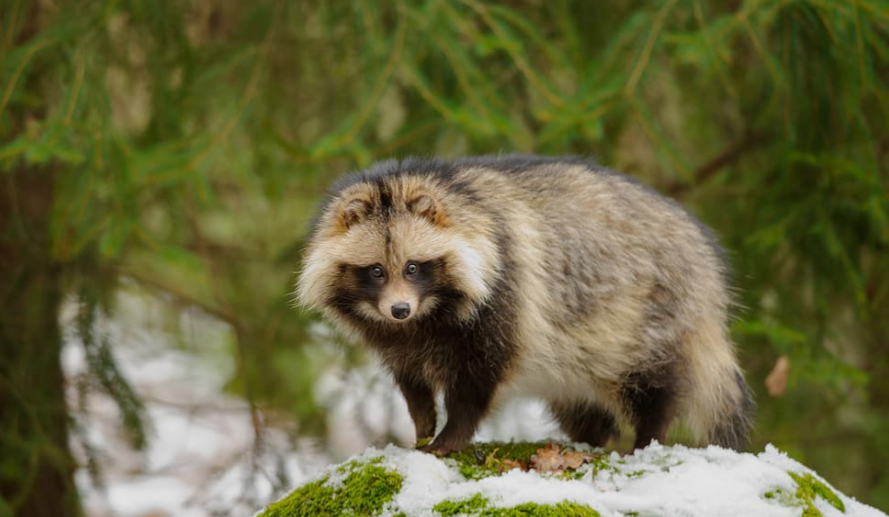
The animals that look like raccoons include close relatives, distant cousins and a few unrelated look-alikes that share the famous bandit mask or ringed tail. A raccoon is easy to recognize, with a dark band across its eyes, a bushy tail with about 5 to 7 dark rings and agile, hand-like paws. Many other animals have borrowed one or more of these features through family ties or convergent evolution. Some are so similar that people mistake them for raccoons in photos, in backyards and on camera traps.
The nearest relatives belong to the raccoon family, which has about 18 species. Besides raccoons, it includes coatis, ringtails, cacomistles, kinkajous, olingos and the olinguito. Only two of those family members live wild in the United States besides the raccoon itself, the white-nosed coati and the ringtail. The rest live in the tropical forests of Central and South America.
Beyond the family, other animals match raccoons through coloring and habits. Badgers and ferret-badgers have bold facial masks, while civets and genets have masks and ringed tails. Some look-alikes, like the raccoon dog and the red panda, are only distantly related or not related at all. In most cases, you can tell them apart by the snout, the tail and the body shape.
The 28 animals below range from raccoon cousins to complete outsiders. Each entry explains what makes it look like a raccoon and where it lives. Wild animals should never be handled, so enjoy them from a distance and call local wildlife officials if one is in trouble.
1. Raccoon Dog
The raccoon dog is the most famous raccoon look-alike that is not a raccoon at all. It is a member of the dog family, with a black face mask, a stocky body and thick fur that makes it look remarkably like a raccoon. Unlike a raccoon, its tail has no rings. In Japan it is called the tanuki and features in folklore.
It lives in Korea, Japan and eastern China, and it has become established in parts of Europe, where it is considered invasive. Like raccoons, it is an omnivore that forages at night. It is the only dog that hibernates in winter in some northern areas. It eats fruit, insects, frogs and small animals.
2. Ringtail
The ringtail is a slender, cat-like relative of the raccoon with a long tail boldly banded with 14 to 16 rings. Its face has pale rings around the eyes instead of a full mask. It is smaller and more agile than a raccoon, and it is a skilled climber. Its tail is often longer than its body.
It lives across the American Southwest and parts of the West and Great Plains, including Oregon, California, Kansas, Oklahoma, Arizona, New Mexico, Colorado, Nevada, Utah, Louisiana and Texas. It lives in rocky areas, deserts and forests, from sea level up to about 9,500 feet. It is nocturnal and rarely seen. It is considered a species of least concern.
3. Cacomistle
The cacomistle is a close relative of the ringtail, and it looks like a raccoon with a ringed tail and a masked face. It is solitary, nocturnal and a good climber. Its fur is brown and its tail is long and banded. It is one of the closest relatives of the raccoon.
It lives in southern Mexico and Central America, from Belize and Guatemala to Panama, in tropical forests. Females have a single young at a time. It is rarely seen in the wild. It is considered a species of least concern.
4. White-Nosed Coati
The white-nosed coati is the closest raccoon look-alike in the wild in the United States. It has a masked face and a long, ringed tail, but it also has a long, flexible, upturned snout and white markings around its nose. It carries its tail upright when walking. It forages in groups, sniffing out insects and fruit.
It lives from southeastern Arizona, southwestern New Mexico and southwest Texas south to northern Colombia. Females and young travel in bands, while males live alone. It usually sleeps in trees at night. It is considered a species of least concern.
5. South American Coati
The South American coati is also called the ring-tailed coati. It has a long snout, a ringed tail and a brown to reddish coat, so it resembles a raccoon in many ways. Its facial markings and tail rings are bolder than those of the white-nosed coati. It lives in groups.
It lives across northern and central South America, in forests and grasslands. It has 13 subspecies. It forages on the ground and in trees for insects, fruit and small animals. It is a common sight in many national parks.
6. Western Mountain Coati
The western mountain coati is a small, stocky coati with a short snout and a tail that is shorter than that of other coatis. Its body is only 36 to 39 centimeters long, with a tail of 20 to 24 centimeters. It looks like a small raccoon with a pointed nose. It is shy and rarely seen.
It lives in the Andes of northern South America, in forests and grasslands. There are two subspecies. Its relative, the eastern mountain coati of the Venezuelan Andes, is endangered. Habitat loss is a major threat.
7. Kinkajou
The kinkajou is a raccoon relative that lost the mask. It has golden-brown, honey-colored fur, a round face, big eyes and a long prehensile tail that it uses as a fifth limb. Its tail is not ringed or fluffy, which sets it apart from a raccoon. It spends nearly all its life in the treetops.
It lives in the rainforests of Central and South America, from Mexico to Brazil, and has seven subspecies. It feeds mainly on fruit, and it is nocturnal. Females have a single baby at a time. It is sometimes kept as an exotic pet, though it is not a good pet.
8. Northern Olingo
The northern olingo is a small, slender, tree-dwelling relative of the raccoon. It has a bushy tail, but it lacks the black eye mask of a raccoon. It weighs about 3 pounds. It is often mistaken for a kinkajou, though it is more agile.
It lives in the forests of Costa Rica, Nicaragua and Panama. It is nocturnal and arboreal, feeding on fruit, nectar and insects. Females have one baby at a time. It is considered a species of least concern.
9. Olinguito
The olinguito is a small, large-eyed relative of the raccoon, and it was only recognized as a new species in 2013. It has thick brown fur, a bushy ringed tail and a rounded face. Its body shape and hands resemble a raccoon’s. It is nocturnal and arboreal.
It lives in the cloud forests of the Andes in Colombia and Ecuador. It is listed as near threatened, and its numbers are declining. Deforestation is its main threat. It was found in museum collections and in the wild after being mistaken for olingos for years.
10. Crab-Eating Raccoon
The crab-eating raccoon is a true raccoon of South America. It is slightly lighter in color than the North American raccoon, and its mask is smaller. It has a slender body, and it is sometimes mistaken for a weasel. It has four subspecies.
It lives in hot, wet and marshy areas across South America, and in Colombia it has been found from sea level up to about 2,500 meters. It eats crustaceans and shellfish, and it hunts in water. It is far less urban than the common raccoon, and it rarely enters cities. It is not considered threatened.
11. Cozumel Raccoon
The Cozumel raccoon, also called the pygmy raccoon, is a small, gray raccoon with black and white face markings. It is smaller than the mainland raccoon, with a body of 42 to 60 centimeters. It is one of the rarest raccoons in the world. It eats many crabs.
It lives only on Cozumel Island, off the coast of Mexico’s Yucatan Peninsula. It is critically endangered, with only about 200 individuals left. Tourism development is the main threat. Researchers at Columbia University helped show its numbers were so low that its status was raised to critically endangered.
12. American Badger
The American badger is a stocky, shaggy digger with a triangular face and a bold black-and-white facial pattern. Its stripes run between the eyes, and its cheeks are black with a white throat. The pattern looks a little like a raccoon’s mask. It has long front claws, up to about 2 inches, for digging.
It lives in North America, especially in dry, open areas with deep soils such as prairies. It hunts rodents, rabbits and birds, and it has been reported to hunt together with coyotes. Northern animals sleep underground for long periods in winter. It marks its territory with scent from anal glands.
13. Eurasian Badger
The Eurasian badger is a gray, stocky animal with bold black-and-white stripes on its face. The stripes run over the eyes and give it a mask that resembles a raccoon’s. It lacks a ringed tail. It is a social animal.
It lives across most of Europe, Russia, Mongolia, Tibet, China and Japan. It lives in groups in large burrow systems called setts, where it spends the day. It forages at night for worms, insects and fruit. Adult Eurasian badgers have few natural predators.
14. Honey Badger
The honey badger, or ratel, is a short, tough mustelid with a dark body and a pale gray or white back. It does not look much like a raccoon in the face, but its low, stocky build and fearless attitude lead people to compare them. It is known for its ferocity. It digs up hives to eat honey and bee larvae.
It lives in Africa, southwest Asia and the Indian subcontinent. It is aggressive toward predators much bigger than itself, such as lions and hyenas. It is reported to be resistant to snake venom. It eats small animals, berries, roots and carrion.
15. Red Panda
The red panda is a masked, ringed-tail climber that looks like a red-and-cream raccoon. It has a white face with dark tear marks, a bushy tail with rings and a soft coat. Scientists first placed it in the raccoon family because of its skull, teeth and ringed tail. It is now in a family of its own, with its own pseudo-thumb for grasping bamboo.
It lives in the Himalayan region and nearby mountains, in forests. There are two species, the western and the eastern red panda. It is arboreal and eats mainly bamboo. It is endangered because of habitat loss.
16. Masked Palm Civet
The masked palm civet has a black face with a white stripe from its nose to its forehead, which makes it look like a cross between a cat and a raccoon. Its fur is gray to reddish, and its tail is long and thick. It has no spots or stripes on its body. Its ears are short and round.
It is the most widespread of all civets, living in the Indian subcontinent and Southeast Asia, and it has at least 13 subspecies. The University of Michigan’s Animal Diversity Web notes how broad its range is. It nests in the tops of trees and is solitary. It eats fruit, rodents, snakes and insects.
17. Common Palm Civet
The common palm civet is a small, gray-black animal with three dark bands along its back and a black mask on its face. It resembles a long-nosed cat with a raccoon’s mask. It is a nocturnal tree dweller. It can live about 22 years.
It lives in the forests of Asia and often shares space with people, sometimes living in roofs. It eats fruit, insects, worms and small animals. It is considered a species of least concern. It is sometimes called the toddy cat for its love of palm sap.
18. African Civet
The African civet is a large, dark, spotted animal with a black mask on a pale face. It has thick legs and a banded tail, giving it a raccoon-like look. It raises a crest of hair along its back when alarmed. It is the only terrestrial civet in Africa.
It lives across much of sub-Saharan Africa, in forests and savannas. It is not a threatened species. It is solitary and nocturnal. It eats fruit, small animals, eggs and insects.
19. Common Genet
The common genet is a slim, cat-like carnivore with spots, a masked face and a long, ringed tail. It has a white-tipped tail, unlike the black-tipped tail of the rusty-spotted genet. It weighs about 3 to 6 pounds. It is a skilled climber.
It lives in France, Portugal, Spain, the Arabian Peninsula, northern Africa and all of sub-Saharan Africa. It is nocturnal and often found in trees. It eats rodents, birds and insects. It is common in many parts of its range.
20. Striped Skunk
The striped skunk has a black coat with two white stripes, a bushy tail and a pointed face, so it looks a bit like a raccoon in silhouette. Like raccoons, it is a nocturnal omnivore that visits garbage cans and gardens. Its famous spray is a defense against predators. It tolerates people well.
It lives across North America and is abundant in many urban areas. It eats insects, grubs, small rodents, eggs and fruit. It digs shallow holes in lawns to find grubs. It often denens under porches and sheds.
21. Eastern Spotted Skunk
The eastern spotted skunk is a very small skunk, no larger than a good-sized tree squirrel. Its body is more weasel-like than a striped skunk’s, and it has four broken stripes that give it a spotted look. Its black-and-white coloring and bushy tail can make it look like a tiny raccoon. It is the most agile of the skunks and can climb trees like a squirrel.
It lives throughout the eastern United States and in small areas of Canada and Mexico. It is uncommon where it is not declining, but it remains common in southern Florida. It is the most carnivorous skunk. It is known for its handstand display before spraying.
22. Hog-Nosed Skunk
The hog-nosed skunk has a long, bare snout like a pig’s, powerful front claws and a mostly white back. It is the largest skunk, weighing up to 4.5 kilograms. Its thick body and white tail give it a rough resemblance to a raccoon. It roots in soil for grubs and insects.
There are four species, found in North and South America. They are excellent diggers with strong upper bodies. They live in grasslands, scrub and rocky country. They eat insects, small reptiles and eggs.
23. Wolverine
The wolverine is a stocky, bear-like mustelid with dark brown fur and pale side stripes, and it is often confused with raccoons and other mid-sized animals. It has a bushy tail and a broad, powerful build. It is much bigger and stronger than a raccoon. It is a tough scavenger and hunter.
It lives in the cold forests and tundra of northern North America, Europe and Asia. It travels long distances over snow. It eats carrion and prey much larger than itself. It is rarely seen.
24. Virginia Opossum
The Virginia opossum is a gray, nocturnal scavenger that is often seen near garbage cans, just as raccoons are. It has a white head and a long, furless pink tail. It lacks the mask and the ringed tail of a raccoon. It is a marsupial, not a relative of raccoons.
It lives in most of the United States and has spread to the West Coast, thriving in woodlands, farmland and cities. It eats insects, fruit, carrion and garbage. It is famous for playing dead when threatened. It is a harmless neighbor that eats many pests.
25. Ring-Tailed Lemur
The ring-tailed lemur has a long tail with black and white stripes that is often mistaken for a raccoon’s tail. Its face is white with dark eye patches, and its body is gray. Like raccoons, it is an omnivore. It holds its tail up like a flag when moving through a troop.
It lives in the dry forests and rocky areas of southern Madagascar. It is highly social and lives in large troops. It is active during the day, unlike raccoons. It is endangered because of habitat loss.
26. Black-Footed Ferret
The black-footed ferret is a slim mustelid with a dark mask across its eyes, black feet and a black-tipped tail. The mask gives it a raccoon-like look. It is much smaller and more slender than a raccoon. It depends on prairie dogs for both food and shelter.
It lives on the Great Plains of North America. It was once listed as extinct in the wild, and the last known population in South Dakota disappeared in 1974. A colony of about 130 ferrets was found near Meeteetse, Wyoming, in 1981, but disease struck it hard. Captive breeding and reintroduction have since helped it recover.
27. Burmese Ferret-Badger
The Burmese ferret-badger is a small, ferret-like badger with a white or yellowish mask on its face and a white stripe along its back. Its dark patches are thinner than those of the Chinese ferret-badger. It weighs 1 to 3 kilograms. It looks like a tiny, masked raccoon.
It lives in Nepal, northeastern India, Myanmar, southern China, Vietnam, Laos, Thailand and Cambodia. According to the University of Michigan’s Animal Diversity Web, it has large teeth for crushing snails and hard-shelled insects. People in northeastern India welcome it into homes to eat cockroaches. It is hunted for food, fur and medicine.
28. Chinese Ferret-Badger
The Chinese ferret-badger is a small badger with a mask-like pattern of light fur surrounded by black, and a whitish diamond-shaped patch on its head. Its body is 33 to 43 centimeters long, with a tail of 15 to 23 centimeters. It is the smallest of the badgers. Its mask makes it look like a miniature raccoon.
It lives in grassland, open forests and tropical rainforests from northeastern India to southern China, including Hong Kong, Taiwan and northern Indochina. It eats earthworms, insects, amphibians and fruit, and it helps spread seeds. It is listed as least concern and tolerates modified habitat. It is associated with rabies outbreaks in southeastern China.
Sources:
- 15 Animals That Look Like Raccoons, A-Z Animals
- 8 Animals Like Raccoons, Wildlife Informer
- Animals That Look Like Raccoons: 9 Lookalikes, The Faunalist
- Raccoon Family Habitat Map, DataBayou
- Procyonidae, Nature Works, New Hampshire PBS
- Procyonidae, Wikipedia
- List of Procyonids, Wikipedia
- Cozumel Raccoon, Wikipedia
- Vulnerable Island Carnivores: Cozumel Island, Biodiversity and Conservation
- Crab-Eating Raccoon in the Colombian Amazon
- Types of Raccoons Around the World, Skedaddle Wildlife
- Badgers, Encyclopedia.com
- Badger, Britannica Kids
- Facts About Badgers, Live Science
- Masked Palm Civet, Animal Diversity Web, University of Michigan
- Masked Palm Civet, A-Z Animals
- Civets, Genets, and Linsangs, Encyclopedia.com
- Civets and Genets, Snapshot Serengeti
- Eastern Spotted Skunk, Wikipedia
- Skunk Natural History, Encyclopaedia Britannica
- Weasels, Badgers, Skunks, and Otters, Encyclopedia.com
- Snapshot USA Field Guide, Smithsonian eMammal
- How Is a Lemur Like a Raccoon?, Toronto Public Library
- Commonly Misidentified Species, Genuine Mustelids
- Ferret-Badgers, Genuine Mustelids
- Burmese Ferret-Badger, Animal Diversity Web, University of Michigan
- Chinese Ferret-Badger, Wikipedia