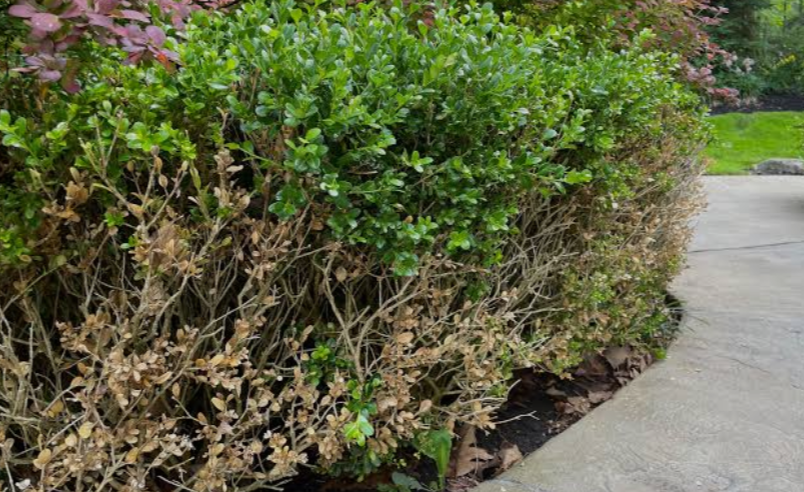
Boxwood diseases are hard to diagnose because many unrelated problems start the same way, with yellow, tan or bronze leaves on a shrub that looked fine weeks earlier. Some are minor and grow out with better care. Others, like boxwood blight, can strip a hedge bare in weeks.
Getting the diagnosis right matters because the treatment for one disease may do nothing for another. Spraying a fungicide on a plant with root rot, for example, won’t fix the wet soil that is killing it.
Boxwood is one of the most valuable shrubs in American nurseries. USDA data analyzed in the Journal of Environmental Horticulture show U.S. boxwood sales rose from $102.9 million in 2009 to $126.4 million in 2014. That 23% increase was about twice the growth rate of nursery stock overall.
Disease pressure has also changed. Boxwood blight reached the United States in 2011, and by 2019 it had been confirmed in 30 states and the District of Columbia. Those states grow about 95% of the nation’s boxwood.
This guide covers the six diseases American gardeners see most often, with the symptoms, causes and treatment for each. It also explains how to tell real disease from winter injury and insect damage.
Boxwood Blight
Identifying Boxwood Blight
Boxwood blight is the most destructive boxwood disease in North America. It causes round brown leaf spots, often with darker borders, and narrow black streaks on green stems. No other common boxwood disease produces those stem streaks.
The other key sign is fast leaf drop. Infected plants can lose most of their leaves within 1 to 2 weeks, starting at the bottom. In humid weather, fuzzy white spore masses may show on leaf undersides.
What Causes Boxwood Blight
The disease is caused by a fungus first reported in the United Kingdom in the mid-1990s. Federal inspectors confirmed the first U.S. case on October 26, 2011, at a nursery in Surry County, North Carolina, and Connecticut confirmed cases at about the same time.
It spreads on infected nursery stock and holiday greenery. Its sticky spores also travel on tools, clothing, shoes and pets, and in splashing water.
Warm, wet weather drives infection, especially around 64 to 77 degrees Fahrenheit with leaves that stay wet for hours. The fungus can survive in fallen leaves and soil for several years, which makes replanting risky.
Treating Boxwood Blight
Boxwood blight cannot be cured once a plant is infected. The University of Connecticut’s Home and Garden Education Center advises getting a lab to confirm it first, because other problems can look similar.
If it’s confirmed, dig out infected plants with their roots and fallen leaves. Bag everything for the landfill and never compost it.
Fungicides only protect healthy plants, and they need repeat sprays every 7 to 14 days in wet weather. Most homeowners do better switching to tolerant types such as littleleaf boxwood or the NewGen series.
Volutella Blight (Boxwood Canker)
Identifying Volutella Blight
Volutella blight, also called boxwood canker, is the most common fungal disease of landscape boxwood in the eastern United States. Single branches turn yellow, then straw-colored, usually in spring. Unlike boxwood blight, the dead leaves stay attached for weeks.
Bark at the base of affected branches often peels away and shows a canker that circles the stem. In cool, moist weather, look for small salmon-pink spore masses on stems and leaf undersides.
What Causes Volutella Blight
This fungus is an opportunist that enters through damaged or stressed tissue. The University of Kentucky Cooperative Extension Service notes that winter injury, poor vigor and stem wounds raise the risk, and that all boxwoods are susceptible.
Heavily sheared shrubs are especially prone to it. Their dense outer shell traps moisture and debris inside, which gives the fungus ideal conditions. Outbreaks are usually worst after harsh winters in the Mid-Atlantic and Northeast.
Treating Volutella Blight
Cut out dead branches back to healthy green wood, ideally in dry weather. Then clear out the dead leaves trapped inside the shrub and around its base. Disinfect your pruners between cuts.
Thinning the shrub keeps the disease from coming back. Remove small sections of interior branches so light and air reach the center. After a bad outbreak, a copper-based or other labeled fungicide applied before spring growth can cut down on new infections.
Phytophthora Root and Crown Rot
Identifying Phytophthora Root Rot
This disease starts underground, so early symptoms are vague. Leaves fade to light green, then yellow or bronze, and often curl upward. Plants may wilt in the afternoon even when the soil is moist.
To confirm it, scrape the bark at the base of the stem. Healthy tissue underneath is creamy white, and infected tissue is gray to dark brown. Rotted roots are brown, soft and water-soaked.
What Causes Phytophthora Root Rot
Root rot is caused by water molds that thrive in saturated soil. According to Tennessee State University Cooperative Extension, poor drainage, over-watering, heavy rain and planting too deeply all encourage it.
Boxwood roots are shallow and need oxygen, so heavy clay soils are risky. Low spots, downspout areas and beds next to irrigated lawns are common trouble sites.
Treating Phytophthora Root Rot
Root rot has to be prevented, because chemical treatments rarely save a plant once its leaves change color. Remove plants that are badly affected, along with their roots and the soil around them.
For plants in early decline, fix the drainage and cut back on watering. Keep mulch to 1 inch or less around the stems. Phosphite fungicides can help protect healthy plants nearby, but they won’t revive dying ones.
English Boxwood Decline
Identifying English Boxwood Decline
This slow disease mostly affects English boxwood that is 20 years old or more. Sections of the shrub lose their gloss and turn orange-tan to bronze over several seasons. The plant ends up looking patchy, with dead areas mixed among green ones.
Peeling back the bark near the soil line shows dark, sunken cankers on the stems. Because the symptoms overlap with root rot, a lab test is the most reliable way to tell the two apart.
What Causes English Boxwood Decline
Decline is a complex of problems, not a single infection. Clemson Cooperative Extension links it to several fungi together with cold injury, drought stress and nematodes.
Old plants in compacted, shaded or drought-prone sites are the most vulnerable. Construction damage, foot traffic and deep mulch add to the stress.
Treating English Boxwood Decline
No chemical controls work for decline. Prune out dead branches in dry weather, clear out the debris inside the plant and pull mulch back from the base. Water deeply during droughts without keeping the soil soggy.
Badly damaged plants are often best replaced. Clemson Extension’s boxwood disease guidance notes that American and littleleaf boxwood resist decline, so they make good replacements.
Macrophoma Leaf Spot
Identifying Macrophoma Leaf Spot
Macrophoma leaf spot is common but rarely serious. It shows up as tiny black dots on leaves that have already turned yellow or straw-colored, usually inside the plant.
The dots catch the eye, but they are rarely the real problem. The fungus usually moves into leaves that were already weakened by cold, drought or root trouble.
What Causes and Treats Macrophoma Leaf Spot
This weak fungus overwinters in dead leaves and spreads by splashing water. Dense, sheared shrubs with poor airflow carry more of it.
Treatment is sanitation and better care. Shake out dead leaves, thin the canopy and fix whatever stress caused the yellowing. Fungicides are rarely worth using for this disease alone.
Nematode Damage
Identifying Nematode Problems
Nematodes are microscopic roundworms that feed on boxwood roots. Infected plants look stunted and bronzed, and they wilt quickly in hot, dry weather. The decline is gradual and usually takes several years.
Roots are often small and stubby, with few fine feeder roots. Root-knot nematodes leave small swellings on the roots.
What Causes and Treats Nematode Damage
Nematodes spread mainly through infested nursery stock, contaminated soil and moving water. They are worst in the sandy soils of the Southeast, from the Carolinas to Florida.
There is no practical chemical treatment for homeowners. A soil test from your state diagnostic lab will show which nematodes are present. Where counts are high, replace boxwood with plants those nematodes don’t feed on.
Telling Disease Apart from Winter Injury and Pests
Many browning boxwoods have no disease at all. Winter injury causes orange or bronze leaves in late winter, usually on the south and west sides of the plant. Frozen soil stops the roots from replacing water the leaves lose to sun and wind.
Insects cause damage that is easily mistaken for disease. Boxwood leafminer makes blisters on leaf undersides, spider mites cause pale speckling, and psyllids make new leaves cup inward.
In parts of New York, Ohio and Michigan, the invasive box tree moth now strips boxwoods of their leaves. Its webbing and green-and-black caterpillars tell it apart from blight.
Preventing Boxwood Diseases
Buy boxwood from reputable nurseries and check plants for leaf spots and stem streaks before buying. If you can, keep new plants apart from existing boxwood for about 4 weeks. Avoid cut boxwood greenery when you don’t know where it came from.
Plant in well-drained soil at the same depth the plant grew in its container. Water with drip lines instead of sprinklers to keep the leaves dry. Thin plants every year or two instead of shearing them, so air and light reach the middle.
When to Get a Lab Diagnosis
Most land-grant universities run plant diagnostic clinics through their extension services, and homeowner fees are usually modest. Send several branches that show a range of symptoms, and include roots and soil if you suspect root rot.
Get a lab diagnosis right away if you see black stem streaks or sudden leaf drop. It is also worth the cost before removing an expensive hedge or replanting where boxwoods have died.
Sources
University of Connecticut Home and Garden Education Center, “Boxwood Blight”
University of Kentucky Cooperative Extension Service, “Volutella Blight of Boxwood”
Tennessee State University Cooperative Extension, “Boxwood Phytophthora Root and Crown Rot”
Clemson Cooperative Extension Home and Garden Information Center, “Boxwood Diseases & Insect Pests”