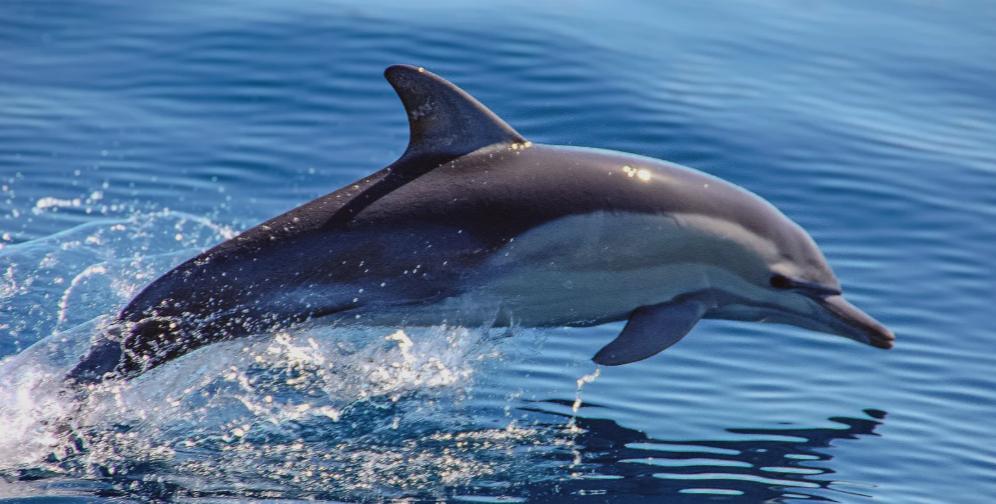
The types of dolphins make up one of the most diverse and beloved groups of marine mammals, with about 38 oceanic dolphin species and several river dolphins spread across every ocean and some of the world’s great rivers. Dolphins are toothed whales, and they range from the 4-foot Hector’s dolphin to the 30-foot orca, which is the largest dolphin of all. Six oceanic dolphins, including the orca and the pilot whales, are commonly called whales even though they belong to the dolphin family. Porpoises are a separate group, even though many people mix them up with dolphins.
Dolphins are famous for their intelligence and social lives. They live in pods that can range from a handful of animals to a thousand in some species, and they use clicks to echolocate and whistles to communicate. Many dolphins, including bottlenose and white-sided dolphins, produce signature whistles that work like individual names. Most feed on fish and squid, though orcas also hunt seals and whales.
Most oceanic dolphins prefer the warm waters of the tropics, but some live in polar seas, in muddy rivers or in shallow bays. Their habitats put them in contact with fishing nets, boat traffic and pollution, and several species are now critically endangered. The baiji of China’s Yangtze River was declared functionally extinct in 2006, and New Zealand’s Māui dolphin numbers only a few dozen animals. At the same time, many open-ocean dolphins remain abundant.
Dolphin taxonomy changes constantly as DNA studies reshape the family tree. This article reaches 50 by covering the 38 oceanic dolphin species recognized by the Society for Marine Mammalogy, splitting out 5 well-known forms (the long-beaked and Arabian common dolphins, the Māui dolphin, and the Bigg’s and resident orcas), adding 5 river dolphins and including 2 contested forms. Here are the 50 types of dolphins, along with where each is found.
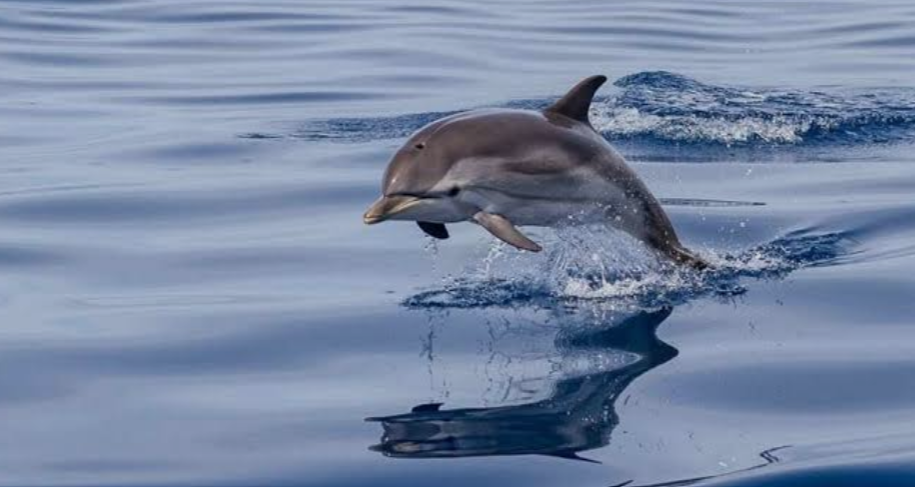
1. Common Bottlenose Dolphin
The common bottlenose dolphin is the most familiar dolphin in the world and the one most often seen in aquariums, films and coastal tours. Adults measure about 6.5 to 13 feet long and weigh from 300 to over 1,000 pounds, with a gray back, a paler belly and a short, thick beak. Each animal develops a signature whistle that works like a name. They hunt fish cooperatively and sometimes use sponges or mud rings as tools.
It lives in coastal and offshore waters across most tropical and temperate oceans, from Florida and the Mediterranean to Australia and South Africa. Some populations stay in bays and estuaries for life, while others roam hundreds of miles. It is considered common overall. Local populations face bycatch, pollution and boat strikes.
2. Indo-Pacific Bottlenose Dolphin
The Indo-Pacific bottlenose dolphin was recognized as a separate species from the common bottlenose in the 1990s. It is generally smaller, has a proportionately longer beak and often develops spots on its belly and lower sides. It has more teeth than the common bottlenose. Its average length is about 8.5 feet, and large animals weigh up to 510 pounds.
It lives in warm coastal waters of the Indian Ocean, Southeast Asia and the western Pacific, including Australia and the Red Sea. Groups of 5 to 15 are most common, though larger gatherings of hundreds occur. In some places it shares water with common bottlenose dolphins. It is listed as near threatened because of fishing nets and coastal development.
3. Tamanend’s Bottlenose Dolphin
Tamanend’s bottlenose dolphin is a recently described coastal species from the western North Atlantic. It looks much like other bottlenose dolphins, but genetic work shows that it is distinct and that it has a smaller body suited to shallow coastal waters. It is named after a Lenape leader. Little has been written about its behavior compared with that of its famous cousin.
It lives along the Atlantic coast of the United States, mainly in shallow bays and nearshore waters from the mid-Atlantic southward. It overlaps with the common bottlenose in some places. Because it was only recently separated, population counts and status are still being worked out. Coastal pollution and fishing gear are the main concerns.
4. Short-Beaked Common Dolphin
The short-beaked common dolphin is one of the most abundant dolphins on Earth. It has a striking hourglass pattern, with a dark back, a pale belly and yellowish patches on the sides. Adults are about 6 feet long and weigh up to 170 pounds. It often gathers in fast-moving groups of hundreds.
It lives in temperate and subtropical oceans around the world, including the North Atlantic, the Mediterranean, the eastern Pacific and the waters around New Zealand. It is common along shelf edges and around seamounts and underwater canyons. Short-beaked common dolphins often leap and ride the bow waves of boats. Fishing nets cause deaths, though the species remains abundant.
5. Long-Beaked Common Dolphin
The long-beaked common dolphin has a longer, thinner beak and a more streamlined body than its short-beaked relative. It was formerly treated as a separate species, and the Society for Marine Mammalogy now lists it provisionally as a subspecies. Research shows that long-beaked populations around the world arose separately from short-beaked ancestors. They are often bigger but less abundant than the short-beaked form.
It lives mostly in shallow, warm coastal waters, with scattered populations off California, Baja California, western South America, West Africa and Asia. Schools range from fewer than 10 to several thousand animals. It is a popular sight on whale-watching trips off southern California. Fishing nets are a major concern.
6. Arabian Common Dolphin
The Arabian common dolphin, also called the Indo-Pacific common dolphin, has an even longer, thinner beak than other common dolphins. It is a slim, fast swimmer with the typical hourglass pattern. Some studies suggest it is a distinct species, while the current list treats it as a subspecies. Its range is much smaller than that of other common dolphins.
It lives in the Red Sea, the Persian Gulf, the Arabian Sea and the coasts of India and Sri Lanka. It hunts schooling fish near the surface. It is poorly studied in many parts of its range. Fishing gear and coastal development are the main threats.
7. Pantropical Spotted Dolphin
The pantropical spotted dolphin is a slender, athletic dolphin whose spots increase with age. Calves are born with plain gray bodies, and adults can be heavily speckled. It reaches about 7 feet and 250 pounds. It is a frequent bow-rider and a playful leaper.
It lives in all the world’s tropical oceans, generally between 40°S and 40°N, including the Persian Gulf and Red Sea. It has two subspecies, a widespread offshore form and a coastal form along the Pacific coast of Central America. In the eastern tropical Pacific, millions of these dolphins were killed in tuna nets in past decades. Recovery has been slower than expected despite reforms.
8. Atlantic Spotted Dolphin
The Atlantic spotted dolphin is more robust than its pantropical cousin, and its spots develop later in life. Young animals are plain gray, and old adults may be covered in spots. Adults grow to about 7.5 feet. It is a social, curious dolphin that often approaches boats.
It lives in the warm waters of the Atlantic, from the Gulf Stream and the Gulf of Mexico to the Caribbean, the Azores and West Africa. It is famous for friendly encounters with swimmers in the Bahamas. It feeds on fish, squid and bottom-dwelling prey. Its status is considered least concern, though bycatch is a problem in places.
9. Spinner Dolphin
The spinner dolphin is a slender, long-beaked dolphin famous for leaping and spinning along its long axis. Some animals twist several times in a single jump. Adults are about 6 to 7 feet long. Four subspecies are recognized, including the widespread Gray’s spinner, the eastern spinner and the dwarf spinner.
It lives in tropical and warm oceans worldwide. Hawaiian spinners rest in sheltered bays by day and feed offshore at night. They can be disturbed by frequent daily visits from boats and swimmers. Spinners in the eastern Pacific were once caught in large numbers in tuna nets.
10. Clymene Dolphin
The Clymene dolphin is a small, stocky dolphin with a short beak and a three-toned gray pattern. It was once considered a subspecies of the spinner dolphin and is also called the short-snouted spinner. It weighs up to about 90 kilograms. Groups usually number 5 to 50 animals.
It is found only in the tropical and subtropical Atlantic, in deep offshore waters. Its range includes the northwestern Atlantic off New Jersey, the Gulf of Mexico, the Caribbean, southern Brazil and West Africa from Mauritania to Angola. Its southern limits are poorly known. It is also known as the helmet dolphin or Senegal dolphin.
11. Striped Dolphin
The striped dolphin has blue-gray and white stripes running along its sides, making it one of the most striking dolphins. It is a sleek, acrobatic swimmer that often leaps high in the air. Adults reach about 8 feet. Groups can be large, often numbering hundreds.
It lives offshore in tropical, subtropical and warm temperate waters worldwide, including the Mediterranean. Because it prefers deep water, it is rarely seen from shore. It feeds on small fish and squid. It is common but has suffered die-offs from disease in the Mediterranean.
12. Fraser’s Dolphin
Fraser’s dolphin is a stocky, short-beaked dolphin with a dark stripe from the eye to the flipper. It has small flippers and a small dorsal fin. Adults are about 8 feet long. It travels in tight, fast-moving groups that can number in the hundreds or more.
It lives in deep tropical waters of the Atlantic, Pacific and Indian Oceans and is rarely seen near shore. It feeds on deepwater fish, squid and crustaceans. It is shy of boats compared with many dolphins. Fraser’s dolphins are seen from the coast of Dominica and in the Philippines.
13. Rough-Toothed Dolphin
The rough-toothed dolphin has a sloping forehead that flows into its beak without a crease, giving it a prehistoric look. Its teeth have fine vertical ridges. It grows to about 8 feet and has pink-white lips and scars on its sides. It is a deep diver that eats fish and squid.
It lives in deep tropical to warm temperate waters worldwide, though records from the Atlantic are scarce. It has been recorded off Virginia in the north and Brazil in the south. Little is known about its natural history. Hawaii and the Caribbean offer some of the best sightings.
14. Risso’s Dolphin
Risso’s dolphin is a medium-sized gray dolphin with a blunt, bulbous head and no beak. Its body is covered with white scars from fights and squid bites, and older animals look almost white. Adults reach about 13 feet long. It feeds mostly on squid.
It lives in deep temperate to tropical waters around the world, often along the continental slope. It is regularly seen in Monterey Bay in California and in the Mediterranean. Groups usually include dozens of animals. It is considered common but is hunted in a few places.
15. Atlantic White-Sided Dolphin
The Atlantic white-sided dolphin is a stocky, powerful dolphin with a black back, white belly and a yellow-tan streak above its gray side. It is a social animal that often travels in groups of dozens. Adults reach about 9 feet. It breaches frequently.
It lives in the cold waters of the northern North Atlantic, mostly offshore. Its range includes the Gulf of Maine, Cape Cod, Iceland and the North Sea. Virginia is the southern limit in the western Atlantic. Mass strandings occasionally occur on Cape Cod.
16. White-Beaked Dolphin
The white-beaked dolphin is a robust dolphin with a white or gray beak and a pale saddle behind the dorsal fin. It lacks the yellow streak of the Atlantic white-sided dolphin. It reaches about 9 feet in length. After the 2025 revision of the group, it is the only species left in its genus.
It lives in cold temperate and subarctic waters of the northern North Atlantic and the Baltic Sea, south to Cape Cod. It often rides the waves of boats and breaches frequently. It feeds on fish and squid. It is regularly seen around Iceland and Scotland.
17. Pacific White-Sided Dolphin
The Pacific white-sided dolphin is an energetic acrobat found in cool North Pacific waters. It has a dark back, light gray sides and a white belly, with a distinct hooked dorsal fin. It is also known as the hookfin porpoise. It forms groups that range from dozens to a thousand animals.
It lives across the North Pacific, from Alaska and the Bering Sea to Baja California, and across to the Sea of Japan and the Sea of Okhotsk. A northern form and a southern form exist, which look the same at sea. It prefers deep offshore waters. Its only known predator is the killer whale.
18. Dusky Dolphin
The dusky dolphin is a small, playful dolphin known for dramatic leaps and flips. It has a dark back, pale sides and a white belly, with a short beak. Adults reach about 6 feet. Three subspecies are recognized.
It lives in cool coastal waters of the Southern Hemisphere, with major populations around South America, southwestern Africa, New Zealand and some oceanic islands. Off Argentina’s Peninsula Valdés and New Zealand’s Kaikōura, it can be seen in large groups. It feeds on anchovies and other schooling fish. Local fisheries are a concern in parts of its range.
19. Peale’s Dolphin
Peale’s dolphin is a black, white and gray dolphin with a white patch behind each flipper that looks like an armpit. It is one of the few dolphins that does not whistle. It is a bold, curious animal that often rides the bow waves of boats. Adults reach about 7 feet.
It lives in coastal waters of southern South America, including Patagonia, Tierra del Fuego and the Falkland Islands. It often stays in shallow water near kelp beds. It shares habitat with Commerson’s dolphin. It is poorly studied.
20. Hourglass Dolphin
The hourglass dolphin is a small, black-and-white dolphin with a bold white pattern that resembles an hourglass on each side. It lives in cold, windy seas and is a fast swimmer. It often rides the bow waves of ships. Adults reach about 6 feet.
It lives in the Southern Hemisphere, in subantarctic and Antarctic waters, including the Drake Passage. It is often seen with other pelagic species, such as rorqual whales and beaked whales. Few people ever see it. Its status is considered least concern.
21. Northern Right Whale Dolphin
The northern right whale dolphin is a slender, black-and-white dolphin with no dorsal fin. It has a smooth back like a right whale, which gives it its name. Adults reach about 10 feet and are among the longest, thinnest dolphins. It swims in fast, leaping groups.
It lives in the cool waters of the North Pacific, from the Gulf of Alaska to southern California and across to Japan. Groups can reach 1,000 or more, often mixed with Pacific white-sided dolphins. It is fast and agile and breaks the surface in low arcs. Driftnet fisheries once killed many.
22. Southern Right Whale Dolphin
The southern right whale dolphin is also finless and slim, with a black back and a bright white belly and flippers. Adults reach about 10 feet. It is a speedy swimmer that leaps low over the water. It often travels in groups of dozens.
It lives in cold temperate waters of the Southern Hemisphere, off Chile, Argentina, southern Africa and New Zealand. It is mostly seen offshore. Dusky dolphins and pilot whales sometimes join its groups. It is rarely studied.
23. Commerson’s Dolphin
Commerson’s dolphin is a small, bold black-and-white dolphin that looks like a panda. It has a rounded head and a rounded dorsal fin, and it reaches about 5 feet. It is playful and curious. It lives in shallow coastal waters.
It lives off southern South America, including Patagonia, Tierra del Fuego and the Falkland Islands, with a separate population around the Kerguelen Islands. It often rides the bow waves of boats. It feeds on small fish, squid and crustaceans. Fishing nets are the main threat.
24. Chilean Dolphin
The Chilean dolphin is a small, dark gray dolphin with a rounded head and no beak. It reaches about 5.5 feet in length. It is shy, avoids boats and travels in small groups. It lives close to shore.
It lives only along the coast of Chile, in fjords, channels and bays. Little is known about its numbers. It is listed as near threatened. Entanglement in fishing nets and hunting for crab bait are the main threats.
25. Heaviside’s Dolphin
Heaviside’s dolphin is a small, triangular-finned dolphin with a dark back and a strikingly patterned belly. It is a remnant of a group that once spread around the globe. It reaches about 5.5 feet in length. It swims in groups of up to 10.
It lives in the cold, rich waters of the Benguela Current off Namibia and western South Africa. It stays close to shore, often in bays and surf zones. It is playful and rides waves. Fishing nets are the main threat.
26. Hector’s Dolphin
Hector’s dolphin is the smallest and rarest marine dolphin in the world and lives only in New Zealand. It weighs about 110 pounds and measures 4 to 5 feet long. It has a rounded black dorsal fin and a blunt beak. About 15,000 were estimated in 2022.
It lives along the South Island coast, with the largest group off the west coast. Groups are small, usually 2 to 12 animals. Gillnets are the main threat, and set-net restrictions were put in place in 2015. Banks Peninsula has a protected sanctuary.
27. Māui Dolphin
The Māui dolphin is a subspecies of Hector’s dolphin found only off the west coast of New Zealand’s North Island. It is slightly longer than Hector’s dolphin, with a longer, wider snout. It has been isolated for about 15,000 years. It is one of the rarest marine dolphins in the world.
It lives between Dargaville and New Plymouth, mostly in a narrow stretch of coastline. An estimate in 2022 found only 54 animals aged one year and over. An updated count is expected in late 2026. Gillnets and trawl nets are the main threats.
28. Orca
The orca, also called the killer whale, is the largest dolphin and a top predator in every ocean. Males reach about 30 feet and 6 tons. It has bold black-and-white markings and hunts in coordinated pods. Different populations specialize on salmon, seals, sharks or whales.
It lives in all oceans and seas, from the Arctic and Antarctic to the tropics. Ten ecotypes are recognized worldwide, with distinct diets and cultures. Pods are led by older females. Some populations are healthy, while others are endangered.
29. Bigg’s Killer Whale
Bigg’s killer whales, also called transients, are a mammal-eating form of orca in the eastern North Pacific. They travel in small groups and hunt silently to surprise seals, sea lions and porpoises. They are named for scientist Michael Bigg. In 2024, researchers proposed that they deserve species status.
They roam along the coast from Alaska to California, including British Columbia and Washington. Their numbers have grown as seal and sea lion populations have recovered. They are now seen increasingly in the Salish Sea. Genetically, they diverged from resident orcas more than 300,000 years ago.
30. Resident Killer Whale
Resident killer whales are a fish-eating form of orca that live in tight-knit family pods. They feed mainly on salmon and use echolocation to hunt. They keep to predictable ranges and travel with their mothers for life. The Southern Resident population, with J, K and L pods, is among the best studied.
Southern Residents live in the Salish Sea and off the coasts of Washington, Oregon and British Columbia. Their population fell from a peak of 99 in 1995 to 73 in 2024. They are listed as endangered, mostly because of a lack of Chinook salmon. They are also affected by noise and pollution.
31. False Killer Whale
The false killer whale is a slender, dark gray dolphin that looks a little like a small orca. It reaches about 20 feet long and has a rounded head with no beak. It is fast and social, and it hunts large fish such as tuna and mahi-mahi. It sometimes shares its catch with people.
It lives in tropical and warm temperate waters worldwide, mostly offshore. A small insular population around the main Hawaiian Islands is listed as endangered. Longline fishing gear is a problem. It is also prone to mass strandings.
32. Pygmy Killer Whale
The pygmy killer whale is a small, dark dolphin that is rarely seen. Adults reach about 8 to 9 feet long and have a rounded head. It is sometimes aggressive in captivity. It travels in tight groups of 10 to 50.
It lives in deep tropical and subtropical waters worldwide. Most sightings come from Hawaii, the eastern tropical Pacific and the Caribbean. It feeds on fish and squid. Little is known about its population or biology.
33. Melon-Headed Whale
The melon-headed whale is a small, dark dolphin with a pointed head and a triangular dorsal fin. It reaches about 9 feet. It gathers in large, fast-moving pods, often hundreds strong. It is very social.
It lives in deep tropical and subtropical waters around the world, including Hawaii, the Philippines and the Indian Ocean. Hawaii has a resident population that lives near shore. It feeds on squid, small fish and shrimp. Noise from sonar and mass strandings are concerns.
34. Long-Finned Pilot Whale
The long-finned pilot whale is a large, black dolphin with a bulbous head and very long flippers. Males reach about 20 feet and 3 tons. Pods are strong matriarchal groups of dozens to hundreds. It dives deep for squid.
It lives in cool temperate waters of the North Atlantic and the Southern Hemisphere. Its range in the North Atlantic includes Iceland, Norway, the Faroe Islands and the Gulf of Maine. It is known for mass strandings. The Faroe Islands still hunt it each year in the traditional grind.
35. Short-Finned Pilot Whale
The short-finned pilot whale is a large, dark dolphin with shorter flippers than its cousin. It reaches about 18 feet. It lives in stable matrilineal groups. It dives deep to hunt squid.
It lives in warm tropical and subtropical waters around the world. Resident pods are found off the Canary Islands, Hawaii and Japan. Females live well past breeding age, a rare trait in mammals. Naval sonar and bycatch are threats.
36. Irrawaddy Dolphin
The Irrawaddy dolphin has a blunt, rounded head with no beak and a small dorsal fin. It is slate gray, reaching about 8 feet. It lives in coastal waters, estuaries and some rivers. It is known for spitting water from its mouth.
It lives in Southeast Asia and the Bay of Bengal, including the Irrawaddy and Mekong Rivers, Chilika Lake in India and the Mahakam River in Borneo. Several freshwater populations are critically endangered. The Mekong group numbers fewer than 100. Gillnets, dams and pollution are major threats.
37. Australian Snubfin Dolphin
The Australian snubfin dolphin looks much like the Irrawaddy dolphin, with a rounded head and a small, low dorsal fin. It was recognized as a separate species in 2005. It reaches about 8 feet. It is shy and slow-moving.
It lives in shallow coastal waters of northern Australia and Papua New Guinea, including estuaries and river mouths. Populations are small and local. It often shares habitat with humpback dolphins. Habitat loss and fishing nets are the main concerns.
38. Atlantic Humpback Dolphin
The Atlantic humpback dolphin is a gray, shy dolphin with a hump below its dorsal fin. It lives in shallow coastal water and mangrove estuaries. It reaches about 8 feet. It is the most endangered humpback dolphin.
It lives off West Africa, from Western Sahara to Angola. The International Union for Conservation of Nature lists it as critically endangered. Fishing nets, hunting and coastal development are the main threats. It is on Appendix I of the Convention on Migratory Species.
39. Indian Ocean Humpback Dolphin
The Indian Ocean humpback dolphin stays lead gray throughout its life and has the most pronounced hump of any humpback dolphin. It reaches about 8 feet. It lives in shallow coastal water and is often shy. It feeds on fish and squid.
It lives in the central to western Indian Ocean, including South Africa, East Africa, the Arabian Peninsula and India. It is listed as endangered. Fishing nets, pollution and coastal development are the main threats. Shark nets in South Africa also kill some.
40. Indo-Pacific Humpback Dolphin
The Indo-Pacific humpback dolphin is famous for the pink color of adults in Chinese waters, where it is known as the Chinese white dolphin. Calves are born gray, and adults can turn pink or nearly white. It reaches about 8 to 9 feet. It lives in estuaries and shallow coastal water.
It lives in the eastern Indian Ocean and the western Pacific, from Bangladesh and India to Southeast Asia, China and Taiwan. Hong Kong’s waters hold a well-known population. It is listed as vulnerable. Noise from high-speed ferries, pollution and coastal reclamation are major threats.
41. Australian Humpback Dolphin
The Australian humpback dolphin was identified as a new species in 2013. It is slightly lighter in color than other humpbacks and has a diagonal dark gray cape on its back. It reaches about 8 feet. It lives in shallow coastal waters.
It lives off northern Australia and Papua New Guinea. It often shares territory with snubfin and bottlenose dolphins. It is listed as vulnerable. Habitat loss, fishing nets and shark nets are the main concerns.
42. Tucuxi
The tucuxi is a small, gray freshwater dolphin of South American rivers. It looks like a miniature bottlenose dolphin, with a triangular dorsal fin. It reaches about 6 feet. It lives in small groups and leaps often.
It lives in the Amazon and Orinoco river basins, in Brazil, Colombia, Peru, Ecuador and Venezuela. A study found that tucuxis and botos in the Amazon were declining sharply. Dams, fishing nets and use of dolphin meat as bait are threats. It is shy compared with the pink river dolphin.
43. Guiana Dolphin
The Guiana dolphin is the marine counterpart of the tucuxi, with a similar body shape but a longer beak. It is gray with a pinkish belly. It reaches about 7 feet. It lives in coastal bays and estuaries.
It lives along the Atlantic coasts of Central and South America, from Nicaragua to southern Brazil. It was lumped with the tucuxi for decades but is now recognized as separate. It lives in groups of a few to dozens. Coastal pollution, fishing nets and development threaten it.
44. Amazon River Dolphin
The Amazon river dolphin, or boto, is the largest river dolphin. It reaches about 8 feet and 220 pounds. Adults turn pink with age, especially males. It has a long beak, a flexible neck and a rounded forehead.
It lives in the Amazon and Orinoco basins of Brazil, Bolivia, Colombia, Ecuador, Peru, Guyana and Venezuela. In flood season it swims among flooded forest trees. Boto sightings in one Brazilian study declined 6.7 percent a year from 2000 to 2017. It is listed as endangered, and local legends say it can turn into a man.
45. Ganges River Dolphin
The Ganges river dolphin, or susu, is a long-beaked, nearly blind dolphin that swims on its side. It lacks a lens in the eye, so it senses only light and dark and relies on echolocation. It reaches about 8 feet. It is India’s national aquatic animal.
It lives in the Ganges, Brahmaputra, Karnaphuli and Meghna rivers in India, Bangladesh, Nepal and Bhutan. It is listed as endangered. Dams, irrigation barrages, pollution and fishing nets are the main threats. Project Dolphin was launched in India to protect it.
46. Indus River Dolphin
The Indus river dolphin, or bhulan, is a subspecies of the South Asian river dolphin with similar looks to the Ganges form. It is functionally blind and navigates entirely by sound. It reaches about 8 feet. It lives in the Indus River system.
Most live in Pakistan, between barrages on the river. In India, it survives only in about 185 kilometers of the Beas River in Punjab. It is listed as endangered. Dams and water diversion have chopped its range into isolated pieces.
47. Baiji
The baiji, or Yangtze river dolphin, was a pale, long-beaked dolphin that lived only in China’s Yangtze River. Its lineage stretched back about 20 million years. It was declared functionally extinct in 2006 after a 26-day survey of more than 2,000 miles of river found none. The last verified sighting was in 2002.
It lived in the middle and lower Yangtze, including its lakes. Pollution, overfishing, boat traffic and dams drove it to extinction. It is the first dolphin to be lost in modern times. A few unconfirmed sightings have been reported since, but none are verified.
48. Franciscana
The franciscana, also called the La Plata dolphin, is the smallest river dolphin and, despite the name, lives in the sea. It has the longest beak relative to body size of any dolphin. Adults reach about 5.5 feet, and females are larger than males. It is shy and avoids boats.
It lives in shallow coastal waters of eastern South America, from southern Brazil through Uruguay to Argentina, especially in the La Plata estuary. It is not often seen. Fishing net entanglement is the biggest threat. Data on its numbers are limited.
49. Bolivian River Dolphin
The Bolivian river dolphin is a slightly smaller, grayish-pink form of the Amazon river dolphin. It lives above the Teotônio rapids, which separate it from its relatives. DNA studies suggest the two have not interbred for tens of thousands of years. The Society for Marine Mammalogy does not currently recognize it as a species.
It lives in the Bolivian Amazon, in rivers such as the Madeira system above the rapids. It may number as many as 25,000 individuals. It is hunted in some places for use as bait. Dams are a new threat.
50. Burrunan Dolphin
The Burrunan dolphin was proposed as a new species in 2011, based on its skull and DNA. It looks like a bottlenose dolphin, with a gray back and a lighter belly. It lives in warm to temperate coastal waters of southern Australia. The Society for Marine Mammalogy has not recognized it as distinct, pending more research.
It is reported from southeastern Australian waters, including Victoria’s Gippsland Lakes and Port Phillip Bay and parts of Tasmania. Resident groups live in bays and estuaries. Some experts treat it as a local form of the Indo-Pacific bottlenose dolphin. Its status is still debated.
Sources:
- List of Marine Mammal Species and Subspecies, Society for Marine Mammalogy
- Taxonomy Committee 2024 Annual Review, Society for Marine Mammalogy
- Oceanic Dolphin, Wikipedia
- Delphinidae Overview, ScienceDirect
- Humpback Dolphin, International Whaling Commission
- Humpback Dolphin Handbook, International Whaling Commission
- Spinner Dolphin Handbook, International Whaling Commission
- Spotted Dolphin Handbook, International Whaling Commission
- Hector’s and Māui Dolphins, Te Ara, the Encyclopedia of New Zealand
- Hector’s and Māui Dolphin Research Strategy 2026–2031, New Zealand Department of Conservation
- Southern Resident Killer Whale Stock Assessment, NOAA Fisheries
- Resident and Bigg’s Killer Whales, NOAA Fisheries
- About Orcas, Center for Whale Research
- Freshwater Dolphins and Porpoises, Marine Mammal Commission
- River Dolphin, Wikipedia
- River Dolphins, Encyclopaedia Britannica
- Goodbye to the Baiji, Mongabay
- Common Dolphin, Wikipedia
- Indo-Pacific Bottlenose Dolphin, Wikipedia
- Dusky Dolphin, Wikipedia
- Lagenorhynchus, Wikipedia