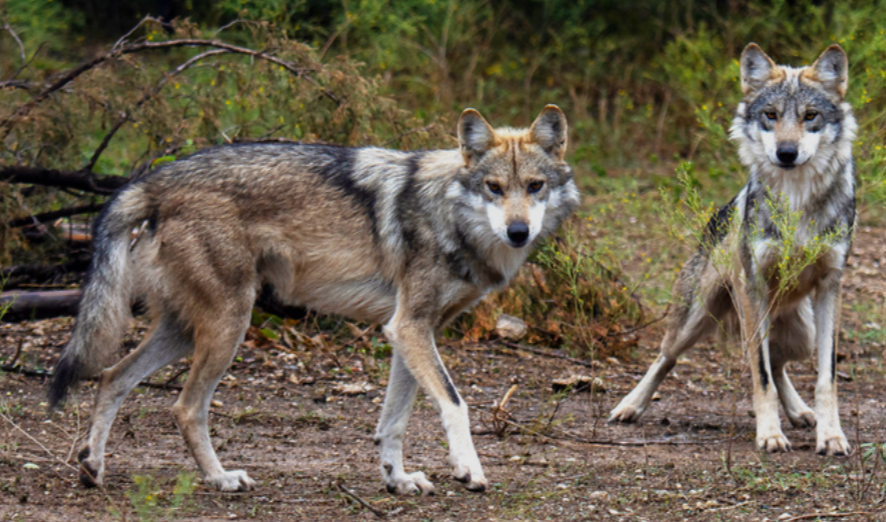
The types of wolves are harder to count than most people expect, because scientists still argue about what counts as a species and what counts as a regional form. The wolf is the largest wild member of the dog family, and the gray wolf is by far the most widespread, ranging across North America, Europe and Asia. Most experts accept two true wolf species, the gray wolf and the red wolf, and many add the Ethiopian wolf as a third. Everything else is a subspecies, an ecotype or a population that has been given its own name.
Wolves are highly social animals that live in packs, usually a breeding pair and their offspring from the past one to three years. They communicate by howling, scent marking and body language, and they hunt together to bring down deer, elk, moose and other large prey. Their territories can cover hundreds of square miles. They have been persecuted for centuries, which has dramatically shrunk their range.
Today wolves occupy only about two-thirds of their former range worldwide, and about 10 percent of their historic range in the lower 48 United States. Europe has made a notable comeback, with roughly 23,000 wolves in 2023. In the American Southwest, the wild Mexican wolf population reached 319 at the end of 2025, a count later adjusted to 317. Red wolves, by contrast, survive in the wild only in North Carolina, with around two dozen animals.
The standard reference list from 2005 names 38 gray wolf subspecies, but genetic studies suggest far fewer real divisions. North America alone has gone from 24 or more named forms down to about 4 or 5 in modern thinking. This article reaches 35 by covering 6 species and contested wolf-like lineages, 18 living regional forms and 11 extinct forms. Here are the 35 types of wolves, along with where each is found.
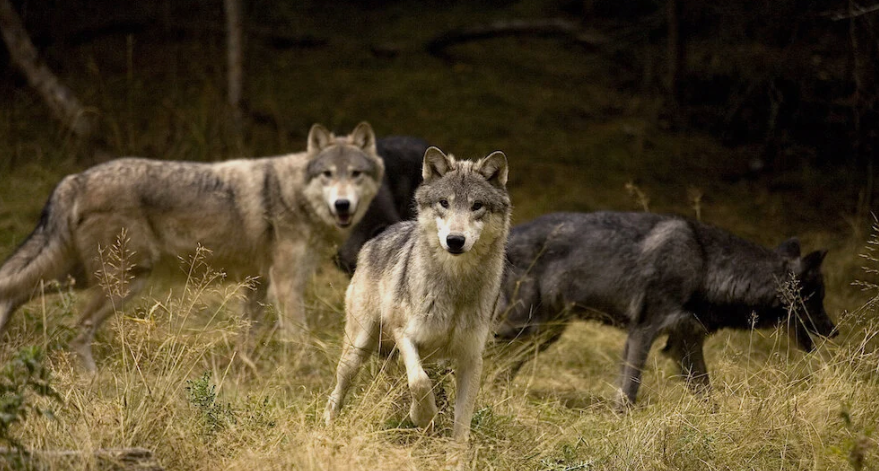
1. Gray Wolf
The gray wolf is the largest member of the dog family and the most common wolf in the world. Its coat can be gray, brown, black, cream or white, and adults weigh anywhere from about 50 to over 140 pounds depending on the region. It lives in packs and hunts mainly large hoofed animals. It is also called the timber wolf.
It is found throughout the Northern Hemisphere, in North America, Europe and Asia, with a few animals reaching North Africa. It lives in forests, tundra, mountains, grasslands and deserts. More than 30 subspecies have been named, though many are now questioned. Overall, it has lost about a third of its historic range worldwide.
2. Red Wolf
The red wolf is a slender, long-legged wolf with a coat of cinnamon, buff and black. It is smaller than the gray wolf, with most adults weighing 45 to 80 pounds. It hunts rabbits, rodents, nutria and white-tailed deer, and it often forms small family groups. It is among the most endangered canids on Earth.
It once ranged from Texas to Florida and north to North Carolina. Today the only wild population is a small experimental group in eastern North Carolina, with about 22 known animals as of July 2026. A captive breeding program backs them up. Hybridization with coyotes remains the biggest challenge.
3. Eastern Wolf
The eastern wolf, also called the Algonquin wolf or deer wolf, is a medium-sized wolf of the Great Lakes region. It is smaller than the gray wolf and has a reddish-brown coat with a tawny tone. Its classification is debated, and some scientists treat it as its own species, while others call it a gray wolf subspecies. Genetic studies show a mix of gray wolf and coyote ancestry.
It lives in south-central Ontario and south-central Quebec, with its core in Algonquin Provincial Park. One study found the park’s wolves are about 58 percent gray wolf and 42 percent coyote, and another found about 32 percent coyote DNA in the most pure animals. Human persecution reduced the number of mates, which allowed coyote genes to enter the population. Deer, beaver and moose are its main prey.
4. Ethiopian Wolf
The Ethiopian wolf is a slender, long-legged, red-and-white wolf and the rarest canid in the world. Adults weigh 13 to 20 kilograms, or roughly 29 to 44 pounds. Unlike most wolves, it is a specialist that hunts mostly Afroalpine rodents, such as giant mole-rats. It lives in family packs but usually hunts alone.
It is found only in seven isolated mountain ranges in Ethiopia, at altitudes of about 3,000 to 4,500 meters. Fewer than 500 remain, and more than half live in the Bale Mountains. Rabies spread by domestic dogs has killed more than 70 percent of some packs, and farming is shrinking its habitat. It is listed as endangered.
5. Himalayan Wolf
The Himalayan wolf is a high-altitude lineage with a thick, woolly coat in pale gray, cream or white. It has adapted to thin, low-oxygen air at elevations above about 4,000 meters. DNA studies show it is one of the oldest wolf lineages, and some scientists propose treating it as a separate species. Its classification remains unsettled.
It lives in the Himalayas, including Ladakh, and across the Tibetan Plateau and mountains of Central Asia. It preys on wild sheep, marmots, hares and livestock, which creates conflict with herders. A 2019 expert workshop recommended calling this lineage the Himalayan wolf until further genetic work is done. Its habitat is among the highest of any wolf.
6. African Golden Wolf
The African golden wolf is a medium-sized, golden-gray canid that was long called the golden jackal. DNA work showed it is closer to wolves than to true jackals, and it has been linked to the Himalayan and Indian wolf lineages. It is smaller than the gray wolf, with a slim build and long legs. Scientists still debate whether it deserves its own species name.
It lives across North and East Africa, in savanna, scrub, desert edges and farmland. It eats rodents, birds, reptiles, carrion and fruit. It often hunts alone or in pairs, though it may gather in family groups. The Ethiopian wolf is the only other wolf generally recognized in Africa.
7. Arctic Wolf
The arctic wolf is a white wolf of the far north, with a thick double coat and short ears and muzzle that help it conserve heat. It is smaller than many southern wolves, but it is built to survive months of darkness and temperatures far below freezing. It hunts muskoxen, Arctic hares and caribou. It often goes without food for days.
It lives in the high Arctic, from Melville Island to Ellesmere Island and across the Canadian Arctic islands and Greenland. Because its range is so remote, it has little contact with people and is seldom threatened by hunting. Packs are often small, since prey is scattered. It is one of the least-disturbed wolves in the world.
8. Mexican Wolf
The Mexican wolf is the smallest gray wolf in North America and the most genetically distinct. It has a gray, tan and black coat with rusty tones, and adults weigh about 50 to 90 pounds. It was wiped out in the wild, and the last five wild animals were captured in 1980 to start a breeding program. It is among the most endangered mammals in North America.
At the end of 2025, the Southwest held a minimum of 319 wild Mexican wolves, a figure later adjusted to 317, with about 175 in New Mexico and 142 in Arizona. About 50 to 60 more live in Mexico, mainly in Sonora and Chihuahua, and roughly 380 live in captivity. It lives in mountain forests and woodland. The recovery plan calls for an average of 320 wolves, which would justify a move to threatened status.
9. Great Plains Wolf
The Great Plains wolf, once called the buffalo wolf or loafer, was the wolf that followed the bison herds. It is a mid-sized, often pale or light gray wolf. Older sources list it as extinct by about 1926, but newer classifications fold several regional forms into it. As a result, it is described as the most common gray wolf form in the continental United States.
Its range once covered the central United States and southern Canada. Today wolves of this type live in the western Great Lakes states, the Northern Rockies and parts of Canada. Lumping the many named forms together shows how much naming has changed. It is a good example of why wolf subspecies counts differ so much between sources.
10. Northwestern Wolf
The northwestern wolf, also known as the Mackenzie Valley wolf, Alaskan wolf or Rocky Mountain wolf, is among the largest gray wolves. It has a long, thick coat in gray, black or white, and it is built to take down moose and elk. It lives in strong packs. It is the form that was brought back to Yellowstone.
It lives in Alaska, the Northern Rocky Mountains of the United States and much of Canada. Wolves from Canada were reintroduced to Yellowstone National Park and central Idaho in 1995 and 1996. Its range includes Unimak Island in the Aleutians. Today it is the most numerous wolf form in North America.
11. Great Lakes Timber Wolf
The Great Lakes timber wolf is a forest wolf of the upper Midwest. It has a gray-brown coat, often with black or reddish tones, and it weighs 60 to 100 pounds. It hunts white-tailed deer, moose and beaver. Its taxonomy is debated and overlaps with the eastern wolf.
It lives in the western Great Lakes states of Minnesota, Wisconsin and Michigan, as well as Manitoba and northern Ontario and Quebec. Minnesota holds the largest wolf population in the lower 48. It uses boreal forest, bogs and mixed woodland. It is a key success story for wolf recovery in the United States.
12. Alexander Archipelago Wolf
The Alexander Archipelago wolf is a small, dark wolf of the Alaskan rainforest, weighing about 30 to 50 pounds. It is a strong swimmer that moves between islands and eats fish as well as deer. It was named a subspecies in 1937. Newer findings suggest it is related to the Great Plains wolf, so its status is questioned.
It lives in the Alexander Archipelago of southeastern Alaska, a chain of islands along the Inside Passage, including Prince of Wales Island. Sitka black-tailed deer are its main prey, and it also eats salmon, beaver and mountain goat. Logging of old-growth forest threatens its habitat. It is sometimes called the island wolf.
13. Vancouver Island Wolf
The Vancouver Island wolf is a medium-sized, grayish coastal wolf. Genetic work shows that it carries one of the most ancient North American wolf lineages, along with the Mexican wolf. It is also called a coastal wolf, a group known for eating salmon and shoreline foods. It is a skilled swimmer.
It lives on Vancouver Island and along the coast of British Columbia. Black-tailed deer, elk and salmon provide most of its food, and some animals feed on seals and intertidal creatures. Its numbers have fluctuated with deer populations and hunting. It is considered a high conservation priority by many biologists.
14. Baffin Island Wolf
The Baffin Island wolf is the smallest of the Arctic wolves. It has a white or light-colored coat and is built for the cold. It was not recognized as a subspecies until 1943. It hunts caribou, Arctic hares and lemmings.
It lives on Baffin Island in Nunavut, in tundra and rocky coast. The island is remote, with few people, so the wolves face little persecution. Packs are small because food is scarce. It is one of the northernmost wolf populations on Earth.
15. Eurasian Wolf
The Eurasian wolf is the nominate subspecies of the gray wolf and has the largest range of any wolf form. It is a large wolf with rusty-ochre or light gray fur, and adults average about 86 pounds. Males can reach 130 pounds. It is the most common wolf in Europe and Asia.
It ranges from Western Europe and Scandinavia across Russia to Central Asia and eastern Siberia. Europe had about 23,000 wolves in 2023, a strong comeback. It lives in forests, steppes, mountains and farmland. It hunts deer, wild boar and livestock.
16. Iberian Wolf
The Iberian wolf is a medium-sized, gray-brown wolf with distinct dark markings on the legs and tail. Its skull, DNA and body shape differ from other European wolves. It is the largest wolf population in Western Europe. It lives in packs and hunts wild boar, roe deer and ponies.
It lives in northwestern Spain and northern Portugal, with 2,200 to 2,700 animals. It is the only Western European wolf that was legally hunted until Spain banned hunting in 2021. In March 2025, Spain’s parliament approved hunting north of the Douro River again. A small, isolated group also survives in the Sierra Morena.
17. Italian Wolf
The Italian wolf, also known as the Apennine wolf, is a smaller, darker wolf with a unique genetic signature. Males weigh about 53 to 88 pounds. It is the only wolf population in Europe that belongs exclusively to an ancient genetic group once common across Europe and North America. It lives in small packs of two to seven animals.
It lives in the Apennine Mountains and the western Alps, and it has spread into southeastern France and Switzerland since the 1990s. About 3,307 wolves lived in Italy as of 2022. It uses forests, wetlands, pastures and mountains. Once reduced to a few hundred animals, it has staged a major recovery.
18. Scandinavian Wolf
The Scandinavian wolf is a gray, rangy wolf of the northern forests. It was nearly wiped out in Sweden and Norway by the 1960s. The current population descends from just a few founders, which means serious inbreeding. It is a large wolf that hunts moose.
It lives in Sweden and southeastern Norway, with about 520 animals in 2023, up from 260 to 330 in 2011. It is listed as vulnerable. It uses boreal forest and remote bogs. Its small gene pool is the main challenge to its future.
19. Central European Lowland Wolf
The Central European lowland wolf is a population that has recolonized the plains of Germany, Poland and neighboring countries. It is a medium-sized gray wolf. It adapts to farmland, military training grounds and forests. It often lives close to people.
Its numbers have climbed fast. A few dozen packs lived there in 2011, and about 3,000 wolves lived there by 2023. It is listed as near threatened. Conflict over livestock has become a major political issue.
20. Arabian Wolf
The Arabian wolf is one of the smallest wolves, standing about 26 inches tall at the shoulder and weighing around 45 pounds. It has a sandy, buff coat and large ears that help it shed heat. It lives in small packs or alone, since food in the desert is scarce. It can go long periods without drinking.
It lives on the Arabian Peninsula, including Oman, Jordan, Yemen and Saudi Arabia, and in southern and western Iraq and Egypt’s Sinai Peninsula. It eats gazelles, hares, rodents and livestock, as well as carrion and fruit. It is still hunted widely because most countries do not protect it. Some experts fold the Caucasian and desert wolves into this form.
21. Indian Wolf
The Indian wolf is a slim, short-coated wolf of South Asia’s warm plains. It is smaller than the Himalayan wolf and lighter than the Arabian wolf. It lives in small packs and hunts blackbuck, hares and livestock. One genetic group, the Indian plains wolf, is among the oldest wolf lines.
It lives from Southwest Asia to the Indian subcontinent, including India, Pakistan and parts of Iran and Turkey. It uses grasslands, scrub, semi-arid land and thin forest. Habitat loss and conflict with herders are the main threats. It may deserve separate status from other wolves.
22. Mongolian Wolf
The Mongolian wolf is a gray-brown wolf of the high steppes and deserts of Asia. It is medium-sized and often has a pale coat. Its naming overlaps with the Himalayan and Tibetan wolves, which has caused confusion. It hunts gazelles, marmots and livestock.
It lives in Mongolia and northern and central China, and some sources also include Korea. Its range is bounded by the Altai and Tien Shan mountains in the west and the Tibetan Plateau in the south. Herders often kill wolves to protect sheep and goats. The taxonomy is still unresolved.
23. Tundra Wolf
The tundra wolf is a large, pale wolf with a mix of white and gray fur. It is nomadic and follows reindeer herds across the north. It feeds on reindeer, hares and Arctic foxes. It is one of the largest wolves in Eurasia.
It lives in the tundra and taiga of northern Russia, including Siberia and the far north of Scandinavia. Winters are long, so packs travel widely. It is rarely seen by people. Reindeer herders sometimes conflict with it.
24. Steppe Wolf
The steppe wolf is a lean, light-colored wolf of open grasslands. It is smaller than forest wolves and has a sandy gray coat. It hunts hares, rodents and other small to medium mammals, as well as saiga antelope. It can run long distances across open plains.
It lives on the steppes of southeastern Europe and Central Asia, from the Caspian region through Kazakhstan. It also lives near farms, where it may take livestock. Farming has changed much of its habitat. It remains common in some remote areas.
25. Japanese Wolf
The Japanese wolf, also called the Honshu wolf, was a small wolf with a shoulder height of only about 56 centimeters. It was first described in 1839 and went extinct in 1905. It was revered in Japanese folklore as a protector of the mountains. Many shrines honor it.
It lived on Honshu, Shikoku and Kyushu. Rabies and distemper spread rapidly after being introduced, and hunting and habitat loss finished it off. It likely arrived on the islands less than 20,000 years ago. It was the first wolf to reach the Japanese archipelago.
26. Hokkaido Wolf
The Hokkaido wolf, also called the Ezo wolf, was a large wolf with a big skull and long, curved canines. It looked more like a typical wolf than its smaller southern relative. It went extinct on Hokkaido in 1889. It was also reported on Sakhalin and the Kuril Islands.
Its home was Hokkaido, Japan’s northern island, in forests and coastal areas. Government campaigns that offered bounties to protect livestock drove it to extinction. It is revered in Japanese mythology. It arrived more recently from the mainland than the Japanese wolf.
27. Kenai Peninsula Wolf
The Kenai Peninsula wolf was one of the largest wolves in North America, weighing up to about 200 pounds. It lived on the Kenai Peninsula in southern Alaska. It was common before 1915, but hunting and trapping wiped it out within about 10 years during the Gold Rush. It was extinct by about 1925.
Its range was the forests and wetlands of the Kenai Peninsula. Moose were its main prey. Its original color is unknown. Wolves from elsewhere in Alaska have since recolonized the peninsula.
28. Newfoundland Wolf
The Newfoundland wolf was a medium-sized white wolf. It was recognized as a subspecies in 1937. The last known animal was killed in 1911. It is sometimes called the Beothuk wolf.
It lived on the island of Newfoundland in eastern Canada. Caribou were its main prey. Hunting and the decline of caribou led to its extinction. It was officially declared extinct decades later.
29. Texas Wolf
The Texas wolf was a gray wolf with slightly darker, reddish-brown fur than other wolves. It was first described in 1937. It was declared extinct in 1942. It was hunted and poisoned to protect livestock.
It lived in Texas and New Mexico. Its habitat included plains, scrub and river valleys. Its loss was part of the broader elimination of wolves from the American Southwest. Mexican wolves are its closest living relatives.
30. Southern Rocky Mountain Wolf
The Southern Rocky Mountain wolf was a gray wolf of the southern Rockies. It shared an ancient genetic group with the Mexican wolf and the Great Plains wolf. It disappeared in the early 20th century. Predator control programs wiped it out.
It lived in Idaho, Wyoming, Nevada, Utah, Colorado and New Mexico. It used mountain forests and high valleys. Elk and deer were its main prey. Today wolves are returning to parts of this region.
31. Cascade Mountains Wolf
The Cascade Mountains wolf, also called the brown wolf, was a cinnamon-colored wolf. It was originally thought to be a separate species before being reclassified as a subspecies. It was declared extinct in 1940. It was trapped and poisoned.
It lived in British Columbia, Washington and Oregon. It used forests and mountain valleys. Deer and elk were its main prey. Gray wolves from Canada and Idaho have begun returning to the Cascades.
32. Florida Black Wolf
The Florida black wolf was a small, jet-black wolf of the Southeast. Some experts consider it a form of the red wolf. It went extinct in the early 1900s, usually dated to 1908. It was shot and trapped as settlers cleared land.
It lived in Florida and the surrounding southeastern states. Swamps, pine forests and hammocks were its habitat. Deer and small mammals made up its diet. It was a victim of habitat loss and hunting.
33. Banks Island Wolf
The Banks Island wolf, also known as Bernard’s wolf, was a pale wolf of the Canadian Arctic. It lived on Banks Island and neighboring areas in the far north. It is now extinct. Little is known about its life.
It lived on Arctic tundra, where muskoxen and Arctic hares were prey. Hunting and the loss of prey likely contributed to its disappearance. Some experts doubt it was ever a separate form. It is one of several named Arctic wolves that no longer exist.
34. Mogollon Mountain Wolf
The Mogollon Mountain wolf, also called the Southwestern wolf, was a gray wolf of the Southwest. It is extinct. It was similar to the Mexican wolf. Livestock owners and government agents wiped it out.
It lived in the mountains of Arizona and New Mexico, including the Mogollon region. Elk and deer were its main prey. Its disappearance made recovery of the Mexican wolf more urgent. Little remains of its history.
35. Dire Wolf
The dire wolf was a large Ice Age predator that lived in the Americas from about 125,000 to 9,500 years ago. It weighed roughly 75 to 150 pounds and had a heavy build with a wide skull and powerful jaws. It hunted large prey such as bison, horses and ground sloths. It is not a close relative of the gray wolf.
It lived across North and South America, from southern Canada to Bolivia, with its largest fossil collection at the La Brea Tar Pits in Los Angeles. Fossils are rare north of 42 degrees latitude. It died out at the end of the last Ice Age, along with the large prey it depended on. In 2025, a company announced gene-edited gray wolves it called dire wolves, though scientists say they are modified gray wolves, not true dire wolves.
Accuracy note: Wolf taxonomy is unsettled. I reached 35 by covering 6 species and contested lineages, 18 living regional forms and 11 extinct forms, so many entries are subspecies, ecotypes or populations whose names are debated. The Great Plains wolf, Alexander Archipelago wolf, eastern wolf, Himalayan wolf, Mongolian wolf and Tibetan wolf are especially contested, and older sources treat several extinct forms as separate subspecies that newer studies lump together. Details for the Banks Island, Mogollon Mountain, Southern Rocky Mountain, Steppe, Tundra and Central European lowland wolves are thin and partly from general knowledge. The African golden wolf’s range, the Great Lakes wolf’s Minnesota note and the 2025 gene-edited dire wolf announcement are also from general knowledge. Population figures change yearly. Florida black wolf extinction dates range from 1908 to 1921 across sources. As usual, I left out scientific names. I didn’t find many university sources, so let me know if you’d like about 3 added.
Sources:
- Gray Wolf Subspecies, WolfQuest
- Types of Wolves, International Wolf Center
- The Gray Wolf Taxonomy in North America, Wolf Song of Alaska
- A Guide to Grey Wolves, Destination Wildlife
- Subspecies of Canis lupus, Wikipedia
- Mexican Wolf, Wikipedia
- Mexican Wolf Population Count Complete, Arizona Game and Fish Department
- How Many Wild Wolves Are in the United States?, New York Wolf Conservation Center
- Wolf Reintroduction, Wikipedia
- Rabies in Endangered Ethiopian Wolves, Emerging Infectious Diseases, CDC
- The Ethiopian Wolf, UK Wildlife Conservation Trust
- Ethiopian Wolf, Canid Specialist Group
- Himalayan Wolf, Wikipedia
- Mongolian Wolf, Wikipedia
- Eastern Wolf, Wikipedia
- Iberian Wolf, Wikipedia
- Italian Wolf, Wikipedia
- Wolves in Europe: Status and Challenges 2025, Large Carnivore Initiative for Europe
- Wolf Species and Extinct Forms, Born Free USA
- Wolf Facts, California Wolf Center
- Hokkaido Wolf, Wikipedia
- Japanese Wolf, Wikipedia
- Dire Wolf, Wikipedia
- Canis dirus, Florida Museum of Natural History, University of Florida