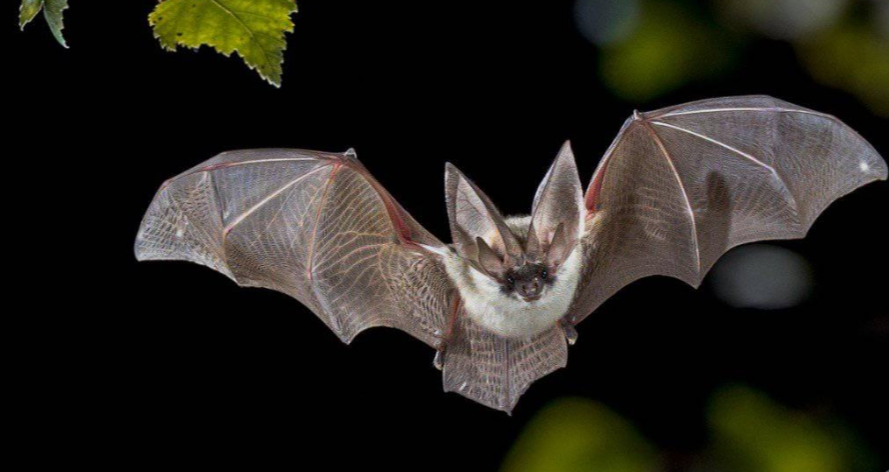
The types of bats include more than 1,400 species, which together make up about one in five of all mammals. Bats are the only mammals capable of true flight, and they live on every continent except Antarctica. They range from the bumblebee-sized Kitti’s hog-nosed bat, weighing about 2 grams, to giant flying foxes with wingspans of more than 5 feet. Scientists traditionally split them into large, mostly fruit-eating megabats and smaller, mostly insect-eating microbats.
Most microbats find their way and catch prey with echolocation, producing high-pitched calls and listening to the echoes. Many megabats, such as the giant golden-crowned flying fox, rely instead on keen eyesight and a sharp sense of smell. Bats roost in caves, trees, buildings, bridges, rolled-up leaves and even tents they build themselves. Some hibernate through winter, and others migrate hundreds of miles.
Bats do enormous good for people and ecosystems. They pollinate cacti, agaves and bananas, spread seeds across forests and eat huge numbers of insects. In the United States, bats are believed to give agriculture a boost worth about $3 billion a year, and a single Texas colony has been valued at more than $3 million annually in pest control.
Unfortunately, many bats are in trouble. White-nose syndrome, a fungal disease first found in 2006, has affected 12 North American species and killed millions of bats. Wind turbines, habitat loss and hunting threaten others. Here are 35 types of bats, along with where each one is found.
1. Giant Golden-Crowned Flying Fox
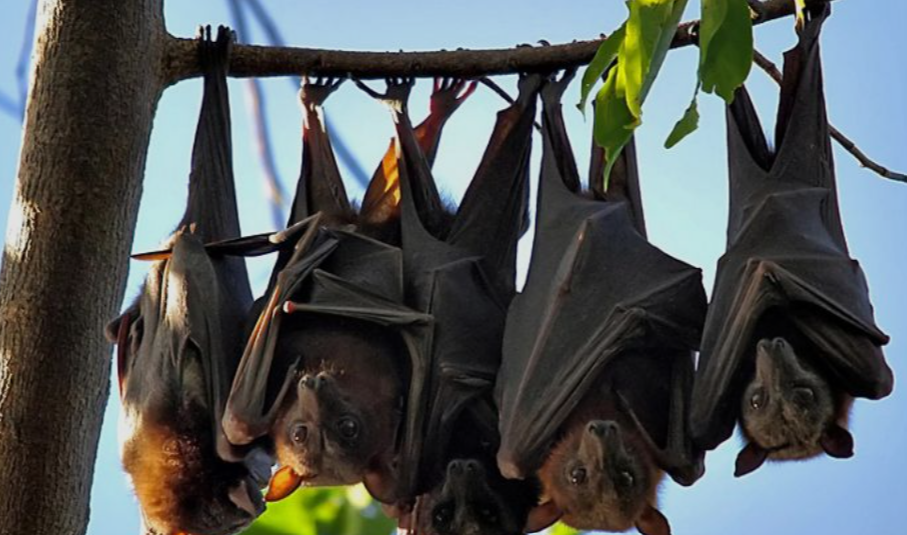
The giant golden-crowned flying fox is possibly the largest bat in the world, with a wingspan of 1.5 to 1.7 meters, or about 5 to 5.6 feet. It weighs up to about 3 pounds and is named for the golden fur on its head. It is a fig specialist that depends on eyesight and smell instead of echolocation. It roosts in trees, often with other flying foxes.
It lives only in the Philippines, in mature primary and secondary forest. The species is endangered, with a population estimated at fewer than 20,000. Numbers fell by about 50 percent between 1986 and 2016, mainly because of hunting and habitat loss. It is hunted for bushmeat and sometimes captured for the pet trade, despite legal protection.
2. Indian Flying Fox
The Indian flying fox is one of the heaviest bats in the world, with a maximum weight of about 1.6 kilograms and a wingspan of up to 1.5 meters. It has a fox-like face, a brown body and a golden-orange mantle. It feeds on fruit, nectar and leaves. It spends the day hanging in noisy colonies.
It lives across South Asia, including India, Pakistan, Nepal, Bangladesh and Sri Lanka, roosting in tall trees near towns, temples and rivers. Colonies can number in the thousands. It is a known natural host of the Nipah virus, which has made it a subject of public health research. It remains common but is persecuted in some areas.
3. Grey-Headed Flying Fox
The grey-headed flying fox is Australia’s largest native bat, with a gray head, an orange-brown collar and a wingspan of about a meter. It eats nectar, pollen and fruit and is a vital pollinator of eucalyptus trees. It travels long distances in search of flowering trees. It roosts in large camps in trees.
It lives along the eastern coast of Australia, from Queensland to Victoria and South Australia, with well-known camps in cities such as Melbourne and Sydney. It is listed as vulnerable. Extreme heat events have killed thousands of animals, and habitat loss reduces its food supply. People often complain about the noise and smell of camps.
4. Straw-Colored Fruit Bat
The straw-colored fruit bat is a medium-sized megabat with a yellowish collar and a brown body. It forms some of the largest gatherings of mammals on Earth. Its migrations spread millions of seeds across central Africa, which helps regenerate forests. It roosts in trees in dense colonies.
It lives across sub-Saharan Africa and parts of the Arabian Peninsula. Each year, millions of bats gather in Zambia’s Kasanka National Park, drawn by a seasonal fruit boom. Hunting for food and habitat loss have caused declines in some areas. It is listed as near threatened.
5. Egyptian Fruit Bat
The Egyptian fruit bat is a small, brown megabat with large eyes and a short snout. It is unusual because it can echolocate by clicking its tongue, which most fruit bats cannot do. It feeds on fruit and nectar and sometimes flies long distances to find food. It roosts in caves and ruins.
It lives in Africa and the Middle East, in cave systems, mines and old buildings. It is common in many parts of its range. Farmers sometimes persecute it as an orchard pest. It lives in colonies that can number in the thousands.
6. Hammer-Headed Bat
The hammer-headed bat is the largest bat in Africa, with a wingspan of about 90 centimeters. Males have a huge, horse-like head and a massive voice box. They gather in groups called leks at night and honk loudly to attract females. Females are much smaller and have fox-like faces.
It lives in the rainforests and swamps of central and West Africa. It roosts in trees along rivers and feeds on figs and other fruit. It is hard to see, since it is shy and rarely approached. It is considered widespread but is hunted for meat in some places.
7. Little Brown Bat
The little brown bat is a small, glossy brown bat of North America, weighing only about 7 to 14 grams. It once was among the most common bats on the continent. It eats mosquitoes, moths and other insects, sometimes catching hundreds an hour. It can live for more than 30 years.
It lives across most of North America, roosting in buildings, trees and caves. White-nose syndrome has devastated hibernating colonies, with some sites losing about 97 percent of their bats. It is being evaluated for federal listing. Conservationists use bat boxes to help provide roosts.
8. Big Brown Bat
The big brown bat is a large, chestnut-brown bat with a broad face. It is one of the most widespread bats in the Americas. It feeds mostly on beetles, including farm pests. Scientists found it uses Earth’s magnetic field to orient itself.
It lives across North America and into the Caribbean and northern South America, roosting in buildings, bridges, trees and caves. It hibernates in winter. It has been hit less hard by white-nose syndrome than little brown bats, and may be filling their ecological role. It is a common bat in cities.
9. Mexican Free-Tailed Bat
The Mexican free-tailed bat is a medium-sized, red-brown to dark gray bat with broad, forward-pointing ears and a tail that extends beyond its membrane. It is among the fastest-flying bats. It forms colonies that are among the biggest gatherings of mammals on Earth. It feeds on moths and other insects.
It lives across the southern half of the United States and south into Mexico, roosting in caves, under bridges and in buildings. Texas hosts huge colonies, including the one at Bracken Cave and Austin’s Congress Avenue Bridge. A single Texas colony has been valued at over $3 million a year for pest control. Wind turbines are an emerging threat.
10. Hoary Bat
The hoary bat is a large, frosty-furred bat with white-tipped brown hairs. It is a migratory tree bat that roosts alone in foliage. It is a strong flier that feeds on moths. Females and males migrate to different places.
It lives across much of North and South America, including a subspecies in Hawaii that is the islands’ only native land mammal. It is one of the three species that account for about 75 percent of bat deaths at wind turbines. It is often found in forest and open country. Scientists are testing ways to reduce collisions.
11. Eastern Red Bat
The eastern red bat has brick-red or rusty fur, with white shoulder patches, and females are slightly frosted. It is a tree-roosting bat that hangs among leaves, looking like a dead leaf. It feeds heavily on moths. It is a fast, moderately maneuverable flier.
It lives across eastern North America and Bermuda, in forests and woodland edges. It migrates south in fall. It has the second-highest mortality from wind turbines of any bat. The International Union for Conservation of Nature lists it as least concern, though numbers may be falling.
12. Indiana Bat
The Indiana bat is a small, medium-brown bat with a pinkish nose. It hibernates in dense clusters in a few caves. It raises pups in colonies under the loose bark of trees in summer. It feeds on moths, beetles and other insects.
It lives in the eastern and midwestern United States, including Indiana, Kentucky and Missouri. It was listed as endangered in 1973. White-nose syndrome has killed large numbers and set it back after a period of stabilization. Protecting cave hibernation sites is central to recovery.
13. Gray Bat
The gray bat is one of the few North American bats that lives in caves all year, including summer. It has uniformly gray fur. It hibernates in huge colonies in a few caves. It feeds on insects over rivers and lakes.
It lives in the southeastern and midwestern United States, mainly in limestone cave regions. It was listed as endangered in 1976 after disturbance of its few caves. Its recovery is considered an Endangered Species Act success, with about 350,000 hibernating in one Mammoth Cave site in 2019. White-nose syndrome remains a threat.
14. Northern Long-Eared Bat
The northern long-eared bat is a small, brown bat with long ears that stick out past its nose when folded forward. It roosts under bark and in tree hollows in summer. It gleans insects off leaves in forest. It was once the most commonly caught bat in many eastern parks.
It lives across 37 states in the eastern and central United States and across Canada. White-nose syndrome has caused estimated declines of 97 to 100 percent in affected populations. It was reclassified as endangered in late 2022. Wind turbines and forest loss add to the pressure.
15. Tricolored Bat
The tricolored bat is a tiny, yellowish-brown bat with hairs that are dark at the base, pale in the middle and dark at the tip. It is also called the eastern pipistrelle. It flies with a fluttering, erratic pattern. It eats small insects.
It lives across the eastern United States, roosting in trees and hibernating in caves and mines. It has been hit hard by white-nose syndrome. The US Fish and Wildlife Service proposed listing it as endangered in 2022. Its status should be checked for updates.
16. Townsend’s Big-Eared Bat
Townsend’s big-eared bat has extremely long, flexible ears that are nearly half its body length, and two fleshy lumps on its snout. It curls its ears like ram’s horns while hibernating. It flies slowly enough to appear to hover. Moths make up as much as 90 percent of its diet.
It lives in western Canada, the western United States and Mexico. It needs large caves, mines and old buildings to roost. It is very sensitive to human disturbance. Two subspecies, the Ozark and Virginia big-eared bats, are federally endangered.
17. Pallid Bat
The pallid bat is a large, pale bat with creamy yellow fur and huge ears. It is unusual because it often hunts on the ground, listening for the footsteps of prey. It catches scorpions, crickets and grasshoppers. It is tolerant of stings from many scorpions.
It lives in the arid regions of the western United States and Mexico, in deserts, rocky canyons and grasslands. It roosts in rock crevices, mines and buildings. Its slow, low flight makes it easy to spot at dusk. It is common in some desert regions.
18. Spotted Bat
The spotted bat is one of the most striking bats in North America, with a black back marked with three white spots and a white belly. It has enormous pink ears that are about as long as its body. It is rare and secretive. It eats mostly moths.
It lives in western North America, in cliffs and canyons of the arid West. It roosts in rock crevices on high cliffs. Its loud echolocation calls can be heard by people. It is rarely seen and not well studied.
19. Lesser Long-Nosed Bat
The lesser long-nosed bat is a nectar-feeding bat with a long snout, a long tongue and a small leaf-shaped nose. It weighs only about 15 to 29 grams and has a wingspan of about 14 inches. It pollinates saguaro cactus and agave. It migrates along a nectar trail of about 600 miles.
It lives in the Sonoran Desert of Arizona and New Mexico and migrates to Mexico for winter. It was listed as endangered in 1988, when only about 1,000 remained. It became the first bat species to be removed from the endangered list in 2018 after a major recovery, helped by efforts to protect agave and roost sites. Warming may reduce overlap with the plants it relies on.
20. Common Pipistrelle
The common pipistrelle is one of Europe’s smallest bats, weighing about 5 grams. It is dark brown with a short, rounded face. It is a fast, flickering flier, often seen around streetlights. It eats midges, flies and other small insects.
It lives across Europe, including the UK, in woodland, farmland, gardens and towns. It roosts in buildings, trees and bat boxes. It is widespread in the UK and was removed from the priority species list in 2007. It is the bat most people see in their gardens.
21. Greater Horseshoe Bat
The greater horseshoe bat is a large European bat with a horseshoe-shaped nose-leaf. It hangs freely from cave ceilings, wrapped in its wings. It emits its echolocation calls through its nose. It eats large beetles and moths.
It lives in southern Europe, North Africa and Asia, and it is rare in the UK, where the New Forest is a stronghold. The loss of roost sites and feeding areas are the biggest threats. It depends on old caves, mines and buildings. Conservation efforts focus on protecting roosts.
22. Noctule
The noctule is a large, golden-brown European bat that flies high and fast. It is often one of the first bats to emerge at dusk. It hunts in open sky for beetles and moths. It roosts in tree holes.
It lives across Europe and Asia, in woodland, parkland and over water. It is a priority species in the UK because of declines. Its numbers have dropped as old trees have been lost. Bat boxes can help provide roosts.
23. Greater Mouse-Eared Bat
The greater mouse-eared bat is the largest bat in the UK, with a body length of up to 8 centimeters and broad wings. It can live for more than 35 years. It eats big beetles, caterpillars and crickets, often caught on the ground. Maternity colonies roost in large roofs and caves.
It lives throughout much of Europe. It was declared extinct in the UK in 1990, after the last known male failed to return to its roost, although a few individuals have turned up since. It is classified as critically endangered in Britain. Its decline is linked to loss of roosts and habitat.
24. Brown Long-Eared Bat
The brown long-eared bat has ears nearly as long as its body. It can fold them back under its wings when resting. It is a gleaning bat that picks insects from leaves. It weighs only about 8 grams.
It lives across most of Europe, except southern Spain, Greece and Italy, and in most of the UK. It roosts in attics, barns and trees. It is a priority species in the UK because of declines. Its quiet echolocation makes it hard to detect.
25. Barbastelle
The barbastelle is a dark, flat-faced bat with wide ears that meet over the forehead. It specializes in eating moths. It uses very quiet echolocation, which helps it sneak up on prey. It is one of the rarest bats in Europe.
It lives in old woodland in Europe, including the UK, where it is classified as vulnerable. The New Forest is one of its few strongholds. It roosts under loose bark and in tree cracks. Loss of old trees and pesticides threaten it.
26. Common Vampire Bat
The common vampire bat is the best-known blood-feeding bat. It has heat-sensing pits on its nose to find blood vessels, and its saliva stops blood from clotting. It feeds on the blood of cattle, horses and wild animals. Roost mates share blood meals with hungry neighbors.
It lives across Latin America, from Mexico to Chile and Argentina, in caves, hollow trees and buildings. It is common in ranching country. It can spread rabies to livestock. Its saliva has inspired medical research.
27. Fringe-Lipped Bat
The fringe-lipped bat has fleshy bumps on its chin and lips, and it hunts frogs. It can tell poisonous frogs from harmless ones by their calls. It also eats insects, lizards and fruit. It listens for the mating calls of frogs and katydids.
It lives in the tropical lowland forests of Central and South America. It roosts in hollow trees and caves. It is stable and widespread. It is a popular subject of sensory research.
28. Greater Bulldog Bat
The greater bulldog bat, also called the fishing bat, has a dog-like face with drooping lips. It has long legs and sharp claws to snatch fish from the water. It detects ripples with echolocation. It also eats insects.
It lives in lowland Latin America and the Caribbean, near lakes, rivers and coasts. It roosts in hollow trees and caves. It can catch dozens of small fish in a night. It is one of the few bats that fishes.
29. Spectral Bat
The spectral bat is the largest bat native to the Americas, with a wingspan of about a meter. It is carnivorous and hunts birds, rodents and other bats. It was once mistaken for a vampire bat, and it is also called the false vampire bat. It roosts in hollow trees in family groups.
It lives in the rainforests of Central and South America. It needs large trees. It is rare and sensitive to forest loss. It is one of the most formidable bats.
30. Ghost Bat
The ghost bat is Australia’s only carnivorous bat and the largest microbat on the continent. It weighs about 74 to 144 grams and has a wingspan of up to 60 centimeters. It eats large insects, frogs, reptiles, birds and small mammals, and even other bats. It is named for its pale, ghostly fur.
It lives in northern Australia, with three isolated populations in the Pilbara and Kimberley, the Top End and Queensland. It is vulnerable and has vanished from central Australia. Mining, disturbance of caves and barbed wire fences are threats. It roosts in caves and old mine shafts.
31. Kitti’s Hog-Nosed Bat
Kitti’s hog-nosed bat, also called the bumblebee bat, is the smallest bat and one of the smallest mammals in the world. It measures about 29 to 33 millimeters long and weighs about 2 grams. It has a piglike nose. It was not discovered by science until 1974.
It lives in limestone caves in western Thailand and southeastern Myanmar. It leaves its roost for only about 30 minutes in the evening and 20 minutes at dawn. About 6,600 are believed to exist. It is listed as near threatened.
32. Honduran White Bat
The Honduran white bat is a tiny, snow-white bat with bright yellow ears and a yellow nose-leaf. It measures only about 1.75 inches. It is one of only six known white bat species. It eats fruit.
It lives in the lowland rainforests of Honduras, Nicaragua, Costa Rica and Panama. It builds a tent by biting the veins of a large leaf so it folds down. Sunlight filtered through the leaf gives the bats a green tint that hides them from predators. It is threatened by forest loss.
33. Spix’s Disc-Winged Bat
Spix’s disc-winged bat has sticky suction discs on its wrists and ankles. It uses them to cling to smooth, rolled-up leaves. It roosts head up, unlike most bats. It is a small insect-eater.
It lives in the tropical forests of Central and South America. It roosts in the unfurling leaves of plants such as heliconia. It uses special calls to find roost mates. It is common but rarely seen.
34. Wrinkle-Faced Bat
The wrinkle-faced bat is a strange, small fruit bat with a deeply wrinkled face. Males can pull a flap of skin up over their face like a mask. It eats fruit. It roosts in trees.
It lives in the tropical forests of Central and South America. It is rarely seen and not well studied. It is considered rare but widespread. Its odd face remains a mystery to scientists.
35. Mariana Fruit Bat
The Mariana fruit bat, called fanihi in Chamorro, is a medium-sized flying fox of the western Pacific. It has a brown body with a golden-orange mantle. It eats fruit, flowers and leaves. It roosts in trees in colonies.
It lives on Guam and the Northern Mariana Islands, with three subspecies recognized. It has been hunted for food and has lost habitat. The US Fish and Wildlife Service has classified the Guam form as threatened. It is an important seed disperser for island forests.
Sources:
- Giant Golden-Crowned Flying Fox, Bat Conservation International
- Giant Golden-Crowned Flying Fox, Wikipedia
- Giant Golden-Crowned Flying Fox, Animalia
- U.S. Geological Survey Science Strategy to Address White-Nose Syndrome and Bat Health 2025–2029
- Bats: Endangered Species of Mammoth Cave, National Park Service
- NPS Great Lakes Bat Monitoring, National Park Service
- Northern Long-Eared Bat Reclassified as Endangered, U.S. Fish and Wildlife Service
- U.S. Bat Species Devastated by Fungus Now Listed as Endangered, CBS News
- White-Nose Syndrome News, The Wildlife Society
- Making the Sky Safer for Bats, Bat Conservation International
- Bats in Spring Valley, National Park Service
- Flight of the Night, Bat Conservation International
- Eastern Red Bat, Wikipedia
- Lesser Long-Nosed Bat, Pima County
- Townsend’s Big-Eared Bat, Truckee Meadows Parks Foundation
- Greater Mouse-Eared Bat, Bat Conservation Trust
- Greater Mouse-Eared Bat, People’s Trust for Endangered Species
- Are UK Bats Threatened?, Bat Conservation Trust
- Bats of the New Forest, New Forest National Park Authority
- Fringe-Lipped Bat, Encyclopaedia Britannica
- Spectral Bat, Wikipedia
- Ghost Bat Fact Card, WILD LIFE Sydney Zoo
- Ghost Bat, Northern Territory Government
- Kitti’s Hog-Nosed Bat, Wikipedia
- The Honduran White Bat, Critter Science
- Mariana Fruit Bat, Wikipedia