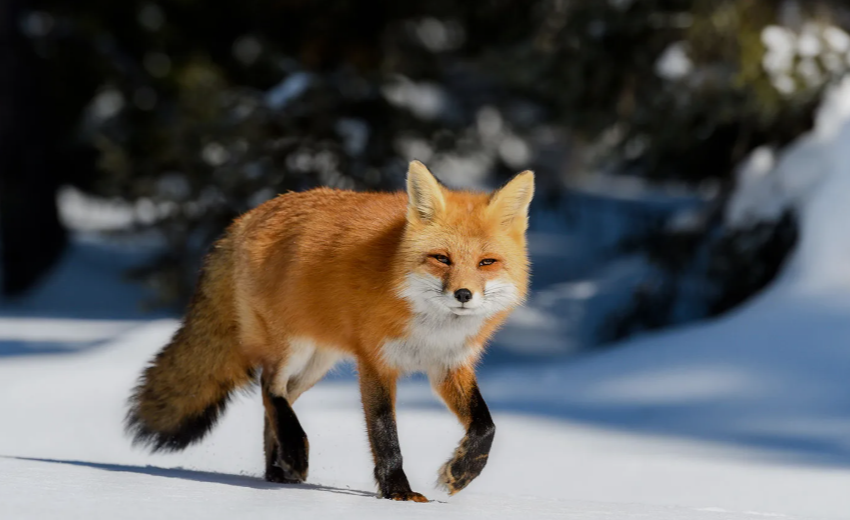
The animals that look like foxes include wild canids from five continents, several domestic dog breeds and a few unrelated creatures that borrowed the name. A true fox is easy to recognize, with a pointed muzzle, large upright ears, a slender body and a long, bushy tail. Many other animals share these features, either through family ties or because evolution produced similar shapes in similar habitats. Some are so convincing that people mistake them for the real thing.
The closest look-alikes are other members of the dog family, including jackals, coyotes and the false foxes of South America. Despite their names, the South American “foxes” are not true foxes. They are more closely related to wolves and jackals, and their fox-like looks come from convergent evolution. Several wolf-like canids, such as the Ethiopian wolf and the maned wolf, also wear a fox’s red coat.
Dogs are another big source of look-alikes. Spitz-type breeds in particular have the pointed faces, upright ears and fluffy tails of a fox, and some are even named after foxes. A few unrelated animals earn a place on the list too, like the flying fox, the brushtail possum and the fox squirrel, whose names or faces recall the real thing.
The 30 animals below range from true cousins to complete outsiders. Each description explains what makes it look like a fox and where it lives. As with any wildlife, enjoy them from a distance and never try to feed or handle them.
1. Coyote
The coyote is the animal most often confused with a fox in North America. It has a pointed muzzle, upright ears and a bushy tail, but it is larger, with males averaging 18 to 44 pounds. Its gray-brown coat and slender legs give it a lean, fox-like look. Older names include the prairie wolf and the brush wolf.
It lives across North America, in deserts, forests, farmland and cities. It fills much the same role as the golden jackal does in Eurasia, and one behavioral ecologist called it the American jackal. Michigan’s Animal Diversity Web catalogs it alongside the jackals. It is a highly adaptable omnivore that eats rodents, rabbits, fruit and carrion.
2. Golden Jackal
The golden jackal resembles a small wolf, but it has fox-like ears, a narrow skull and a pointed muzzle. Its fur is yellowish to tawny, shifting from pale cream in summer to darker tawny beige in winter. It has a more slender build, shorter legs and a shorter tail than a wolf. Many people think it looks like a large fox.
It lives across northern Africa, southeastern Europe, the Arabian Peninsula and South Asia, and it has 13 subspecies by some counts. It prefers arid, open country with grassland, brush and scrub. Researchers at Hungary’s Jackal Symposium note that it occupies a niche similar to the coyote’s. It is expanding northward in Europe, and it forms group howls that sound like eerie wailing.
3. Black-Backed Jackal
The black-backed jackal is a fox-like canid with a slender body, long legs and large ears. Its reddish-brown flanks are topped by a black, silver-flecked saddle that runs from the shoulders to the tail. It is smaller than the golden jackal. A trapped jackal makes a cackling sound much like a fox.
It lives in two separate parts of Africa, in southern and eastern regions, in savannas, woodlands, deserts and coastal areas. It is resourceful and adapts to a wide range of habitats. It is active mostly at dawn and dusk but can also hunt by day. Where it meets the side-striped jackal, it can drive that species out of open grassland.
4. Side-Striped Jackal
The side-striped jackal is a slender, gray-brown canid with a pale stripe along each flank bordered by black. Its tail has a distinctive white tip. It is slightly larger than the black-backed jackal. Its look is quieter and softer than that of its colorful cousin.
It lives in the moister habitats of central and southern Africa, such as wooded savannas, brushlands and marshes. It is the most omnivorous jackal, eating fruit, insects and small animals. Instead of howling, it makes an owl-like hoot. Large parts of its range have little population data.
5. Ethiopian Wolf
The Ethiopian wolf is often described as a wolf in fox clothing. It has a long muzzle, a rich red coat, white markings and a fox-like frame. DNA studies show it is more closely related to the gray wolf and the coyote than to any African canid. It also goes by names such as red jackal and Simien fox.
It lives only in the Ethiopian highlands, in seven isolated mountain ranges, hunting rodents in high-elevation heathlands. It is the most endangered canid in the world and Africa’s most endangered carnivore, listed as endangered. It lives in packs but hunts alone. Disease and habitat loss are its main threats.
6. Dhole
The dhole has a reddish-brown coat, a bushy dark tail and a fox-like face. It weighs 10 to 20 kilograms, which is far bigger than a fox. It is also known as the Asiatic wild dog, whistling dog or red dog. Its coloring is often what leads people to compare it to a large fox.
It lives across South, Southeast and Central Asia, in forests and grasslands. It is endangered, and its numbers are decreasing. It hunts in packs and whistles to keep in contact. Habitat loss and a shrinking prey base are major threats.
7. Maned Wolf
The maned wolf looks like a fox on stilts. It has a rich red coat, a dark mane and the longest legs of any canid, so it moves through tall grass with ease. Its markings resemble those of a fox, but it is neither a fox nor a wolf. It weighs 18 to 32 kilograms.
It lives in the tall grasslands and scrublands of central South America. It is solitary and hunts alone after sundown, and it is listed as near threatened. It eats small animals and a lot of fruit. Its closest living relative in recent history was the extinct Falkland Islands wolf.
8. Red Wolf
The red wolf has a reddish-brown coat, long legs and large ears, giving it a lean, fox-like look next to a gray wolf. It is smaller than the gray wolf, weighing 20 to 35 kilograms. Its fur is a blend of tawny, red, black and gray. It is one of the most endangered canids in the world.
It lives in the southeastern United States, with a reintroduced population in North Carolina. It is listed as critically endangered, though its numbers are rising. It hunts rabbits, rodents and deer. Breeding programs in captivity have kept it from extinction.
9. Dingo
The dingo is a medium-sized wild dog with a sandy, ginger or golden coat, pointed ears and a bushy tail. At a glance it resembles a large fox or a lean, slender dog. It lives in the wild without owners. Its face is narrower than most domestic dogs’.
It lives across Australia and in parts of Southeast Asia. It hunts kangaroos, rabbits and other animals, often alone or in small packs. It is Australia’s largest land predator. Its status as a separate species is debated.
10. Raccoon Dog
The raccoon dog is a stocky canid with a black face mask and thick fur, and it resembles a fox with a raccoon’s face. Unlike a raccoon, it has no tail rings. It is a true member of the dog family and is considered a distant relative of foxes. In Japan it is the tanuki of folklore.
It lives in Korea, Japan and eastern China and has become established in parts of Europe, where it is considered invasive. It is an omnivorous, nocturnal forager. It is the only canid that hibernates in cold areas. It eats fruit, insects, frogs and small animals.
11. Crab-Eating Fox
The crab-eating fox is a gray, fox-like canid of 5 to 8 kilograms. It has a pointed muzzle, dark legs and a bushy tail, so it looks like a typical fox. It is not a true fox, and it sits in its own genus. It is more at home in woodland than its look-alike cousins.
It lives in eastern and northern South America, with five subspecies. It prefers woodlands and forest edges. It eats crabs, fruit, insects and small animals. It is common in much of its range.
12. Culpeo
The culpeo, or Andean fox, is a large, reddish-gray South American canid with a pointed muzzle and a bushy, black-tipped tail. It is the second-largest native canid on the continent after the maned wolf. It looks like an oversized fox. It is sometimes called the Andean wolf.
It lives in a wide variety of habitats, including mountains, high grassland, desert, scrubby pampas and rainforest. It is listed as least concern. It is not a true fox but more closely related to wolves and jackals. It hunts rabbits, rodents and birds.
13. Pampas Fox
The pampas fox is a medium-sized false fox native to the South American grasslands. It has a gray-brown coat, a pointed face and a dark stripe along its tail. It is also called Azara’s fox. A typical home range covers about 260 hectares.
It lives in central and northern Argentina, Uruguay, eastern Bolivia, Paraguay and southern Brazil. It prefers open habitats, whereas the crab-eating fox favors woodland. It has even hybridized with domestic dogs in some cases. Its population trend is stable.
14. South American Gray Fox
The South American gray fox, or chilla, is a small, gray canid with large ears and a russet-fringed pelt. It is the most common of the false foxes. It weighs about 2.5 to 4 kilograms. It looks like a typical small fox.
It lives on both sides of the Andes in Argentina and Chile, in semi-arid habitats. It is an omnivore that eats fruit, birds, mammals, reptiles and carrion. Its diet changes with the seasons. It was once heavily hunted for its pelt.
15. Darwin’s Fox
Darwin’s fox is a small, dark gray false fox with short legs and a bushy tail. It is one of the rarest canids in the world. Charles Darwin recorded the species during his voyage. It looks like a stocky, dark fox.
It lives only in Chile, in the Valdivian coastal range, on Chiloé Island and in Nahuelbuta National Park. It lives mainly in temperate rainforests. It is critically endangered. Habitat loss and dogs are its main threats.
16. Sechuran Fox
The Sechuran fox, or Peruvian desert fox, is the smallest of the South American false foxes. It has a pale gray-buff coat, big ears and a bushy tail, which suit it to desert life. It looks very much like a miniature fox. It is a desert specialist.
It lives in the coastal deserts of Peru and Ecuador. It eats fruit, seeds, insects and small animals. It is not a true fox. It is a rarely studied species.
17. Hoary Fox
The hoary fox is a small, delicate canid with silver-gray fur and a bushy tail tipped with black. Its large ears and slender build give it an elegant look. It is a false fox native to Brazil’s savannas. It hunts at night.
Unlike other false foxes, its diet is made up mostly of invertebrates, particularly termites and beetles. It also eats fruit, birds and rodents on occasion. It lives in open grassland and cerrado. It has a small mouth and teeth to match its diet.
18. Falkland Islands Wolf
The Falkland Islands wolf, or warrah, was a fox-like canid that Darwin described as a wolf-like fox. The French called it the wolf-fox, and said it dug a burrow like a fox and had a bushier tail than a wolf. It was the only native land mammal of the Falkland Islands. It had little fear of people.
It was hunted for its fur and driven to extinction by 1876. DNA studies show its closest living relative is the maned wolf. Its name comes from a South American word for fox. It appeared on a Falkland Islands stamp for the Darwin bicentennial.
19. Shiba Inu
The Shiba Inu is arguably the most popular fox-like dog. It is the smallest of Japan’s native breeds, with a red coat, pointed ears and a curled tail. Owners often say they are asked whether their dog is a fox. It is independent, alert and stubborn.
It originated in Japan as a hunting dog. Red Shibas look so much like red foxes that people do double takes. It is a loyal companion but hard to train. It belongs to the Spitz family.
20. Finnish Spitz
The Finnish Spitz has a bright red-gold top coat, triangular ears and a boxy chest. When it points, it looks very much like a fox. It is a medium-sized, sturdy dog. It is considered one of the most fox-like breeds.
It comes from Finland, where it was bred to hunt. It is friendly and trainable but has high exercise needs. It is known for its bark. It is a good example of a hunting dog that looks like its prey.
21. Pomeranian
The Pomeranian looks like a tiny, fluffy fox. It has a pointed muzzle, small upright ears and a plume of a tail carried over its back. It is far smaller than a Shiba Inu or a Finnish Spitz. Certain colors, especially red and orange, look strikingly like a red fox.
It is a toy breed of the Spitz family. It is lively and bold, with a thick double coat. It makes an affectionate companion. Despite its small size, it has a big personality.
22. Pembroke Welsh Corgi
The Pembroke Welsh Corgi is a small, low-slung dog with a long, foxy snout and large, upright ears. It is one of the few British dogs that look like a fox. The breed traces back to Wales and as far as 1107 AD. It descended from the Spitz family.
It was used as a cattle herder, nipping at heels. It is smart and energetic. It is distinct from the Cardigan Welsh Corgi. It remains a popular companion dog.
23. Alaskan Klee Kai
The Alaskan Klee Kai is a miniature Husky with upright ears, a dense coat and a plush tail. The red-and-white coat looks most like a fox. Its name means “little dog.” It comes in toy, miniature and standard sizes, with the toy up to 13 inches tall and under 9 pounds.
It was developed as a companion-sized version of the Husky, descended from native Alaskan dogs. It is active, smart and reserved with strangers. It needs plenty of exercise. It is a fairly new and rare breed.
24. Volpino Italiano
The Volpino Italiano is a small, fluffy Italian dog whose name means “little fox.” It is about 30 centimeters tall and weighs 11 to 14 pounds. Most are white, so they look more like Arctic foxes than red foxes. It has a pointed muzzle and a plumed tail.
It is a Spitz relative that was once popular in Italy. It is found mostly in Italy, the UK and Scandinavia. It is lively and alert. It makes a good watchdog.
25. Swedish Vallhund
The Swedish Vallhund is a sturdy, short-legged dog with a foxy face and upright ears. It stands 11 to 14 inches tall. It looks like a corgi with a fox’s head. It is related to the Icelandic sheepdog and the Norwegian Buhund.
It is a Viking-era herding dog from Sweden used to drive cattle. It lives 12 to 15 years. It has a catlike hunting style and does well in canine sports. It is intelligent and playful.
26. Flying Fox
The flying fox is a large fruit bat with a fox-like face and reddish fur. Early observers noted that its head looks like a fox’s and that it is covered in reddish hair, which is how it got its name. It has a wingspan of about 1 meter or more in many species. In the evening, flocks fly over valleys.
It lives in Asia, Africa, Australia and the Pacific islands. Species such as the grey-headed flying fox live in Australia. It feeds on fruit, nectar and pollen. It is an important pollinator and seed disperser.
27. Red Panda
The red panda is a rusty-red, cat-sized climber with a white-marked face and a bushy ringed tail. It is sometimes called the firefox. It looks like a fox crossed with a raccoon. It is not related to the fox or the giant panda.
It lives in the forests of the Himalayas and nearby mountains. It eats mostly bamboo. There are two species, the western and the eastern red panda. It is endangered.
28. Common Brushtail Possum
The common brushtail possum has pointed ears, a pointed muzzle and a bushy tail. Its scientific name means “little fox,” and males can be reddish at the shoulders. It weighs 1.2 to 4.5 kilograms. It is a marsupial, not a relative of the fox.
It is native to Australia and was introduced to New Zealand in the 1850s for the fur industry. There it became a major agricultural and conservation pest. It is nocturnal and semi-arboreal. It sometimes visits roofs and gardens.
29. Fox Squirrel
The fox squirrel is the largest tree squirrel in North America, weighing 2 to 3 pounds. It gets its name from its reddish-brown color, mask-like facial pattern and fox-like lope along the ground. Its fur color varies, with silvery-gray backs in the northeast and darker black-and-brown forms in the south. It has short, rounded ears.
It lives in the eastern and central United States, west to the Dakotas, Colorado and Texas. It prefers open deciduous and mixed forests. The Delmarva fox squirrel, a gray form, lives on the Eastern Shore. It is omnivorous and eats nuts, fruit and insects.
30. Akita
The Akita is a large, powerful Japanese dog with upright triangular ears, a curled tail and a fox-like face. Red Akitas look like a giant red fox. It is much bigger than a fox, with a thick, plush coat. It is often listed among the dogs that look like foxes.
It originated in Japan, where a figurine of an Akita is given to newborns as a symbol of happiness and long life. It is loyal but stubborn and hard to train. It is a good fit for patient owners. It is a member of the Spitz family.
Sources:
- Golden Jackal, DesertUSA
- Jackal Species, Habitat and Mythology, Study.com
- Does This Wild Dog Deserve Its Bad Reputation?, Discover Wildlife
- Jackal Facts, Animals Tribune
- What Is the Difference Between a Jackal and a Coyote?, Biology Insights
- Jackals, Whole Earth Education
- Studied Species, Hungarian University of Agriculture and Life Sciences, Jackal Symposium
- Dogs, Jackals and Wolves, Animal Diversity Web, University of Michigan
- Side-Striped Jackal, Wikipedia
- Black-Backed Jackal, Wikipedia
- Ethiopian Wolf Taxonomy and Genetics, Ethiopian Wolf Conservation Programme
- Ethiopian Wolf, Wikipedia
- Beautiful Wild Dogs of the World, Discover Wildlife
- Six Amazing Species of Wolf, Animalogic
- Canid Species and Population Status, PubMed Central
- List of Canids, Wikipedia
- South American Fox, Wikipedia
- The Six Species of South American Fox, WorldAtlas
- Pampas Fox, Wikipedia
- Culpeo, Discover Wildlife
- Pampas Fox, IUCN Canid Specialist Group
- Falkland Islands Wolf, Wikipedia
- Warrah, The Falkland Islands and South Atlantic
- Falkland Islands Wolf Baffled Darwin, The Conversation
- Dogs That Look Like Foxes, Trusted Housesitters
- Dog Breeds That Look Strikingly Like Foxes, A-Z Animals
- Top 10 Dog Breeds That Look Like a Fox, Wamiz
- Dogs That Look Like Corgis, Hepper
- Dogs That Look Like Foxes, Rover
- Common Brushtail Possum, Earth.com
- Glossary of Fox Terms, Wiktionary
- Fox Squirrel, Blackmouth Cur
- Fox Squirrel Species Profile, Mossy Oak
- Fox Squirrel, New Hampshire PBS