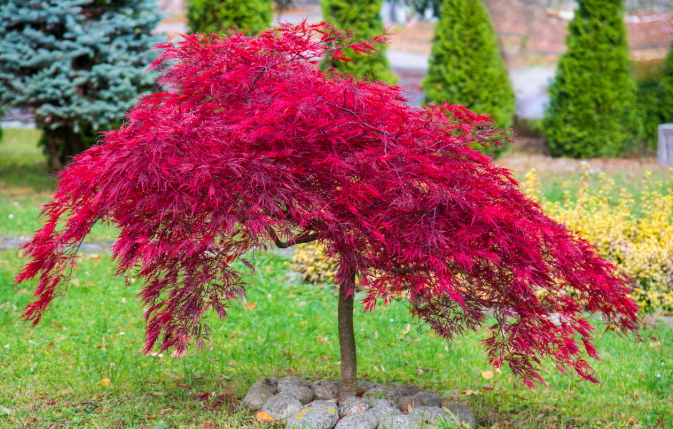
Finding a fast-growing tree for USDA Zone 4 can be a little more challenging than choosing one for warmer climates. Winters are cold, the growing season is relatively short, and some trees simply do not have enough time each year to put on the kind of growth they might achieve farther south. The good news is that there are still plenty of hardy trees capable of adding several feet of growth annually when they are planted in the right conditions.
Fast growth is particularly useful when you need shade, privacy, wind protection, or a larger landscape tree without waiting decades for the canopy to develop. However, speed should not be the only consideration. A tree that grows rapidly may have weaker wood, aggressive roots, a short lifespan, or a mature size that eventually overwhelms a small yard. Iowa State Extension notes that trees classified as fast-growing can sometimes be more susceptible to breakage during ice and other storms.
The following 28 trees are among the better fast-growing choices for Zone 4 landscapes. Growth rates are approximate and can vary considerably with soil, water, sunlight, cultivar, competition from grass, and the length of the growing season. Some may grow faster during their early years and slow down as they mature.
1. Hybrid Poplar
Approximate growth rate: 4–8 feet per year
Hybrid poplar is one of the fastest-growing trees suitable for cold climates. Different hybrids vary considerably, but some can add several feet of height each year once established. That makes them particularly useful when quick shade, screening, or wind protection is the main objective.
The trade-off is that speed often comes with weaker wood and a relatively shorter useful landscape life. Hybrid poplars also become very large, so they are better suited to acreage, large yards, and open spaces than small residential lots. Keep them well away from foundations, septic systems, underground utilities, and structures.
2. Eastern Cottonwood
Approximate growth rate: 3–6 feet per year
Eastern cottonwood (Populus deltoides) is famous for rapid growth and is hardy into Zone 4. Under good conditions, young trees can put on several feet of growth annually, particularly when planted in deep, fertile soil with adequate moisture.
The species eventually becomes enormous, with mature trees capable of reaching roughly 80–100 feet or more. That makes cottonwood a much better choice for large properties than small suburban yards. Its extensive roots and relatively brittle branches are additional reasons to give it plenty of room.
3. Silver Maple
Approximate growth rate: 3–5 feet per year
Silver maple (Acer saccharinum) is one of the fastest-growing maples and is hardy into Zone 3 or 4 depending on conditions. Its broad crown and relatively rapid growth have made it a traditional choice for homeowners looking for shade without a decades-long wait.
The tree can eventually become very large, and its shallow root system can interfere with lawns, sidewalks, and other landscaping. It also has relatively soft wood compared with slower-growing maples. If planted, give it plenty of space and avoid putting it directly beside structures or pavement. Extension guidance specifically identifies silver maple as one of the fastest-growing maples and notes that it needs room to develop properly.
4. American Sycamore
Approximate growth rate: 2–4 feet per year
American sycamore (Platanus occidentalis) is one of the largest deciduous trees that can grow in Zone 4. It develops an enormous trunk, broad spreading crown, and distinctive mottled bark that becomes increasingly attractive as the tree ages.
Iowa State Extension lists American sycamore as hardy from Zones 4 through 9 and describes its growth rate as moderate to fast. A mature sycamore can exceed 75 feet in height and width, so this is definitely a tree for a large landscape.
5. River Birch
Approximate growth rate: 1.5–3 feet per year
River birch (Betula nigra) is an excellent choice when you want relatively fast growth combined with attractive bark. The peeling bark develops shades of tan, cinnamon, and cream, giving the tree considerable winter interest after the leaves have dropped.
It is also unusually adaptable for a birch. River birch prefers moisture but can tolerate a range of soil types once established. Extension guidance describes it as a fast-growing native shade tree that can reach roughly 50–75 feet tall. In Zone 4, choose a hardy cultivar appropriate for the local climate.
6. Red Maple
Approximate growth rate: 2–3 feet per year
Red maple (Acer rubrum) combines reasonably fast growth with attractive fall color and good adaptability. It is one of the more versatile maple species and can grow in a wide variety of soils when moisture is adequate.
It is hardy through Zone 3 and is widely used as a shade tree. Extension information describes red maple as fast-growing and easy to establish, with a mature height commonly around 50–70 feet depending on conditions. Its ability to tolerate different soil conditions makes it especially useful for residential landscapes.
7. Green Ash
Approximate growth rate: 2–3 feet per year
Green ash (Fraxinus pennsylvanica) is a relatively fast-growing native tree that is extremely cold hardy. It can develop a tall trunk and broad crown, making it useful where a substantial shade tree is needed.
The major concern is emerald ash borer, which has devastated ash populations across much of North America. If you are considering green ash, investigate local pest pressure and whether resistant cultivars or alternative species are recommended in your area. Its growth potential is attractive, but pest resistance should be part of the decision.
8. American Elm
Approximate growth rate: 2–4 feet per year
American elm (Ulmus americana) is famous for its elegant vase-shaped canopy. A mature tree can create an enormous area of shade, with arching branches that rise over lawns, roads, and outdoor spaces.
American elm was historically one of the most important shade trees in North America, but Dutch elm disease changed that dramatically. If you want an elm, look for a cultivar selected for improved disease resistance. American elm is also included among the tree species used in cold-climate landscape and woodland recommendations.
9. Boxelder
Approximate growth rate: 2–4 feet per year
Boxelder (Acer negundo) is one of the toughest fast-growing trees for cold climates. It tolerates a range of soils and can establish quickly, particularly where moisture is available.
Its relatively fast growth is its biggest attraction, but it is not always the most refined landscape tree. Branches can be brittle, and its structure may become irregular. It is better suited to naturalized areas, large properties, and restoration projects than formal gardens.
10. Quaking Aspen
Approximate growth rate: 2–4 feet per year
Quaking aspen (Populus tremuloides) is one of North America’s most cold-hardy trees and is capable of relatively rapid growth when conditions are favorable. Its rounded leaves tremble in the slightest breeze, creating the characteristic shimmering effect that gives the species its name.
Aspen is particularly attractive when planted in groups or naturalized settings. However, it can spread through root suckers and may not be ideal for a small manicured yard. It generally performs best in full sun and reasonably moist soil.
11. Bigtooth Aspen
Approximate growth rate: 2–3 feet per year
Bigtooth aspen (Populus grandidentata) is another fast-growing poplar suited to cold climates. Its leaves are larger and more coarsely toothed than those of quaking aspen, while the tree develops a relatively open crown.
It can establish quickly following disturbance and is useful for naturalized landscapes and woodland edges. Like other aspens, it can reproduce through root suckers, so give it room if you do not want new shoots appearing around the planting area.
12. Balsam Poplar
Approximate growth rate: 2–4 feet per year
Balsam poplar (Populus balsamifera) is a remarkably cold-hardy tree that naturally occurs across much of northern North America. It grows particularly well in moist soils and can become a substantial tree relatively quickly.
Its fragrant spring buds are one of its distinguishing characteristics. Because it can become large and may produce suckers, it is generally better for large properties, shelterbelts, and naturalized landscapes than tight urban spaces.
13. Black Willow
Approximate growth rate: 3–6 feet per year
Black willow (Salix nigra) is among the fastest-growing native trees when moisture is abundant. It is particularly well suited to stream banks, ponds, drainage areas, and other consistently moist sites.
The tree can develop a broad crown rapidly, but its wood is relatively weak and its roots aggressively seek moisture. That makes it unsuitable for planting close to foundations, septic systems, water lines, or paved areas. Use it where rapid growth and erosion control are more important than compact landscape form.
14. Paper Birch
Approximate growth rate: 1.5–2.5 feet per year
Paper birch (Betula papyrifera) is one of the most recognizable cold-climate trees, thanks to its bright white peeling bark. It is exceptionally hardy and can grow successfully throughout much of Zone 4.
Although it is not as fast as cottonwood or willow, it can establish at a useful pace when moisture and soil conditions are favorable. Paper birch is especially attractive when planted in small groups rather than as a single specimen.
15. Black Locust
Approximate growth rate: 3–4 feet per year
Black locust (Robinia pseudoacacia) is one of the fastest-growing hardwood trees suitable for Zone 4. Its fragrant white flowers in late spring are attractive to bees and other pollinators, while the tree’s pinnate leaves give the canopy a light, airy texture.
Black locust is extremely tough once established, but it can spread aggressively through root suckers and shoots. It is best used where its tendency to spread is manageable. Avoid planting it directly beside carefully maintained flower beds or small lawns.
16. Thornless Honeylocust
Approximate growth rate: 2–3 feet per year
Thornless honeylocust (Gleditsia triacanthos var. inermis) is a better-behaved landscape choice than many extremely fast-growing trees. Its small leaflets create filtered shade, allowing grass to grow beneath the canopy more successfully than under very dense shade trees.
Choose a thornless, preferably seedless cultivar for residential landscapes. Honeylocust tolerates a variety of soil conditions and is generally a durable choice when given adequate space. Iowa State’s growth comparisons place thornless honeylocust among moderately fast-growing landscape trees.
17. Northern Catalpa
Approximate growth rate: 2–3 feet per year
Northern catalpa (Catalpa speciosa) is an unusual and attractive tree with enormous heart-shaped leaves, white flowers, and long bean-like seed pods. It can grow surprisingly quickly during its early years.
The tree can eventually reach 50–70 feet tall, so it needs more room than its young nursery size suggests. The large leaves and seed pods can also create considerable seasonal litter, making it more appropriate for open lawns and naturalistic landscapes than areas immediately beside patios.
18. Tulip Tree
Approximate growth rate: 2–3 feet per year
Tulip tree (Liriodendron tulipifera) is one of the tallest eastern North American hardwoods and can grow relatively quickly when planted in deep, fertile soil. Its unusual leaves and tulip-shaped flowers make it a handsome specimen tree.
Zone 4 is near the colder edge of its range, so site selection matters. A sheltered location with adequate moisture and good soil can improve performance. This is a tree for large properties because mature specimens can eventually exceed 80 feet in height.
19. Eastern White Pine
Approximate growth rate: 1.5–3 feet per year
Eastern white pine (Pinus strobus) is an excellent evergreen choice for Zone 4. It can produce relatively rapid growth once established and provides year-round screening, wind protection, and habitat.
Young trees can be especially useful for creating privacy because their evergreen foliage remains attractive throughout winter. However, mature white pines can become extremely tall, so they should not be planted directly beneath utility lines or immediately beside a house.
20. Norway Spruce
Approximate growth rate: 1.5–2 feet per year
Norway spruce (Picea abies) is a dependable evergreen for cold climates and is often used for windbreaks, screening, and large-scale plantings. It maintains a dense pyramidal form as it matures.
It is not among the fastest trees on this list, but its consistent growth and evergreen foliage make it valuable. Norway spruce is especially useful where you want a living screen rather than just summer shade.
21. White Spruce
Approximate growth rate: 1–2 feet per year
White spruce (Picea glauca) is extremely cold hardy and can handle the winter conditions of Zone 4 with ease. It eventually forms a tall, conical evergreen tree capable of providing excellent year-round screening.
Growth is moderate rather than spectacular, particularly in poor soils or dry conditions. Nevertheless, its reliability makes it a better long-term choice than some extremely fast-growing but weaker trees.
22. Tamarack
Approximate growth rate: 1.5–2 feet per year
Tamarack (Larix laricina) is unusual because it is a deciduous conifer. Its soft needles appear fresh green in spring and summer before turning golden and dropping in autumn.
It is exceptionally cold hardy and particularly well adapted to moist soils. Tamarack is useful when you want a conifer-like tree but do not necessarily need year-round foliage. It is also included among recommended trees for northern climates.
23. Kentucky Coffeetree
Approximate growth rate: 1.5–2.5 feet per year
Kentucky coffeetree (Gymnocladus dioicus) is a tough native tree capable of handling cold winters and a range of difficult urban conditions. Its large compound leaves create a relatively open canopy that provides useful summer shade without becoming excessively dense.
Young trees may grow moderately quickly once established. The species can eventually reach 60–75 feet, so it should be given plenty of room. Its distinctive branching structure also gives it strong winter interest after the leaves fall.
24. Hackberry
Approximate growth rate: 1.5–2.5 feet per year
Hackberry (Celtis occidentalis) is not an exceptionally fast tree, but it earns a place on this list because of its durability. It tolerates difficult urban conditions and a wide range of soils better than many more delicate species.
Mature trees can reach approximately 50–75 feet. Their rough bark, rounded crowns, and small fruits give them interest throughout the year. Extension recommendations list hackberry among adaptable trees for cold-climate landscapes.
25. Northern Red Oak
Approximate growth rate: 2–3 feet per year
Northern red oak (Quercus rubra) is an excellent choice when you want a relatively quick-growing tree that can also become a long-lived shade tree. It develops a broad crown and produces attractive red to russet fall color.
It is slower than cottonwood, willow, or silver maple, but its stronger long-term landscape value can make the extra waiting worthwhile. Give it deep, well-drained soil and plenty of room for the mature canopy.
26. Pin Oak
Approximate growth rate: 2–3 feet per year
Pin oak (Quercus palustris) is one of the faster-growing oaks and is hardy into Zone 4. It develops a distinctive pyramidal crown when young and eventually becomes a large shade tree.
Pin oak generally prefers moist, acidic soil and can struggle in highly alkaline conditions. Its lower branches may persist for years, giving the tree a distinctive layered appearance. It is best planted where the mature tree will have plenty of horizontal space.
27. Dawn Redwood
Approximate growth rate: 2–3 feet per year
Dawn redwood (Metasequoia glyptostroboides) is one of the most unusual trees for a Zone 4 garden. It looks like an evergreen conifer during the growing season but is actually deciduous, dropping its soft, feathery needles in autumn.
It can grow rapidly when young and eventually become a very large, impressive tree. A sunny site with adequate moisture will produce the best results. Because mature trees can become extremely tall, dawn redwood belongs on large properties rather than compact lots.
28. Bur Oak
Approximate growth rate: 1.5–2.5 feet per year
Bur oak (Quercus macrocarpa) is not the fastest tree on this list, but it is one of the most durable. It is exceptionally cold hardy, tolerates relatively dry conditions once established, and can eventually become an enormous shade tree.
Its massive leaves and large acorns give it a distinctive appearance. Bur oak is an excellent choice when long-term durability matters more than getting the absolute fastest possible growth. It is also listed among recommended northern landscape trees.
Fast-Growing Zone 4 Trees at a Glance
| Tree | Approximate annual growth |
|---|---|
| Hybrid Poplar | 4–8 ft |
| Eastern Cottonwood | 3–6 ft |
| Black Willow | 3–6 ft |
| Silver Maple | 3–5 ft |
| Black Locust | 3–4 ft |
| American Sycamore | 2–4 ft |
| Quaking Aspen | 2–4 ft |
| Balsam Poplar | 2–4 ft |
| Boxelder | 2–4 ft |
| American Elm | 2–4 ft |
| River Birch | 1.5–3 ft |
| Red Maple | 2–3 ft |
| Thornless Honeylocust | 2–3 ft |
| Northern Catalpa | 2–3 ft |
| Tulip Tree | 2–3 ft |
| Eastern White Pine | 1.5–3 ft |
| Northern Red Oak | 2–3 ft |
| Pin Oak | 2–3 ft |
| Dawn Redwood | 2–3 ft |
| Bigtooth Aspen | 2–3 ft |
| Shumard-style hardy oak selections | — |
| Kentucky Coffeetree | 1.5–2.5 ft |
| Hackberry | 1.5–2.5 ft |
| Bur Oak | 1.5–2.5 ft |
| Paper Birch | 1.5–2.5 ft |
| Norway Spruce | 1.5–2 ft |
| White Spruce | 1–2 ft |
| Tamarack | 1.5–2 ft |
Note: Growth rates are approximate ranges under favorable conditions. They should not be interpreted as guaranteed annual increases. Published growth rates are frequently based on good growing conditions, and actual performance can be substantially slower in compacted, dry, nutrient-poor, or heavily shaded locations.
Which Is the Fastest-Growing Tree for Zone 4?
If pure speed is your priority, hybrid poplar, eastern cottonwood, black willow, silver maple, and black locust are among the strongest candidates.
Hybrid poplar can be especially impressive when planted on a good site, while cottonwood and willow can produce exceptional growth where moisture is plentiful. Black locust can also put on rapid growth, particularly when young.
But the fastest tree is not automatically the best tree. Fast-growing species often have weaker wood, shorter lifespans, aggressive roots, or other characteristics that can become liabilities later.
Best Fast-Growing Trees for Shade
If your main goal is to create shade, consider:
- Silver maple
- American sycamore
- Red maple
- American elm
- Northern catalpa
- Northern red oak
- Pin oak
- Hybrid poplar
- Eastern cottonwood
Silver maple and sycamore can produce particularly impressive canopies, but both eventually become very large. Red maple and some elm cultivars may be more practical for residential landscapes.
Best Fast-Growing Evergreen Trees for Zone 4
If you want year-round screening rather than deciduous summer shade, the strongest choices include:
Eastern white pine is one of the most useful options because of its relatively rapid growth and tall, graceful form.
Norway spruce provides dense evergreen screening and is particularly useful for windbreaks.
White spruce is extremely cold hardy and dependable, although it generally grows more slowly than white pine.
For large properties, a carefully planned combination of evergreen and deciduous trees can provide both winter screening and summer shade.
Fast-Growing Trees for Small Zone 4 Yards
Not every fast-growing tree is appropriate for a small yard. Eastern cottonwood, American sycamore, hybrid poplar, tulip tree, and dawn redwood can eventually become enormous.
For a more modest property, consider:
- Red maple
- River birch
- Thornless honeylocust
- Hackberry
- Kentucky coffeetree
- Northern red oak
Even these trees need adequate space. Before planting, check the expected mature height and canopy width rather than judging the tree by the size of the container at the nursery.
How to Make Trees Grow Faster in Zone 4
The short growing season means that establishment is especially important. A tree that spends several years struggling with drought, competition, or poor soil may never achieve the growth rate listed in a nursery catalog.
Start by selecting a species suited to your specific site. Soil type, drainage, exposure, wind, and available sunlight all influence performance. Trees that tolerate shade are not necessarily trees that grow fastest in shade; most trees achieve their best growth with adequate sunlight.
Water newly planted trees consistently during establishment, particularly during dry periods. Apply mulch over the root zone to help conserve moisture, but keep mulch away from direct contact with the trunk.
Avoid trying to force growth with excessive fertilizer. Healthy root development is more important than producing a flush of weak top growth.
Are Fast-Growing Trees More Likely to Break?
Sometimes, yes.
Fast growth can mean softer wood or weaker branch structure in some species. This is one reason a tree that looks fantastic during its first 10 years may eventually require more pruning or become more vulnerable during ice storms and high winds.
This does not mean you should avoid fast-growing trees altogether. It simply means that location matters. Plant weaker-wooded species away from houses, garages, power lines, driveways, and frequently used outdoor areas.
For example, silver maple can provide excellent shade but needs room because of its shallow roots and structural characteristics.
How Far Should Fast-Growing Trees Be Planted From a House?
There is no universal distance because mature tree size varies dramatically.
A tree that eventually reaches 30 feet wide needs considerably less space than one that can develop an 80-foot canopy. Large species such as cottonwood, sycamore, tulip tree, and hybrid poplar should therefore be given substantial clearance.
Before planting, consider both the mature canopy and the root system. Also look overhead for power lines and other utilities. Remember that a 10-foot nursery tree may look small today but could become one of the largest living structures on your property.
Fast Growth vs. Long-Term Value
There is a temptation to choose the tree with the biggest growth-rate number, particularly when you are impatient for shade. But a tree is a long-term investment, and the fastest option is not always the best.
A silver maple may shade a yard quickly, while a northern red oak may take longer but eventually provide a stronger, longer-lasting landscape presence. A hybrid poplar can produce impressive growth in only a few years, while an eastern white pine may take longer but provide evergreen screening for decades.
Think about what you want the tree to accomplish in 10, 20, and 50 years—not just what you want it to do next summer.
Final Thoughts
Zone 4 may have cold winters and a relatively short growing season, but that does not mean you have to wait decades for a substantial tree. Hybrid poplar, eastern cottonwood, silver maple, black willow, black locust, American sycamore, and several aspens can make surprisingly fast growth when planted under favorable conditions.
For a typical home landscape, however, it often makes more sense to choose a tree that balances growth rate with strength, mature size, longevity, and maintenance. Red maple, river birch, thornless honeylocust, northern red oak, hackberry, and eastern white pine can provide a better long-term compromise.
The most important rule is simple: choose a tree that is both fast enough for your needs and appropriate for the space you have. A tree that grows quickly but eventually outgrows its location can create years of maintenance problems. A slightly slower tree that fits its surroundings can become a valuable part of the landscape for generations.