
A philosophical problem is a fundamental question that resists settlement by empirical observation, technical calculation, or straightforward definition, precisely because it concerns the basic concepts and assumptions we use to make sense of experience, value, and knowledge in the first place. Where a scientific problem typically has a procedure that could, in principle, resolve it given enough data or the right experiment, a philosophical problem often persists even after all the relevant facts are in, because the difficulty lies in how those facts should be interpreted, weighed, or related to one another. Asking whether the mind is identical to the brain, whether an action can be truly free, or whether moral claims can be objectively true does not admit of a measurement that would settle the matter, since the very terms of the question are themselves what is in dispute.
Philosophical problems tend to arise at the points where our ordinary concepts, concepts that work well enough for everyday purposes, are pushed to their limits and begin to strain or contradict one another. The concept of identity works perfectly well when asking whether the car in the driveway is the one purchased last year, but it starts to wobble when every part of that car has since been replaced, or when the question becomes whether the person waking up tomorrow is truly the same person who fell asleep tonight. Philosophy typically begins not by inventing entirely new questions out of nothing, but by noticing that concepts already in wide use turn out, on close inspection, to be far less stable and well-defined than they first appeared, and by trying to work out what should be said once that instability is exposed.
A defining feature of many philosophical problems is that they generate a small number of well-developed, mutually incompatible positions, each backed by serious argument, rather than a single agreed-upon answer. The problem of free will, for instance, has produced compatibilists, hard determinists, and libertarians about the will, each offering internally coherent accounts that nonetheless directly contradict the others, and centuries of debate have sharpened rather than dissolved the disagreement. This does not mean philosophical problems are unanswerable in principle or that all positions are equally good; it means that resolving them requires sustained conceptual argument rather than a single decisive experiment, and that even a well-supported answer typically remains open to further challenge, refinement, or reinterpretation as new arguments and considerations are introduced.
Some thinkers have questioned whether so-called philosophical problems are genuine problems at all, rather than confusions generated by the misuse of language or by asking questions that secretly have no determinate answer. The logical positivists argued that many traditional philosophical disputes were meaningless because they could not be verified through observation, while Wittgenstein suggested that some philosophical puzzles dissolve once we see how ordinary language has been pulled out of its normal context and made to do work it was never suited for. Yet even sympathizers with this deflationary view tend to agree that at least some philosophical problems, concerning knowledge, morality, mind, and existence, address real and pressing difficulties in how humans understand themselves and their world, which is why these problems have persisted across cultures and centuries rather than fading once their supposed confusions were pointed out. What follows is a survey of twenty of the most enduring problems the philosophical tradition has grappled with.
The Mind-Body Problem
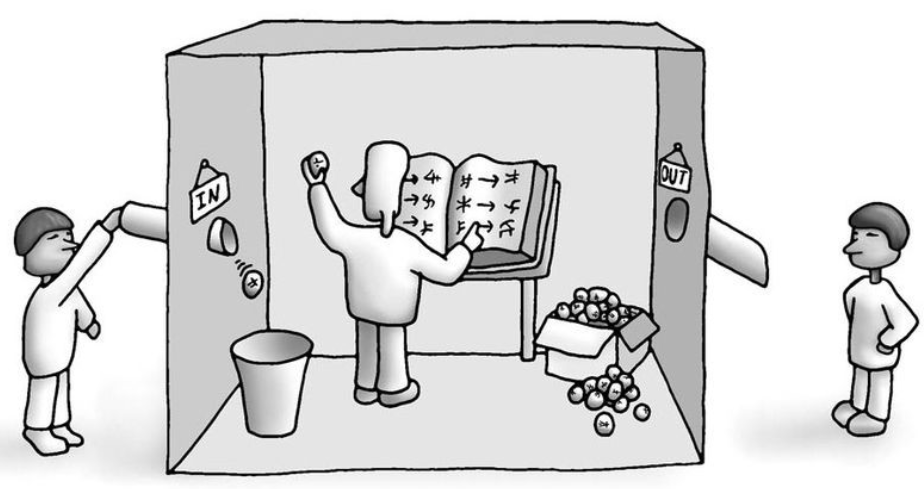
The mind-body problem asks how mental states such as beliefs, sensations, and conscious experiences relate to the physical body, and in particular to the brain. René Descartes framed the difficulty sharply by arguing that mind and body are two fundamentally different kinds of substance, one extended in space and the other purely thinking and non-spatial, which immediately raises the puzzle of how two such different substances could ever causally interact, as they plainly seem to when a physical injury causes pain or a decision causes bodily movement. Later positions have tried to avoid this interaction problem by identifying mental states with brain states, treating the mind as an emergent property of physical processes, or denying that mental properties are anything over and above functional or physical organization, yet each of these physicalist strategies faces renewed versions of the original puzzle when it comes to explaining subjective experience. The problem remains central to philosophy of mind because it sits at the intersection of metaphysics, neuroscience, and the deeply personal question of what a person fundamentally is.
The Problem of Free Will
This problem asks whether human beings ever genuinely act freely, in a sense strong enough to ground moral responsibility, given that every event, including human decisions, appears to be caused by prior events stretching back before the agent was even born. If determinism is true and every choice is simply the inevitable product of antecedent causes, it becomes unclear in what sense a person could have done otherwise, and yet holding people morally responsible for their actions seems to presuppose that they could have chosen differently. Compatibilists argue that freedom only requires acting according to one’s own desires and reasoning without external coercion, even within a fully determined universe, while libertarians about free will insist that genuine freedom requires a deeper kind of indeterminism, and hard determinists conclude that free will, in the sense ordinarily assumed, simply does not exist. The dispute has enormous practical stakes for how societies understand punishment, praise, and desert.
The Problem of Personal Identity
This problem asks what makes a person at one time the very same person as someone existing at an earlier or later time, despite undergoing constant physical, psychological, and experiential change over a lifetime. Candidate answers have included continuity of the physical body, continuity of memory and psychological connectedness, or the persistence of an immaterial soul, yet each faces serious objections once pushed to extreme cases involving amnesia, brain splitting, gradual replacement, or radical psychological change. The stakes of the problem extend well beyond abstract metaphysics, touching directly on practical questions such as what makes punishment of a criminal years later fair, what survival after death would even mean, and what a person owes to their future or past selves, making personal identity one of the most practically consequential problems in metaphysics.
The Problem of Universals
This ancient problem asks what accounts for the fact that many distinct particular things can share a common property, such as multiple separate objects all being red, or several people all being brave. Realists argue that such shared properties, called universals, exist as genuinely real entities distinct from and independent of the particular objects that instantiate them, following a tradition traced back to Plato’s theory of Forms, while nominalists deny that any such abstract entities exist at all, arguing that resemblance between particulars can be explained without positing any additional universal entity standing behind them. Moderate positions, such as conceptualism, locate universals in the mind’s own capacity for classification rather than in an independently existing realm or in bare particulars alone. The dispute shapes fundamental questions in metaphysics about what kinds of things ultimately exist and how language manages to refer meaningfully to general categories.
The Problem of Induction
First sharply posed by David Hume, this problem asks what justifies the common practice of inferring general conclusions, or predictions about the future, from a finite number of past observations, such as concluding that the sun will rise tomorrow because it has always risen before. Hume pointed out that any attempt to justify this inference by appealing to the past reliability of induction is itself circular, since it uses inductive reasoning to justify induction, and no purely logical or deductive argument can guarantee that patterns observed so far will continue to hold in the future. Despite its unresolved status, induction remains the backbone of scientific reasoning and everyday practical life, and philosophers of science have proposed various responses, including probabilistic justifications, pragmatic defenses, and Karl Popper’s attempt to replace induction altogether with a method of falsification, though none has achieved full consensus as a decisive solution.
The Problem of Evil
This long-standing problem in the philosophy of religion asks how the existence of significant and often seemingly gratuitous suffering in the world can be reconciled with belief in a God who is simultaneously all-powerful, all-knowing, and perfectly good. If such a God exists, it seems he would have both the power and the desire to prevent unnecessary suffering, yet the world plainly contains suffering that appears to serve no discernible greater purpose, from natural disasters to the prolonged suffering of children. Responses have included appeals to the necessity of free will, the character-building value of hardship, and the limits of human comprehension regarding divine purposes, while some philosophers conclude that the sheer scale and apparent gratuitousness of suffering in the world provides strong evidence against the existence of a traditional theistic God altogether, making this one of the most persistent challenges within natural theology.
The Problem of Other Minds
This problem asks how any individual can be justified in believing that other people possess genuine conscious inner experiences, given that each person has direct access only to their own mind and can observe of others only their outward physical behavior and bodily expressions. Since it seems logically possible that other people could behave in every observable respect as though they were conscious while actually having no inner experience at all, the usual justification offered is an argument from analogy, inferring that because other people are physically and behaviorally similar to oneself, they likely have similar inner mental lives as well. Critics have questioned whether an inference based on a single case, one’s own mind, can ever be strong enough to justify such a sweeping conclusion about billions of other minds, and the problem remains foundational to debates in epistemology, philosophy of mind, and even the ethical treatment of animals and artificial systems.
The Is-Ought Problem
Also known as Hume’s Guillotine, this problem observes that many moral and practical arguments slide from purely descriptive premises about how things are to normative conclusions about how things ought to be, without any clear logical justification for that transition. Hume pointed out that no purely factual description of the world, however detailed, seems capable of logically entailing any evaluative or prescriptive conclusion on its own, since an additional evaluative premise always seems required to bridge the gap between description and prescription. The problem has had a lasting influence on metaethics, motivating the distinction between fact and value, prompting debates over whether ethical naturalism can successfully derive moral properties from natural ones, and shaping G. E. Moore’s related argument that goodness cannot be defined in purely natural terms without committing what he called the naturalistic fallacy.
The Problem of Perception
This problem asks how, and indeed whether, human sensory perception provides direct and reliable access to an external, mind-independent world, given that perceptual experience can be systematically deceived, distorted, or entirely mistaken, as in cases of illusion, hallucination, and dreaming. Direct realists maintain that perception normally puts a person in immediate contact with actual external objects, while indirect or representative realists argue that perception is always mediated by internal mental representations or sense-data that merely correspond to, rather than directly present, the external world, opening a gap that skeptics have exploited to question whether we can ever be certain our perceptions correspond to reality at all. The problem sits at the foundation of epistemology, since so much of what people claim to know about the world rests on the assumption that perception is at least generally trustworthy.
The Hard Problem of Consciousness
Coined by philosopher David Chalmers, this problem distinguishes the comparatively tractable “easy problems” of explaining cognitive functions such as memory, attention, and behavioral responses, which can in principle be explained through physical and computational mechanisms, from the much deeper puzzle of explaining why any of this physical processing is accompanied by subjective experience at all, why there is something it feels like to see red or taste coffee rather than the processing simply occurring in the dark, functionally but without any inner experience. Even a complete map of every neuron and its causal function, the argument goes, would not by itself explain why subjective, felt experience arises from purely physical processes rather than none at all. The hard problem has become the central organizing puzzle in contemporary philosophy of mind, dividing physicalists who believe a full explanation is still possible in principle from dualists and panpsychists who argue that consciousness may require a fundamentally different kind of explanation altogether.
The Problem of Moral Realism
This problem in metaethics asks whether moral claims, such as “cruelty is wrong,” describe objective facts that hold true independently of what any individual or culture happens to believe, or whether such claims merely express subjective attitudes, cultural conventions, or emotional reactions with no deeper objective grounding. Moral realists argue that at least some ethical statements are literally true or false in the same robust sense that scientific or mathematical statements are, while anti-realist positions, including various forms of expressivism, relativism, and error theory, deny that moral claims track any mind-independent moral reality at all. The dispute carries significant practical weight, since it bears directly on whether moral disagreements between individuals or cultures can, even in principle, be objectively resolved, or whether they merely reflect differing, ultimately unadjudicable preferences and conventions.
The Problem of the Criterion
This problem, traced back to ancient skeptical debates and later developed extensively by Roderick Chisholm, asks how anyone can determine which beliefs count as genuine knowledge without already possessing a reliable criterion for distinguishing knowledge from mere belief, yet any proposed criterion itself seems to require independent justification, which in turn seems to require its own further criterion, generating either an infinite regress or a troubling circularity. Someone might try to first identify particular instances of knowledge and derive a general criterion from them, or instead start with a general criterion and use it to identify particular instances, but each approach appears to presuppose exactly what it is meant to establish. The problem exposes a foundational difficulty at the very root of epistemology, namely how any theory of knowledge can get off the ground without already assuming some of what it sets out to prove.
The Problem of the External World
This skeptical problem asks how anyone can be certain that a genuine, mind-independent external world exists at all, given that all of a person’s evidence for the external world comes filtered through subjective sensory experience, which could in principle be systematically mistaken, illusory, or entirely fabricated, as in scenarios involving vivid dreams, hallucinations, or a deceiving demon. Because every piece of purported evidence for the external world is itself just another item of subjective experience, it seems difficult to find any neutral standpoint from which to verify that experience genuinely corresponds to an independently existing reality rather than merely a coherent internal simulation. Responses have ranged from Descartes’ attempt to rebuild certainty from the indubitable fact of his own thinking, to G. E. Moore’s blunt appeal to common sense, to pragmatist arguments that the practical success of belief in an external world is itself sufficient justification, though no response has fully silenced the underlying skeptical worry.
The Problem of Vagueness
This problem concerns how to make sense of predicates such as “tall,” “bald,” or “heap,” which apply clearly to some cases and clearly fail to apply to others, yet possess a troubling range of borderline cases in between where it seems neither straightforwardly true nor straightforwardly false to say the predicate applies. Classical logic assumes that every meaningful statement is either true or false, yet vague predicates seem to resist this binary treatment, since removing a single grain from a heap or adding a single hair to a bald head never seems to mark a sharp, decisive transition from one category to its opposite. Philosophers have proposed various solutions, including supervaluationism, degree-theoretic or fuzzy logics that allow partial truth values, and epistemicist views holding that sharp boundaries do exist but are simply unknowable to us, though no single account has become the dominant consensus view.
The Problem of Time
This cluster of problems in metaphysics asks fundamental questions about the nature of time itself: whether time genuinely flows or passes, as ordinary experience strongly suggests, or whether this sense of flow is merely a subjective psychological illusion superimposed on a universe in which past, present, and future are all equally and permanently real, a view known as eternalism, as opposed to presentism, which holds that only the present moment genuinely exists. Debates also concern whether time could have a definite beginning or must extend infinitely into the past, whether time travel is logically coherent, and how the felt directionality of time relates to the physical asymmetries described by thermodynamics. Modern physics, particularly the relativity of simultaneity in special relativity, has added considerable complexity to these ancient metaphysical debates, since it undermines the intuitive picture of a single universal “now” shared by all observers throughout the universe.
The Problem of Causation
This problem asks what it actually means for one event to cause another, beyond the mere fact that the two events are regularly observed to occur together in a consistent temporal sequence. David Hume famously argued that we never directly observe any necessary causal connection between events themselves, only their constant conjunction, one event reliably following another, raising the question of whether causation is a genuine feature of the mind-independent world or merely a habitual expectation the human mind projects onto sequences of events it has repeatedly observed together. Later theories have attempted to analyze causation in terms of counterfactual dependence, asking what would have happened had the cause not occurred, in terms of underlying physical processes transferring energy or information, or in terms of probabilistic influence, yet each proposed analysis faces persistent counterexamples, and no single theory of causation commands universal philosophical agreement.
The Problem of Moral Luck
This problem, brought into sharp focus by Bernard Williams and Thomas Nagel, asks how it can be fair to hold people morally responsible for the outcomes of their actions when those outcomes often depend heavily on factors entirely outside the agent’s control. Two drunk drivers who behave in exactly the same reckless manner may be judged very differently depending purely on the accident of whether a pedestrian happens to step into the road, with one driver facing only a minor traffic violation and the other facing manslaughter charges, even though their own choices and level of culpable recklessness were identical. This apparent role of luck in moral judgment sits uneasily with the widespread intuition that people should only be judged for what is genuinely within their own control, and the problem forces a reconsideration of the very relationship between control, intention, and moral responsibility.
The Problem of Political Obligation
This problem in political philosophy asks what, if anything, actually justifies the general expectation that citizens ought to obey the laws and authority of the state under which they live. Proposed justifications have included an implicit or hypothetical social contract that citizens are taken to have consented to by remaining within a state’s territory, the fair distribution of benefits and burdens within a mutually cooperative society, or the simple practical necessity of political order for avoiding chaos, yet each of these justifications faces serious objections, particularly regarding people who never explicitly consented to anything and had little genuine choice about where they were born or which state governs them. Philosophical anarchists go so far as to conclude that no fully satisfying justification for political obligation actually exists, while most political philosophers continue to search for a more adequate account, making this problem central to debates over the legitimacy of state authority itself.
The Problem of Akrasia
Also known as weakness of will, this problem, first posed sharply by Socrates and Aristotle, asks how it is possible for a person to act against their own better, considered judgment, doing something they themselves genuinely believe, at the very moment of acting, to be the worse of the available options. Socrates found the phenomenon so puzzling that he denied it could genuinely occur at all, arguing that anyone who truly and fully believed an action was bad would necessarily be incapable of choosing it, and that apparent cases of weakness of will must actually involve some kind of ignorance or miscalculation rather than a real conflict between judgment and action. Aristotle offered a more nuanced account distinguishing different types and degrees of akratic action, and the problem remains central to moral psychology and philosophy of action, since it bears directly on how beliefs, desires, and genuine self-control relate to the actual choices people make.
The Problem of the Meaning of Life
This broad and enduring problem asks what, if anything, could confer genuine meaning, purpose, or ultimate significance on human existence, particularly against the backdrop of mortality, the vast and largely indifferent scale of the physical universe, and the apparent absence of any built-in cosmic purpose independent of what human beings themselves create or assign. Some philosophers locate meaning in the pursuit of objectively valuable ends such as knowledge, love, and moral achievement, others argue that meaning is inescapably subjective and depends entirely on what an individual personally finds worthwhile, and still others, following existentialist and absurdist traditions, argue that the universe supplies no meaning at all, leaving human beings to either construct their own significance through free choice and commitment or to confront the fundamental absurdity of that very search head-on. Unlike many other philosophical problems that concern narrow technical distinctions, this one bears directly and personally on how individuals choose to live, making it perhaps the most widely felt of all philosophical problems even outside professional philosophical circles.