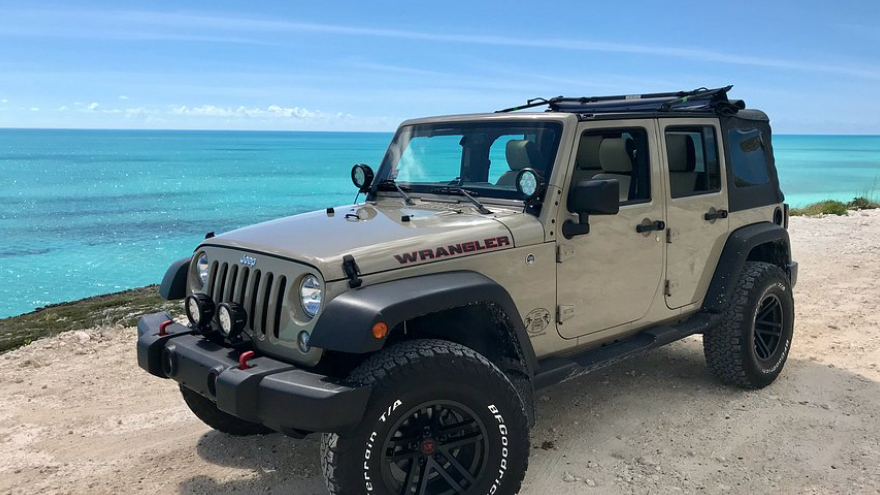
Jeep is one of the most iconic American automotive brands, with a heritage stretching back to the rugged military vehicles produced during World War II. From those utilitarian origins, the brand evolved into a consumer powerhouse known for building vehicles that balance off-road capability with everyday usability. Jeep is now a global brand under Stellantis, selling vehicles in more than 100 countries, and it consistently ranks among the best-selling SUV brands in the United States.
The Jeep lineup has always been defined by its Trail Rated badge, a certification that indicates a vehicle has been tested for capability in five off-road categories: traction, ground clearance, maneuverability, articulation, and water fording. This commitment to genuine off-road performance separates Jeep from many competitors in the SUV segment, which often prioritize comfort and aesthetics over capability. Even as Jeep has expanded into more road-oriented crossovers, the brand has maintained its identity by keeping rugged, body-on-frame and solid-axle models at the core of its lineup.
Over the decades, Jeep has introduced, retired, and revived numerous nameplates, reflecting changing consumer tastes and market conditions. Some models like the Wrangler have endured for generations and become cultural symbols, while others were discontinued as the market shifted away from truck-based SUVs toward car-based crossovers. Today the lineup spans a wide range, from the compact Renegade to the three-row Grand Cherokee L, and Jeep has also entered the electric vehicle space with plug-in hybrid variants of several models and the fully electric Wagoneer S.
Jeep Wrangler (Current)
The Wrangler is the spiritual successor to the original wartime Jeep and remains the most iconic model in the lineup. Available in two-door and four-door (Unlimited) configurations, it features solid front and rear axles, removable doors and roof, and a fold-down windshield — design elements that have persisted across generations. The current fourth-generation JL Wrangler also offers a 4xe plug-in hybrid variant, giving it modern efficiency without sacrificing the off-road credibility the nameplate is built on.
Jeep Gladiator (Current)
The Gladiator is a midsize pickup truck that shares its platform and front-end design with the Wrangler, making it one of the very few body-on-frame, solid-axle trucks on the market. It was introduced for the 2020 model year after a long absence of Jeep-branded trucks and quickly found a loyal following among enthusiasts who wanted open-air driving combined with a usable truck bed. The Gladiator is Trail Rated and available in several trims including the off-road-focused Mojave and Rubicon.
Jeep Grand Cherokee (Current)
The Grand Cherokee is Jeep’s flagship SUV and one of the best-selling vehicles in its segment, having been in continuous production since 1992. The current fifth-generation WL model offers a refined interior, advanced technology, and a choice of powertrains including a V8, a straight-six turbo, and a 4xe plug-in hybrid. A long-wheelbase three-row version called the Grand Cherokee L was added to the lineup in 2021, extending the model’s appeal to larger families.
Jeep Cherokee (Current)
The Cherokee occupies the midsize crossover segment and serves as a more road-oriented alternative to the Wrangler, riding on a unibody platform rather than a body-on-frame chassis. It has gone through several generations since its debut in 1974, with the current fifth-generation KL model introduced in 2014 featuring a distinctive split headlight design that proved polarizing but memorable. The Cherokee offers a Trailhawk trim for buyers who want genuine off-road capability in a more comfortable, daily-driver package.
Jeep Compass (Current)
The Compass is a compact crossover positioned below the Cherokee in Jeep’s lineup, targeting buyers who want the Jeep brand identity in a smaller, more fuel-efficient package. The second-generation model introduced in 2017 was a significant improvement over its predecessor, earning better reviews for its interior quality, ride comfort, and overall refinement. It is one of Jeep’s most globally important models, sold in markets across North America, Europe, South America, and India where it is also locally manufactured.
Jeep Renegade (Current)
The Renegade is Jeep’s smallest SUV, built on a platform shared with the Fiat 500X and produced in Italy. Introduced for the 2015 model year, it was designed to bring the Jeep brand to younger, urban buyers who wanted a compact, stylish vehicle with brand heritage. Despite its small size, the Renegade Trailhawk variant is Trail Rated and capable of surprisingly competent off-road performance for a subcompact crossover.
Jeep Wagoneer and Grand Wagoneer (Current)
The Wagoneer and Grand Wagoneer were revived for the 2022 model year as full-size, three-row SUVs positioned at the premium and luxury ends of the market respectively. The original Wagoneer, produced from 1963 to 1991, was a pioneer of the luxury SUV segment, and the new versions aim to recapture that prestige while competing with vehicles like the Cadillac Escalade and Lincoln Navigator. The Grand Wagoneer in particular features an opulent interior with multiple screens, premium audio, and a starting price that pushes well above $80,000.
Jeep Avenger (Current)
The Avenger is Jeep’s first fully electric vehicle sold in Europe, introduced in 2023 and named European Car of the Year for that same year — a remarkable achievement for a Jeep model. It is a subcompact crossover built on Stellantis’s eCMP platform, offering a range of around 400 kilometers on the WLTP cycle in its electric form, with a combustion engine variant also available in select markets. The Avenger represents Jeep’s most significant push into the European market in years and signals the brand’s commitment to electrification outside North America.
Jeep Wagoneer S (Current)
The Wagoneer S is Jeep’s first fully electric vehicle for the North American market, introduced as a 2024 model and positioned as a premium midsize electric SUV. It produces over 600 horsepower in its launch edition trim and offers an estimated range of around 300 miles per charge, making it one of the more performance-oriented electric SUVs in its segment. The Wagoneer S borrows the prestigious Wagoneer name to establish the electric sub-brand as a luxury-oriented chapter in Jeep’s evolving lineup.
Jeep Recon (Upcoming/Current)
The Recon is an upcoming electric off-road SUV designed to bring Wrangler-like capability to the battery-electric segment, with features like a one-pedal rock-crawl mode, removable doors and roof panels, and an available open-air driving experience. It is built on a dedicated EV platform and is intended to demonstrate that electrification and serious off-road performance are not mutually exclusive. The Recon is among the most anticipated Jeep models in recent memory, as it directly challenges the notion that electric vehicles cannot replicate the Wrangler experience.
Jeep CJ Series (Discontinued)
The CJ, short for Civilian Jeep, was produced from 1945 to 1986 and represents the direct civilian evolution of the WWII military Jeep. It came in numerous variants including the CJ-2A, CJ-5, and CJ-7, each refining the basic open-air, body-on-frame formula that would eventually become the Wrangler. The CJ-7 in particular is a beloved classic among off-road enthusiasts and collectors, and well-maintained examples remain highly sought after today.
Jeep Willys MB (Discontinued)
The Willys MB is the original military Jeep, produced from 1941 to 1945 in massive quantities to support Allied forces during World War II. Approximately 640,000 units were built across Willys-Overland and Ford manufacturing facilities, and the vehicle served in virtually every theater of the war as a reconnaissance, transport, and utility vehicle. The MB’s rugged simplicity and go-anywhere capability are the direct DNA from which every subsequent Jeep model descends, making it the most historically significant vehicle in the brand’s lineage.
Jeep FC (Forward Control) Series (Discontinued)
The FC series, produced from 1956 to 1965, was a cab-over pickup truck built on a modified Jeep truck chassis, placing the driver directly above the front axle for maximum cargo bed length in a compact overall footprint. It came in FC-150 and FC-170 variants, differing in wheelbase and payload capacity, and was marketed primarily to farmers, contractors, and utility operators. The FC series is a rare and unusual chapter in Jeep history, and surviving examples are prized by collectors for their distinctive appearance and mechanical curiosity.
Jeep Wagoneer (Original, Discontinued)
The original Wagoneer was produced from 1963 to 1991, making it one of the longest-running nameplates in automotive history under continuous production. It is widely credited with inventing the luxury SUV concept, combining genuine four-wheel-drive capability with amenities like automatic transmission, air conditioning, and wood-grain exterior trim at a time when trucks were strictly utilitarian. By the end of its production run the Wagoneer had become a symbol of preppy American affluence, and its cultural cachet continues to fuel nostalgia and strong values in the classic vehicle market.
Jeep Cherokee XJ (Discontinued)
The XJ-generation Cherokee, produced from 1984 to 2001, is widely regarded as one of the greatest off-road vehicles ever built and one of the most important in Jeep’s history. It pioneered unibody construction in a rugged SUV format, delivering car-like ride quality without sacrificing serious off-road ability, and its compact dimensions made it extraordinarily maneuverable on trails. The XJ’s combination of capability, reliability, and affordability has given it a devoted enthusiast following that remains exceptionally strong decades after its discontinuation.
Jeep Grand Cherokee ZJ and WJ (Discontinued)
The first and second generation Grand Cherokees, designated ZJ (1992–1998) and WJ (1999–2004), established the nameplate as a benchmark for mid-size SUVs and introduced features like the Quadra-Coil suspension and multiple four-wheel-drive systems. The ZJ generation was particularly groundbreaking at launch, offering a level of on-road refinement and off-road capability that no competitor could match at the time. Both generations are well-regarded by enthusiasts and are still commonly used as off-road builds due to their solid axles and strong parts availability.
Jeep Comanche (Discontinued)
The Comanche was a compact pickup truck produced from 1986 to 1992, based on the XJ Cherokee platform and sharing its unibody construction — an unusual choice for a truck at the time. It was offered in both short-bed and long-bed configurations and was available with four-wheel drive, making it a capable and versatile work and recreational truck. The Comanche was discontinued due to slow sales, but it has since developed a cult following and rising collector values, particularly as enthusiasm for compact trucks has surged in recent years.
Jeep J-Series Truck (Discontinued)
The J-Series was a full-size pickup truck produced from 1962 to 1988, sharing its Gladiator name in early years before being rebranded as the J-10 and J-20. It was built on a body-on-frame chassis with solid axles front and rear, and was available with Jeep’s Quadra-Trac full-time four-wheel-drive system, which was innovative for its era. The J-Series trucks were genuinely capable work vehicles and are now sought-after classics, particularly clean examples of the late 1970s and early 1980s models with their distinctive styling.
Jeep Liberty (Discontinued)
The Liberty was produced from 2002 to 2012 as a replacement for the Cherokee XJ, offering a more rounded exterior design and a more modern feature set. While the first-generation KJ model retained a solid rear axle and available solid front axle, making it genuinely Trail Rated, the second-generation KK model softened its off-road credentials in favor of improved on-road comfort. The Liberty was discontinued and replaced by the current Cherokee, which moved to a fully unibody crossover platform.
Jeep Commander (Discontinued)
The Commander was a three-row SUV produced from 2006 to 2010, built on the same platform as the Grand Cherokee to give Jeep a presence in the large family SUV segment. Its boxy, upright design was visually bold but also limited rear visibility, and its fuel economy was poor at a time when gas prices were rising sharply. Sales never met expectations, and the Commander was dropped after just five model years without a direct replacement until the Grand Cherokee L arrived over a decade later.
Jeep Patriot (Discontinued)
The Patriot was a compact crossover produced from 2007 to 2017 alongside the first-generation Compass, with both vehicles sharing the same platform but differing in styling and market positioning. The Patriot had a more traditional, boxy Jeep appearance and was positioned as the more off-road-oriented of the two, with a Trail Rated Trailhawk trim available in later years. It was discontinued alongside the original Compass when the redesigned second-generation Compass was introduced, consolidating the two nameplates into one model.
Jeep Scrambler (Discontinued)
The Scrambler, designated CJ-8, was a stretched pickup truck variant of the CJ-7 produced from 1981 to 1985, giving Jeep a small open-air truck with genuine off-road credentials. It featured a longer wheelbase than the CJ-7 to accommodate a short cargo bed while retaining the classic CJ styling, removable doors, and fold-down windshield. The Scrambler was produced in relatively small numbers — just over 27,000 units — making it one of the rarer classic Jeeps and a highly collectible vehicle today.
Jeep Hurricane Concept (Concept)
The Hurricane concept, unveiled in 2005, was a twin-engine, four-wheel-steering concept vehicle that demonstrated Jeep’s engineering ambitions at their most extreme. It featured two 5.7-liter Hemi V8 engines producing a combined 670 horsepower, with all four wheels capable of independent steering that allowed the vehicle to rotate in place or drive diagonally. While never intended for production, the Hurricane showcased technologies that previewed future Jeep engineering directions and remains one of the most dramatic concept vehicles the brand has ever produced.