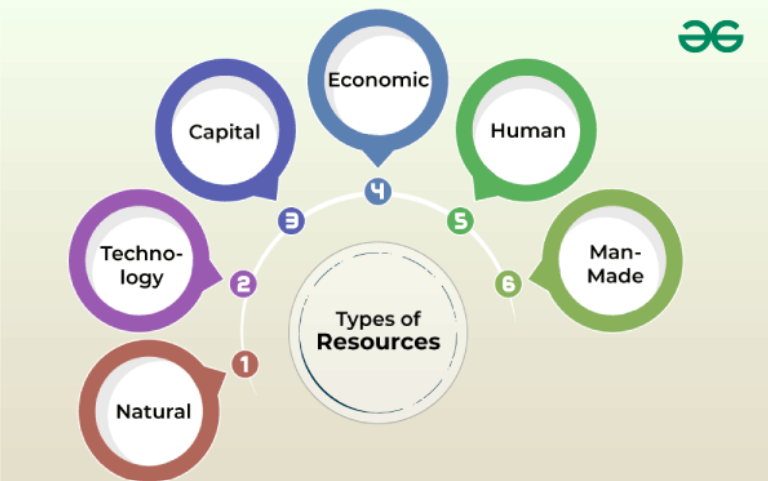
Economic resources are the inputs used in the production of goods and services that satisfy human wants and needs, forming the foundational building blocks of every economy from the smallest subsistence farm to the most complex industrial nation. Traditionally categorized by economists into four broad classes — land, labor, capital, and entrepreneurship — economic resources are by definition scarce relative to the unlimited demands placed upon them, a fundamental tension that gives rise to the central economic problem of how to allocate limited resources among competing uses. Every economic decision made by individuals, firms, and governments — what to produce, how to produce it, and for whom — is ultimately a decision about how to deploy scarce economic resources most effectively.
The concept of resource scarcity is not merely an academic abstraction but a lived reality with profound consequences for human welfare, geopolitical competition, and environmental sustainability. Natural resource endowments vary enormously between nations — Saudi Arabia’s petroleum reserves, Brazil’s agricultural land, the Democratic Republic of Congo’s mineral wealth, and Norway’s hydroelectric capacity all confer distinct economic advantages that shape national development trajectories. The World Bank estimates that natural capital — the economic value of land, forests, minerals, and water — accounts for 9% of total global wealth, while produced capital (machinery, infrastructure, buildings) represents 27% and human capital the remaining 64%, a distribution that underscores how profoundly human knowledge and skills now dominate the resource base of modern economies.
The boundaries of what constitutes an economic resource have expanded considerably as economic theory has evolved beyond its classical roots. Data, intellectual property, social trust, institutional quality, and access to financial networks are increasingly recognized as critical economic resources in the knowledge economy, even though they fit imperfectly into traditional four-factor classification schemes. The OECD estimates that knowledge-based capital — including software, research and development, organizational competencies, and intellectual property — now accounts for as much as 30% of total business investment in advanced economies, reflecting a fundamental shift in the nature of productive resources from the tangible assets that dominated classical economic thinking to the intangible resources that drive competitive advantage in the twenty-first century.
Land
In classical economics, land encompasses all natural resources provided by the earth — including agricultural soil, forests, water bodies, mineral deposits, fisheries, and the physical space on which human activity occurs. It is distinguished from other factors of production by its fixed supply — the total quantity of land on earth cannot be increased, though its productivity can be enhanced through irrigation, fertilization, and land improvement. Land generates returns to its owners in the form of rent, and its uneven global distribution is a primary driver of international economic inequality and geopolitical competition.
Labor
Labor represents the human effort — physical, cognitive, and creative — applied to the production of goods and services, encompassing everything from manual agricultural work and factory assembly to professional services, managerial decision-making, and artistic creation. It is distinguished from other factors by its inseparability from the person providing it, which gives rise to unique labor market dynamics around wages, working conditions, mobility, and worker rights that do not apply to other tradeable economic resources. The International Labour Organization estimates the global labor force at approximately 3.4 billion people, whose collective productive effort generates the vast majority of global economic output.
Capital
Physical or produced capital refers to the manufactured inputs used in production — machinery, tools, equipment, buildings, vehicles, computers, and infrastructure — that are themselves the product of previous rounds of production and investment rather than gifts of nature. Unlike land and labor, capital is reproducible through investment of savings, meaning its supply can be expanded over time through deliberate resource allocation decisions. The global stock of produced capital is estimated by the World Bank at over $100 trillion, representing centuries of accumulated investment in the physical infrastructure of modern economic life.
Entrepreneurship
Entrepreneurship is the fourth classical factor of production — the human capacity to identify opportunities, combine the other factors of production in novel ways, bear the risks of business failure, and generate the innovation that drives economic growth and productivity improvement over time. Entrepreneurs transform ideas into commercially viable products and services, creating new markets, disrupting existing industries, and generating employment and income in ways that no amount of land, labor, or capital can achieve without the organizing and risk-bearing function that entrepreneurship provides. The Global Entrepreneurship Monitor estimates that approximately 582 million people worldwide are engaged in entrepreneurial activity at any given time.
Human Capital
Human capital refers to the accumulated knowledge, skills, education, experience, and health attributes embodied in individual workers that enhance their productive capacity beyond the basic contribution of raw labor time. Unlike physical capital, human capital cannot be separated from the person who possesses it, and it is built through investment in education, training, healthcare, and on-the-job experience over a lifetime. The World Bank’s Human Capital Index highlights that the gap between countries in human capital development is one of the most powerful determinants of long-run economic growth differentials between nations.
Natural Capital
Natural capital extends the traditional economic concept of land to encompass the full stock of natural ecosystems — forests, wetlands, soils, fisheries, freshwater systems, and the atmosphere — that provide flows of ecosystem services including food production, water purification, climate regulation, pollination, and flood protection that underpin all economic activity. The global value of ecosystem services has been estimated by researchers at over $125 trillion annually — nearly twice global GDP — yet these services are largely unpriced in conventional markets, leading to systematic overexploitation of natural capital that threatens the long-run productive capacity of the global economy.
Financial Capital
Financial capital refers to the funds — savings, credit, equity investment, and other monetary resources — that enable businesses and governments to acquire physical capital, hire labor, and finance the operations and investments that generate economic output. While not itself a direct input to production, financial capital performs the critical intermediary function of channeling savings from those who have surplus income to those who have productive investment opportunities, and the efficiency of financial systems in performing this intermediation function is a major determinant of overall economic productivity. Global financial assets — including equities, bonds, bank deposits, and derivatives — exceed $400 trillion, dwarfing the value of the underlying physical economy they represent.
Intellectual Capital
Intellectual capital encompasses the stock of knowledge, patents, trade secrets, proprietary processes, software, brand equity, and organizational know-how that gives firms and nations competitive advantage in producing and commercializing goods and services. In the modern knowledge economy, intellectual capital is increasingly the dominant source of value creation — companies like Apple, Microsoft, and Google derive the vast majority of their market value not from physical assets but from intellectual property, brand recognition, and proprietary algorithms that are the product of sustained research, development, and organizational learning investment.
Social Capital
Social capital refers to the networks of relationships, norms of trust and reciprocity, and institutional frameworks that facilitate cooperation and collective action within and between communities and organizations, reducing transaction costs and enabling economic exchanges that would be too costly or risky to undertake in its absence. High-trust societies — consistently demonstrated in economic research to grow faster, attract more investment, and govern more efficiently than low-trust societies — illustrate the profound economic value of social capital even though it appears in no conventional balance sheet or national accounts framework. Robert Putnam’s foundational research documented how declining social capital in American communities correlated with measurable reductions in economic participation and civic productivity.
Technological Capital
Technological capital refers to the accumulated stock of applied scientific knowledge, engineering methods, production techniques, and technological systems that enhance the productivity of all other economic resources — allowing the same quantity of land, labor, and physical capital to produce dramatically greater output than was possible with earlier technology. Total factor productivity growth — the portion of economic output growth attributable to technological improvement rather than increased input quantities — has accounted for roughly half of all economic growth in developed economies since the Industrial Revolution, underscoring the extraordinary economic leverage that investment in technology generates over time.
Energy Resources
Energy resources — including fossil fuels (coal, oil, and natural gas), nuclear fuel, and renewable sources (solar, wind, hydro, and geothermal) — are a distinct and critical category of economic resource that powers all other productive activity, from agriculture and manufacturing to transportation, computing, and climate control. Global primary energy consumption exceeded 600 exajoules in 2023, with fossil fuels still supplying approximately 80% of that total despite rapid renewable energy expansion. The global energy transition — shifting from finite, carbon-intensive fossil fuel resources to renewable energy flows — represents the most significant transformation of the energy resource base since the Industrial Revolution.
Mineral Resources
Mineral resources encompass the metallic ores, industrial minerals, and construction materials extracted from the earth’s crust that serve as raw material inputs for manufacturing, construction, electronics, and chemical production across the global economy. The growing demand for critical minerals — lithium, cobalt, nickel, copper, and rare earth elements — essential for electric vehicle batteries, wind turbines, solar panels, and electronic devices has elevated mineral resource security to the top of economic and geopolitical agendas in major economies. The International Energy Agency projects that demand for critical minerals could increase by 400 to 600% by 2040 as the clean energy transition accelerates.
Water Resources
Freshwater is an economic resource of fundamental importance — used in agriculture (which accounts for approximately 70% of global freshwater withdrawals), industrial manufacturing, energy production, and direct human consumption — whose scarcity is becoming an increasingly binding constraint on economic development in water-stressed regions covering over 40% of the world’s land area. The World Bank estimates that water scarcity could cost some regions up to 6% of GDP by 2050 through impacts on agriculture, health, and income, making water resource management one of the most economically consequential environmental challenges of the coming decades.
Arable Land
Arable land — the subset of total land area capable of supporting crop production — is a distinct and finite economic resource of extraordinary importance, with only approximately 10% of the earth’s total land surface (roughly 1.4 billion hectares) currently under cultivation and limited potential for expansion without unacceptable environmental costs. Growing global food demand, driven by population growth and dietary shifts toward more resource-intensive foods in emerging economies, is placing unprecedented pressure on arable land resources, while soil degradation from erosion, salinization, and chemical depletion reduces the productive capacity of existing farmland at an estimated rate of 24 billion tonnes of fertile topsoil lost annually.
Forest Resources
Forest resources provide a bundle of economic goods and services — timber, fuelwood, non-timber forest products, carbon sequestration, watershed protection, biodiversity habitat, and recreational value — that collectively represent one of the most economically valuable categories of natural capital on earth. The world’s forests cover approximately 4 billion hectares and are estimated to provide ecosystem services worth over $2.5 trillion annually, yet deforestation continues at a rate of approximately 10 million hectares per year, driven by agricultural expansion, logging, and infrastructure development that captures only a fraction of the total economic value forests provide.
Marine Resources
Marine resources encompass the fisheries, aquaculture potential, offshore mineral deposits, hydrocarbons, marine genetic resources, and the shipping lanes and port infrastructure that make ocean-based economic activity possible, collectively constituting what the OECD has termed the “ocean economy” — estimated to be worth over $1.5 trillion annually and supporting 31 million direct jobs worldwide. Overfishing has depleted an estimated 34% of global fish stocks beyond biologically sustainable levels, illustrating the classic economic problem of the tragedy of the commons in the management of shared natural resources without effective property rights or governance frameworks.
Biodiversity as Economic Resource
Biodiversity — the variety of life at genetic, species, and ecosystem levels — represents an economic resource of enormous but largely unquantified value, providing the genetic material for pharmaceutical discovery, the ecological functions that sustain agricultural productivity, the natural pest control and pollination services that underpin food production, and the ecosystem resilience that buffers economic activity against environmental shocks. The Dasgupta Review on the Economics of Biodiversity, commissioned by the UK government and published in 2021, estimated that biodiversity loss poses systemic economic risks comparable to climate change and called for fundamental reform of how economies account for and manage their dependence on natural biodiversity.
Infrastructure as Economic Resource
Public infrastructure — roads, bridges, ports, airports, power grids, water and sanitation systems, telecommunications networks, and digital infrastructure — functions as a critical economic resource that enhances the productivity of private sector land, labor, and capital by reducing transaction costs, enabling market access, and providing the foundational services on which all other economic activity depends. The American Society of Civil Engineers estimates that inadequate infrastructure costs the average American household $3,300 per year in lost productivity, vehicle damage, and higher prices, while the Global Infrastructure Hub estimates a global infrastructure investment gap of $15 trillion through 2040 that constrains economic growth in both developed and developing economies.
Knowledge and Information
Knowledge and information have emerged as perhaps the defining economic resources of the twenty-first century — inputs to production that, unlike physical resources, are non-rival (one person’s use does not diminish another’s) and potentially non-excludable, giving them unique economic properties that challenge conventional resource allocation frameworks built around scarce, depletable inputs. The global data sphere — the total amount of data generated, captured, copied, and consumed worldwide — reached 120 zettabytes in 2023 and is projected to reach 181 zettabytes by 2025, reflecting the extraordinary scale at which information is now being produced as a byproduct of digital economic activity and the growing importance of data analytics as a source of competitive economic advantage.
Time as Economic Resource
Time is the most fundamental and universally scarce economic resource — every individual, firm, and society faces a fixed endowment of time that cannot be expanded, stored, or transferred, and every economic decision involves an allocation of this fixed resource among competing uses with opportunity costs measured in foregone alternatives. Gary Becker’s groundbreaking theory of time allocation demonstrated that the value of time — measured by the wage rate forgone through non-market activity — is a central determinant of household production decisions, consumption patterns, and investment in human capital, fundamentally reshaping how economists understand the full cost of economic activities that require both market goods and time inputs.
Institutional Resources
Institutions — the formal legal frameworks, property rights systems, contract enforcement mechanisms, regulatory agencies, and informal social norms that govern economic interaction — function as critical economic resources that determine how productively all other resources can be deployed within a society. Douglass North’s Nobel Prize-winning work on institutions and economic performance demonstrated that differences in institutional quality — particularly the security of property rights and the reliability of contract enforcement — explain a substantial portion of the enormous variation in economic development outcomes between nations with similar natural resource endowments. The World Bank’s Doing Business indicators consistently show that institutional quality improvements can reduce business transaction costs by 20 to 40% in developing economy contexts.