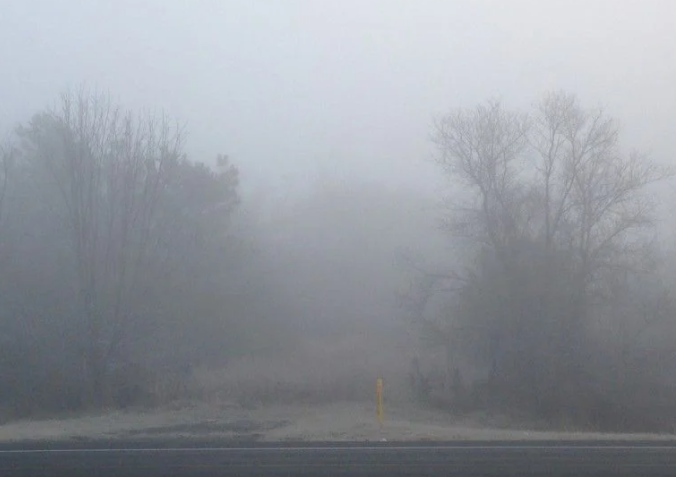
Fog is essentially a cloud that forms at or very near ground level, consisting of tiny water droplets suspended in the air that reduce visibility to less than one kilometer. While clouds and fog are fundamentally the same phenomenon in terms of their physical composition, fog forms through processes that occur directly at the surface rather than within the broader atmosphere, making it one of the few weather phenomena that humans experience by walking directly through it. Fog occurs in virtually every region of the world, though certain locations are particularly famous for the frequency and persistence of their fog.
The formation of fog requires the air near the surface to become saturated with water vapor, reaching what is known as the dew point temperature at which water vapor begins to condense into liquid droplets. This saturation can occur through several different mechanisms, including the cooling of air to the point where it can no longer hold all of its water vapor, the addition of moisture to air that is already close to saturation, or the mixing of air masses with different temperature and humidity characteristics. The specific mechanism responsible for a particular fog event determines its classification and helps explain why fog forms under certain conditions but not others.
Fog has significant practical implications for transportation, with reduced visibility creating hazards for drivers, pilots, and ship operators throughout history. Major fog events have been responsible for serious transportation accidents, and the development of technologies such as radar, fog lights, and instrument landing systems for aircraft has been driven in part by the need to operate safely in foggy conditions. Beyond transportation, fog also plays important ecological roles in certain environments, providing a critical source of moisture for plants and ecosystems in regions where fog occurs regularly, particularly along certain coastlines and in some desert environments.
Understanding the different types of fog reveals the variety of atmospheric processes that can lead to this common but often underappreciated weather phenomenon. Each type of fog forms under specific combinations of temperature, humidity, wind, and topography, and recognizing these different types can help explain why fog forms in certain locations and at certain times more than others. The following overview explores the major types of fog recognized by meteorologists and the distinct processes responsible for each.
Radiation Fog
Radiation fog, also called ground fog, forms during clear nights when the ground loses heat rapidly through radiation, cooling the air directly above the surface to the point where it becomes saturated and fog develops. This type of fog is most common during autumn and winter months when nights are longer.
This type of fog typically forms under calm, clear conditions that allow the ground to cool efficiently without the moderating influence of clouds or wind, often developing in low-lying areas such as valleys where cool, dense air tends to settle. Radiation fog usually dissipates after sunrise as the sun warms the ground and the air above it, though in particularly persistent cases it can last well into the morning or even all day during the shortest days of winter.
Advection Fog
Advection fog forms when warm, moist air moves horizontally over a colder surface, causing the air to cool to its dew point through contact with the cooler surface below. This type of fog can form regardless of the time of day, unlike radiation fog which is closely tied to nighttime cooling.
Advection fog is particularly common along coastlines where warm, moist air from the ocean moves over cooler land or water surfaces, and it can also form when air moves from a warm water surface to a colder one or from warm land to cooler land. This type of fog can be quite persistent, sometimes lasting for days if the wind continues to bring warm, moist air over the cooler surface, and it tends to be less dependent on calm conditions than radiation fog, often forming with moderate winds.
Upslope Fog
Upslope fog forms when relatively moist air is forced to rise along sloping terrain, cooling adiabatically as it ascends until it reaches saturation and condenses into fog. This type of fog is common in hilly or mountainous regions where air flows up against terrain.
Unlike radiation fog, which forms through surface cooling, upslope fog forms through the cooling that naturally occurs when air expands as it rises to lower pressure at higher elevations, a process that can occur even when the ground itself is not particularly cold. Upslope fog can persist as long as the upslope flow of air continues, sometimes covering hillsides and mountain slopes in a blanket of fog while valleys below remain clear.
Valley Fog
Valley fog forms when cold, dense air settles into low-lying valleys and basins, often combining with radiation cooling overnight to create persistent fog that can fill an entire valley while higher elevations remain clear. This type of fog is particularly common in mountainous regions during calm, clear weather.
The cold air that pools in valleys can be significantly colder than air at higher elevations, a phenomenon known as a temperature inversion, which traps the fog within the valley and prevents it from mixing with the warmer, drier air above. Valley fog can be remarkably persistent, sometimes lasting for days during periods of stable high-pressure weather, particularly during the colder months when the temperature inversion is strongest and most difficult to break.
Steam Fog
Steam fog, also known as evaporation fog, forms when cold air moves over much warmer water, causing water to evaporate rapidly from the surface and immediately condense in the cold air above, creating wisps of fog that appear to rise from the water’s surface. This type of fog has a distinctive steaming appearance.
This type of fog is commonly observed over lakes, rivers, and swimming pools during cold mornings, as well as over the ocean in polar regions where the temperature difference between the water and the overlying air can be substantial. Steam fog tends to be relatively shallow and localized compared to other fog types, often dissipating a short distance above the water’s surface as the rising moisture mixes with and is absorbed by the surrounding drier air.
Frontal Fog
Frontal fog forms in association with weather fronts, typically occurring when rain falling from warm air ahead of a front evaporates into the cooler air below, increasing the humidity of that air to the point of saturation. This type of fog is closely tied to the passage of frontal weather systems.
Frontal fog can occur with both warm fronts and cold fronts, though it is more commonly associated with warm fronts where a broad area of light rain falling into cooler air ahead of the front creates favorable conditions for fog formation over an extended period. This type of fog can be particularly persistent and widespread, sometimes affecting large areas as a frontal system moves slowly across a region.
Freezing Fog
Freezing fog consists of supercooled water droplets that remain in liquid form despite the air temperature being below freezing, freezing immediately upon contact with surfaces to create a coating of rime ice. This type of fog can create hazardous conditions for both transportation and infrastructure.
The ice that forms from freezing fog can accumulate on trees, power lines, and road surfaces, creating slippery conditions and potentially damaging vegetation and infrastructure under the weight of accumulated ice during prolonged events. Freezing fog is most common in cold climates during winter, particularly in areas where temperatures hover just below freezing and sufficient moisture is present in the air.
Ice Fog
Ice fog consists of tiny ice crystals suspended in the air rather than liquid water droplets, forming only at extremely cold temperatures, typically below negative 30 degrees Celsius, where the air is too cold for liquid water droplets to exist even in a supercooled state. This type of fog is restricted to the coldest climates on Earth.
Ice fog is most commonly observed in polar regions and other extremely cold environments, sometimes forming in association with human activities such as vehicle exhaust or industrial emissions, which can add sufficient moisture to extremely cold air to trigger ice fog formation even when natural conditions alone might not produce it. The tiny ice crystals that make up ice fog can create optical effects such as halos around lights, and the fog itself can persist for extended periods under the very stable atmospheric conditions typical of extreme cold.
Hail Fog
Hail fog is an unusual and relatively rare type of fog that forms in the aftermath of a significant hailstorm, when the rapid melting and evaporation of accumulated hail on the ground cools the air near the surface and adds enough moisture to create fog. This type of fog is closely tied to a specific preceding weather event.
The formation of hail fog requires a substantial accumulation of hail combined with relatively warm air above the hail-covered surface, creating conditions where the cooling and moistening effects of the melting hail are significant enough to produce visible fog. This type of fog is most commonly observed in the hours following severe thunderstorms that have deposited significant hail accumulations, dissipating once the hail has fully melted and the temperature difference that created the fog has equalized.
Sea Fog
Sea fog is a form of advection fog that develops over the ocean when warm, moist air moves over significantly cooler ocean water, a phenomenon particularly common in regions where cold ocean currents flow beneath warmer air masses. This type of fog can extend for great distances over open water.
Sea fog can be particularly hazardous for maritime navigation, as ships may encounter dense fog banks while in open water far from any coastline, requiring careful use of radar and other instruments to navigate safely. Some of the foggiest regions in the world occur where warm and cold ocean currents meet, creating persistent sea fog conditions that can affect shipping lanes and coastal areas for much of the year.