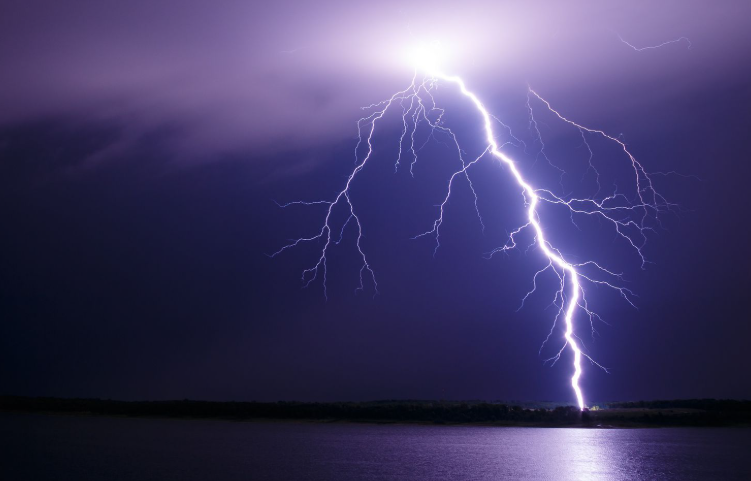
Lightning is a sudden electrical discharge that occurs during thunderstorms, resulting from the buildup and release of electrical charge within clouds, between clouds, or between clouds and the ground. This dramatic natural phenomenon represents one of the most powerful electrical events that occurs naturally on Earth, with a single lightning bolt capable of carrying tens of thousands of amperes of current and heating the surrounding air to temperatures hotter than the surface of the sun. Lightning occurs constantly around the world, with an estimated 8 million lightning strikes occurring globally every single day.
The formation of lightning begins with the development of electrical charges within a thunderstorm cloud, a process that scientists believe is related to collisions between ice crystals and larger hail or graupel particles within the turbulent interior of the storm. These collisions cause a separation of electrical charge, with positive charges typically accumulating in the upper portions of the cloud and negative charges accumulating in the lower portions, creating an electrical potential difference that can become large enough to overcome the insulating properties of the air. When this potential difference becomes sufficiently large, a lightning discharge occurs, rapidly neutralizing the charge difference along the path of the strike.
The visible flash of lightning is accompanied by thunder, the sound created by the rapid expansion of air that has been instantaneously heated by the lightning discharge to extreme temperatures. Because light travels so much faster than sound, observers typically see the lightning flash before hearing the accompanying thunder, with the time delay between the two providing a rough estimate of the distance to the lightning strike. Lightning poses a significant hazard to people, property, and infrastructure, causing fatalities, starting wildfires, and damaging electrical systems and structures around the world every year.
Understanding the different types of lightning provides insight into the complex electrical processes occurring within thunderstorms and helps explain the variety of visual phenomena that can be observed during storms. Lightning can be classified according to where the discharge occurs relative to the cloud and ground, as well as by specific visual characteristics that distinguish certain types of lightning from more typical strikes. The following overview explores the major types of lightning recognized by scientists and storm observers.
Cloud-to-Ground Lightning
Cloud-to-ground lightning is the most well-known and extensively studied type of lightning, occurring when a discharge travels from the cloud down to the Earth’s surface, striking trees, buildings, people, and other objects on the ground. This type of lightning poses the most direct hazard to life and property.
This type of lightning typically begins with a faint, branching channel called a stepped leader that descends from the cloud toward the ground in a series of rapid steps, followed by an upward-traveling return stroke that produces the bright flash most people associate with lightning. While cloud-to-ground lightning represents only a relatively small percentage of all lightning that occurs, its direct interaction with the ground makes it the type most relevant to lightning safety and protection efforts.
Intracloud Lightning
Intracloud lightning occurs entirely within a single cloud, representing a discharge between areas of different electrical charge located within different parts of the same thunderstorm cloud. This type of lightning is actually the most common form of lightning that occurs during thunderstorms.
Because intracloud lightning occurs within the cloud itself rather than extending to the ground, it is often visible primarily as a diffuse glow or flickering illumination within the cloud rather than as a distinct, branching bolt. This type of lightning can sometimes be observed from a considerable distance as a flickering light within distant storm clouds, even when the storm itself is too far away for the accompanying thunder to be heard.
Cloud-to-Cloud Lightning
Cloud-to-cloud lightning occurs when a discharge travels between two separate cloud formations, representing a discharge between areas of different electrical charge located in different clouds rather than within a single cloud or between a cloud and the ground. This type of lightning is less common than intracloud lightning.
This type of lightning can sometimes be observed as a bright channel connecting two distinct cloud masses, particularly visible when one or both of the clouds involved are relatively isolated from surrounding cloud cover. Cloud-to-cloud lightning represents an important component of the broader electrical activity occurring within and around thunderstorm systems, contributing to the overall redistribution of electrical charge within the storm environment.
Cloud-to-Air Lightning
Cloud-to-air lightning occurs when a discharge travels from a cloud into the surrounding clear air without reaching either the ground or another cloud, essentially terminating in mid-air at a point where the electrical charge has been sufficiently neutralized. This type of lightning can sometimes appear to simply end abruptly without an obvious destination.
This type of lightning can create dramatic visual effects, particularly when observed against a dark sky, as the discharge appears to branch outward from the cloud before fading into the surrounding air. Cloud-to-air lightning represents another pathway by which thunderstorms can discharge accumulated electrical charge, occurring when the charge differential between the cloud and the surrounding air becomes sufficient to overcome the air’s insulating properties even without a connection to the ground or another cloud.
Ground-to-Cloud Lightning
Ground-to-cloud lightning, sometimes described as upward lightning, occurs when the initial discharge originates from a tall object on the ground and travels upward toward the cloud, representing essentially the reverse process of typical cloud-to-ground lightning. This type of lightning is relatively rare and tends to be associated with very tall structures.
This type of lightning is most commonly observed in association with tall structures such as communication towers, skyscrapers, and wind turbines, where the intense electric field created by the approach of a charged cloud can trigger an upward discharge from the tall object before a downward leader from the cloud reaches the ground. The increasing height of modern structures has made ground-to-cloud lightning an important consideration in the design of lightning protection systems for very tall buildings and towers.
Heat Lightning
Heat lightning is not actually a distinct type of lightning but rather a term used to describe lightning that is visible from a distance without any accompanying audible thunder, typically because the storm producing the lightning is too far away for the thunder to be heard. This term reflects a common observation rather than a different physical phenomenon.
The flashes associated with heat lightning are often visible as a diffuse glow on the horizon, particularly on warm summer evenings when distant thunderstorms may be occurring beyond the range at which their thunder can be heard. While the term heat lightning suggests some connection to hot weather, the phenomenon is simply a matter of distance and the limited range over which thunder can travel compared to the much greater distance over which lightning flashes remain visible.
Sheet Lightning
Sheet lightning refers to lightning that illuminates a broad area of cloud from within, creating a diffuse glow across a wide portion of the sky rather than a distinct, visible bolt or channel. This effect occurs when the lightning discharge itself is hidden behind clouds.
This type of lightning is often associated with intracloud discharges that occur within thick cloud cover, where the cloud itself diffuses and scatters the light from the discharge, creating a broad illumination effect rather than a sharply defined flash. Sheet lightning can create a dramatic visual effect, particularly at night, as large areas of the sky briefly brighten with each discharge occurring within the obscured clouds.
Ball Lightning
Ball lightning is a rare and poorly understood phenomenon involving the appearance of a luminous, spherical object that appears to float or move through the air, sometimes in association with thunderstorms, though the exact relationship between ball lightning and conventional lightning remains a subject of scientific debate. Reports of ball lightning have been documented for centuries.
Descriptions of ball lightning typically involve glowing spheres of various colors, ranging in size from a few centimeters to a meter or more in diameter, that can persist for several seconds and sometimes appear to move in unusual ways, including horizontal movement or passage through solid objects according to some accounts. The rarity and unpredictability of ball lightning have made it extremely difficult to study scientifically, and various theories have been proposed to explain the phenomenon, though no single explanation has gained universal acceptance among researchers.
Bead Lightning
Bead lightning is an unusual variation of cloud-to-ground lightning in which the typical continuous channel of the lightning bolt appears to break up into a series of bright segments or beads as it fades, creating an appearance similar to a string of glowing beads rather than a single continuous line. This effect is relatively rare and brief.
The phenomenon is believed to occur because certain portions of the lightning channel cool and fade at different rates than others, with thicker or more luminous segments of the channel remaining visible slightly longer than thinner segments, creating the beaded appearance during the final moments of the discharge. Because bead lightning typically lasts for only a fraction of a second longer than typical lightning, it can be easily missed by observers and is more commonly captured through photography than observed directly.
Ribbon Lightning
Ribbon lightning occurs when strong winds blow during a lightning discharge, causing successive return strokes of the same lightning channel to be displaced slightly from one another, creating an appearance of multiple parallel channels or a ribbon-like band of lightning rather than a single bolt. This effect results from the movement of the air through which the lightning is traveling.
Because lightning often consists of multiple return strokes occurring in rapid succession along essentially the same path, strong horizontal winds can shift the position of each successive stroke slightly, creating a series of parallel or overlapping channels that together create the ribbon-like appearance. This effect is more commonly captured in photographs than perceived by the naked eye, as the rapid succession of strokes occurs too quickly for human vision to easily distinguish the individual displaced channels.
Staccato Lightning
Staccato lightning refers to a cloud-to-ground lightning strike that consists of a single, very short-duration, bright stroke, often appearing as a quick, sharp flash rather than the more prolonged, flickering appearance of lightning with multiple return strokes. This term describes a particular visual quality of certain lightning strikes.
This type of lightning tends to produce a particularly intense but brief flash of light, and the short duration of staccato lightning can sometimes make it more difficult to capture clearly in photographs compared to longer-duration strikes. The term staccato draws an analogy to the musical term describing notes played in a detached, abrupt manner, reflecting the sharp, brief character of this type of lightning discharge.
Anvil Crawler Lightning
Anvil crawler lightning refers to a type of lightning that travels horizontally along the underside of the anvil-shaped top of a thunderstorm cloud, appearing to crawl across the sky as the discharge propagates along the relatively flat cloud base at high altitude. This type of lightning can travel considerable horizontal distances.
This type of lightning is often associated with significant intracloud electrical activity occurring within the upper portions of well-developed thunderstorms, and the horizontal propagation of the discharge can sometimes be tracked visually as it moves across the underside of the storm’s anvil cloud. Anvil crawler lightning can sometimes be observed from considerable distances, appearing as a branching network of light moving across the underside of a distant storm’s spreading cloud top.
Dry Lightning
Dry lightning refers to lightning that occurs with little or no accompanying rainfall reaching the ground, typically occurring when a thunderstorm produces virtual precipitation that evaporates before reaching the surface due to very dry air beneath the cloud. This phenomenon is of particular concern in regions prone to wildfires.
The combination of lightning strikes with extremely dry vegetation and an absence of rain to help extinguish any resulting fires makes dry lightning a particularly significant cause of wildfire ignition in arid and semi-arid regions during the warmer months. Dry lightning events can sometimes ignite multiple fires across a wide area simultaneously, as numerous lightning strikes occur across a region without the moisture that would normally accompany a thunderstorm and help prevent fire spread.