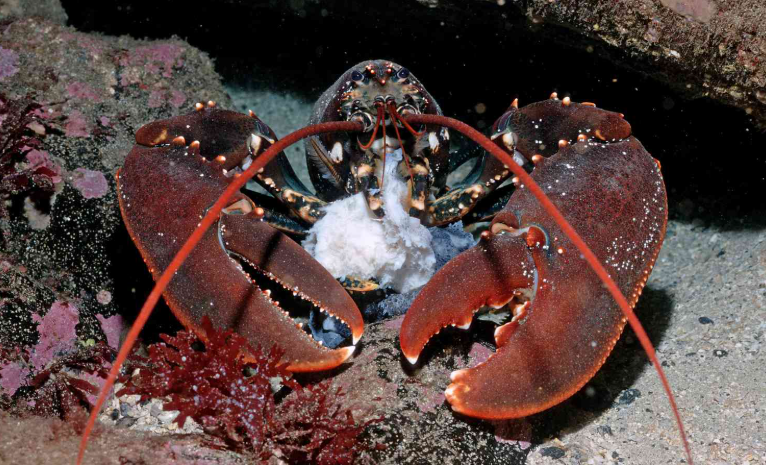
Lobsters are large marine crustaceans belonging to the order Decapoda, characterized by their hard exoskeletons, segmented bodies, and prominent claws or antennae that have made them one of the most recognizable and economically important groups of seafood in the world. Found in oceans across virtually every region of the globe, from the cold waters of the North Atlantic to the warm tropical reefs of the Caribbean and Indo-Pacific, lobsters occupy an enormous range of marine habitats and have evolved into several distinct lineages that, despite sharing the common name lobster, are often only distantly related to one another.
The broad category of lobster encompasses several genuinely different evolutionary groups. True lobsters, belonging to the family Nephropidae, are characterized by the large, asymmetrical claws that most people associate with the word lobster, and include the commercially dominant species harvested from the cold waters of the North Atlantic. Spiny lobsters, belonging to the family Palinuridae, lack large claws entirely and instead rely on long, spiny antennae and a heavily armored carapace for defense, dominating warmer tropical and subtropical waters. Slipper lobsters and squat lobsters represent further distinct lineages with their own unique body plans and ecological niches.
The global lobster fishing and aquaculture industry represents billions of dollars in economic activity annually, supporting coastal communities from Maine to Australia and everywhere in between. Lobster populations face a range of pressures including overfishing, habitat degradation, and the effects of warming ocean temperatures, which have already caused measurable shifts in the geographic distribution of several commercially important species. Conservation and sustainable management of lobster fisheries has become an increasingly important focus for marine policy in many countries.
Exploring the different types of lobsters reveals the remarkable diversity hidden behind a single common name, encompassing species adapted to environments ranging from icy continental shelves to coral reefs, from shallow tide pools to the deep ocean floor. The following overview covers true lobsters, spiny lobsters, slipper lobsters, squat lobsters, and several other related groups that are commonly referred to as lobsters despite their varied evolutionary backgrounds.
American Lobster
The American lobster, found along the northeastern coast of North America from Labrador to North Carolina, is the most commercially significant lobster species in the world, prized for its large, meaty claws and sweet, tender flesh. It is the species most people picture when they think of a classic lobster dinner.
American lobsters can live for many decades and grow to substantial sizes, with the largest individuals on record weighing over 20 kilograms, though most harvested individuals are considerably smaller. The state of Maine is particularly associated with this species, where the lobster fishing industry forms a cornerstone of the coastal economy and cultural identity.
European Lobster
The European lobster is found along the coasts of Europe and North Africa, from Norway to Morocco, and is closely related to the American lobster while displaying a generally darker blue-black coloration that distinguishes it from its North American relative. It is highly prized in European culinary traditions.
European lobster populations have faced significant pressure from overfishing in many areas, leading to conservation measures including minimum size limits and protected breeding sanctuaries in various countries. This species generally commands a premium price compared to American lobster due to its relative scarcity and the strong demand within European markets.
Norway Lobster
The Norway lobster, also widely known as scampi or langoustine, is a smaller relative of the true lobsters found in the northeastern Atlantic and parts of the Mediterranean, distinguished by its slender body and long, thin claws compared to the bulkier true lobsters. It is an important commercial species in European fisheries.
This species is typically caught using trawl nets rather than the traps used for larger lobster species, reflecting its smaller size and burrowing behavior on muddy seafloor habitats. The Norway lobster forms the basis of the dish known as scampi in many European countries, where its tail meat is a popular delicacy.
Caribbean Spiny Lobster
The Caribbean spiny lobster is the dominant commercial lobster species throughout the Caribbean Sea, the Gulf of Mexico, and the southeastern United States, lacking the large claws of true lobsters but possessing a heavily spined carapace and long antennae used for defense. It is an important species for both commercial fishing and recreational diving.
This species undertakes notable mass migrations, with groups sometimes traveling in long single-file lines across the seafloor, a behavior that has fascinated marine biologists studying lobster navigation and social behavior. Caribbean spiny lobster populations support substantial fisheries throughout the region, with the tail meat being the primary commercial product.
California Spiny Lobster
The California spiny lobster inhabits the coastal waters of the eastern Pacific from central California to the Baja California peninsula of Mexico, characterized by its reddish-brown coloration and prominent spiny antennae. It supports an important recreational and commercial fishery along the California coast.
Unlike many true lobster species, the California spiny lobster is most active at night, emerging from rocky crevices and kelp forest habitats to forage after dark. The species has become an important focus of marine protected area management in California, where fishing regulations aim to balance commercial interests with conservation goals.
Western Rock Lobster
The Western rock lobster is found along the coast of Western Australia and represents one of the most valuable single-species fisheries in the country, exported in large quantities particularly to markets in Asia. Its reddish-brown coloration and lack of large claws are typical of spiny lobster species.
This species undergoes a complex life cycle involving a long larval stage that can drift in ocean currents for many months before settling onto reef habitats as juveniles. The Western rock lobster fishery has been recognized for its sustainable management practices, including quota systems designed to maintain healthy population levels over the long term.
Tristan Rock Lobster
The Tristan rock lobster is found in the cold waters surrounding the remote Tristan da Cunha island group in the South Atlantic Ocean, representing one of the more geographically isolated lobster fisheries in the world. Its remote habitat has helped protect it from some of the pressures affecting more accessible lobster populations.
The isolation of the Tristan da Cunha islands means that this lobster species supports a fishery that is economically vital to the small local community, with exports forming a significant portion of the islands’ economy. Sustainable management of this fishery has been a priority given the limited economic alternatives available to the island’s residents.
Southern Rock Lobster
The Southern rock lobster is found in the cold waters off southern Australia and New Zealand, representing one of the most valuable seafood exports from this region, particularly to markets in China where it is considered a luxury item. Its spiny, reddish carapace is typical of rock lobster species.
This species can live for several decades and reach considerable sizes, with older individuals being particularly prized in certain markets. The Southern rock lobster fishery has faced challenges related to fluctuating export demand and the need to balance harvest levels with the slow growth rates characteristic of long-lived crustacean species.
Japanese Spiny Lobster
The Japanese spiny lobster, known locally as ise-ebi, is found in the warmer coastal waters of Japan and holds significant cultural and culinary importance, particularly during traditional celebrations and the New Year period. Its bright reddish coloration and long, robust spines are highly distinctive.
This species is often featured prominently in formal Japanese dining and ceremonial contexts, where its appearance is considered auspicious and symbolically significant. Wild populations have faced pressure from fishing demand, leading to interest in aquaculture approaches that could supplement wild-caught supplies for the Japanese market.
Mediterranean Slipper Lobster
The Mediterranean slipper lobster is found throughout the Mediterranean Sea and parts of the eastern Atlantic, belonging to a distinct family of lobsters characterized by flattened, shovel-like antennae rather than the long whip-like antennae of spiny lobsters. Its unusual appearance distinguishes it readily from other lobster types.
This species uses its flattened antennae for digging into sandy or muddy substrates, where it spends much of its time partially buried during daylight hours. While less commercially significant than true lobsters and spiny lobsters in most markets, slipper lobsters are considered a delicacy in certain regional cuisines.
Ridgeback Slipper Lobster
The ridgeback slipper lobster is found in the warm waters of the western Pacific and Indian Oceans, displaying the characteristic flattened body and shield-like antennae typical of slipper lobsters along with distinctive ridges running along its carapace. It inhabits sandy and rubble seafloor habitats.
This species is sometimes targeted by specialized fisheries in regions where it occurs in sufficient abundance, though it generally remains less economically significant than the major true lobster and spiny lobster species. Its burrowing behavior makes it less frequently encountered than more visible reef-dwelling lobster species.
Spanish Slipper Lobster
The Spanish slipper lobster, also known as the locust lobster in some regions, is found in the Mediterranean and adjacent Atlantic waters, sharing the flattened antennae and body shape characteristic of the broader slipper lobster family. Its coloration tends toward mottled browns and tans that provide effective camouflage against sandy seafloors.
This species is occasionally caught as bycatch in fisheries targeting other species, though it is sometimes specifically sought after in regions where its meat is considered a culinary delicacy. Its relatively cryptic, burrowing lifestyle means it is less frequently observed than more conspicuous reef-associated lobster species.
Red Squat Lobster
The red squat lobster belongs to a group of small crustaceans that, despite their common name, are more closely related to crabs than to true lobsters or spiny lobsters, possessing a flattened body, long claws, and a tail that is typically tucked beneath the body rather than extended. Its bright red coloration is distinctive.
Squat lobsters like this species are found in enormous numbers in certain marine environments, sometimes occurring in dense aggregations on the seafloor. While generally too small to be commercially significant as a food source on their own, squat lobsters play an important role in marine food webs as prey for larger predators.
Galathea Squat Lobster
The Galathea squat lobster represents a genus within the broader squat lobster group, found in various marine habitats around the world and characterized by the typical squat lobster body plan of a flattened carapace, prominent claws, and a tucked abdomen. Species within this genus vary considerably in size and coloration.
These small crustaceans are often found in association with specific habitats such as sponges, corals, or rocky crevices, where they may form symbiotic or commensal relationships with their host organisms. Their ecological roles, while less economically visible than larger lobster species, contribute to the complexity of the marine communities they inhabit.
Yeti Lobster
The Yeti lobster, more formally known by its scientific genus name Kiwa, is a remarkable squat lobster species discovered relatively recently living near deep-sea hydrothermal vents, distinguished by the dense mats of hair-like setae covering its claws and legs. Its discovery generated significant scientific interest.
These hairy structures are believed to host colonies of bacteria that the lobster may use as a food source, representing a fascinating example of the symbiotic relationships that have evolved in the extreme environments surrounding hydrothermal vents. The Yeti lobster’s discovery highlighted how much remains unknown about life in the deep ocean’s most extreme habitats.
Furry Lobster
The furry lobster refers to a group of small lobster-like crustaceans found in tropical and subtropical waters, characterized by a covering of fine hairs or setae over much of their body and a generally cylindrical body shape distinct from both true lobsters and spiny lobsters. Several species exist within this group.
Furry lobsters are typically found hidden within reef crevices and under rocks, emerging primarily at night to forage, which combined with their relatively small size makes them less frequently encountered than larger, more visible lobster species. They are generally not significant in commercial fisheries due to their size and cryptic habits.
Blunthorn Slipper Lobster
The blunthorn slipper lobster is found in the Indo-Pacific region, displaying the characteristic flattened, shield-shaped antennae of slipper lobsters along with a relatively short, blunt body shape that distinguishes it from more elongated slipper lobster species. It inhabits sandy and reef-associated habitats.
This species is occasionally encountered by divers and is sometimes harvested in local fisheries within its range, though it does not represent a major component of international seafood trade. Its camouflaged appearance and burrowing tendencies make it a relatively inconspicuous member of the reef communities it inhabits.
Painted Spiny Lobster
The painted spiny lobster is found in the Indo-Pacific region and is notable for its striking coloration, featuring bold patterns of stripes and spots that make it one of the more visually distinctive spiny lobster species. Its appearance has made it popular in the aquarium trade as well as a target for food fisheries.
This species inhabits coral reef environments, where its bold coloration may serve functions related to camouflage against the similarly colorful reef background or potentially to signaling between individuals. Like many reef-associated spiny lobsters, it is most active at night, sheltering in crevices during daylight hours.
Pronghorn Spiny Lobster
The pronghorn spiny lobster is found in the eastern Pacific, ranging from California to parts of Central America, and is named for the distinctive horn-like projections above its eyes that distinguish it from other spiny lobster species in the region. It shares the general body plan typical of spiny lobsters.
This species inhabits rocky and reef habitats along its range and is occasionally encountered by divers, though it is generally less commercially significant than the California spiny lobster found in overlapping portions of its range. Its distinctive head ornamentation makes it relatively identifiable among regional spiny lobster species.
Longlegged Spiny Lobster
The longlegged spiny lobster is found in the Indo-Pacific region and is distinguished by its notably elongated walking legs relative to its body size, an adaptation that may aid in movement across the reef and rubble habitats it inhabits. Its overall body plan follows the typical spiny lobster pattern of long antennae and a spined carapace.
This species is found across a wide geographic range spanning much of the tropical Indo-Pacific, occurring in a variety of reef and reef-associated habitats. While part of regional reef fisheries in some areas, it is generally less prominent in international trade than some of the larger and more abundant spiny lobster species.
Mud Spiny Lobster
The mud spiny lobster, also known as the mangrove lobster, is found in the Indo-Pacific region and is unusual among spiny lobsters for its association with muddy, brackish water habitats including mangrove forests and estuaries, rather than the clear coral reef waters preferred by most spiny lobster species. Its coloration tends toward duller browns suited to its murky habitat.
This species’ tolerance for the variable salinity and lower visibility of mangrove and estuarine environments represents an ecological niche distinct from most of its spiny lobster relatives. It is harvested in some local and regional fisheries within its range, contributing to the broader category of seafood products derived from mangrove ecosystems.
Banded Spiny Lobster
The banded spiny lobster is found in the western Atlantic and Caribbean region, displaying a pattern of bands across its body and legs that helps distinguish it from the more common Caribbean spiny lobster found in overlapping waters. Its overall body plan follows the typical spiny lobster form.
This species inhabits reef and rocky habitats similar to those used by other Caribbean spiny lobster species, and while it is sometimes caught alongside the more commercially dominant Caribbean spiny lobster, it generally represents a smaller component of regional fisheries. Its banded pattern provides a useful identification feature for divers and researchers.
Smooth Fan Lobster
The smooth fan lobster is a type of slipper lobster found in the Indo-Pacific, characterized by particularly broad, fan-shaped antennae and a relatively smooth, unadorned carapace compared to some of its more textured slipper lobster relatives. Its body shape is distinctly flattened.
This species inhabits sandy and soft-bottom habitats where its fan-shaped antennae are particularly well-suited for burrowing activity. While part of the broader diversity of slipper lobsters found throughout the Indo-Pacific, it is generally less frequently encountered or commercially significant than larger reef-associated lobster species.
Chinese Spiny Lobster
The Chinese spiny lobster is found in the waters of the South China Sea and surrounding regions, representing an important species within Asian seafood markets where spiny lobsters are highly valued, particularly for live seafood trade and restaurant display. Its coloration and spine pattern are typical of regional spiny lobster species.
This species has faced significant pressure from fishing demand given the strong market for live spiny lobster throughout much of Asia, leading to interest in aquaculture as a means of supplementing wild-caught supplies. Its larvae, like those of other spiny lobster species, undergo a long and complex developmental process that has historically made captive breeding challenging.
Galapagos Slipper Lobster
The Galapagos slipper lobster is found in the waters surrounding the Galapagos Islands and adjacent eastern Pacific regions, sharing the flattened body and shield-shaped antennae characteristic of slipper lobsters generally while occurring within the unique marine ecosystem of this isolated island chain. Its presence adds to the remarkable biodiversity associated with the Galapagos marine environment.
The protected status of much of the Galapagos marine reserve means that this species, along with many others in the region, benefits from conservation measures that limit commercial exploitation. Its relatively cryptic, burrowing lifestyle means it is less frequently the focus of research compared to the islands’ more famous marine megafauna.
Deepwater Squat Lobster
The deepwater squat lobster refers to several species within the broader squat lobster group that inhabit significant ocean depths, often on continental slopes and in deep-sea environments far from sunlight. Their body plans follow the general squat lobster pattern of a flattened carapace and prominent claws.
These deep-dwelling species are adapted to the cold temperatures, high pressures, and limited food availability characteristic of deep-sea environments, often relying on organic material that sinks from shallower waters above. While generally not commercially significant, deepwater squat lobsters contribute to scientific understanding of deep-sea ecosystem structure and function.
Reef Lobster
The reef lobster refers to a group of small lobster species found in coral reef environments throughout tropical regions, generally smaller than the major commercial spiny lobster and true lobster species and often displaying bright coloration that makes them popular in the aquarium trade. Several distinct species fall within this informal grouping.
These small lobsters typically shelter within reef crevices during the day and emerge to forage at night, similar to the behavior pattern seen in many larger spiny lobster species. Their primary economic significance tends to be within the ornamental aquarium trade rather than as food species, given their generally small size.
Spotted Spiny Lobster
The spotted spiny lobster is found in the western Atlantic and Caribbean region, distinguished from the more common Caribbean spiny lobster by a pattern of distinctive spots across its carapace and legs. It inhabits similar reef and rocky habitats to its more abundant relative.
This species is occasionally encountered alongside the Caribbean spiny lobster in regional fisheries, though it generally occurs in smaller numbers and represents a less significant component of overall catch. Its spotted pattern provides a useful distinguishing feature for divers and fisheries researchers working within the region.
Giant Tasmanian Lobster
Often used as a colloquial name for particularly large specimens of the Southern rock lobster found in the cold waters around Tasmania, this designation refers to lobsters that have grown to exceptional size over many years of life in the productive Southern Ocean waters. Such large individuals can command premium prices in export markets.
The cold, nutrient-rich waters surrounding Tasmania support slow but steady growth rates that, combined with the long lifespans typical of rock lobster species, can produce individuals of remarkable size given sufficient time. These larger specimens are particularly sought after in markets where size is associated with prestige and quality.
Hawaiian Spiny Lobster
The Hawaiian spiny lobster is found in the waters surrounding the Hawaiian Islands, representing the primary lobster species of ecological and historical significance to this isolated Pacific island chain. Its body plan follows the typical spiny lobster pattern of long antennae and a spined, clawless carapace.
This species has held cultural significance for native Hawaiian communities for centuries, in addition to its role in more recent recreational and commercial fishing activities. Population management for this species has involved balancing traditional and recreational harvest practices with conservation considerations specific to the relatively limited reef habitat available within the island chain.
Galatheid Crab Lobster
The term galatheid crab lobster refers to members of the squat lobster family Galatheidae, a diverse group found in marine environments worldwide that occupy an evolutionary position between true crabs and true lobsters, displaying characteristics of both groups. Their flattened bodies and folded tails are typical of the broader squat lobster pattern.
Species within this family occupy an enormous range of habitats, from shallow coastal waters to the deep sea, with some species forming dense aggregations on the seafloor in certain environments. Their ecological diversity makes galatheid squat lobsters an important, if often overlooked, component of marine invertebrate communities globally.
Norwegian Lobster (Bug)
Sometimes referred to informally as the Dublin Bay prawn or simply bug in various regional dialects, this name is often used interchangeably with the Norway lobster to describe the same slender-bodied, long-clawed species found throughout the northeastern Atlantic and Mediterranean. Its tail meat is particularly prized.
This species supports significant trawl fisheries in several European countries, with its meat forming the basis for the scampi dishes popular in various national cuisines. The various regional names used for this single species reflect its widespread culinary importance across different European seafood traditions.
Spear Lobster
The spear lobster refers to certain spiny lobster species found in the Indo-Pacific characterized by particularly long, spear-like rostral horns projecting forward from the head, distinguishing them from spiny lobster species with shorter or less pronounced head projections. This feature gives the group its informal common name.
These species inhabit reef and rocky habitats typical of spiny lobsters generally, with their distinctive head ornamentation potentially serving defensive functions against predators. They are part of the broader diversity of spiny lobster species found throughout the Indo-Pacific region, contributing to regional reef fisheries in areas where they are abundant.
Blue Lobster
The blue lobster is not a distinct species but rather a rare color variant of the American lobster, resulting from a genetic mutation that causes the lobster to produce an excess of a particular protein, giving its shell a striking blue coloration instead of the typical brownish-green. This variant occurs in roughly one in two million individuals.
The rarity of the blue coloration has made these individuals objects of considerable public fascination whenever they are caught, often generating media attention and sometimes being donated to aquariums rather than sold for consumption. The blue lobster phenomenon illustrates how genetic variation within a single species can produce dramatically different individual appearances.
Calico Lobster
The calico lobster, like the blue lobster, represents a rare color variant of the American lobster rather than a distinct species, displaying a mottled orange and black or orange and brown pattern across its shell that resembles the calico pattern seen in certain cats. This variant is exceptionally rare.
The unusual coloration of calico lobsters results from a different genetic variation than that responsible for blue lobsters, and the extreme rarity of this color pattern means that individuals displaying it are typically given considerable attention when caught. Such color variants do not represent separate species but rather illustrate the range of genetic diversity present within a single lobster population.