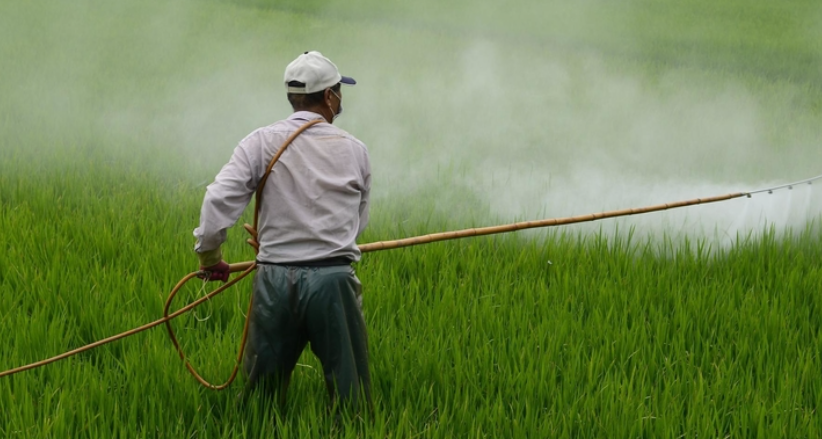
Herbicides are chemical substances used to control or eliminate unwanted plants, commonly known as weeds, that compete with crops for nutrients, water, light, and space. They are among the most widely used agricultural inputs globally, playing a critical role in modern farming by reducing the labour demands of manual weeding and significantly improving crop yields. Their development over the past century has transformed large-scale agriculture, enabling farmers to manage vast areas of land efficiently.
The economic importance of herbicides in agriculture cannot be overstated. Weeds are estimated to cause some of the most significant crop losses worldwide, and without effective weed control, yields of staple crops such as maize, wheat, rice, and soybeans would decline dramatically. Herbicides allow farmers to protect their investments and maintain consistent productivity, contributing to food security at both local and global levels. The global herbicide market is valued at tens of billions of dollars annually, reflecting how central these chemicals have become to modern food production.
Herbicides are classified in several ways — by their mode of action, chemical family, timing of application, and selectivity. Some target specific plant species while leaving crops unharmed, while others kill all vegetation indiscriminately. They can be applied before planting, before crop emergence, or after crops have sprouted, depending on the weed pressure and the crop being grown. Understanding these classifications helps farmers choose the right product for the right situation and minimise unnecessary chemical use.
Despite their benefits, herbicides come with significant environmental and health considerations. Overreliance on a single herbicide has led to the emergence of herbicide-resistant weed populations, a growing challenge that threatens the long-term effectiveness of many widely used products. Runoff from treated fields can contaminate waterways and affect non-target plant species and ecosystems. As a result, integrated weed management strategies that combine herbicide use with crop rotation, cover cropping, and mechanical weeding are increasingly promoted as sustainable alternatives.
Types of Herbicides in Agriculture
Glyphosate
Glyphosate is the most widely used herbicide in the world, sold under brand names such as Roundup. It is a broad-spectrum, non-selective systemic herbicide that works by inhibiting the EPSPS enzyme, which is essential for plant growth and cannot be found in animals or humans. It is particularly dominant in genetically modified cropping systems where glyphosate-tolerant crop varieties have been developed, allowing entire fields to be sprayed without harming the crop itself.
Atrazine
Atrazine is a selective pre-emergent and post-emergent herbicide widely used in maize, sorghum, and sugarcane production. It disrupts photosynthesis in broadleaf weeds and certain grasses by blocking electron transport in plant cells. Despite its effectiveness and low cost, atrazine has been banned or restricted in several countries due to concerns about its persistence in soil and groundwater contamination, though it remains heavily used in others, particularly in the United States.
2,4-Dichlorophenoxyacetic Acid (2,4-D)
One of the oldest synthetic herbicides still in widespread use, 2,4-D is a selective systemic herbicide that mimics the plant hormone auxin, causing uncontrolled and lethal growth in broadleaf weeds while leaving grasses largely unaffected. It is commonly used in cereal crops, lawns, and pastures and has gained renewed relevance in herbicide-resistant weed management programs when combined with other active ingredients in newer formulations.
Paraquat
Paraquat is a fast-acting, non-selective contact herbicide that destroys plant cell membranes upon exposure to light, causing rapid desiccation and death of above-ground plant tissue. It does not translocate within the plant and is quickly inactivated upon contact with soil, which limits its residual activity. Despite its effectiveness as a burn-down herbicide before planting, paraquat is highly toxic to humans and animals and has been banned in the European Union and several other countries due to serious safety concerns.
Pendimethalin
Pendimethalin is a selective pre-emergent herbicide belonging to the dinitroaniline chemical family, widely used to control annual grasses and broadleaf weeds in crops such as cotton, maize, soybeans, and vegetables. It works by inhibiting cell division and disrupting the formation of microtubules in germinating weed seeds, preventing seedling establishment. Because it must be incorporated into the soil through irrigation or rainfall to be effective, its application timing is closely tied to planting schedules.
Metolachlor
Metolachlor is a selective pre-emergent herbicide primarily used to control annual grasses and certain broadleaf weeds in maize, soybeans, sorghum, and other row crops. It inhibits the germination and early growth of weeds by interfering with cell elongation and protein synthesis. Its S-enantiomer form, known as S-metolachlor, has become increasingly preferred in modern formulations as it achieves the same weed control at lower application rates, reducing the overall chemical load on the environment.
Dicamba
Dicamba is a selective systemic herbicide that acts as a synthetic auxin, disrupting normal plant growth in broadleaf weeds and woody plants. It has been used in agriculture for decades but gained significant renewed attention with the development of dicamba-tolerant soybean and cotton varieties, which allow it to be applied over the top of growing crops. However, its tendency to volatilise and drift to neighbouring fields has led to widespread off-target crop damage and significant regulatory and legal controversies in major farming regions.
Imazapyr
Imazapyr is a broad-spectrum, non-selective systemic herbicide belonging to the imidazolinone chemical family, used to control a wide range of annual and perennial weeds, grasses, broadleaf plants, and woody vegetation. It inhibits the enzyme acetohydroxyacid synthase (AHAS), which is essential for the synthesis of branched-chain amino acids in plants. Imazapyr is commonly used in non-crop areas such as roadsides, railway corridors, and industrial sites, as well as in forestry management and some imidazolinone-tolerant crop systems.
Fluazifop-P-butyl
Fluazifop-P-butyl is a selective post-emergent herbicide used primarily to control grass weeds in broadleaf crops such as soybeans, cotton, vegetables, and sunflowers. It belongs to the aryloxyphenoxypropionate chemical group and works by inhibiting acetyl-CoA carboxylase (ACCase), an enzyme critical to fatty acid synthesis in grasses. The herbicide is absorbed through the leaves and translocated throughout the plant, making it effective against both emerged seedlings and established perennial grasses such as couch grass and Bermuda grass.
Trifluralin
Trifluralin is one of the oldest and most widely used selective pre-emergent herbicides, applied to the soil before weed seeds germinate to control annual grasses and some broadleaf weeds in crops such as cotton, soybeans, sunflowers, and vegetables. It belongs to the dinitroaniline chemical family and acts by inhibiting root and shoot development in germinating seedlings through disruption of microtubule formation. Because it is highly volatile, trifluralin must be incorporated into the soil immediately after application to prevent loss through evaporation and to ensure effective weed control.