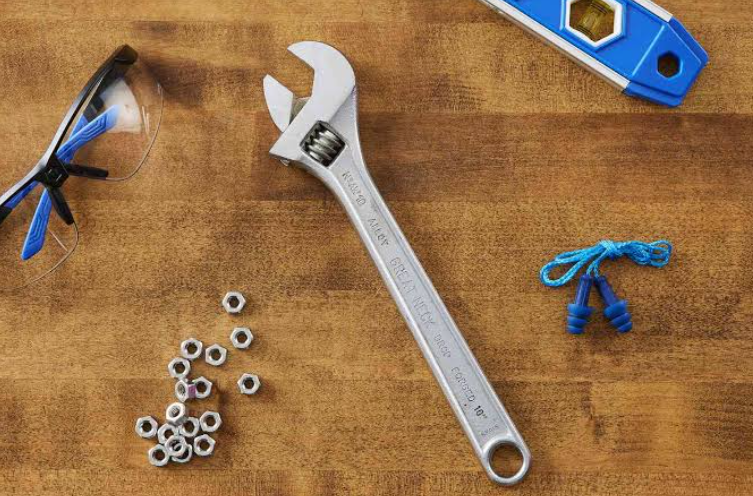
A wrench is a hand tool designed to grip, turn, tighten, or loosen fasteners such as nuts, bolts, and pipes. It is one of the most fundamental tools in mechanical work, construction, plumbing, and automotive repair. Available in a vast range of sizes and configurations, wrenches are essential in virtually every trade and industry that involves assembled components.
Wrenches work by applying torque — a rotational force — to a fastener, either tightening it to secure a joint or loosening it for disassembly. The effectiveness of a wrench depends on the length of its handle, the quality of its grip on the fastener, and the material from which it is made. Most professional-grade wrenches are manufactured from chrome-vanadium steel, which offers an excellent balance of strength, durability, and resistance to corrosion.
The range of wrench designs available today reflects centuries of innovation driven by the demands of different industries and applications. From simple fixed-jaw designs to highly engineered torque-controlled instruments, each wrench type has been developed to solve a specific mechanical challenge. This diversity means that selecting the right wrench for a given task is as important as having the tool itself.
Proper use and maintenance of wrenches significantly extends their working life and ensures safety on the job. Using the wrong size wrench can round off fastener edges, damage threads, or cause the tool to slip and injure the user. Keeping wrenches clean, storing them properly, and inspecting them regularly for cracks or wear are basic practices that every tradesperson and DIY enthusiast should follow.
Open-End Wrench
The open-end wrench features two U-shaped jaws of different sizes at each end of the handle, allowing it to grip flat-sided fasteners from the side. It is one of the most common wrenches found in toolboxes worldwide and is particularly useful in tight spaces where a closed loop cannot be placed over a bolt head. Its limitation is that it contacts only two faces of a fastener, which can lead to slippage under heavy torque.
Box-End Wrench
A box-end wrench has a fully enclosed circular head with internal points that grip all sides of a nut or bolt head simultaneously. Available in 6-point and 12-point configurations, it provides a much more secure grip than an open-end wrench and significantly reduces the risk of rounding off fastener edges. The 6-point version is preferred for heavy-duty applications as it distributes force more evenly across the fastener.
Combination Wrench
The combination wrench features an open-end jaw on one side and a box-end head of the same size on the other, combining the advantages of both designs in a single tool. This versatility makes it one of the most popular and widely used wrenches in both professional and home workshop settings. Sets of combination wrenches covering a range of sizes are a standard component of most tool kits.
Adjustable Wrench
Also known as a crescent wrench, the adjustable wrench has a movable lower jaw that can be widened or narrowed by turning a worm gear mechanism on the handle. This allows a single tool to fit a variety of fastener sizes, making it especially useful when a full set of fixed wrenches is not available. While convenient, it is less precise than fixed wrenches and should not be used as a substitute in heavy-torque applications.
Socket Wrench
A socket wrench uses interchangeable sockets that attach to a ratcheting handle, allowing the user to tighten or loosen fasteners quickly without removing and repositioning the tool after each turn. The ratchet mechanism enables continuous rotation in one direction while freeing in the other, dramatically speeding up repetitive fastening tasks. Socket sets come in standard and metric sizes and are available in various drive sizes including 1/4, 3/8, and 1/2 inch.
Torque Wrench
A torque wrench is a precision tool designed to apply a specific, measurable amount of rotational force to a fastener. It is essential in applications where over-tightening or under-tightening can cause mechanical failure, such as in engine assembly, wheel lug nuts, and structural bolting. Torque wrenches are available in click-type, beam-type, digital, and dial configurations, each suited to different levels of precision and working environments.
Allen Wrench (Hex Key)
The Allen wrench, also called a hex key, is an L-shaped tool with a hexagonal cross-section designed to drive bolts and screws with hexagonal socket heads. It is widely used in furniture assembly, bicycle maintenance, and machinery where recessed fasteners are employed. Allen wrenches are available individually or in folding sets and are among the simplest and most compact wrenches in common use.
Pipe Wrench
The pipe wrench is a large, heavy-duty adjustable wrench designed specifically for gripping and turning round objects such as pipes and pipe fittings. Its serrated, angled jaws bite into the surface of the pipe as torque is applied, providing a firm grip that increases with the force used. Pipe wrenches are a staple tool in plumbing and are typically used in pairs — one to hold and one to turn.
Strap Wrench
A strap wrench uses a flexible strap made of rubber, nylon, or chain looped around an object to grip and turn it without damaging the surface. It is ideal for working on polished pipes, oil filters, jar lids, and other round objects where jaw marks would be unacceptable. The strap wrench is particularly popular in automotive work for removing oil filters and in plumbing for turning chromed or decorative fittings.
Chain Wrench
The chain wrench uses a length of heavy-duty chain in place of a jaw to wrap around and grip pipes, rods, or irregularly shaped objects of large diameter. It is capable of handling objects too large for conventional pipe wrenches and is commonly used in industrial plumbing, oil field work, and heavy pipe installation. The chain locks around the object and tightens as turning force is applied, providing a secure grip on even the largest fittings.
Ratcheting Wrench
A ratcheting wrench combines the slim profile of a standard combination wrench with a built-in ratcheting mechanism in the box end. This allows the user to turn fasteners continuously without lifting and repositioning the wrench, making it significantly faster than a conventional box-end wrench in confined spaces. It is available in both open-ratchet and sealed-head designs across a wide range of sizes.
Flare Nut Wrench
Also known as a line wrench or tube wrench, the flare nut wrench is similar to a box-end wrench but has a small opening cut into the head to allow it to slip over tubing or brake lines. It grips more faces of the fitting than an open-end wrench, reducing the risk of rounding while still allowing access to fittings attached to continuous lines. It is an essential tool in automotive brake and fuel line work.
Crowfoot Wrench
A crowfoot wrench is an open-end or flare nut-style wrench head without a handle, designed to be used with a socket wrench extension and ratchet. It allows torque to be applied to fasteners in locations that are completely inaccessible to conventional wrenches or sockets. Crowfoot sets are a valuable addition to any professional mechanic’s toolkit for working in tight engine bays and around obstructions.
Spanner Wrench
The spanner wrench is a specialized tool with one or more pins, hooks, or pegs that engage with corresponding notches, holes, or slots on a fastener rather than gripping flat sides. It is used on round locknuts, bearing retainers, and other non-standard fasteners commonly found in machinery, bearings, and plumbing fittings. Different configurations including hook, pin, and face spanner designs cover a wide variety of specialized applications.
Impact Wrench
An impact wrench is a power tool that delivers high-torque output through rapid, repetitive hammering impacts combined with rotation, allowing it to loosen or tighten heavily seized or high-torque fasteners with minimal effort from the operator. Available in pneumatic, electric, and cordless versions, impact wrenches are standard equipment in automotive garages, construction sites, and assembly lines. They are especially prized for their ability to remove stubborn lug nuts and large bolts quickly.
Lug Wrench
A lug wrench is a dedicated tool for removing and installing the lug nuts that secure a vehicle’s wheels. It typically comes in an L-shape or X-shape (cross wrench) configuration with a socket at one or more ends sized to match the vehicle’s lug nuts. Most vehicles come supplied with a basic lug wrench in the spare tyre kit, while aftermarket versions offer better leverage and ergonomics for roadside tyre changes.
Monkey Wrench
The monkey wrench is an older style of adjustable wrench with smooth, flat jaws set perpendicular to the handle and adjusted via a screw mechanism. Unlike the more modern crescent wrench, its jaws are oriented at a right angle, giving it a distinctive appearance. While largely replaced by the adjustable crescent wrench in modern workshops, it remains in use in some plumbing and industrial applications and is a recognized icon of manual labour.
Basin Wrench
A basin wrench is a specialized plumbing tool with a long shaft and a pivoting jaw at one end, designed specifically to reach up into the confined space beneath sinks to tighten or loosen the mounting nuts on faucets and supply lines. Its pivoting head can be repositioned to work in both tightening and loosening directions, and the long handle provides enough leverage to break loose corroded nuts. It is an indispensable tool for any plumber working on faucet installations.
Radiator Wrench
A radiator wrench is a specialized tool used to grip and turn the square or hexagonal plugs found on vehicle radiators and heating system components. Its compact design allows it to work in the tight spaces around radiator fittings where conventional wrenches cannot reach easily. It is a niche but valuable tool in automotive cooling system maintenance and repair.
Tension Wrench
A tension wrench, also called a turnkey or tension tool, is a small, flat L-shaped tool used in lock picking to apply light rotational tension to a lock cylinder while the pins are being manipulated. It is a fundamental tool in locksmithing and security work, used to open locks when keys are unavailable. While associated with security professionals, it is also an important instrument in locksport, a hobby community focused on the mechanical study of locks.
Pedal Wrench
A pedal wrench is a long, thin wrench specifically designed to remove and install bicycle pedals, which use a standard threading but are often tightened very firmly and located in a cramped position beside the crank arm. Its slim profile allows it to fit into the narrow gap between the pedal spindle and the crank, and its long handle provides the leverage needed to break loose stubborn pedals. It is an essential tool for any cyclist or bicycle mechanic.
Drum Key Wrench
A drum key is a small T-shaped wrench with a square socket head used to tune the tension rods on drum heads. By tightening or loosening each tension rod evenly, drummers can adjust the pitch and tone of each drum in their kit. It is a small but essential tool for any percussionist, available in standard and speed-handle designs for faster tuning.
Fire Hydrant Wrench
A fire hydrant wrench is a large, specialized pentagon-socket wrench used by fire departments to open and close the pentagonal nuts on fire hydrants. The pentagon shape is used instead of a standard hexagonal fitting to discourage unauthorized opening of hydrants by the public. These wrenches are made to strict specifications and are a required piece of equipment on every fire apparatus.
Spoke Wrench
A spoke wrench is a small tool with notched openings of specific sizes used to tighten or loosen the nipples that connect the spokes to the rim of a bicycle wheel. Proper spoke tension is critical to wheel strength, alignment, and performance, and spoke wrenches allow mechanics to true a wheel by adjusting individual spokes. They are available in fixed and adjustable versions to accommodate different nipple sizes.
Armorer’s Wrench
An armorer’s wrench is a multi-function tool used by firearms technicians to disassemble, assemble, and adjust components of rifles and pistols. It typically features multiple socket sizes, pins, and notched openings to engage with the specialized fasteners and barrel nuts found on firearms. The most common versions are designed for AR-15 and M16-pattern rifles, where they are used to install and remove the barrel nut and castle nut during armoring work.
Plumber’s Wrench
A plumber’s wrench is a broad category of heavy-duty adjustable wrenches designed for use with the large-diameter fittings, nuts, and pipes encountered in plumbing work. It typically features wide, smooth or serrated jaws capable of gripping pipes, large hexagonal nuts, and compression fittings without damaging threads. The term is sometimes used interchangeably with pipe wrench, though dedicated plumber’s wrenches may have different jaw geometries suited to specific fittings.
Oil Filter Wrench
An oil filter wrench is a specialized tool designed to grip and remove the cylindrical spin-on oil filters used on vehicle engines. It comes in several configurations including strap, cup, and claw designs, each suited to different filter sizes and access conditions. Because oil filters are often over-tightened by previous installations or seized by heat and oil residue, a dedicated removal tool makes the job significantly easier and reduces the risk of crushing or damaging the filter.
Gland Nut Wrench
A gland nut wrench is a specialized tool used to tighten or loosen the large, round gland nuts found on hydraulic cylinders, shock absorbers, and steering components. These nuts typically have notched or splined outer edges that the wrench engages, and their large diameter requires a purpose-built tool rather than a standard wrench. Gland nut wrenches are essential in heavy equipment maintenance and hydraulic system repair.
Faucet Seat Wrench
A faucet seat wrench is a small, double-ended tool used to remove and install the replaceable valve seats found inside compression-type faucets. One end features a square head and the other an octagonal head to fit the two most common seat sizes encountered in plumbing repair. It is an inexpensive but highly specific tool that makes faucet seat replacement possible without disassembling the entire tap body.
Interchangeable Head Wrench
An interchangeable head wrench system consists of a single handle onto which different wrench heads — open-end, box-end, ratcheting, and others — can be attached and swapped as needed. This modular approach reduces the number of individual tools required and offers flexibility in tight working environments. Professional-grade interchangeable systems are available from several tool manufacturers and are popular in aerospace and precision engineering applications.
Saltus Wrench
A saltus wrench is a specialized socket wrench in which the socket is permanently attached to the handle rather than being a separate, interchangeable piece. The socket can swivel on the handle to allow angled access to fasteners, and some designs incorporate a ratcheting mechanism. Although less versatile than a standard ratchet and socket set, the saltus wrench is compact and well-suited to repetitive tasks on a single fastener size.
Tap Wrench
A tap wrench is a T-handled or double-handled tool used to hold and turn a tap — a cutting tool used to create internal threads in a drilled hole. The wrench grips the square shank of the tap and provides the controlled, sensitive turning motion needed to cut threads cleanly without breaking the tap. It is a fundamental tool in metalworking, engineering workshops, and any setting where threaded holes must be created by hand.
Die Stock Wrench
A die stock is the wrench-like holder used to grip and turn a threading die, which cuts external threads onto a rod or bolt. It features two handles extending from a central body that holds the die securely in place during cutting. Die stocks are available in various sizes to accommodate different die diameters and are paired with tap wrenches in threading sets used across metalworking and engineering trades.
Pliers Wrench
The pliers wrench is a hybrid tool combining the gripping versatility of pliers with the flat, parallel jaws of a wrench. Its parallel jaw action ensures even pressure on fasteners of different sizes without tilting or slipping, and the adjustable joint allows it to accommodate a range of sizes. It is particularly popular in European workshops as a general-purpose gripping and fastening tool for both plumbing and mechanical work.
Angle Head Wrench
An angle head wrench, or angled wrench, has its head set at an angle to the handle — typically 15 or 75 degrees — allowing the user to access fasteners that are recessed, surrounded by obstructions, or located at awkward angles. This offset geometry provides clearance for the handle to swing freely in spaces where a straight wrench would be blocked by surrounding components. Angle head wrenches are essential in automotive engine work and tight machinery maintenance.
Pneumatic Wrench
A pneumatic wrench is a power-driven wrench operated by compressed air, typically through a hose connected to an air compressor. It delivers high torque output rapidly and consistently, making it a preferred tool in assembly lines, tyre shops, and heavy equipment maintenance where large volumes of fasteners must be tightened or loosened efficiently. Pneumatic wrenches are available in impact and non-impact versions and are valued for their power-to-weight ratio compared to electric tools.
Battery-Powered Wrench
A battery-powered or cordless wrench uses a rechargeable lithium-ion battery to drive a motor that delivers rotational or impact force to fasteners. The freedom from air hoses and power cords makes cordless wrenches highly portable and convenient for field work, construction sites, and mobile automotive repair. Advances in battery technology have brought cordless wrenches close to pneumatic tools in terms of torque output, making them increasingly popular across all trades.
Hydraulic Torque Wrench
A hydraulic torque wrench uses hydraulic pressure to deliver extremely precise and very high torque values to large fasteners in industrial and structural applications. It is used in heavy industry, oil and gas, wind turbine maintenance, and bridge construction where fasteners must be tightened to exact specifications that exceed the capability of manual or pneumatic tools. Hydraulic torque wrenches are controlled by a pump unit and can apply tens of thousands of foot-pounds of torque with consistent accuracy.
Spark Plug Wrench
A spark plug wrench is a specialized socket wrench with a deep, rubber-lined socket designed to grip and remove spark plugs from vehicle engines. The rubber insert holds the spark plug securely during removal and installation to prevent it from dropping into the engine bay. Spark plug sockets are available in standard sizes to fit the range of spark plug hex sizes used across different vehicle makes and models.
Garbage Disposal Wrench
A garbage disposal wrench, also called an Allen-type disposal wrench, is a short hex wrench designed to be inserted into the socket at the base of a garbage disposal unit to manually free a jammed grinding plate. When food debris causes the motor to seize, inserting the wrench and turning it back and forth frees the impeller plate and allows the unit to restart. Most garbage disposal units are supplied with a dedicated wrench sized for their specific socket.
Bung Wrench
A bung wrench is a specialized tool used to open and close the bung plugs — large threaded caps — found on barrels, drums, and storage tanks. They are available in cross-handle, ratchet, and socket-drive versions and are made of materials such as brass, aluminium, or steel to suit different industries and chemical compatibility requirements. Bung wrenches are widely used in food processing, chemical storage, fuel handling, and brewing operations.
Structural Bolt Wrench
Also known as a heavy hex wrench or structural wrench, this tool is designed for the large-diameter, heavy hex bolts used in steel frame construction, bridge building, and infrastructure work. These bolts require high torque values that standard wrenches cannot achieve, so structural bolt wrenches are typically used in conjunction with impact guns or hydraulic tools. Proper installation of structural bolts is critical to the integrity of steel connections in buildings and bridges.
Ratcheting Pipe Wrench
A ratcheting pipe wrench combines the jaw design of a traditional pipe wrench with a ratcheting mechanism that allows the jaws to reset and re-grip without fully releasing the pipe. This eliminates the need to lift and reposition the wrench after each stroke, significantly speeding up work on pipes in tight or awkward locations. It is a modern evolution of the classic pipe wrench, offering improved efficiency in plumbing and pipefitting.
Compression Sleeve Puller Wrench
This specialized wrench is used in refrigeration, air conditioning, and plumbing to remove compression sleeves and ferrules from tubing after they have been compressed onto fittings. Standard tools cannot grip and pull the sleeve evenly without damaging the tubing, making this dedicated tool essential for clean disassembly of compression-type connections. It is an important tool for HVAC technicians and plumbers who frequently service compression fittings.
Dog Bone Wrench
A dog bone wrench, named for its distinctive shape, is a double-ended socket tool with a fixed socket at each end, commonly used on bicycles for tightening specific bolt sizes found on brakes, stems, and derailleur components. Its compact, handleless design makes it suitable for carrying in a saddle bag as an on-the-road repair tool. The name comes from the visual resemblance of the tool’s two rounded ends connected by a narrow shaft.
T-Handle Wrench
A T-handle wrench consists of a socket or hex key mounted on the centre of a straight crossbar, forming a T-shape that allows the user to apply rotational force with both hands simultaneously. This design provides excellent torque control and is widely used in machinery maintenance, bicycle repair, and industrial assembly. T-handle hex key sets are a common sight in assembly facilities where repetitive fastening of hex socket screws is required.
Plumber’s Basin Tap Wrench
This is a long-reach version of the standard basin wrench, featuring an extended shaft and a pivoting jaw to access the deeply recessed mounting nuts on certain basin mixers and tap fittings in modern bathroom installations. The additional length is necessary in contemporary vanity units where the tap sits further from the access point than in traditional installations. It is a niche but indispensable tool for plumbers fitting modern bathroom furniture and concealed tap systems.
Distributor Wrench
A distributor wrench is a specialized open-end wrench with a thin, offset head designed to reach the hold-down bolt of an ignition distributor on older vehicle engines. The slim profile allows the wrench to slip between the distributor body and surrounding engine components, and the offset angle provides clearance for turning in a confined space. Although less commonly needed on modern vehicles with electronic ignition systems, it remains essential for maintaining and tuning classic and vintage cars.