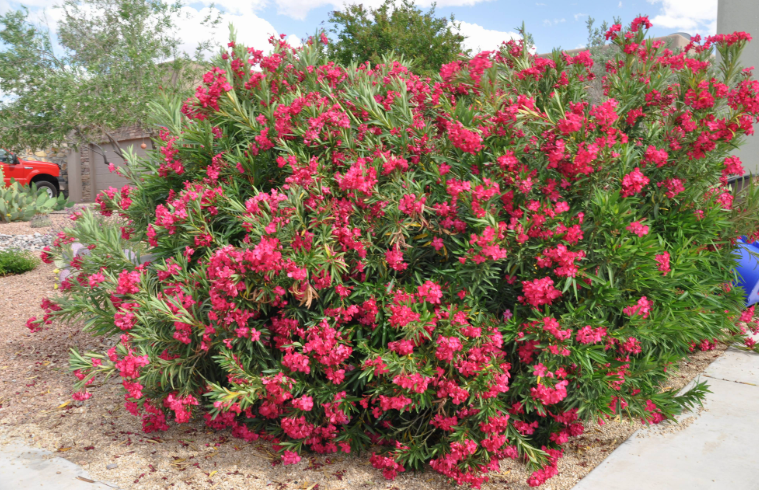
Oleander (Nerium oleander) is a fast-growing evergreen shrub native to the Mediterranean region, North Africa, and parts of Asia, prized for its glossy lance-shaped leaves and abundant clusters of vibrant flowers. Mature plants typically reach heights of 6 to 19 feet (2 to 6 meters), depending on the cultivar, making the shrub suitable for hedges, privacy screens, or eye-catching specimen plantings.
The blooms appear in shades of white, pink, red, salmon, and pale yellow, often arriving in waves from late spring through autumn, with some warm-climate gardens enjoying nearly continuous color. Flowers may be single or double-petaled, and many cultivars carry a sweet, rose-like fragrance that adds to the plant’s appeal.
Few shrubs match oleander’s toughness, as it tolerates drought, salt spray, poor soil, and heavy urban pollution with remarkable ease. This resilience has made it a go-to choice for coastal gardens, highway median plantings, and low-water landscaping projects in warm regions around the world.
Despite its ornamental value, every part of the oleander plant contains cardiac glycosides that make it highly toxic if ingested. Gardeners should wear gloves when pruning, avoid burning trimmings, and keep the plant away from areas frequented by curious children or grazing pets.
Oleander grows reliably outdoors in USDA zones 8 through 11, where mild winters allow it to thrive year-round. In colder climates, it is often grown in containers and moved indoors or into a sheltered space during the cold months to avoid frost damage.
With its drought tolerance, long bloom season, and minimal care requirements once established, oleander remains a top pick for gardeners wanting a hardy, high-impact shrub that rewards little effort with months of vivid color.
How to Grow and Care for Oleander Shrub
- Pick a Sunny Spot: Oleander flowers most abundantly when given at least 6 hours of direct sunlight daily. Plants grown in partial shade tend to produce fewer blooms and develop a leggier, less attractive form.
- Choose Well-Draining Soil: This shrub adapts to sandy, rocky, or clay soils as long as water doesn’t pool around the roots. Poor drainage is one of the few conditions that can seriously harm an otherwise tough plant.
- Plant in Spring or Fall: Cooler planting seasons give roots time to establish before facing summer heat or winter cold. Space plants 6 to 12 feet apart based on the expected mature spread of the chosen variety.
- Water Consistently While Young: Newly planted oleanders benefit from watering once or twice a week until roots are established. Deep, infrequent watering encourages a strong root system better suited to future drought.
- Cut Back Watering Once Mature: Established oleanders need little supplemental water outside of extended dry periods. Excess moisture around the roots can lead to fungal problems and root rot over time.
- Apply Fertilizer Sparingly: A light dose of balanced, slow-release fertilizer in early spring is typically all this shrub needs. Overfeeding can result in excessive leafy growth at the expense of flowers.
- Prune After the Main Bloom: Late winter or post-flowering pruning helps maintain shape and removes dead or damaged wood. Heavy pruning in fall should be avoided, as it can trigger new growth that’s vulnerable to frost.
- Handle with Protective Gear: All parts of the oleander plant are toxic, so gloves and long sleeves are recommended during pruning or cleanup. Hands should be washed thoroughly after any contact with the plant.
- Add a Layer of Mulch: Mulching around the base helps conserve soil moisture, suppress weeds, and moderate root temperatures. Mulch should be kept a few inches away from the trunk to prevent rot.
- Guard Against Frost in Marginal Zones: Gardeners in USDA zones below 8 often grow oleander in containers that can be brought indoors during winter. Outdoor plants in borderline climates may need frost cloth during cold snaps.
- Check Regularly for Pests: Aphids, scale insects, and oleander caterpillars are the most common pests affecting this shrub. Early detection and treatment with insecticidal soap or hand removal prevents widespread damage.
- Be Alert for Oleander Leaf Scorch: This bacterial disease, spread by leafhopper insects, causes progressive leaf browning and decline with no known cure. Infected plants should be removed to protect nearby healthy oleanders.
- Propagate Through Stem Cuttings: Cuttings of 6 to 8 inches taken in late spring or summer root readily in water or moist potting mix. This is an inexpensive way to create new plants from an existing favorite.
- Create Hedges and Windbreaks: Spacing oleanders according to their mature width allows them to form dense, attractive screens. Periodic trimming keeps hedges neat while preserving the shrub’s natural flowering habit.
- Grow Compact Varieties in Pots: Dwarf oleander cultivars do well in large containers with drainage holes and a well-draining potting mix. Container-grown plants require more frequent watering than those planted in the ground.
- Deadhead to Prolong Flowering: Removing spent flower clusters redirects the plant’s energy toward producing new blooms rather than forming seed pods. This small task can noticeably extend the overall flowering season.