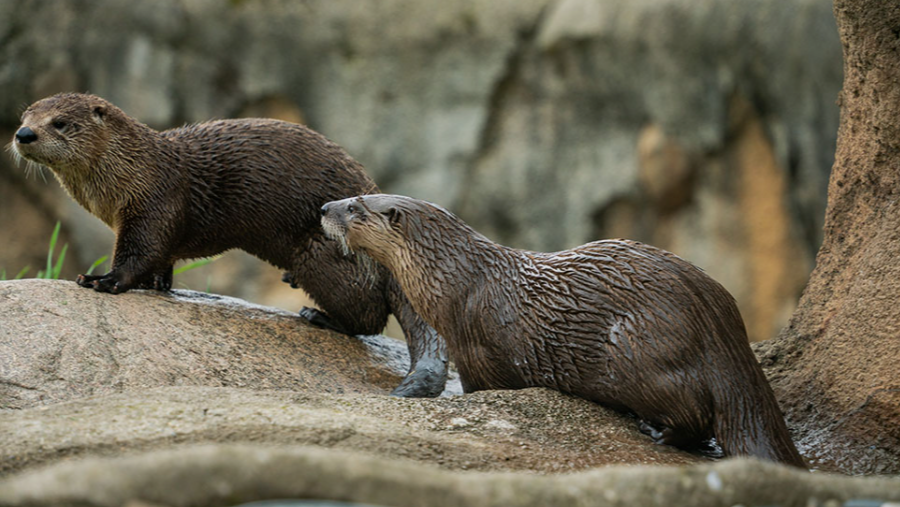
The types of otters range from the tiny Asian small-clawed otter to the 6-foot giant otter of South America, and they live on every continent except Antarctica and Australia. Otters are semi-aquatic members of the weasel family, and most authorities recognize 13 living species in 7 genera. Two of those species live in the sea, while the rest live mainly in rivers, lakes and wetlands. Otters are famous for their playful behavior, from sliding down mud banks to juggling stones.
All otters share a long, streamlined body, a strong tail and webbed feet. Their dense fur traps air, so it works as insulation, and the sea otter has the thickest coat of any animal. Sea otters also use tools, cracking shellfish open on a stone balanced on the chest. Species that live in murky water, such as the clawless otters, rely on sensitive hands to find prey by touch instead of sight.
Otters matter far beyond their charm. Sea otters keep sea urchin numbers in check, which protects kelp forests, and river otters are indicators of clean, healthy waterways. Unfortunately, about half of all otter species are threatened. Hunting for fur, water pollution, drained wetlands and fishing conflicts have all taken a toll.
Because only 13 living species exist, this article reaches 21 by also covering the 3 sea otter subspecies, the extinct Japanese otter, 3 regional forms of the North American river otter and 1 giant fossil otter. Here are the 21 types of otters, along with where each one is found.
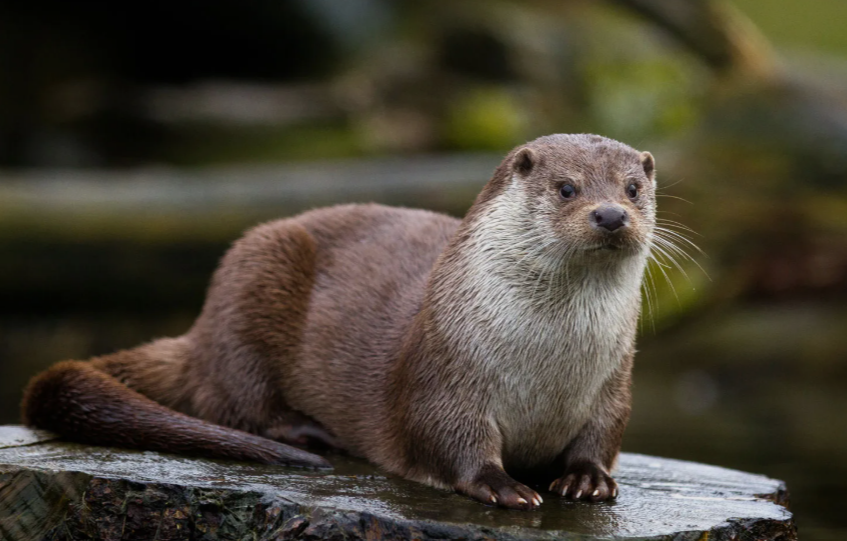
1. Sea Otter
The sea otter is the only otter that spends almost its entire life in the ocean. It has no blubber, so it depends entirely on its dense fur for warmth, and it must eat a large share of its body weight each day. It floats on its back and uses a stone to crack open clams, mussels and urchins. Males can weigh up to about 100 pounds.
It lives along the North Pacific coast, from California to Alaska, Russia and northern Japan, usually in kelp beds. The worldwide population is estimated at about 108,000, and the species is listed as endangered. Before the fur trade, there were 150,000 to 300,000 sea otters, but hunting reduced them to a few thousand survivors. Today they are recovering in many areas, although gaps remain.
2. Giant Otter
The giant otter is the longest otter in the world, reaching almost 6 feet from nose to tail tip. It has a bold white or cream throat patch, and each animal’s pattern is unique, which helps researchers identify individuals. It is highly social and lives in family groups that can include 10 or more animals. Groups hunt together and call to each other with loud, varied sounds.
It lives in the rivers, lakes and flooded forests of South America, including the Amazon, Orinoco and Pantanal regions. It feeds mainly on fish, but it also takes caimans, snakes and crustaceans. It is listed as endangered because of habitat loss, mining pollution and past hunting for its pelt. Ecotourism in places such as Brazil’s Pantanal now helps protect it.
3. Marine Otter
The marine otter is a small, rugged otter that lives along the rocky Pacific coast of South America. It is much smaller than the sea otter and stays within about 100 meters of shore. It is also called the sea cat, or gato marino in Spanish. Its nose is covered with hair, an unusual trait among otters.
It lives on the coasts of Peru and Chile, with a small population in Argentina. It rests in rock cavities during the day, giving birth and raising young there, unlike the sea otter, which does so at sea. Its diet includes crustaceans, fish and mollusks. It is endangered because of hunting, fishing nets and coastal development.
4. Southern River Otter
The southern river otter is a solitary, dark brown otter with one of the smallest ranges of any otter. It lives in cold, clear rivers, lakes and coastal waters. It is a skilled hunter of fish and crustaceans. Its fur is thick and dense, which suits the chilly climate.
It lives in southern Chile and western Argentina, including the Patagonian region. Some animals live along the Pacific coast and among fjords, while others live in inland rivers and lakes. It is endangered because of past hunting, habitat loss and dam building. Conservation work focuses on protecting river corridors and reducing conflict with fishermen.
5. Neotropical Otter
The neotropical otter is the most widespread otter in Latin America. It is a medium-sized, dark brown otter with a pale throat. It lives alone or in small family groups and hunts fish and crabs. It is a strong swimmer that is also at ease on land.
It ranges from Mexico through Central America and down to Argentina and Uruguay. It uses rivers, streams, lakes, mangroves and wet forests, from lowlands to mountain streams. Its status is near threatened, and its numbers are falling in many areas. Pollution, mining, deforestation and hunting are the main threats.
6. North American River Otter
The North American river otter is the most familiar otter in the United States and Canada. Adults weigh about 11 to 33 pounds, and large males can top 33 pounds. It is a sleek, brown swimmer that can stay underwater for several minutes. It is known for sliding down snowbanks and mud slopes for fun.
It occupies waterways in every US state except Hawaii and in all Canadian provinces and territories, though Prince Edward Island lost its otters. Trapping and pollution once wiped out otters across large areas. More than 4,000 were reintroduced into 21 states starting in 1976, and the species is now listed as least concern. It lives in rivers, lakes, marshes and coastal waters.
7. Eurasian Otter
The Eurasian otter is the most widely distributed otter and one of the most widespread mammals in the Old World. It has a brown coat, a pale throat and a muscular tail. It hunts fish, frogs, crayfish and water birds, mostly at night. Between 7 and 12 subspecies have been recognized, depending on the study.
It lives across Europe, Asia and North Africa, in rivers, lakes, marshes and along coasts. Pollution and hunting wiped it out in many places in the 20th century, but cleaner rivers have brought it back in places such as the UK. Overall, it is listed as near threatened, and its numbers are decreasing in parts of Asia. It remains a flagship species for river conservation.
8. Hairy-Nosed Otter
The hairy-nosed otter is one of the rarest and least-known otters. Its nose is completely covered in short fur, which gives it its name. It is a dark brown otter with a pale underside, reaching about 4.3 feet long and 18 pounds. It was once thought to be extinct until it was rediscovered in the 1990s.
It lives in Southeast Asia, in peat swamp forests, coastal mangroves and rice fields, with records from Sumatra, Borneo, the Malay Peninsula, Thailand, Cambodia and Vietnam. The species has declined by half or more over three decades. It is listed as endangered. Habitat loss, poaching and fishing nets are the major threats.
9. Smooth-Coated Otter
The smooth-coated otter has short, sleek fur and a flat tail that is wide at the base. It is a social, noisy animal that lives in family groups and hunts fish cooperatively. It is a strong swimmer and often shares habitat with the Asian small-clawed otter. Wild groups have even become famous in the city of Singapore.
It lives across southern Asia, including India, Southeast Asia and parts of China. A separate form lives in the marshes of southern Iraq. It uses rivers, estuaries, mangroves, rice paddies and wetlands. It is vulnerable because of wetland loss, pollution and the fur trade.
10. Asian Small-Clawed Otter
The Asian small-clawed otter is the smallest otter in the world. It has short claws and partially webbed fingers that it uses like hands to feel for crabs, snails and shellfish. It lives in tight family groups and makes a wide range of chirps and whistles. It is the otter most often seen in zoos.
It lives in South and Southeast Asia, from India and Nepal through Thailand and Malaysia to Indonesia and the Philippines, as well as southern China. It uses mangroves, rice paddies, freshwater wetlands and slow streams. It is vulnerable because wetlands are being drained and the animal is hunted for the pet trade. Its numbers are decreasing across its range.
11. African Clawless Otter
The African clawless otter is a large, brown otter with a white throat and cheeks. It lacks claws on its front paws, and its sensitive fingers let it feel for crabs, frogs and fish under rocks in muddy water. It relies on touch more than sight. It lives alone or in small family groups.
It lives across much of sub-Saharan Africa, including southern and central regions. It uses rivers, lakes, marshes, estuaries and coastal waters, and can spend time far from water. It is listed as near threatened, and its numbers are decreasing in many areas. Pollution, siltation and hunting are the main concerns.
12. Congo Clawless Otter
The Congo clawless otter is the least aquatic of all otters. It has short fur and only partly webbed feet, which suit hunting in shallow forest streams and swamps. It forages on land and in muddy water for crabs, fish, frogs and other prey. It is also called the Cameroon clawless otter.
It lives in the lowland rainforests and wetlands of central Africa, in the Congo River basin. It is the least-studied otter, and little is known about its numbers. Some researchers treat it as a subspecies of the African clawless otter, though most authorities consider it a species. It is considered threatened, with assessments ranging from near threatened to vulnerable.
13. Spotted-Necked Otter
The spotted-necked otter, also called the speckle-throated otter, has a dark brown body with white spots on the neck and chest. It is a lively, social otter that often turns daily activities into games. Males and females form separate groups for much of the year, meeting mainly to mate. It feeds mostly on fish.
It lives across sub-Saharan Africa, but not in dense rainforest or very dry regions. It favors large, clean lakes and rivers, including those around the Great Lakes region of East Africa. It is listed as near threatened, and its numbers are decreasing. Pollution, fishing nets and wetland loss are the main threats.
14. Northern Sea Otter
The northern sea otter is the sea otter subspecies of Alaska, British Columbia and Washington. It is larger than its California cousin, with males weighing up to about 100 pounds. It lives in the cold waters of the North Pacific and relies on thick fur and heavy feeding to stay warm. It is a keystone predator of sea urchins and clams.
Alaska holds three groups, called stocks, in the southwest, southcentral and southeast. The southwest Alaska stock declined by more than 50 percent from the mid-1980s and is listed as threatened under the Endangered Species Act. The most recent estimate for that stock is 51,935 otters. Otters were also moved to British Columbia and Washington to restore lost populations.
15. Southern Sea Otter
The southern sea otter, also called the California sea otter, is the smallest sea otter subspecies and the smallest marine mammal in North America. Females weigh up to 50 pounds, and males reach about 70 pounds. It is a symbol of Monterey Bay and the California coast. It lives in kelp forests, eelgrass beds and estuaries.
It lives along the central California coast, with a population of roughly 3,000 animals. It once ranged from Baja California to Oregon but now covers only a portion of that. It is listed as threatened under the Endangered Species Act. Oil spills, disease and shark bites are major concerns.
16. Asian Sea Otter
The Asian sea otter, also called the Russian or Commander sea otter, is the largest sea otter subspecies. It lives in the cold waters of the western North Pacific. It has thick, dark fur and heavy bones. It is a keystone predator in kelp forests.
It lives along the Commander Islands, Kamchatka Peninsula and Kuril Islands in Russia, and in northern Hokkaido in Japan. The Russian population is estimated at about 22,500, though the northern Kurils have seen declines. Remnant colonies on the Commander Islands and Kamchatka helped it recover. Sea ice limits its northern range.
17. Japanese Otter
The Japanese otter was a river otter that once lived across the main islands of Japan. It was officially declared extinct on August 28, 2012, and had not been seen in the wild since 1979. It was once even seen in Tokyo in the 1880s. It is the official animal symbol of Ehime Prefecture.
It lived in rivers and coastal waters throughout Honshu, Shikoku and Kyushu. Pollution, overhunting and habitat loss wiped it out. Genetic studies suggest it was a distinct lineage, though some scientists classify it as a subspecies of the Eurasian otter. In 2017, camera traps on Tsushima Island recorded a Eurasian otter, raising hopes that otters may still exist in Japan.
18. Pacific River Otter
The Pacific river otter is a western form of the North American river otter. It is a dark brown, sleek otter that lives along coasts as well as in inland waterways. In some areas, it lives mainly in saltwater, hunting fish and crabs from the shore. It is a strong swimmer that can dive deep.
It lives across Alaska, Canada and the northern United States, south to central California, northern Nevada and northeastern Utah. It uses rivers, lakes, coastal inlets and estuaries. The Pacific Northwest and Alaska are strongholds. Many modern authorities do not treat these regional forms as truly separate.
19. Southwestern River Otter
The southwestern river otter is a form of the North American river otter that lives in the dry Southwest. It depends on rivers and streams in desert and mountain country. It has a brown coat and the typical river otter shape. It is much rarer than its northern relatives.
It lives in Arizona, California, Colorado, Nevada, New Mexico and Utah, and in parts of northern Mexico. It may be of conservation concern in Mexico. Reintroductions have helped restore otters along rivers such as the Colorado system. Water diversion and drought are the main threats.
20. Eastern River Otter
The eastern river otter is the nominate form of the North American river otter. It lives in the rivers, lakes and wetlands of the eastern part of the continent. It has dense brown fur and a long, thick tail. It often shares habitat with beavers, using their ponds for food and dens.
It lives in eastern Canada, including the Maritime Provinces, Ontario and Quebec, and in the northeastern United States from Maine through New York. It also lives around the Great Lakes in Michigan and Wisconsin. Trapping and pollution once reduced its range, but recovery has been strong. It now thrives in many places where it was once absent.
21. Giant Miocene Otter
The giant Miocene otter was an extinct otter from China that lived about 6.2 million years ago. It measured roughly 6 feet long and weighed at least 88 pounds, and some estimates run up to 110 pounds. That is almost twice as heavy as the biggest living otters. It had a powerful jaw with rounded teeth for crushing shellfish.
Its fossils were found at the Shuitangba site in Yunnan Province, in southwestern China. The skull shows a mix of otter-like and badger-like features. It belonged to an ancient lineage of otters that goes back at least 18 million years. It reminds us that otters were once even more diverse than they are today.
Sources:
- Otter, Classification and Conservation, Encyclopaedia Britannica
- Otter, Encyclopaedia Britannica
- 13 Types of Otters: Species, Facts and Photos, TRVST
- The 13 Species of Otter, h2g2
- Otters: 13 Extant Species, Quest-X
- Sea Otter, IUCN Otter Specialist Group
- Sea Otter Population Status, Doroff et al., IUCN OSG Bulletin
- 5 Myths Around Alaska’s Northern Sea Otters, Defenders of Wildlife
- Northern Sea Otter, Marine Mammal Commission
- Sea Otter Genetic Diversity, Population Structure and Recovery
- North American River Otter, IUCN Otter Specialist Group
- Lontra canadensis, IUCN Red List Assessment 2020
- North American River Otter, Wikipedia
- North American River Otter, Natural History Museum of Utah, University of Utah
- Eurasian Otter in Korea, Journal of Species Research
- Mitogenomes of Eurasian Otter Subspecies, Cardiff University
- Evaluating the Phylogenetic Status of the Extinct Japanese Otter, PLOS ONE
- Japanese Otter, Wikipedia
- A New Otter of Giant Size from the Latest Miocene of Yunnan, UC eScholarship
- Siamogale melilutra: Giant Otter Fossils Reveal New Species, Sci.News