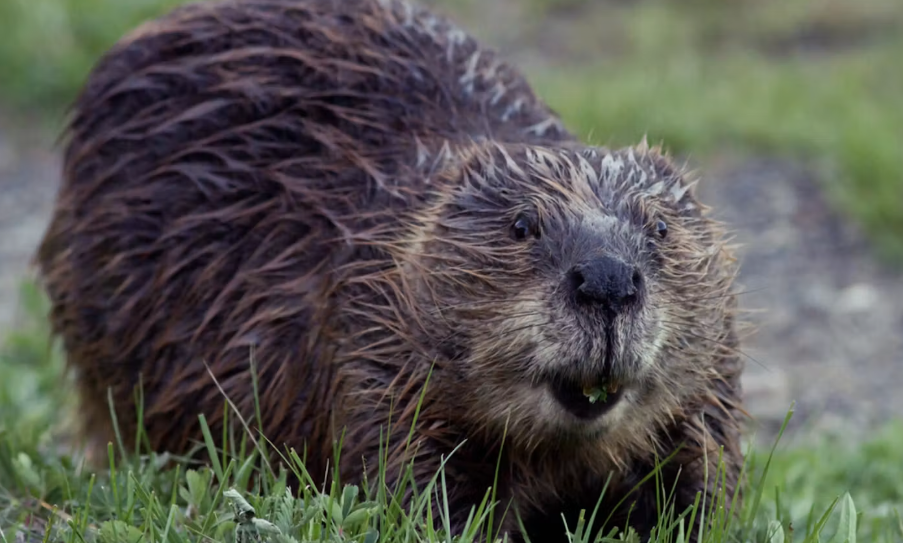
The types of beaver species include just 2 living species, but their many regional forms and extinct giants make a much richer story. Beavers are the largest rodents in North America and among the largest in the world. They are famous for felling trees, building dams and creating ponds, and no other animal except humans changes landscapes as much. Their orange-tinted front teeth never stop growing, and a flap of skin behind them lets a beaver gnaw wood underwater without swallowing any.
A beaver’s body is built for water, with webbed hind feet, a broad, flat tail and a dense, waterproof coat. The tail serves as a rudder when swimming, a prop when standing and an alarm that slaps the surface to warn of danger. Beavers are strict plant-eaters that feed on bark, twigs, leaves and aquatic plants, and they do not eat fish. Most activity happens at night, and a family colony usually includes a mated pair and their young from the past one or two years.
The ponds that beavers create slow streams, raise water tables and shelter fish, frogs, ducks and many other animals. Their lodges, built from sticks and mud, have underwater entrances that keep predators out. Because of this, beavers are known as ecosystem engineers. Conservationists now use them to restore wetlands and reduce flooding.
Both living species were hunted heavily for their fur and for a scent oil called castoreum, and both nearly disappeared in many regions. Protection and reintroduction programs have brought them back across much of their old range. Scientists have named many regional forms of each species, although the naming is often debated. Here are 20 types of beavers, including the 2 species, 16 regional forms and 2 extinct giants, with where each is found.
1. North American Beaver
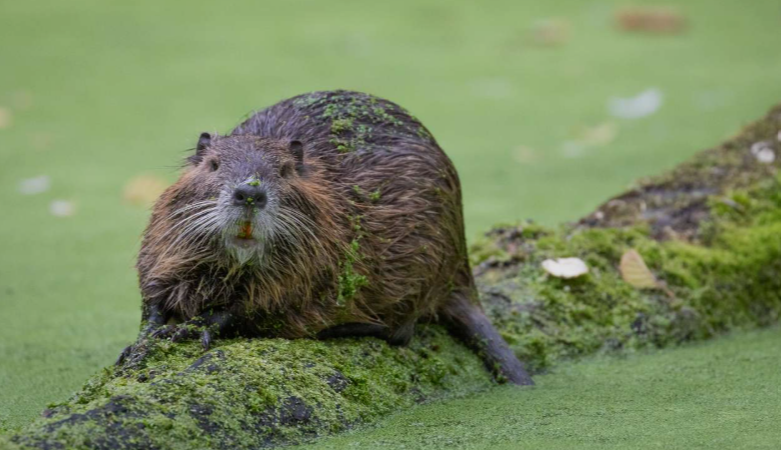
The North American beaver is the largest rodent in North America. Adults weigh about 30 to 60 pounds and measure 34 to 40 inches in total length, with a dense, soft under-fur that insulates against cold water. It is mostly nocturnal and builds stick-and-mud dams across streams, along with large, domed lodges or bank dens. Its body has 40 chromosomes, which sets it apart from its Eurasian cousin.
It lives across most of the continent, from Alaska and Canada through most of the United States and into northern Mexico. It is absent from the Arctic tundra, peninsular Florida and the southwestern deserts. People also introduced it to Tierra del Fuego in South America and to parts of Europe, including Finland, northwestern Russia, Poland, Germany and Austria. It is listed as least concern.
2. Eurasian Beaver
The Eurasian beaver is the largest rodent native to Eurasia. Adults weigh about 28 to 77 pounds and measure 29 to 53 inches long, with a narrower tail and smaller skull than the North American species. Its fur color varies by region, from pale brown to nearly black. It has 48 chromosomes, and attempts to breed it with the North American beaver in Russia produced only a single stillborn kit.
Hunters pushed it to the brink, leaving only about 1,200 animals in 8 small populations around 1900. Reintroduction and protection have since raised the population to at least 1.5 million. It now lives from Spain, central Europe, Great Britain and Scandinavia to a few regions in China and Mongolia. It is still absent from Portugal, Moldova and Turkey, where it was wiped out.
3. Canadian Beaver
The Canadian beaver is the nominate form of the North American beaver and one of its most widespread. It originally lived across nearly all of Canada’s forested lands. Its fur was highly prized, so trappers and wildlife agencies often chose it for reintroductions elsewhere. It has the typical thick brown coat and broad tail of its species.
It lives in the boreal forests, lakes and rivers of Canada. Many beavers across the United States and even overseas descend from Canadian stock. The animals introduced to Tierra del Fuego in the 1940s came from Canada. Today it thrives wherever streams and woody plants are found.
4. New England Beaver
The New England beaver was once classed as a separate form of the North American beaver, based on small differences in size and skull shape. It lived in the forests and wetlands of northeastern North America. Trapping wiped out beavers across much of the region by the 1800s. They later returned thanks to protection laws and reintroductions.
Its home is the lakes, bogs and streams of New England and the neighboring parts of eastern Canada. Today, beavers are common in places such as Maine, Vermont and New Hampshire. Modern experts often fold this form into the general North American beaver. Its recovery is one of the success stories of eastern conservation.
5. Carolina Beaver
The Carolina beaver is a southeastern form of the North American beaver. It lives in warmer, slower rivers and swamps than its northern relatives. It has the same flat tail and webbed feet but does not need the thick winter coat of northern beavers. It feeds on bark, aquatic plants and woody shoots.
Its range covers the southeastern United States, reaching north to southern Virginia and northern Ohio, Indiana and Illinois. It also extends west to southeastern Iowa, eastern Missouri, eastern Arkansas and Louisiana. Beavers in bottomland forests and cypress swamps here create habitat for wading birds and fish. Modern genetic studies have not supported it as a separate subspecies.
6. Texas Beaver
The Texas beaver lives in the eastern part of Texas, where the climate is humid and wet. It is a medium-sized beaver with a brown coat. It is common where rivers and wooded creeks provide food and building materials. Trappers had reduced beavers to very low numbers in much of Texas by the 1850s.
Beavers survived along remote streams in the Hill Country, along the Devil’s River and around the Panhandle and El Paso. Today they are found over most of the state, especially in East Texas. The Texas beaver is named for this region. Wetlands built by beavers help control erosion and provide water for wildlife.
7. Rio Grande Beaver
The Rio Grande beaver is a southwestern form that lives in one of North America’s driest regions. It depends on the river and its nearby tributaries for water and cottonwoods and willows for food. It builds bank dens more often than large lodges. Its coat is typically paler than that of beavers in wetter regions.
It lives along the Rio Grande and its immediate tributaries in Texas and northern Mexico. In the desert, beavers are among the few animals that create ponds and wetlands. Water diversion and drought are major concerns for this population. It is one of the southern limits of the species’ range.
8. Sonora Beaver
The Sonora beaver lives in northwestern Mexico, at the southwestern edge of the beaver’s range. It is a hardy form that survives in desert rivers and canyons. It has not been widely studied. The International Union for Conservation of Nature has not evaluated it separately.
It has been recorded along rivers such as the Bavispe in the Mexican state of Sonora. Beavers here live in narrow strips of river forest surrounded by arid country. Dams and ponds provide scarce habitat for birds, fish and amphibians. Protecting these rivers is key to its survival.
9. Pacific Beaver
The Pacific beaver is a form from the Pacific coast of North America. It lives in a mild, rainy climate with abundant forests and streams. It is a medium to large beaver with a dark brown coat. It was named from animals collected on Vancouver Island in British Columbia.
Its range stretches through coastal British Columbia, Washington and Oregon. It uses rivers, lakes, sloughs and marshes in temperate rainforest. Beaver ponds on this coast provide important habitat for salmon and trout. Some experts have also used the name Washington beaver for animals from the Cascade Mountains.
10. Admiralty Beaver
The Admiralty beaver is an island form from the Alexander Archipelago in southeastern Alaska. It is named for Admiralty Island, one of the largest islands in the region. Island populations are often isolated and show small differences from the mainland. This one was classed as data deficient, meaning too little is known to judge its status.
It lives in the cold, wet forests and muskegs of Admiralty Island, which is also famous for its brown bears. Its habitat is protected within Admiralty Island National Monument. Beavers there build dams in small creeks and lakes. Researchers would like more information about the animal.
11. Scandinavian Beaver
The Scandinavian beaver, also called the Norwegian beaver, is the nominate form of the Eurasian beaver. It has the typical brown coat and broad tail of the species. Its survival in southern Norway kept it from disappearing entirely. Only about 60 to 120 animals were left in the Telemark region of Norway in the late 1800s.
It later became the source for recovery efforts, starting with Sweden’s first reintroductions in the 1920s. Today it lives in Norway, Sweden and Finland, along with reintroduced groups in other countries. It uses forest rivers, lakes and bogs. Its recovery stands as one of Europe’s early conservation successes.
12. Rhone Beaver
The Rhone beaver is a western European form that survived in southern France. By the late 1800s, only about 100 animals remained in the lower Rhône valley. It is a medium-sized beaver with a light brown coat. Its survival depended on the river’s thick vegetation and a small amount of protection.
It has since spread greatly in France, moving up the Rhône toward Lake Geneva and beyond. Reintroductions also took it to other countries in western Europe. It shares the Rhine watershed with Elbe beavers and Polish beavers in some places. It has been a key source for restocking projects.
13. Elbe Beaver
The Elbe beaver is a central European form that survived on the River Elbe in Germany. Only about 200 animals remained there in the 20th century, and protection helped them recover. It is a dark-furred beaver adapted to river floodplains. Scientists consider it part of the western genetic group of Eurasian beavers.
It now occupies much of the Elbe river system and has been used to restock rivers in Germany, Denmark and nearby countries. Its habitat includes oxbow lakes, flooded forests and meadows. Beavers on the Elbe create wetlands that support fish and birds. It has helped reintroduce beavers across Europe.
14. Vistula Beaver
The Vistula beaver, sometimes called the Polish beaver, is a form named for Poland’s longest river. Some scientists treat it as the same population as the Belarusian beaver, and the names are often confused. It belongs to the eastern group of Eurasian beavers. It has the typical brown coat of the species.
It lives in Poland and Belarus, including the marshy lowlands around the Pripet region. Few animals remained in the early 20th century, but reintroductions have helped it grow. It uses rivers, canals and wooded wetlands. Its range now overlaps with other populations in central Europe.
15. Eastern European Beaver
The Eastern European beaver, also called the Voronezh beaver, survived west of the Ural Mountains in Russia. Only about 70 animals remained in the Voronezh region at one point. It belongs to the eastern group of Eurasian beavers. It is a medium to large beaver with a dark brown coat.
Its stronghold was the Voronezh Reserve in western Russia, which became a breeding source for restocking. Animals from Voronezh and Belarus were released across Russia and into Siberia. They now meet native populations in some areas. It is a key part of the species’ comeback in the east.
16. West Siberian Beaver
The West Siberian beaver, also called the Ural beaver, is a form that lives east of the Urals. It is a sturdy animal adapted to cold winters and frozen rivers. It builds both bank dens and lodges, depending on the water. Its coat is dense and dark.
It is found in western Siberia, including the Konda and Sosva river systems, where about 300 animals were counted in the 1980s. Rivers, lakes and bogs in the taiga provide habitat. Reintroduced animals of mixed origin now live along parts of the Yenisei and elsewhere. It is one of the less-studied forms.
17. Tuva Beaver
The Tuva beaver, also called the Yenisei beaver, is a rare form from the upper Yenisei River in Siberia. Only 30 to 40 animals were known from the area at one stage. It lives in a cold, remote region of Russia near the Mongolian border. The beavers feed on willow, aspen and aquatic plants.
Its range is the Tuva Republic in southern Siberia. In 2005, researchers recorded ten beaver settlements along the Tes River, showing that the range continues to expand into Mongolia. It uses mountain rivers, valleys and wooded floodplains. Its survival depends on protecting these river systems.
18. Mongolian Beaver
The Mongolian beaver, also called the Sino-Mongolian beaver, is one of the rarest and least-known beavers in the world. It survived in a tiny area on the Bulgan River in far western Mongolia and neighboring Xinjiang in China. It is a pale-furred beaver adapted to a cold, dry region. It is protected as a very rare animal in Mongolia.
The population has grown from translocations to other rivers, reaching about 150 animals in Mongolia and about 700 in China. Beavers were moved to the Khovd and Tes rivers in the 1950s through the 2000s. The Bulgan River Beaver Reserve in China protects its main population. The US Fish and Wildlife Service considers it endangered.
19. Giant Beaver
The giant beaver was an Ice Age rodent about the size of a black bear. It grew up to 8 feet long and weighed around 130 to 220 pounds. Its front teeth had a ridged enamel surface that differed from the smooth teeth of modern beavers. Chemical studies show it ate aquatic plants rather than bark, and scientists describe it as a little like a hippo.
It lived across North America, from Florida to the Yukon and from New Brunswick to Nebraska, with fossils at more than 150 sites. It went extinct about 12,000 years ago, along with mammoths and mastodons. Scientists still debate whether it built dams or lodges. Minnesota named it the official state fossil in 2025.
20. Eurasian Giant Beaver
The Eurasian giant beaver, known by the fossil name Trogontherium, was a giant relative of modern beavers that lived in Europe and Asia. It was much larger than a living beaver, though it was not as huge as the North American giant beaver. It belonged to a lineage that split from the modern beaver line long ago. Its fossils are known from the Pliocene through the Late Pleistocene.
It lived in the rivers and wetlands of Europe and Asia and disappeared before the end of the Ice Age. Only the single genus of modern beavers survives today from what was once a diverse family. Exact details of its size and habits are less certain than those of its American cousin. It reminds us how varied the beaver family used to be.
Sources:
- North American Beaver, Wikipedia
- American Beaver, Minnesota Seasons
- American Beaver, U.S. Forest Service Fire Effects Information System
- North American Beaver, Montana Field Guide
- American Beaver, Mammal Species of the World, Bucknell University
- Species Account of the American Beaver, Mammals of Texas, Texas Tech University
- Eurasian Beaver, Wikipedia
- Eurasian Beaver, Animal Diversity Web, University of Michigan
- Castor fiber, IUCN Red List
- Population and Distribution of Beavers in Eurasia, Halley, Saveljev and Rosell, 2020
- Population and Distribution of Eurasian Beaver, Baltic Forestry
- Subspecies of the European Beaver, Gabrys and Wazna
- Reintroduction of Beavers to Europe, Wikipedia
- From Bjurälven to Britain: 103 Years of Beaver Comebacks, The Beaver Trust
- Beavers: Recovery in Britain, Somerset Wildlife Trust
- Giant Beaver, The Canadian Encyclopedia
- Castoroides, Wikipedia
- Ancient Giant Beavers Did Not Chow on Trees, Science News
- Castoroides ohioensis, Canadian Field-Naturalist