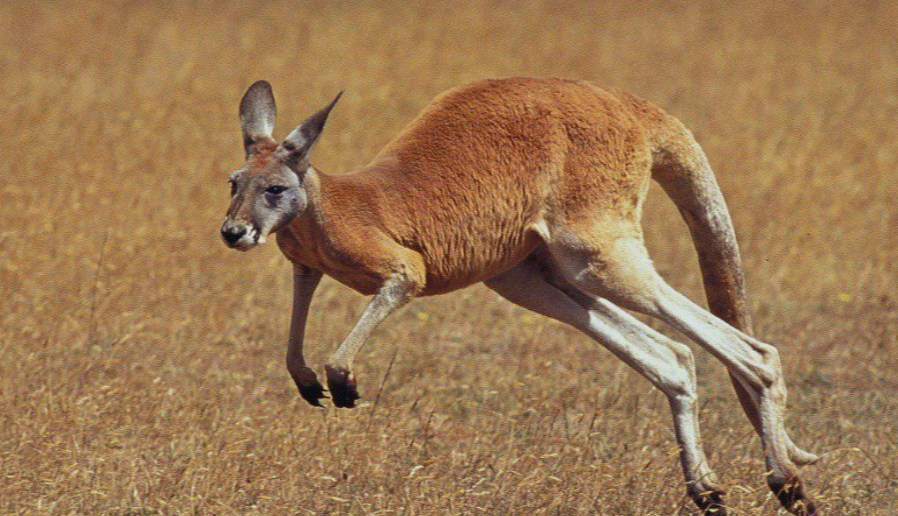
The types of kangaroo species make up one of the most recognizable groups of mammals in the world. Kangaroos are marsupials, which means the females carry their young in a pouch, and they live mainly in Australia, Tasmania and New Guinea. Together with their wallaby and tree-kangaroo relatives, they belong to a family of about 65 species known as macropods, a word that means big foot.
Almost every kangaroo shares the same basic design. They have powerful hind legs, large feet, a strong muscular tail for balance and a small head with big, swiveling ears. They cannot walk backward, and when they move slowly they use their tail as a fifth leg. At speed, a big kangaroo can hop at more than 30 miles per hour and clear fences 6 feet high.
Their way of raising young is just as unusual. A baby kangaroo, called a joey, is born after a pregnancy of about 33 days and is only about 1 inch long, roughly the size of a jellybean. It crawls unaided into its mother’s pouch, attaches to a teat and stays there for 6 to 8 months or longer. Most kangaroos are plant eaters that graze on grasses, leaves and shrubs, often at dawn and dusk.
The family is far more varied than most people expect. The true big kangaroos are only a few species, while the rest include wallaroos, small wallabies, pademelons, rock-wallabies and tree-kangaroos that live high in tropical rainforest. Some are abundant, while others are among the rarest mammals on Earth. Here are 35 kangaroo species and close relatives, along with where each one is found.
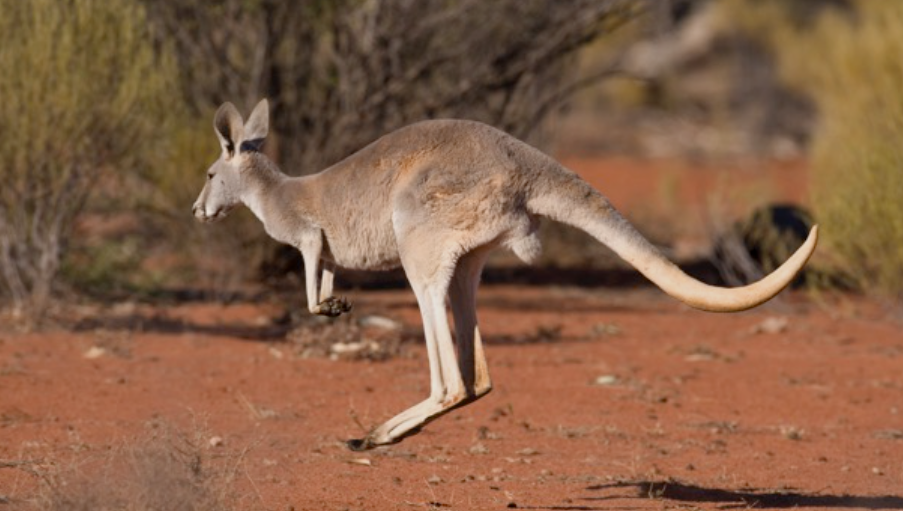
1. Red Kangaroo
The red kangaroo is the largest marsupial in the world, with big males standing up to about 6 feet tall and weighing up to roughly 200 pounds. Males have a rusty red coat, while many females are a soft bluish-gray, which is why they are sometimes called blue fliers. A red kangaroo can cover about 25 feet in a single bound and cruise at around 20 miles per hour. It can also store up energy-saving elastic strain in its tendons, which makes long-distance hopping surprisingly efficient.
This species lives across the dry heart of Australia, including the deserts, plains and shrublands of central and western regions. It is most common in arid and semi-arid country with scattered shade trees. Red kangaroos eat mainly grasses and can survive for long periods with little water. They gather in loose groups called mobs, often led by a dominant male.
2. Eastern Grey Kangaroo
The eastern grey kangaroo is a large, soft-furred kangaroo with a silvery-gray coat and a paler belly. Males can weigh up to about 145 pounds, and they often stand upright to box rivals in dramatic fights. Females are much smaller, and a mother may have a young joey in the pouch while a larger youngster still nurses at her side. The species is highly social and typically forms big mobs at dusk.
It lives across eastern Australia, from Queensland down through New South Wales and Victoria to Tasmania. Open woodland, forest edges and grassland are its favored habitats, and it is a common sight on golf courses and rural paddocks. Grasses make up most of its diet. It is one of the most numerous kangaroos, with a population in the millions.
3. Western Grey Kangaroo
The western grey kangaroo is a large, shaggy kangaroo with a coat that varies from gray to chocolate brown and a dark patch around the face. Males can weigh up to roughly 120 pounds. Males give off a strong curry-like odor during the breeding season, which has earned the species the nickname stinker. It is a shy animal that tends to flee quickly into cover.
This kangaroo ranges across southern Australia, from the coast of Western Australia through South Australia and into western Victoria and New South Wales. It lives in woodland, mallee scrub, heath and coastal plains. It grazes on grasses and shrubs and often shelters in shade during the heat of the day. It is common and widespread across its range.
4. Antilopine Kangaroo
The antilopine kangaroo is a graceful, long-legged kangaroo that looks a bit like an antelope, which is how it earned its name. Its coat is a pale reddish-tan, with males taking on a brighter ginger color and growing much larger than females. It has a broad, flat face and a swollen-looking nose. It is often active in the early morning and late afternoon and may rest in the shade in between.
This species lives in the tropical savannas of northern Australia, from Cape York in Queensland across the Top End of the Northern Territory to the Kimberley in Western Australia. It prefers open woodland with plenty of grass. It feeds mainly on grasses, and it can be seen in mobs that follow fresh growth. Unlike the red and grey kangaroos, it is closely tied to the monsoonal north.
5. Common Wallaroo
The common wallaroo is a stocky, broad-shouldered kangaroo with a shaggy coat and a bare black nose. It is built more like a mountain climber than a plains runner, and it has rough, grippy foot pads that help it on rock. Males can reach about 100 pounds, and their color varies from dark gray to reddish. The reddish form found in dry regions is often called the euro.
It occurs across most of mainland Australia, except for the southwest corner and some coastal strips in the southeast. It lives on rocky hills, escarpments, caves and ledges, where it shelters from heat during the day. Wallaroos can go for long periods without drinking, a skill that lets them live in some very dry country. They graze on tough grasses at dusk and dawn.
6. Black Wallaroo
The black wallaroo is a striking kangaroo, with adult males having a dark black-brown coat and females a much paler gray. It has a stocky, muscular body and a short, thick tail. It is smaller than the common wallaroo but heavily built, and it is an excellent rock climber. Its coloring helps it blend into the dark sandstone of its habitat.
This species lives only in a small area of northern Australia, the Arnhem Land escarpment in the Northern Territory. It shelters in caves and rocky overhangs during the heat of the day and comes out to feed in the evening on grasses and other plants. Because its range is so small, it has long been considered a species of special conservation interest. Its rocky stronghold has helped keep it relatively safe.
7. Goodfellow’s Tree-Kangaroo
Goodfellow’s tree-kangaroo is a colorful tree-dweller with a rich chestnut-red coat, a golden belly and golden bands on its tail and paws. It weighs roughly 15 to 20 pounds and has strong forelimbs and rough foot pads for climbing. Its long tail acts as a balancing rod rather than a grasping limb. It sleeps in the forks of trees during the day and feeds at night.
This endangered species lives in the mountain rainforests of Papua New Guinea, mostly in the central highlands. It eats leaves, fruit and some flowers, and it can leap long distances between branches. Hunting and forest clearing have reduced its numbers. Conservation programs run with local landowners aim to protect its remaining habitat.
8. Matschie’s Tree-Kangaroo
Matschie’s tree-kangaroo, also called the Huon tree-kangaroo, has a deep red-brown coat with golden accents on the face, legs and underside. It is a stocky climber that weighs around 15 to 20 pounds. Its soft fur and ringed tail give it a teddy-bear look. It is mostly solitary and spends most of the day resting high in the canopy.
It is found only on the Huon Peninsula of Papua New Guinea, where it lives in cool mountain forests. It is endangered because of hunting and clearing of forest for gardens. Leaves, moss, fruit and bark are its main foods. Community-run reserves have been set up to help protect it.
9. Bennett’s Tree-Kangaroo
Bennett’s tree-kangaroo is a gray-brown tree-kangaroo with a pale face, reddish forehead and a long, thick tail. It is a large species that can weigh about 20 pounds. Unlike many of its cousins, it often descends to the ground to move between trees. It eats leaves, ferns and fruit.
This species lives in the lowland and upland rainforests of northeastern Queensland in Australia, especially north of the Daintree River and in parts of Cape York. It is an elusive animal that is most active at night. Its rainforest habitat is protected within the Wet Tropics World Heritage Area. Dog attacks and vehicle strikes are among its main threats.
10. Lumholtz’s Tree-Kangaroo
Lumholtz’s tree-kangaroo has a dark brown to blackish coat with a paler belly and a pale golden face. It is slightly smaller than Bennett’s tree-kangaroo, with adults weighing about 13 to 20 pounds. It has a long tail that it uses for balance as it leaps from branch to branch. It can drop to the ground from heights of up to 60 feet without injury.
It lives in the upland rainforests of the Atherton Tablelands in northern Queensland, Australia. It spends most of its time in the trees and eats leaves, fruit and flowers. Rainforest clearing in the past reduced its habitat, though protection has helped. It is considered near threatened.
11. Grizzled Tree-Kangaroo
The grizzled tree-kangaroo has a dense gray coat flecked with silvery hairs, giving it a grizzled look. It has a lighter underside and a long, dark tail. It is one of the more poorly known tree-kangaroos, and it is thought to spend much of the day resting in trees. Its size is medium compared with other tree-kangaroos.
This species lives in the lowland forests of northern New Guinea, with records from both Papua New Guinea and Indonesia. It is listed as endangered because of hunting and habitat loss. Leaves and fruit are its main foods. Scientists still have much to learn about how it lives.
12. Doria’s Tree-Kangaroo
Doria’s tree-kangaroo is a dark brown to blackish tree-kangaroo with a pale face and forearms, and a thick, bushy tail. It is a heavily built animal that weighs around 15 to 25 pounds. Compared with other tree-kangaroos, it spends more time on the ground. It is a good climber but also moves well on the forest floor.
It lives in the mountain forests of New Guinea, from the southern ranges of Papua New Guinea into the Indonesian side of the island. It feeds on leaves, fruit and grasses. Hunting and forest clearing have made it vulnerable. It is often found near forest clearings where new growth is plentiful.
13. Dingiso
The dingiso, also called the bondegezou, is a black-and-white tree-kangaroo with a white belly, white-tipped tail and white markings on the face. It was not described by scientists until 1995, which makes it one of the most recently discovered large mammals. It is a sacred animal to some local people, who traditionally avoid hunting it. It is a mid-sized animal that lives mostly on the ground and in low branches.
It lives in the high mountain forests and alpine grasslands of western New Guinea, in Indonesian Papua, and has also been recorded in Papua New Guinea. It is critically endangered because of hunting and habitat loss. The Moni people have helped protect the dingiso by creating a conservation area. Its diet includes grasses, leaves and fruit.
14. Ursine Tree-Kangaroo
The ursine tree-kangaroo has thick, shaggy black fur that gives it a bear-like look, which is where its name comes from. It has a blunt face, rounded ears and a long tail. It is a robust animal that weighs around 15 to 25 pounds. It spends time both in trees and on the forest floor.
This species lives only in the forests of the Vogelkop Peninsula in Indonesian Papua, in the far west of New Guinea. It is listed as endangered because of habitat clearing and hunting. It eats leaves and fruit. The mountainous, remote nature of its range has kept it somewhat hidden from study.
15. Tenkile
The tenkile, or Scott’s tree-kangaroo, has a dark brown coat with a lighter belly and a distinctive pale stripe on the forehead. It is a small tree-kangaroo that weighs about 15 pounds. It is a ground-dwelling species compared with many of its relatives. It was historically hunted heavily by local people.
It lives in the Torricelli Mountains of northern Papua New Guinea, a small area that limits its range. It is critically endangered, with only a few hundred individuals thought to remain. A community-led program, the Tenkile Conservation Alliance, works with local people to protect it. Leaves and fruit make up its diet.
16. Wondiwoi Tree-Kangaroo
The Wondiwoi tree-kangaroo is among the rarest and least-known tree-kangaroos. For nearly a century, it was known only from a single museum specimen collected in the 1920s. It was finally seen alive again in 2018 during an expedition to its mountain home. It has a dark brown coat and is a medium-sized species.
It lives only in the Wondiwoi Mountains on the Wandammen Peninsula in Indonesian Papua. It is listed as critically endangered because so little remains of its habitat and so few have been recorded. Its diet is thought to be leaves and fruit. The rediscovery in 2018 gave scientists new hope that it still survives.
17. Agile Wallaby
The agile wallaby is a sandy-brown wallaby with a pale stripe on the hip and a long, slender tail. Males can weigh up to about 50 pounds, much more than females. It is one of the most common wallabies in the north, and it moves in groups. It is active at night and on cool days.
This species lives in northern Australia, from the Kimberley across the Top End and Cape York, and in southern New Guinea. It favors grasslands and woodland near rivers and floodplains. During the dry season, it digs small holes in dry sand to reach water. It eats mainly grasses and herbs.
18. Red-Necked Wallaby
The red-necked wallaby is a medium-sized wallaby with a gray coat, a reddish tint on the neck and shoulders, and a black nose and paws. Males can weigh up to about 40 pounds. It is a shy animal that often feeds alone or in small groups at dusk. It is a skilled jumper that can bound at speed through dense brush.
It lives in eastern Australia, from Queensland to Victoria, with a subspecies called Bennett’s wallaby in Tasmania. It prefers open forest and scrubby country with grassy clearings. Feral colonies also live in places such as New Zealand, England and Ireland, after escapes from zoos. Grasses and herbs are its main foods.
19. Swamp Wallaby
The swamp wallaby is a dark brown to black wallaby with a pale cheek stripe and a reddish belly. Its tail is long and often darker toward the tip. It feeds on an unusually wide range of plants, including ferns, shrubs and bark. It moves with its head held low, which helps it slip through thick undergrowth.
It lives along the east coast of Australia, from Cape York in Queensland to the Victoria–South Australia border. It prefers dense forest, heathland, swamps and scrub near water. Female swamp wallabies are almost always pregnant, a feature that is unusual among marsupials. It is active mainly at night and in the early morning.
20. Whiptail Wallaby
The whiptail wallaby, also called the pretty-face wallaby, has a soft gray coat and a striking white stripe on its cheek. It has a long, slim tail, and males can weigh about 40 pounds. It is a social wallaby and often forms groups of 10 or more. It is one of the most graceful of the wallabies, with a high-stepping hop.
This species lives in eastern Australia, mostly in Queensland and northern New South Wales. It likes open forest and grassy woodland, especially in hilly country. It grazes mainly on grasses in the early morning and evening. It often rests in the shade of trees during the heat of the day.
21. Parma Wallaby
The parma wallaby is a small, shy wallaby with a gray-brown coat, a dark stripe down the back and a white chest. It weighs only around 8 to 12 pounds. It was believed extinct from the 1930s until it was rediscovered in New South Wales in 1965. It is a quiet, secretive animal that hides in dense undergrowth.
It lives in the wet forests of eastern New South Wales and southeastern Queensland. A separate introduced population survives on Kawau Island in New Zealand. It feeds on grasses, herbs and seeds at night. Fox predation and habitat loss are its main threats.
22. Tammar Wallaby
The tammar wallaby is a small, dark gray-brown wallaby that weighs about 10 to 20 pounds. It is a compact animal with a short snout and rounded ears. It has a remarkable ability to drink seawater when fresh water is scarce. It was the first kangaroo species to have its genome sequenced.
It lives on Kangaroo Island in South Australia and in parts of southwestern Western Australia, plus some offshore islands. A population introduced to New Zealand now helps conserve the species. It prefers thick scrub and heath where it can hide during the day. It grazes on grasses and shrubs at night.
23. Black-Striped Wallaby
The black-striped wallaby has a gray-brown coat with a thin black stripe that runs from the face down the back. It has a white stripe on the cheek and a long tail. It weighs around 25 pounds at most. It forms small groups and is more social than many other wallabies.
It lives in eastern Queensland and northeastern New South Wales. Dense scrub, especially brigalow and other dry forests, provides its habitat. It feeds on grasses and herbs in clearings near cover. It is shy and often vanishes into the bush when disturbed.
24. Western Brush Wallaby
The western brush wallaby, also called the black-gloved wallaby, has a gray-brown coat, a white hip stripe and black hands and feet. It is a fast, slender wallaby with a long tail that has a dark crest near its tip. It weighs about 15 to 20 pounds. It tends to feed alone or in small groups in the early evening.
It lives in southwestern Western Australia, in open forest, woodland and scrub. It eats grasses and the leaves of shrubs. It is one of the fastest wallabies and can outrun many predators. It is a common sight in the national parks of its range.
25. Quokka
The quokka is a small, cat-sized wallaby, weighing about 5 to 10 pounds, with a round face and a permanent smile. That look has made it famous on social media as the world’s happiest animal. It is a mostly nocturnal animal that eats leaves, grasses and bark. It is quite fearless around people on some islands.
Its stronghold is Rottnest Island off Western Australia, home to about 10,000 quokkas, and it also lives on Bald Island and in small patches of the southwest mainland. It prefers dense scrub and swampy forest. It is listed as vulnerable, as foxes and habitat loss have reduced mainland numbers. Visitors to Rottnest are not allowed to touch or feed them.
26. Red-Legged Pademelon
The red-legged pademelon is a small, plump wallaby with bright rufous legs, a gray-brown back and a short, thick tail. It weighs about 8 to 14 pounds. It is a shy animal that stays close to dense cover and quickly retreats if alarmed. It forages in the early morning and late evening.
It lives in the rainforests and wet forests of eastern Queensland and northeastern New South Wales. It feeds on fallen fruit, leaves, grasses and herbs. It is fairly common in protected areas. Its rainforest home gives it shade and protection from predators.
27. Red-Necked Pademelon
The red-necked pademelon is a small, stocky wallaby with a rusty-red neck, a gray-brown coat and a thick tail. It is slightly smaller than the red-legged pademelon, and it weighs about 8 to 15 pounds. It has a compact body that lets it dash through thick undergrowth. It hides in dense vegetation during the day.
It lives along the east coast of Australia, from southeastern Queensland to northern New South Wales. Rainforest, wet forest and thick scrub are typical habitats, and it often feeds at the edges of clearings. It eats leaves, fruits and grasses. It is common in some national parks.
28. Tasmanian Pademelon
The Tasmanian pademelon, also called the rufous-bellied pademelon, is a short-legged, stout wallaby with a thick, dark gray-brown coat and a reddish belly. It weighs about 7 to 15 pounds. Its short, thick tail and compact body are adapted for moving through dense forest. It is a nocturnal animal that feeds on grasses and herbs.
It is found in Tasmania, where it is abundant in forests, scrub and farmland edges. It was once also found in southeastern mainland Australia but has disappeared from there. It is one of the most commonly seen native animals in Tasmania at night. Because it is so numerous, it is sometimes culled in farming areas.
29. Yellow-Footed Rock-Wallaby
The yellow-footed rock-wallaby is among the most colorful wallabies, with a gray coat, a white cheek stripe and yellow-orange feet and tail rings. It weighs about 15 to 25 pounds. Rough foot pads give it superb grip on steep, rocky slopes. It is an agile climber that leaps from ledge to ledge.
It lives in the rugged ranges of South Australia, including the Flinders Ranges, as well as parts of western New South Wales and southwestern Queensland. Its habitat is rocky outcrops and gorges in arid country. It eats grasses, herbs and shrubs. Foxes, goats and competition for food have hurt populations, but protection has helped.
30. Black-Flanked Rock-Wallaby
The black-flanked rock-wallaby, also called the black-footed rock-wallaby, is a dark gray-brown wallaby with a black flank stripe and a bushy-tipped tail. It weighs about 8 to 15 pounds. Its feet have granular pads that give excellent traction on rock. It is a shy animal that rests in caves and crevices during the day.
It lives in the rocky ranges of Western Australia, including areas of the wheatbelt and offshore Barrow Island. It feeds on grasses, shrubs and herbs at night. It is listed as endangered or vulnerable in places because foxes and habitat change reduced numbers. Fox control and fenced reserves have helped some groups recover.
31. Brush-Tailed Rock-Wallaby
The brush-tailed rock-wallaby is a rock dweller with a thick, bushy tail, a dark-brown coat and a pale cheek stripe. It weighs about 10 to 20 pounds. It leaps with surprising agility across cliffs and boulders. It lives in colonies and shelters in caves and crevices during the day.
It once ranged across southeastern Australia, from Victoria to Queensland, but now survives in scattered colonies along the Great Dividing Range. An introduced population also lives on the island of Oahu in Hawaii. Hunting for fur and predation by foxes caused its decline, and it is listed as vulnerable. Conservation programs now reintroduce it to protected sites.
32. Banded Hare-Wallaby
The banded hare-wallaby is a small, fast marsupial with a gray-brown coat and dark bands across its back and rump. It weighs only about 3 to 4.5 pounds. Its movement is quick and darting like a hare, and it often shelters in dense, spiky vegetation. It feeds on grasses, herbs and fruits at night.
It once lived across southern Australia but is now extinct from the mainland. It survives naturally on Bernier and Dorre Islands in Shark Bay, Western Australia. In 2021, it was reintroduced to Dirk Hartog Island as part of a major restoration project. It is listed as vulnerable.
33. Rufous Hare-Wallaby
The rufous hare-wallaby, known to Aboriginal people as the mala, is a small, sandy-red wallaby that weighs about 2 to 4 pounds. It has a thick coat and a short tail. It shelters in burrows or dense spinifex during the day. It was once common across Australia’s central deserts.
It has been wiped out on the mainland in the wild, with the original wild population surviving on the Bernier and Dorre Islands. Predators such as foxes and cats caused its disappearance. Reintroductions to fenced areas, such as Uluru-Kata Tjuta National Park, aim to restore it. It is listed as vulnerable.
34. Bridled Nail-Tail Wallaby
The bridled nail-tail wallaby is a graceful, medium-sized wallaby with a pale gray coat and a white stripe curving from the neck to the shoulder like a bridle. It has a small horny spur at the tip of its tail, which is the nail. It weighs around 10 to 20 pounds. It was believed extinct until it was rediscovered in 1973.
It survives in the wild only in central Queensland, mainly at Taunton National Park. It lives in dry, open woodland and brigalow scrub with a grassy understory. It is listed as endangered. A reintroduced group on other sites has helped boost its security.
35. Northern Nail-Tail Wallaby
The northern nail-tail wallaby is a small, slender wallaby with a sandy-gray coat and a black-tipped tail with a nail-like spur at the end. It weighs about 10 to 20 pounds. It is a fast, active animal that rests under bushes during the day. It feeds on grasses and herbs at dusk and at night.
It lives across northern Australia, including northern Queensland, the Northern Territory and the Kimberley in Western Australia. It prefers open woodland and grassy plains, often near water. Its range is wide, but numbers have fallen in some areas. It is listed as least concern overall.