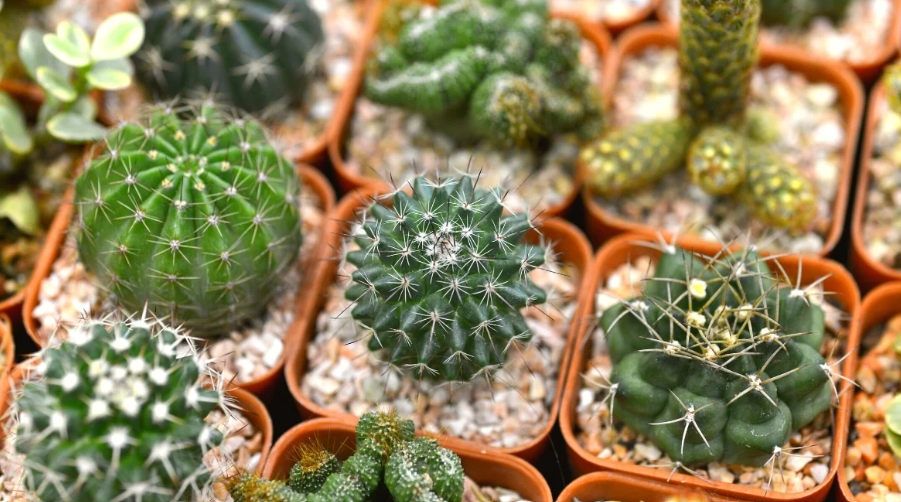
Succulent plants represent one of the most diverse and widespread adaptive strategies in the plant kingdom, encompassing more than 10,000 species spread across over 60 plant families worldwide. Unlike cacti — which are a single family within the broader succulent category — succulents are defined not by taxonomy but by function: the ability to store water in thickened leaves, stems, or roots as a survival mechanism in arid or seasonally dry environments. They are found on every continent except Antarctica, thriving in habitats ranging from coastal sea cliffs and alpine rock faces to tropical rainforest canopies and scorching desert floors.
What makes succulents so biologically remarkable is the convergent evolution that has produced similar water-storing structures independently across dozens of unrelated plant families. The rosette form, for instance, has evolved separately in agaves, echeverias, aloes, sempervivums, and aeoniums — plants that share no close ancestry but have arrived at the same efficient solution to the same environmental challenge. Approximately 30 to 35 percent of all succulent species belong to just three families: Crassulaceae, Aizoaceae, and Asphodelaceae, which together account for roughly 3,000 to 3,500 species, including some of the most recognizable succulents in cultivation.
The global houseplant boom of the past decade has propelled succulents to the top of the horticultural market. By the mid-2020s, succulents and cacti together accounted for an estimated 15 to 20 percent of global houseplant sales, with the United States, Europe, and East Asia representing the largest markets. Their appeal is broad: they are drought-tolerant, long-lived, architecturally striking, and available in an almost infinite range of colors, textures, and forms. South Africa alone contributes more than 2,000 native succulent species to the global horticultural trade, making it the single richest source of succulent biodiversity on the planet.
Despite their reputation for indestructibility, succulents face serious conservation threats in the wild. Habitat destruction, illegal collection, and climate-driven desertification have placed hundreds of species at risk, and the IUCN Red List identifies over 300 succulent species as threatened or endangered. The illegal trade in rare wild-collected succulents — particularly South African mesembs, Mexican agaves, and Madagascan pachypodiums — represents a multi-million-dollar black market that has devastated some wild populations. Conservation efforts including habitat protection, propagation programs, and international trade regulations under CITES are working to protect the most vulnerable species, though enforcement remains a significant challenge.
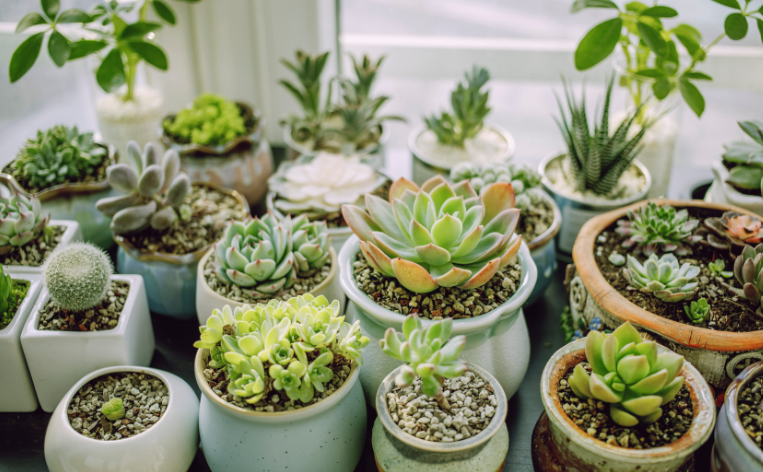
Echeveria (Echeveria elegans)
The Mexican snowball is among the most iconic of all rosette-forming succulents, producing tight, symmetrical rosettes of spoon-shaped, pale blue-grey to silvery-white leaves with delicately pink-tinged margins. Native to the rocky limestone slopes of Hidalgo, Mexico, it is one of the most widely cultivated echeverias in the world, prized for its perfect geometric form and cool, luminous coloration. In spring, it sends up arching stems bearing coral-pink and yellow bell-shaped flowers that are magnets for hummingbirds.
Aloe Vera (Aloe vera)
Aloe vera is arguably the most economically significant succulent on Earth, cultivated on a massive scale across tropical and subtropical regions for the clear gel contained within its fleshy, lance-shaped leaves. The global aloe vera market was valued at over $600 million annually by the early 2020s, with applications spanning skin care, pharmaceuticals, food and beverage, and veterinary products. Despite its fame, aloe vera’s exact wild origin is uncertain — it has been cultivated by humans for so long that truly wild populations are difficult to identify, though the Arabian Peninsula and North Africa are considered its probable homeland.
Jade Plant (Crassula ovata)
The jade plant is a long-lived, shrubby succulent from the Eastern Cape and KwaZulu-Natal provinces of South Africa, producing thick, glossy, oval leaves of deep emerald green often edged with red when grown in bright light. It is one of the most popular houseplants in the world, capable of living for decades — some specimens in collections are known to be over 70 years old. In many East Asian cultures it is considered a symbol of good luck and prosperity, frequently given as a gift and kept near entrances to homes and businesses.
Haworthia (Haworthia attenuata)
The zebra plant haworthia is a compact, clustering rosette succulent from the Eastern Cape of South Africa, instantly recognizable by the horizontal bands of raised white tubercles that stripe the dark green, pointed leaves like zebra markings. Unlike most succulents, it naturally grows in the shade of shrubs and rocks, making it one of the most tolerant succulent genera for low-light indoor conditions. It is a perfect windowsill plant, requiring minimal care and producing slender racemes of small white tubular flowers in summer.
Sedum (Sedum morganianum)
Burro’s tail — or donkey’s tail — is a trailing sedum from southern Mexico and Honduras, producing long, pendulous stems densely packed with overlapping, plump, blue-green leaves that resemble a braided tail. It is one of the most beloved hanging basket succulents in the world, with mature specimens developing stems up to 2 to 3 feet in length that cascade dramatically from shelves or elevated containers. The leaves detach very easily and will root readily wherever they fall, making propagation almost effortless.
Agave (Agave americana)
The century plant is a dramatic, architectural succulent from Mexico and the southern United States, producing massive rosettes of rigid, blue-grey, spine-tipped leaves that can span 6 to 10 feet across. Despite its common name suggesting a 100-year lifespan, it typically flowers after 10 to 30 years, after which the main rosette dies, leaving offsets to continue the colony. Its towering flower spike — which can reach 25 to 30 feet — is one of the most spectacular events in the plant world, producing thousands of yellow flowers that attract bats, bees, and birds.
Sempervivum (Sempervivum tectorum)
Common houseleek is a cold-hardy, mat-forming rosette succulent native to the mountains of southern Europe, where it has been grown on rooftops and walls for centuries — its Latin name means “always alive on roofs.” It is one of the most cold-tolerant of all succulents, surviving temperatures well below -30°F (-34°C) under snow and ice, and is one of the few succulents that can be grown as a perennial garden plant in cold northern climates. Each rosette flowers once and then dies, but produces numerous offsets — called “chicks” — that fill in the gaps.
Aeonium (Aeonium arboreum)
The tree aeonium is a striking, shrubby succulent from the Canary Islands, producing long, bare, branching stems each topped with a flat, plate-like rosette of glossy, spoon-shaped leaves in shades ranging from bright green to deep burgundy-black in full sun. Unlike most succulents, aeoniums are winter growers that go dormant in summer heat, curling their leaves inward to reduce water loss during the hottest months. The bold, dramatic cultivar ‘Zwartkop’ — with its near-black rosettes — is one of the most popular and photographed succulents in the world.
Gasteria (Gasteria carinata)
Gasteria is a genus of tough, shade-tolerant succulents from South Africa closely related to aloes and haworthias, producing thick, tongue-shaped leaves arranged in two neat ranks that give young plants a distinctly flattened, strap-like appearance. As plants mature, the leaves often arrange into a loose spiral. Gasterias are among the most forgiving succulents in cultivation — tolerating low light, irregular watering, and temperature fluctuations — and produce charming, stomach-shaped (gastric) flowers on long arching stems in pink and red.
Kalanchoe (Kalanchoe blossfeldiana)
The flaming Katy is one of the most commercially produced succulents in the world, with millions of plants sold annually as flowering houseplants in supermarkets and garden centers across Europe, North America, and Asia. Native to Madagascar, it produces clusters of small but vivid flowers in red, orange, yellow, pink, and white above glossy, scallop-edged leaves, with each bloom cycle lasting several weeks. It is a short-day plant, requiring extended periods of darkness to initiate flowering, a trait that commercial growers exploit to produce blooming plants year-round.
Lithops (Lithops salicola)
Lithops — known as living stones or pebble plants — are among the most extraordinary examples of plant camouflage in the natural world, their split, highly succulent leaf pairs so perfectly resembling the pebbles and stones of their South African and Namibian desert home that they are virtually invisible in the wild. The plant body consists of just two swollen, fused leaves with a slit at the top from which a single daisy-like flower emerges in autumn. Their entire above-ground structure is adapted to minimize water loss and predation, making them extreme specialists of hyper-arid environments.
Portulacaria (Portulacaria afra)
Elephant bush is a soft-wooded, small-leaved succulent shrub from South Africa that is a primary food source for wild elephants and other megafauna in its native habitat — hence the common name. In cultivation, it is popular as a fast-growing houseplant, bonsai subject, and garden hedge in warm climates, producing masses of tiny, rounded, bright green to golden leaves on reddish stems. It is also recognized as an exceptional carbon sequester, with some studies suggesting it stores more carbon per acre than many other plants.
Aloe Aristata (Aloe aristata)
The lace aloe is a compact, clustering aloe from the mountain grasslands of South Africa and Lesotho, producing dense rosettes of dark green, softly tubercled leaves tipped with distinctive white bristles that give the plant a delicate, lacy appearance. It is one of the most cold-tolerant aloe species, capable of surviving light frosts, and is often recommended as an indoor aloe for those without a warm conservatory. Its orange-red tubular flowers, produced on tall spikes in late spring and summer, are highly attractive to sunbirds in its native habitat.
Crassula (Crassula perforata)
String of buttons is a charming, stacking crassula from South Africa, producing pairs of triangular, grey-green leaves fused at the base around upright, woody stems that appear to be threaded through the center of each leaf pair like beads on a string. The leaf margins are often tinged pink or red in bright light, adding ornamental color. It is a vigorous, easy-care species that branches freely and produces clusters of small, pale pink to white flowers in spring.
Euphorbia (Euphorbia trigona)
The African milk tree is a tall, architectural euphorbia from central Africa, producing upright, three-winged stems with small, oval leaves along the ridges and pairs of short spines at each leaf node, creating an effect midway between a cactus and a tropical plant. It can reach 6 to 9 feet tall indoors under ideal conditions and is widely used as a bold statement plant in contemporary interiors and tropical gardens. Like all euphorbias, its white latex sap is toxic and an irritant to skin and eyes.
Aloe Ferox (Aloe ferox)
The Cape aloe is a large, single-stemmed aloe from the mountains and coastal scrublands of the Western and Eastern Cape of South Africa, producing an impressive rosette of blue-green to grey-green, spiny leaves atop a stout trunk that can reach 10 feet in height. It is the most commercially harvested aloe in the world for medicinal purposes — its bitter latex is used in laxative preparations, and its gel is used in cosmetics and skin care products. Ecologically, its tall, candelabra-like flower spikes are a critical food source for sunbirds and other nectar-feeding wildlife.
Dudleya (Dudleya pulverulenta)
The chalk dudleya — or chalk liveforever — is a spectacular rosette succulent from the coastal cliffs and rocky slopes of southern California and Baja California, famous for the brilliant white, powdery farina that covers every part of the plant, making it appear as though it has been dusted with chalk. The farina coating reflects intense sunlight and reduces water loss, an elegant adaptation to its exposed cliff-face habitat. It has become the target of illegal poaching by organized criminal networks, prompting California to pass specific legislation in 2017 criminalizing its collection from the wild.
Sedum Acre (Sedum acre)
Goldmoss stonecrop is a low-growing, mat-forming sedum native to Europe, western Asia, and North Africa, producing tiny, fleshy, overlapping bright green leaves on creeping stems that form dense, mossy mats on rock walls, rooftops, gravelly soils, and dry banks. In late spring, it erupts into a blaze of bright yellow, star-shaped flowers that cover the mat completely. It is one of the toughest plants in cultivation, tolerating poor, dry soils, extreme cold, and significant foot traffic, making it a popular choice for green roof installations across Europe.
Agave Attenuata (Agave attenuata)
The soft agave — or foxtail agave — is a Mexican species highly prized in landscaping for its soft, unarmed, pale grey-green to powdery blue leaves that lack the terminal spine common to most agaves, making it safe to plant near walkways and play areas. It produces one of the most visually distinctive flower spikes in the plant world — an arching, curved plume densely packed with thousands of greenish-yellow flowers that nods over under its own weight, resembling a giant foxtail. It is one of the most widely planted agaves in warm-climate gardens worldwide.
String of Pearls (Senecio rowleyanus)
String of pearls is one of the most iconic and widely recognized succulent houseplants in the world, producing long, trailing stems strung with perfectly spherical, pea-sized, bright green leaves that look remarkably like a beaded necklace. Native to the semi-arid regions of southwestern Africa, it has evolved its bead-like leaves to maximize water storage while minimizing the surface area exposed to the drying sun. Its small, white, brush-like flowers carry a faint but pleasant cinnamon fragrance.
Sansevieria (Dracaena trifasciata)
The snake plant — or mother-in-law’s tongue — is one of the most popular and widely sold houseplants in the world, valued for its extreme tolerance of neglect, low light, irregular watering, and poor air quality. Native to the tropical dry forests of West Africa, it produces stiff, upright, sword-shaped leaves banded in shades of dark green, light green, and yellow, with dozens of cultivated varieties available in a range of sizes, forms, and variegation patterns. A NASA Clean Air Study identified it as one of the most effective houseplants for filtering indoor air pollutants.
Aeonium Haworthii (Aeonium haworthii)
Pinwheel aeonium is a freely branching Canary Islands succulent that forms loose, open shrubs with multiple rosettes of blue-grey to grey-green leaves edged with fine, reddish, hair-like cilia. It is one of the most adaptable aeonium species in cultivation, tolerating both coastal conditions and inland gardens, and is commonly used in Mediterranean-style landscaping in California and southern Europe. Clusters of pale cream to pale pink flowers appear in spring, and the entire plant has a relaxed, informal charm that complements both formal and naturalistic garden styles.
Furcraea (Furcraea foetida)
Mauritius hemp is a large, agave-like succulent from tropical America, producing impressive rosettes of long, strap-like, soft-spined leaves that can reach 8 feet in length. Like agaves, it is monocarpic — flowering once after many years and then dying — but it produces not seeds but rather thousands of small plantlets (bulbils) along the towering flower spike, each capable of rooting and growing into a new plant. It has been widely planted for fiber production in tropical regions and has naturalized in many parts of Asia, Africa, and the Pacific Islands.
Aloe Brevifolia (Aloe brevifolia)
The short-leaved aloe is a compact, clustering aloe from the Western Cape of South Africa, producing low, dense rosettes of glaucous blue-green, triangular leaves with small white teeth along the margins. It forms attractive, spreading clumps over time that are particularly useful as a low-maintenance ground cover in dry, sunny gardens. Its slender, orange-red flower spikes are reliably produced in early summer and attract sunbirds, bees, and butterflies.
Titanopsis (Titanopsis calcarea)
Titanopsis is a small, clustering mesemb from the limestone and dolomite outcrops of the Northern Cape, South Africa, producing compact rosettes of stubby, triangular leaves tipped with rough, warty, white or pale blue-grey tubercles that provide near-perfect camouflage against the limestone pebbles of their habitat. The textured leaf tips are thought to reduce browsing pressure by herbivores. In autumn, they produce vivid yellow to orange flowers that open only in direct sunlight, creating a jewel-like display against the stark, rocky substrate.
Echeveria Subsessilis (Echeveria subsessilis)
Morning beauty echeveria is a Mexican species prized for its extraordinary coloration — the rosette leaves range from powdery blue-green at the base through lavender and pink to rich coral-orange at the tips, intensifying in cooler temperatures and bright light. It forms medium-sized rosettes and is moderately easy to grow in well-drained conditions, producing coral and yellow flowers on arching stems in spring. It is a favourite subject for succulent dish gardens and colour-themed arrangements due to its pastel, multi-toned palette.
Pachyphytum (Pachyphytum oviferum)
Moonstone succulent — or sugar almond plant — is a dreamily beautiful Mexican species producing short rosettes of chubby, egg-shaped leaves so thickly coated in white farina that they glow with a soft, lavender-pink to pale lilac luminescence. Each leaf is smooth and rounded, resembling a sugared almond or a pale, polished pebble, and the coating is so delicate that fingerprints permanently mark the surface. It produces nodding clusters of small red and orange bell-shaped flowers on arching stems in winter and early spring.
Haworthiopsis (Haworthiopsis limifolia)
The fairy washboard is a stunning small succulent from Swaziland and northeastern South Africa, producing compact, stemless rosettes of dark olive-green, triangular leaves crossed by regular, raised, white horizontal ridges that give the leaf surface a textured, ribbed appearance like a miniature washboard. It is a tough, shade-tolerant species well suited to indoor cultivation and produces slender racemes of small tubular white flowers in summer. Though not as widely known as some haworthias, it is highly regarded among collectors for its geometric precision.
Graptoveria (× Graptoveria ‘Debbi’)
Graptoveria are hybrid succulents produced by crossing Graptopetalum and Echeveria, combining the best traits of both genera in vigorous, colorful plants that are often easier to grow than either parent. ‘Debbi’ is one of the most popular graptoveria cultivars, producing large, plump rosettes of lavender-pink to mauve leaves that hold their color well in a variety of light conditions. It offsets freely, forming large clusters over time, and is widely used in succulent arrangements, wreaths, and living walls for its reliable, jewel-toned presence.
Aloinopsis (Aloinopsis schooneesii)
Aloinopsis is a small, tuberous mesemb from the arid Karoo of South Africa, producing compact rosettes of thick, fleshy, dark green leaves covered in raised white dots or tubercles that give the surface a rough, pebbly texture. The plant sits atop a substantial underground taproot that stores water and nutrients through dry periods. It produces golden-yellow to salmon flowers with a satiny sheen in autumn and winter, and is a specialist collector’s plant prized for its compact dimensions and unusually large, showy flowers relative to its size.
Crassula Capitella (Crassula capitella)
Red pagoda — or campfire crassula — is a South African species that produces stacked, propeller-like pairs of leaves arranged in spiraling columns that start bright green at the base and intensify to vivid scarlet and orange-red at the tips when grown in full sun and cool temperatures. As the plant matures, it sprawls and branches, creating cascading mounds of color that are among the most vivid in the succulent world. It is particularly spectacular in autumn and winter, when cool nights and bright sun bring out the deepest red tones.
Aloe Juvenna (Aloe juvenna)
Tiger tooth aloe is a small, clustering aloe from Kenya, producing upright, densely leafed stems of bright green, white-spotted leaves with prominent, pale marginal teeth that give the plant an energetic, bristling appearance. Unlike many aloes, it maintains a compact size and forms attractively dense clumps well suited to containers and rock gardens. It produces coral-orange tubular flowers on branched spikes in summer and is one of the most popular small aloes in contemporary succulent cultivation.
Senecio Serpens (Curio repens)
Blue chalk sticks is a low-growing, spreading succulent from South Africa, producing dense mats of narrow, cylindrical, powder-blue to silver-blue leaves that create a cool, frosted carpet effect in the landscape. It is an exceptional ground cover plant for dry, sunny banks and borders in warm climates, spreading readily to fill gaps and suppress weeds. In summer it produces small, white, daisy-like flowers typical of the daisy family (Asteraceae) to which it belongs, though the foliage color is its primary ornamental attraction.
Aloe Plicatilis (Aloe plicatilis)
The fan aloe is a uniquely structured aloe from the mountains of the Western Cape, South Africa, producing flat, fan-shaped arrangements of strap-like, smooth, blue-grey leaves that are quite unlike the typical rosette form of most aloes. In its natural habitat of fynbos shrubland, it grows as a multi-branched shrub to small tree up to 15 feet tall, developing a gnarled, woody stem over many decades. Its scarlet to orange tubular flowers appear in winter and early spring, providing a critical nectar source for Cape sugarbirds and sunbirds.
Ceropegia (Ceropegia woodii)
String of hearts — or rosary vine — is a delicate, trailing succulent vine from the rocky hillsides of South Africa, Zimbabwe, and Eswatini, producing long, wiry, purple stems dotted with small, heart-shaped leaves patterned in silver and dark green above and purple beneath. Small, tubular, lantern-shaped purple and pink flowers appear along the stems in summer and autumn. It is one of the most popular trailing houseplants in contemporary interiors and is an excellent choice for shelves, hanging baskets, and macramé plant hangers.
Agave Victoria-Reginae (Agave victoriae-reginae)
Queen Victoria agave is a slow-growing, compact agave from the Chihuahuan Desert of Mexico, forming perfect, tight, dome-shaped rosettes of dark green, rigid leaves outlined with crisp white margins and tipped with a single dark brown spine. It is considered one of the most beautiful and architectural of all agaves, and mature specimens — which can take 20 to 30 years to reach their full rosette diameter of 18 to 24 inches — command considerable admiration in collections and botanic gardens. It is classified as vulnerable in the wild due to habitat loss and collection pressure.
Oscularia (Oscularia deltoides)
Pink ice plant is a freely branching, low-growing mesemb from the Western Cape of South Africa, producing small, triangular, blue-grey, tooth-edged leaves on spreading, reddish stems. In spring, it produces a lavish display of small but vivid magenta-pink, daisy-like flowers with a sweet, almond-like fragrance that can be detected from a distance. It is an excellent drought-tolerant ground cover and rockery plant in Mediterranean-climate gardens and is increasingly used in green roof plantings and coastal landscaping.
Faucaria (Faucaria tuberculosa)
The knobby tiger jaw is a compact, stemless mesemb from the Eastern Cape of South Africa, producing pairs of thick, keeled leaves covered in prominent white tubercles on both surfaces, with interlocking, soft-toothed margins that create the characteristic jaw-like appearance. Despite the fierce look, the leaf teeth are soft and harmless. Large, golden-yellow, daisy-like flowers appear in autumn, opening only in afternoon sunlight, and the plant’s unusual appearance and easy care make it a popular curio in succulent collections.
Graptopetalum (Graptopetalum paraguayense)
Ghost plant is a vigorous, spreading succulent from the mountains of Tamaulipas, Mexico, producing loose rosettes of thick, flat-tipped, triangular leaves that shift in color from powdery lavender-grey in shade to pinkish-yellow and apricot in full sun. It is one of the easiest and most forgiving succulents to grow, tolerating neglect, heat, drought, and a wide range of soil conditions with equanimity. Individual rosettes are loosely assembled compared to echeverias, giving the plant a relaxed, informal appearance that suits naturalistic garden styles.
Yucca (Yucca filamentosa)
Adam’s needle is a bold, architectural succulent from the sandy soils and coastal plains of the southeastern United States, producing stiff, sword-like, blue-green leaves edged with curling white threads that give the plant a fibrous, fringed appearance. It is one of the hardiest yuccas, tolerating temperatures well below zero and thriving in poor, sandy soils where few other plants survive. Every few years it produces a towering spike of creamy white, bell-shaped flowers up to 12 feet tall, pollinated exclusively by yucca moths in a classic mutualistic relationship.
Cotyledon (Cotyledon orbiculata)
Pig’s ear cotyledon is a robust, shrubby succulent from the semi-arid regions of South Africa and Namibia, producing thick, paddle-shaped, grey-green to blue-grey leaves dusted with white farina and edged with a distinctive red or orange rim. It is a tough, long-lived garden plant in warm, dry climates, and its pendulous, orange to red tubular flowers — produced on tall stems in summer — are among the most attractive of any South African succulent. Multiple varieties and forms exist, ranging from compact, rounded-leaf types to larger, elongated specimens.
Sedum Rubrotinctum (Sedum rubrotinctum)
Jelly bean sedum — or pork and beans — is a cheerful, easy-growing Mexican sedum producing plump, jelly bean-shaped leaves in bright lime green that flush to vivid red at the tips in full sun, creating a two-toned, candy-colored effect that delights gardeners and collectors alike. The leaves detach very easily and root readily, making propagation almost effortless. Small, yellow, star-shaped flowers appear in spring, and the plant is equally happy in pots, rock gardens, and hanging baskets.
Aloe Striata (Aloe striata)
Coral aloe is a medium-sized, solitary aloe from the Eastern and Western Cape of South Africa, producing flat, spreading rosettes of smooth, grey-green to blue-green leaves with distinctive pale, toothless margins. In late winter to early spring, it produces branched spikes of brilliant coral-orange to red tubular flowers that are among the most vivid of any aloe and are highly attractive to sunbirds and hummingbirds in cultivation. It is particularly valued for its lack of leaf teeth, making it one of the few aloes that can be safely planted near foot traffic areas.
Adromischus (Adromischus cristatus)
The crinkle-leaf plant is a small, collectible succulent from the Eastern Cape of South Africa, producing stumpy, triangular leaves with distinctively wavy, ruffled upper margins and a velvety, grey-green surface texture. It is part of a large genus of miniature succulents prized by collectors for their endlessly varied leaf shapes, textures, and markings. Adromischus are slow growers well suited to small pots and windowsill collections, and they produce slender spikes of small, tubular, pinkish-white flowers in summer.
Aloe Marlothii (Aloe marlothii)
Mountain aloe is a single-stemmed, tree-like aloe from the Limpopo and Mpumalanga regions of South Africa, forming an imposing specimen plant with a thick trunk supporting a large crown of wide, grey-green to brownish, heavily spined leaves. It produces spectacular multi-branched candelabras of orange to reddish-orange flower spikes in winter that are a critical food source for sunbirds, insects, and nectar-feeding bats. Its large stature and dramatic form make it one of the most architectural aloes in cultivation.
Crassula Muscosa (Crassula muscosa)
Watch chain crassula — or rattail crassula — is a curious, tightly constructed South African species producing slender, upright to sprawling stems densely packed with tiny, scale-like leaves arranged in four neat rows that press tightly against the stem, creating a plaited or braided appearance reminiscent of a miniature watch chain. Mature plants branch freely to form dense, intricate, moss-like clumps, and the tiny, inconspicuous yellow-green flowers are remarkable for their strong, musky scent. It is an unusual and fascinating textural plant for mixed succulent arrangements.
Kalanchoe Tomentosa (Kalanchoe tomentosa)
Panda plant is a softly beautiful, shrubby Madagascan succulent producing oblong, velvety grey-green leaves covered in dense, silver-white felt and edged with rows of distinctive chocolate-brown spots at the tips, creating a pattern that closely resembles a panda’s markings. It is a popular houseplant for its tactile appeal and compact habit, and is frequently recommended as a child-friendly plant due to its soft texture and low maintenance requirements. It rarely flowers in cultivation, and the primary ornamental interest lies entirely in the remarkable foliage.
Haworthia Cymbiformis (Haworthia cymbiformis)
Cathedral window haworthia produces compact, stemless rosettes of pale, translucent green, boat-shaped leaves with glassy, veined tips that act as natural light windows, allowing diffuse light to reach the interior of the leaf for photosynthesis in the shaded, rocky habitats where the plant grows naturally in the Eastern Cape of South Africa. It is one of the most attractive and easy to cultivate of all haworthias, tolerating low light better than almost any other succulent. It offsets prolifically, quickly forming attractive, tight clusters.
Agave Parryi (Agave parryi)
Parry’s agave is a compact, cold-hardy agave from the mountain grasslands of Arizona, New Mexico, and northern Mexico, producing dense, symmetrical rosettes of wide, grey-blue, spine-tipped leaves with precise dark terminal spines and reddish-brown leaf impressions from the tightly packed bud. It is one of the most cold-tolerant of all agaves, surviving temperatures well below 0°F (-18°C) with excellent drainage, making it suitable for cultivation across a wide range of climates. Its towering flower spike attracts bats, bees, orioles, and hummingbirds.
Pleiospilos (Pleiospilos nelii)
Royal flush — or split rock — is a stemless, highly succulent South African mesemb producing just two to four pairs of hemispherical, granite-grey leaves spotted with darker green dots that provide camouflage among the rocky outcrops of the Great Karoo. It is one of the most extreme water-storing succulents known, with a near-spherical leaf pair that can remain turgid through months of complete drought. Large, shimmering, coconut-scented flowers in vivid magenta-pink to orange emerge from the central slit in autumn.
Euphorbia Obesa (Euphorbia obesa)
The baseball plant is a perfectly spherical, spineless euphorbia from the Great Karoo of South Africa, one of the most remarkable examples of convergent evolution in the plant world — it looks nearly identical to certain globular cacti despite belonging to an entirely different family. Its smooth, banded, grey-green body bears horizontal bands of brownish-purple and small, nondescript flowers along the crown. It is critically endangered in the wild due to collection pressure but is widely grown from seed in cultivation.
Fenestraria (Fenestraria rhopalophylla)
Baby toes is a tiny, clustering mesemb from the coastal sands of Namibia and the Northern Cape, producing small cylindrical leaf-fingers tipped with flat, translucent windows that allow light to penetrate to the chlorophyll-containing interior while the rest of the leaf is buried in the sand. It is one of the purest examples of the “window leaf” strategy in succulents, and its curious, toe-like appearance makes it instantly charming. White or yellow daisy-like flowers are produced in autumn and winter.
Aloe Humilis (Aloe humilis)
Spider aloe is a small, freely clustering aloe from the Western Cape of South Africa, producing compact rosettes of narrow, upward-curving, greyish-green to blue-green leaves densely covered in soft white teeth that give the plant a bristly, spider-like appearance. It is one of the most readily available and widely grown of the small aloe species, tolerating a range of conditions from full coastal sun to light shade. Coral-orange tubular flowers are reliably produced on tall spikes in late spring and summer.
Stapelia (Stapelia gigantea)
The giant starfish flower — or carrion flower — is a spineless, succulent stem plant from the dry grasslands of South Africa and Zimbabwe, producing four-angled, velvety grey-green stems from which enormous, star-shaped flowers emerge — up to 14 inches across, making them among the largest flowers of any succulent. The flowers are fringed, wrinkled, and patterned in cream and reddish-brown stripes, and emit a powerful odor of rotting meat to attract the blowflies that serve as pollinators. Despite the unpleasant scent, the flowers are genuinely spectacular in form and scale.
Gasteria Batesiana (Gasteria batesiana)
Knoppies gasteria is a South African succulent producing dark green, strap-shaped leaves covered in raised white tubercles that create a rough, cobbled surface texture. It naturally grows in dense shade under rocky overhangs and shrubs, making it one of the most shade-tolerant succulents available for indoor growing. Its arching racemes of pink and green, stomach-shaped flowers are produced reliably in spring and summer even under low-light conditions that would cause most succulents to languish.
Euphorbia Tirucalli ‘Sticks on Fire’ (Euphorbia tirucalli ‘Rosea’)
This sensational cultivar of the pencil cactus euphorbia is one of the most vivid plants in the succulent world, producing masses of slender cylindrical stems in blazing shades of coral, orange, red, and yellow that glow most intensely in cool temperatures and full sun. It forms a medium-sized shrub to 3 to 4 feet in cultivation and is widely used as a bold color accent in warm-climate landscapes and large container plantings. As with all euphorbias, the white sap is caustic and toxic and must be kept away from skin and eyes.
Gasteria Glomerata (Gasteria glomerata)
Ox tongue gasteria is an unusually compact and clustering gasteria from a very restricted range in the Eastern Cape, producing tightly packed rosettes of tongue-shaped, dark green, smooth leaves with subtle white spotting. It is one of the rarest gasterias in the wild, restricted to a tiny area of shaded quartzite rock faces, but is widely grown in cultivation due to its extremely compact size — rarely exceeding 3 inches across — and exceptional shade tolerance. It is a prime candidate for terrariums and miniature indoor succulent gardens.
Crassula Arborescens (Crassula arborescens)
Silver jade plant — or silver dollar jade — is a large, shrubby South African crassula closely related to the common jade plant but distinguished by its rounder, more silvery-blue leaves edged with a fine red margin and dotted with tiny red spots on the upper surface. It grows more slowly than the common jade plant but develops into an impressive, woody-stemmed specimen over many years, eventually reaching 3 to 4 feet in cultivation. Clusters of tiny, star-shaped, pale pink to white flowers are produced in autumn and winter.
Agave Titanota (Agave titanota)
The white whisker agave is a compact, stunning agave from the limestone ridges of Oaxaca, Mexico, producing dense, symmetrical rosettes of broad, grey-white to blue-grey leaves armed with dramatically irregular, pale-toothed margins and a stout terminal spine. The wildly variable leaf teeth — sometimes tooth-like, sometimes flat and irregular — give each plant a slightly unique character and make it one of the most sought-after agaves among collectors and designers. It has become one of the most hyped and traded succulent plants of the early 21st century.
Cheiridopsis (Cheiridopsis candidissima)
Lobster claws is a compact, stemless mesemb from the Western Cape of South Africa, producing pairs of boat-shaped, chalky white to pale grey, fused leaves that partially enclose each other in a claw-like grip. The frosty-white coloration is an adaptation to the intense summer sun of its coastal and near-coastal habitats, reflecting heat and reducing water loss. It produces large, bright yellow, daisy-like flowers in winter and early spring and is an intriguing, miniature-scale collector’s plant.
Beaucarnea (Beaucarnea recurvata)
The ponytail palm — despite its common name — is not a palm at all but a slow-growing succulent tree from the dry scrublands of northeastern Mexico, storing vast quantities of water in its dramatically swollen, bottle-like base. Long, narrow, strap-like leaves sprout from the apex of a thick, branching trunk in a cascading fountain reminiscent of a green ponytail. It is one of the most long-lived houseplants in cultivation, with well-tended specimens living for decades and becoming impressive, architectural heirlooms.
Aloe Ciliaris (Aloe ciliaris)
The climbing aloe is a vigorous, scrambling aloe from the Eastern Cape, South Africa, unique in the genus for its long, slender, climbing stems that lean and sprawl through surrounding shrubs in search of light — a growth habit more typical of vines than aloes. It is the fastest-growing aloe species, capable of extending several feet per year, and produces abundant, slender racemes of brilliant orange-red flowers throughout much of the year, providing almost year-round color in warm gardens. It is widely used to clothe walls, fences, and embankments in Mediterranean-climate landscapes.
Euphorbia Milii (Euphorbia milii)
The crown of thorns is a spiny, shrubby euphorbia from Madagascar, producing woody stems armed with long, sharp, grey spines and bearing small, bright green leaves near the tips, with vivid, showy bracts in red, orange, yellow, pink, or white surrounding the tiny true flowers. It is among the most floriferous of all succulents, producing colorful bracts almost year-round in warm conditions, and is widely grown as a houseplant, hedge plant, and ornamental shrub across tropical and subtropical regions. Modern large-flowered hybrids have dramatically expanded the available bract colors and sizes.
Echeveria Gibbiflora (Echeveria gibbiflora)
The frilly echeveria is a large, sculptural species from central and southern Mexico, producing wide, loosely arranged rosettes of broad, spoon-shaped leaves in shades of grey-green to bronze-pink, often with a distinctive metallic or ruffled, blistered appearance in certain cultivars. It grows on a distinct stem that elongates over time, elevating the rosette attractively above its container. The spectacular cultivars ‘Carunculata’ and ‘Metallica’ — with their ruffled, blistered, or metallic-pink leaves — are among the most sought-after decorative echeverias in cultivation.
Aloe Polyphylla (Aloe polyphylla)
The spiral aloe is one of the most extraordinary plants in the world, producing a perfect, mathematically precise spiral rosette of up to 150 grey-green, toothed leaves arranged in five ranks that spiral either clockwise or counterclockwise — a pattern so precise that it has been studied by mathematicians and botanists as a model of geometric growth. Endemic to the alpine grasslands of Lesotho at elevations above 7,000 feet, it is the national flower of Lesotho and is protected by law from collection. It is notoriously difficult to grow outside its native cold, wet, high-altitude conditions.
Senecio Radicans (Curio radicans)
String of bananas is a fast-growing, trailing succulent from South Africa closely related to string of pearls but producing elongated, crescent-shaped, banana-like leaves instead of spherical ones. It trails readily from hanging baskets and elevated surfaces, covering considerable ground as it grows, and roots wherever its trailing stems touch soil. Its white to pale lavender, daisy-like flowers carry a pleasant, cinnamon-vanilla fragrance, and it is generally considered easier to grow than string of pearls, tolerating brighter light and more irregular watering with fewer losses.
Agave Attenuata ‘Boutin Blue’ (Agave attenuata ‘Boutin Blue’)
This cultivar of the soft agave is prized for its exceptional blue-silver coloration — among the most intensely silver-blue of all cultivated agaves — combined with the family-friendly, unarmed leaf margins of the species. It forms impressive, wide, symmetrical rosettes that glow with a cool, metallic luminescence in garden settings and container plantings. Its combination of safety, dramatic color, and adaptability to a wide range of warm climates has made it one of the most popular designer agave cultivars in contemporary landscape architecture.
Agave Geminiflora (Agave geminiflora)
Twin-flowered agave is a distinctive, compact agave from the Mexican state of Nayarit, producing dense, symmetrical rosettes of very narrow, flexible, dark green leaves with pale margins that curl and unravel into fine, white, thread-like filaments. The rosette has a distinctive, fluffy, globe-like appearance quite unlike the rigid, spiky form of most agaves. It is a popular ornamental species that tolerates partial shade better than most agaves and fits comfortably into smaller garden spaces and large containers.
Aloe Cryptopoda (Aloe cryptopoda)
The upright aloe is a robust, tree-like aloe from the savanna grasslands of Zimbabwe, Mozambique, and northeastern South Africa, forming a substantial trunk over time and producing large, upward-curved, dull green leaves with reddish-brown marginal teeth. In late autumn and winter, it produces multi-branched candelabras of vivid orange to red tubular flowers that stand out brilliantly against the dry winter landscape. It is an excellent garden specimen in warm, frost-free climates and is widely planted in southern African gardens for its floral impact.
Conophytum (Conophytum bilobum)
Conophytums are tiny, highly succulent mesembs from the hyper-arid quartz fields of the Northern Cape and southern Namibia, producing paired, fused leaf bodies so compact and reduced that the entire plant often resembles a small, rounded pebble or button. Each body produces a single, typically yellow or pink, daisy-like flower from the central fissure in autumn, and then rests through winter and summer, surviving on stored water and the papery husk of the previous year’s leaf body. They are among the most extreme specialists in the entire succulent world.
Echeveria Pulidonis (Echeveria pulidonis)
Pulido’s echeveria is a neat, compact Mexican species producing tight, symmetrical rosettes of spoon-shaped, pale blue-green leaves with distinctive, bright red margins that provide a vivid color contrast. It is considered one of the most reliably colorful echeverias in cultivation, maintaining its red-edged appearance even in moderate light conditions where many other echeverias lose their intensity. Arching stems of red and yellow bell-shaped flowers appear in spring, and it is widely used in mixed succulent bowls and dish gardens for its striking, clean-cut appearance.
Tradescantia Pallida (Tradescantia pallida)
Purple heart — or purple spiderwort — is a vigorous, trailing succulent from northeastern Mexico, producing long, lance-shaped leaves of deep, vivid violet-purple that provide year-round color in warm gardens and containers. Though technically a spiderwort rather than a desert succulent, it stores moisture in its fleshy stems and leaves and tolerates dry conditions exceptionally well. Small, three-petaled, bright pink flowers appear intermittently throughout the growing season, and the plant is widely used as a ground cover, hanging basket plant, and container accent in subtropical and tropical gardens.
Aloe Cameronii (Aloe cameronii)
Red aloe is a clumping aloe from the highlands of Zimbabwe and Malawi, remarkable for the dramatic color transformation its leaves undergo in full sun and drought stress — turning from dark green to vivid red-orange or copper, creating a breathtaking display in the dry season. In partial shade, the leaves remain green, but the red coloration deepens progressively with increasing sun and water stress. Slender, coral-orange tubular flowers are produced on branched spikes in late autumn and winter.
Crassula Falcata (Crassula falcata)
Propeller plant — or airplane plant — is a striking South African crassula producing pairs of large, sickle-shaped, grey-green, fleshy leaves arranged in opposite pairs that twist 90 degrees at each node, creating the impression of a rotating propeller or airplane wing. It produces spectacular, flattened clusters of vivid scarlet flowers in late summer that are among the most vivid produced by any crassula and are highly attractive to butterflies. It is one of the most distinctive and architectural small succulents available for containers and rock gardens.
Echeveria Laui (Echeveria laui)
Echeveria laui is frequently cited as one of the most beautiful succulents in the world, producing compact, perfectly symmetrical rosettes of extraordinarily thick, rounded leaves coated in such a dense white farina that the plant appears luminously pale pink to white, like a rosette carved from alabaster or marzipan. Native to a small area of Oaxaca, Mexico, where it grows on shaded rocky cliffs, it is among the most sought-after and carefully tended echeverias in specialist collections. It is slow-growing and requires careful handling, as even a fingerprint permanently mars the farina coating.
Aloe Maculata (Aloe maculata)
Soap aloe — or zebra aloe — is a clustering, medium-sized aloe from South Africa and Swaziland, producing rosettes of broadly triangular, olive-green leaves heavily blotched with pale green to whitish spots arranged in irregular, crossband patterns. It has one of the widest ranges of tolerance of any aloe species, thriving in conditions from full coastal sun to deep shade, in poor sandy soil and heavy clay, and in temperatures from tropical heat to light frost. Its tubular, yellow-orange to red flowers — produced in winter — are popular with sunbirds and bees.
Lithops Karasmontana (Lithops karasmontana)
The Karas mountains living stone is one of the more widely grown and variable lithops species, producing pairs of highly succulent leaf-bodies in shades of brownish-grey, buff, cream, or reddish-brown with intricate, windowed tops marked by rust-red or brown patterning that mimics the surrounding pebbles. Like all lithops, it flowers in autumn, producing white or yellow, daisy-like flowers that emerge from the central fissure between the two leaves. It is a specialist plant requiring very careful watering — particularly in summer dormancy — but is deeply rewarding for patient growers.
Aloe Vera ‘Chinese’ (Aloe vera var. chinensis)
The Chinese aloe is a commonly grown variant of aloe vera popular throughout Asia, distinguished from the standard form by its greener leaves with more pronounced white spotting, its more compact habit, and its tendency to offset more freely. It has been cultivated in China for centuries and is used widely in traditional Chinese medicine, cosmetics, and food products. Gel extracted from its leaves is used in a range of commercial products across Asia and is an important ingredient in the rapidly growing Asian skincare market.
Portulaca (Portulaca grandiflora)
Moss rose is a low-growing, spreading succulent annual from South America, producing fleshy, needle-like leaves on trailing stems and brilliant, silky flowers in shades of red, orange, yellow, pink, white, and bicolors that open fully in bright sunlight. It thrives in poor, dry, sandy soils where most other flowering plants struggle, making it invaluable for hot, dry spots in the garden. While treated as an annual in temperate climates, it self-seeds freely and returns reliably in warm-climate gardens year after year.
Aloe Speciosa (Aloe speciosa)
The tilt-head aloe is a striking, single-stemmed, tree-like aloe from the Eastern Cape of South Africa, recognizable by the way its large rosette leans to one side at the top of a straight, thick trunk, giving the plant its characteristic tilted silhouette. The leaves are grey-green with reddish margins and teeth, and the multi-branched flower spike produces bicolored flowers — pink to red in bud, opening to creamy white — that provide a long season of color and wildlife interest from autumn through spring.
Lampranthus (Lampranthus spectabilis)
Trailing ice plant is a South African mesemb producing masses of succulent, triangular, grey-green leaves on spreading stems that form dense, low mats, covered for weeks in spring with vivid, daisy-like flowers in shades of magenta, purple, pink, red, or white. It is one of the most spectacular ground cover plants in warm, dry climates, turning entire hillsides and embankments into carpets of color. Widely used for erosion control, highway landscaping, and fire-resistant planting in California and Mediterranean Europe, it is both ornamental and functional.
Crassula Mesembryanthemoides (Crassula mesembryanthemoides)
Tendrils crassula is an unusual South African species producing upright, branching stems clothed in pairs of cylindrical, bright green, softly fuzzy leaves that taper to a fine point, giving each stem a bottle-brush-like appearance. It produces clusters of tiny, white, star-shaped flowers in winter and spring. Though less commonly grown than some of its relatives, it is a charming, easy plant for mixed succulent containers and dry garden beds, offering a fine-textured, vertical element that contrasts well with flat, rosette-forming succulents.
Agave Salmiana (Agave salmiana)
Giant agave is one of the largest agave species, native to the central Mexican plateau, where it has been cultivated for thousands of years as a source of sap fermented into the traditional alcoholic beverage pulque. Individual rosettes of massive, dark green, deeply channeled leaves can span 10 to 14 feet across and weigh several tons at maturity. The plant is also harvested for fiber, food, and as a living fence, and represents one of the most deeply culturally embedded plant relationships in Mexican history.
Echeveria Setosa (Echeveria setosa)
The Mexican firecracker echeveria is a charming, low-growing species from Oaxaca and Puebla, Mexico, producing flat, wide rosettes of spoon-shaped leaves covered in dense, fine white hairs that give the entire plant a soft, silvery sheen. In spring it produces upright stems bearing red and yellow, bicolored tubular flowers with a startling firecracker-like appearance. The hairy leaves distinguish it immediately from most other echeverias and give it a unique tactile quality that makes it popular in mixed succulent collections.
Gasteria Nitida (Gasteria nitida)
Lawyers’ tongue gasteria is a popular South African species producing smooth, tongue-shaped, dark green leaves with white spots arranged in attractive, symmetrical patterns across the leaf surface. It is a vigorous, easy-growing plant that tolerates low-light conditions exceptionally well and is suitable for offices, bathrooms, and other indoor spaces with limited natural light. Like all gasterias, its arching racemes of pink, stomach-shaped flowers are reliably produced in spring and summer even under challenging indoor conditions.
Kalanchoe Luciae (Kalanchoe luciae)
Paddle plant — or flapjack — is one of the most dramatic and instantly recognizable succulents in cultivation, producing flat, paddle-shaped leaves stacked in opposite pairs of increasing size, creating a fan-like structure of remarkable architectural impact. The leaves are pale grey-green through most of the year but flush to vivid red at the margins and tips in cool temperatures and bright light, the red coloring intensifying through autumn and winter until the entire upper portion of the plant glows scarlet. Native to southern Africa, it is a standout specimen plant in containers and dry garden settings.
Disocactus (Disocactus ackermannii)
The orchid cactus is an epiphytic forest cactus from the cloud forests of Mexico and Central America, producing flattened, leaf-like, deeply notched stems that cascade from tree branches and rock faces in its native habitat. It produces some of the largest and most spectacular flowers of any epiphytic cactus — brilliant scarlet to crimson, funnel-shaped blooms up to 6 inches across — in spring, and is widely grown in hanging baskets and on trellises in temperate greenhouses and warm indoor spaces. Hundreds of hybrid cultivars have been developed, expanding the color range to include pink, orange, white, and bicolors.
Euphorbia Mammillaris (Euphorbia mammillaris)
Indian corn cob euphorbia is a clustering, columnar South African euphorbia producing compact, upright stems covered in spiraling, wart-like tubercles that give the stems a strong resemblance to a corn cob. It forms dense, interlocking clumps of these curious, small columns and is a popular curio in mixed succulent and cactus plantings. Like all euphorbias, the white latex is toxic and should be handled with care, and the plant should be kept away from children and pets.
Aloe Vera ‘Barbadensis’ (Aloe barbadensis)
This is the commercially most important aloe variety — often equated with aloe vera itself — cultivated on industrial plantations across Mexico, India, the Dominican Republic, Australia, and South Africa for the bulk aloe gel and latex used in the global cosmetics, food, and pharmaceutical industries. The global market for aloe vera products derived from this variety is valued in the hundreds of millions of dollars annually. Plantation-grown plants are harvested by hand several times per year, with the thick outer leaves removed to extract the clear inner gel.
Rhipsalis (Rhipsalis baccifera)
Mistletoe cactus is the only cactus species native to the Old World, found in the tropical rainforests of Africa, Madagascar, and Sri Lanka — a distribution so anomalous that it has puzzled botanists for decades, with explanations ranging from natural long-distance dispersal by birds to pre-continental-drift origins. It is a freely branching, epiphytic species producing masses of thin, pendant, pale green stems bearing tiny white flowers and translucent, mistletoe-like white berries. As a houseplant, it thrives in warm, humid, shaded indoor conditions and makes an excellent hanging basket plant.
Delosperma (Delosperma cooperi)
The hardy ice plant is a low-growing, mat-forming mesemb from the highlands of South Africa, remarkable for being one of the very few mesembs capable of tolerating significant frost — surviving temperatures as low as -20°F (-29°C) in well-drained soil. In summer, it produces a continuous succession of vivid, magenta-pink, daisy-like flowers that attract bees and butterflies. It has become an important perennial ground cover plant for dry gardens and rock gardens in temperate and cold climates where most succulents cannot survive outdoors.
Corpuscularia (Corpuscularia lehmannii)
Ice plant — or sea fig — is a compact, clustering mesemb from the coastal zones of the Western Cape, South Africa, producing opposite pairs of triangular, sea-green, waxy leaves with a distinctive three-angled, keel-like lower surface. It is frequently used in coastal landscaping for its tolerance of salt spray, poor soils, and dry conditions, and produces bright yellow, daisy-like flowers in spring. Its neat, compact habit and attractive blue-green foliage make it a popular edging and rockery plant in Mediterranean-climate gardens worldwide.
Aloe Castanea (Aloe castanea)
Cat’s tail aloe is a large, clustering aloe from the grasslands of Limpopo and Mpumalanga, South Africa, producing tall, cylindrical racemes of densely packed, reddish-orange to brown-tipped flowers that create a distinctive, brush-like or cat’s tail effect unlike the open candelabra of most large aloes. The plant forms multi-headed clumps over time and is a valuable wildlife plant, with its densely packed flower spikes providing nectar for sunbirds, bees, and butterflies through the winter months. It is a striking and underused garden plant in warm-climate horticulture.
Anacampseros (Anacampseros telephiastrum ‘Variegata’)
Sunrise anacampseros is a jewel-like, miniature South African succulent producing dense, overlapping rosettes of small leaves in a kaleidoscope of pink, purple, cream, and green, with silvery, hair-like stipules between each leaf that give the plant a soft, gauzy appearance. It is one of the most vividly colored compact succulents in cultivation, particularly prized in miniature gardens and fairy garden arrangements. Dainty, bright pink, five-petaled flowers open for just a few hours each afternoon in summer, closing before evening.
Tylecodon (Tylecodon paniculatus)
Butter tree is a remarkable, winter-growing succulent from the semi-arid regions of South Africa and Namibia, developing a thick, yellowish, papery-barked caudex that stores water through the dry summer months, when the plant sheds its leaves entirely and appears dead. In autumn, bright green, fleshy leaves emerge from the bare stems, followed by tubular, orange-yellow flowers on branched stems. The distinctive, peeling yellow bark is highly ornamental, and old specimens develop into impressive, gnarled, bonsai-like structures. All parts of the plant are toxic to livestock.