Soil is the thin layer of material covering much of the Earth’s land surface, formed through the weathering of rock combined with organic matter from decomposed plants and animals, water, and air. Far from being simply dirt, soil is a complex and dynamic system that supports nearly all terrestrial life, providing the foundation for agriculture, forests, and natural ecosystems while also playing important roles in water filtration, carbon storage, and nutrient cycling. The formation of even a thin layer of soil can take hundreds or thousands of years, making it a resource that, once lost through erosion or degradation, is exceptionally difficult to replace.
Soil forms through a combination of physical, chemical, and biological processes acting on parent material — the underlying rock or sediment from which soil ultimately derives. Physical weathering breaks rock into smaller fragments through processes such as freeze-thaw cycles and the action of wind and water, while chemical weathering alters the mineral composition of these fragments through reactions with water, oxygen, and acids. Biological activity, from the burrowing of earthworms to the decomposition of plant material by fungi and bacteria, further transforms this material into the complex mixture that constitutes mature soil.
The classification of soils is based primarily on the relative proportions of different sized mineral particles — sand, silt, and clay — along with the amount and type of organic matter present, and the way these components are arranged into distinct layers known as soil horizons. These factors together determine a soil’s texture, structure, fertility, drainage characteristics, and suitability for different types of plant growth, making soil classification an essential tool for agriculture, construction, and land management. Soil scientists, known as pedologists, have developed elaborate classification systems to describe the enormous diversity of soils found around the world.
Understanding the different types of soil is fundamental to successful gardening, farming, landscaping, and environmental management, as the soil type present in a given location determines what plants will thrive, how water moves through the landscape, and what amendments or management practices might be needed to improve growing conditions. The following overview explores the major soil types classified by texture and composition, along with several specialized soil categories that are particularly significant for agriculture and land use.
Sandy Soil
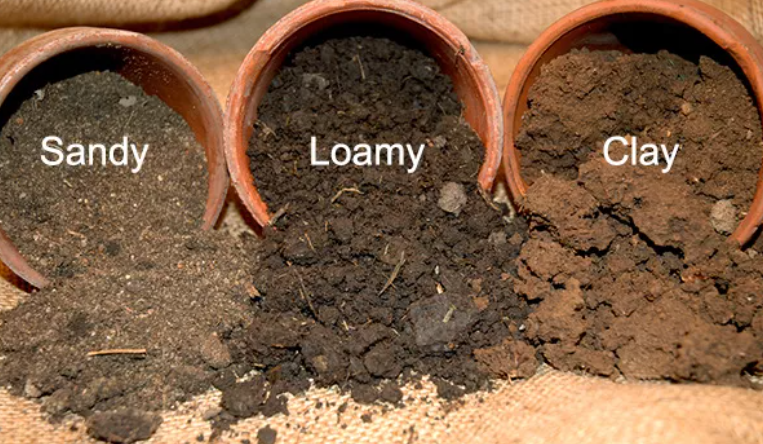
Sandy soil is composed primarily of large, coarse particles that create a loose, gritty texture with large spaces between individual grains, allowing water and air to move through the soil very quickly. This rapid drainage is the defining characteristic of sandy soil.
Because water drains so quickly through sandy soil, it tends to be relatively dry and low in nutrients, as dissolved nutrients are easily washed away before plants can absorb them. However, sandy soil warms up quickly in spring and is easy to work, making it suitable for certain crops such as carrots and potatoes that benefit from loose, well-draining conditions.
Clay Soil
Clay soil is composed of extremely fine particles that pack together tightly, creating a dense soil with very small spaces between particles that holds water and nutrients far more effectively than sandy soil. This water-holding capacity is the defining characteristic of clay soil.
While clay soil’s ability to retain moisture and nutrients can support strong plant growth, it also drains slowly and can become waterlogged after heavy rain, while drying into hard, cracked clumps during dry periods. Clay soil’s heavy texture also makes it more difficult to work, often requiring more effort to till and prepare for planting.
Silty Soil
Silty soil is composed of particles that are intermediate in size between sand and clay, giving it a smooth, almost soapy texture when wet and creating a soil that holds moisture better than sandy soil while draining better than clay soil. This balanced quality makes silty soil generally fertile.
Silty soil tends to be quite fertile because it retains nutrients well while still allowing reasonable drainage and root penetration, making it valuable for agriculture in regions where it occurs, such as river floodplains where silt has been deposited over time. However, silty soil can be prone to compaction and erosion if not managed carefully, since its fine particles can be easily washed or blown away.
Loamy Soil
Loamy soil is considered the ideal soil type for most gardening and agricultural purposes, consisting of a balanced mixture of sand, silt, and clay particles that combines the best characteristics of each component. This balance gives loamy soil good drainage, good water retention, and good nutrient-holding capacity all at once.
The crumbly, easy-to-work texture of loamy soil makes it a favorite among gardeners and farmers, as it allows roots to penetrate easily while still providing enough structure to hold moisture and nutrients near plant roots. Soils that naturally occur as loam are often highly prized for agriculture, and many soil improvement efforts aim to move soils with too much sand, silt, or clay closer to a loamy balance.
Peaty Soil
Peaty soil is a dark, rich soil composed primarily of partially decomposed organic matter that has accumulated over long periods of time in wet, low-oxygen conditions, typically in bogs and marshes. Its high organic content gives peaty soil a spongy texture and exceptional water-holding capacity.
While peaty soil can be highly fertile due to its organic content, it is often quite acidic and can hold so much water that it becomes waterlogged, requiring drainage improvements for many types of agriculture. Peaty soils are also significant as major stores of carbon, and their disturbance through drainage or extraction can release substantial amounts of carbon dioxide into the atmosphere.
Chalky Soil
Chalky soil contains a significant proportion of calcium carbonate, derived from underlying chalk or limestone bedrock, giving it an alkaline pH that distinguishes it from most other soil types. This alkalinity is the defining characteristic that affects which plants can thrive in chalky soil.
Chalky soil tends to be free-draining and can dry out quickly, while its alkaline nature means that certain nutrients, particularly iron and manganese, may become less available to plants, sometimes causing yellowing of leaves in plants that prefer more acidic conditions. Gardeners working with chalky soil often choose plants specifically adapted to alkaline conditions, such as certain herbs and Mediterranean species.
Saline Soil
Saline soil contains elevated levels of soluble salts, which can occur naturally in arid regions where evaporation concentrates salts near the surface, or can develop through poor irrigation practices that allow salts to accumulate over time. High salt content is the defining characteristic of this soil type.
The excess salt in saline soil makes it difficult for most plants to absorb water effectively, even when the soil itself contains adequate moisture, a phenomenon that can stunt growth or kill plants that are not specifically adapted to saline conditions. Managing saline soil typically involves improving drainage and using irrigation practices that help leach excess salts away from the root zone.
Acidic Soil
Acidic soil has a pH below 7, often resulting from the breakdown of organic matter, the leaching of basic minerals by rainfall, or the underlying composition of parent rock material such as granite. This lower pH affects the availability of various nutrients to plants growing in the soil.
While many common garden plants prefer slightly acidic conditions, very acidic soils can make certain nutrients, including phosphorus and calcium, less available to plant roots, while increasing the availability of elements like aluminum to potentially toxic levels. Plants such as blueberries, azaleas, and rhododendrons are specifically adapted to thrive in acidic soil conditions that would be unsuitable for many other species.
Alkaline Soil
Alkaline soil has a pH above 7, often associated with regions where the underlying bedrock contains significant amounts of limestone or other calcium-rich materials, or in arid regions where evaporation concentrates alkaline minerals near the surface. This higher pH influences which nutrients are readily available to plants.
In alkaline soil, certain micronutrients such as iron, manganese, and zinc can become less available to plants even when present in the soil, sometimes resulting in nutrient deficiency symptoms despite adequate total nutrient content. Plants adapted to alkaline conditions, including many Mediterranean herbs and certain ornamental species, have evolved mechanisms to access nutrients effectively even under these higher pH conditions.
Loess Soil
Loess soil is a type of soil formed from wind-deposited silt particles that have accumulated over thousands of years, creating deep, uniform layers of fine-grained sediment in regions that were once exposed to strong winds, often near the edges of ancient glaciers. This windblown origin is the defining characteristic of loess.
The fine, uniform texture of loess soil, combined with its tendency to be naturally fertile, has made loess deposits some of the most agriculturally productive soils in the world, supporting major farming regions in places such as the central United States, Ukraine, and parts of China. However, loess soil can also be highly susceptible to erosion, particularly when natural vegetation is removed, as its fine particles are easily carried away by wind and water.
Laterite Soil
Laterite soil is a type of soil rich in iron and aluminum oxides that forms in tropical regions through intense weathering over long periods of time, giving the soil a characteristic reddish or yellowish color. This distinctive coloration comes from the concentration of iron oxide minerals within the soil.
The intense weathering that creates laterite soil tends to leach away many plant nutrients, leaving behind a soil that can be relatively infertile despite its often deep profile, requiring careful management and fertilization for successful agriculture. In some areas, laterite soil hardens when exposed to air after being excavated, a property that has led to its use as a building material in certain tropical regions.
Black Cotton Soil
Black cotton soil, also known as regur soil, is a dark, clay-rich soil found primarily in tropical and subtropical regions with distinct wet and dry seasons, formed through the weathering of basaltic rock. Its dark color comes from organic matter content combined with certain minerals present in the soil.
This soil type has a remarkable capacity to expand when wet and contract when dry, creating deep cracks during dry periods that can extend significant distances into the soil profile. Black cotton soil is particularly well known for its suitability for growing cotton, from which it derives one of its common names, though its tendency to swell and shrink can create challenges for construction and infrastructure built upon it.