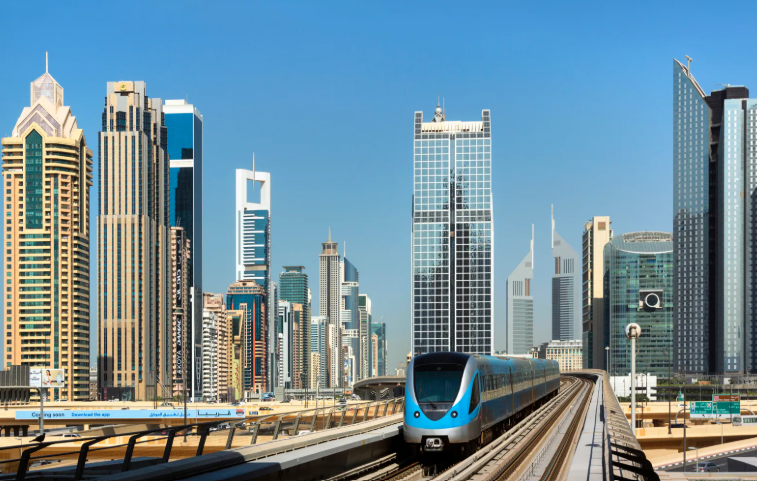
A city is far more than a collection of buildings and streets — it is a living system shaped by geography, history, economics, culture, and the cumulative decisions of millions of people over generations. Cities have existed for at least 7,000 years, beginning with the earliest urban settlements in Mesopotamia, and they have been the primary engines of human progress ever since, concentrating talent, capital, and ideas in ways that generate innovation, culture, and wealth at a scale no rural settlement can match. Today, more than 56% of the world’s population lives in cities, a proportion expected to rise to nearly 70% by 2050.
The urban world is extraordinarily diverse. A megacity of 20 million people navigating the pressures of rapid growth and infrastructure strain has almost nothing in common with a quiet medieval market town of 50,000, yet both are cities in the fullest sense of the word. Some cities are defined by a single dominant industry or function — a port, a capital, a university, a resort — while others are vast, multipurpose metropolises that contain multitudes within their boundaries. This diversity reflects the many different roles cities have been called upon to play throughout history and across different geographies and economic systems.
Cities are also among the most consequential actors in addressing the great challenges of the 21st century. Urban areas account for roughly 70% of global carbon emissions, consume the majority of the world’s energy and resources, and generate the bulk of global GDP. How cities are planned, governed, and powered will therefore determine in large part whether humanity successfully navigates climate change, manages growing inequality, and sustains economic development for a population heading toward 10 billion. The stakes of getting urban development right have never been higher.
Understanding the different types of cities — the categories into which urban settlements fall based on their size, function, history, geography, or economic character — is a valuable lens through which to examine how the urban world works and how it is changing. These categories are not rigid boxes; many cities belong to several types simultaneously, and cities evolve and shift their character over time as economic conditions and human needs change. What the typology offers is a framework for thinking clearly about the enormous variety of urban experience that exists across the globe and the different challenges and opportunities each type of city faces.
Megacity
A megacity is an urban agglomeration with a population of at least 10 million people, a threshold that places it among the largest and most complex human settlements on Earth. There are currently around 35 megacities worldwide, concentrated heavily in Asia, with Tokyo, Delhi, Shanghai, Dhaka, and São Paulo among the most populous, and the number is expected to grow significantly as urbanization accelerates in Africa and South Asia.
Managing a megacity presents challenges of extraordinary complexity — providing housing, water, sanitation, transport, employment, and public safety for tens of millions of people requires governance systems, financial resources, and technical capacity that many megacities, particularly in the developing world, struggle to sustain. Despite their difficulties, megacities are also centers of immense economic power, cultural vitality, and human creativity, concentrating in a single urban area more talent, capital, and ambition than most entire nations can claim.
Capital City
A capital city is the seat of a national government and the symbolic center of a country’s political identity, typically housing the legislature, executive, judiciary, foreign embassies, and the principal institutions of state. Capitals carry an authority and visibility that other cities in the same country rarely match, drawing political decision-makers, lobbyists, journalists, diplomats, and civil servants into a concentrated urban environment oriented around the exercise of power.
Not all capitals are the largest or most economically dominant cities in their countries — Washington D.C., Canberra, Ottawa, and Brasília were all purpose-built or designated specifically to avoid giving any existing commercial city undue political primacy — but many capitals, including London, Paris, Tokyo, and Beijing, combine political centrality with economic and cultural dominance in ways that make them truly primate cities within their national systems.
Port City
A port city is one whose identity, economy, and physical form have been shaped fundamentally by its position on a coast, river, or lake and its role as a hub for maritime trade and transport. From ancient Carthage and Alexandria to modern Singapore, Rotterdam, and Shanghai, port cities have historically been among the wealthiest, most cosmopolitan, and most culturally dynamic urban centers in the world, their openness to sea trade making them natural gateways for the exchange of goods, people, and ideas.
The working waterfront — with its docks, warehouses, cranes, and the constant movement of vessels — defines the physical character and economic rhythm of a port city in ways that penetrate far into the urban fabric. Many historic port cities have undergone dramatic transformations as containerization moved cargo handling to new deep-water terminals away from city centers, freeing up former docklands for redevelopment into mixed-use neighborhoods, cultural institutions, and waterfront promenades that have become defining features of contemporary urban regeneration.
Industrial City
An industrial city is one whose growth, physical form, and social character were shaped primarily by manufacturing and industrial production, typically developing rapidly during the 19th and early 20th centuries in response to the availability of coal, iron, water power, or other resources that attracted factories and the workers who staffed them. Cities like Manchester, Pittsburgh, Essen, and Osaka grew from modest towns into major urban centers within a few generations on the strength of iron, steel, textiles, chemicals, and machinery.
Many industrial cities have faced profound challenges since the deindustrialization of the late 20th century, when manufacturing jobs migrated to lower-cost locations and left behind unemployment, derelict land, and shrinking populations. The most successful have reinvented themselves through investment in education, culture, digital industries, and the creative economy, with cities like Pittsburgh and Manchester now celebrated as models of post-industrial urban regeneration, while others continue to struggle with the legacy of economic dependence on industries that have departed.
University City
A university city is one in which a major university or cluster of higher education institutions plays a central role in shaping the local economy, culture, demographics, and physical environment. The presence of a large student and academic population gives these cities a distinctive intellectual energy, a concentration of young people, and an economy built around education, research, publishing, and the knowledge-intensive industries that tend to cluster near major research universities.
Cities like Oxford, Cambridge, Heidelberg, Bologna, and Ann Arbor have been defined by their universities for centuries, with the institution and the city growing up so intertwined that it is difficult to imagine one without the other. In many cases the university is by far the largest employer, the biggest landowner, and the primary source of economic and cultural vitality in the city, creating a relationship of deep mutual dependence that shapes everything from local housing markets and transport patterns to the social character of the streets.
Tourist City
A tourist city is one whose economy is dominated by or heavily dependent on visitors attracted by its historical heritage, natural beauty, cultural institutions, entertainment, or climate. Cities like Venice, Dubrovnik, Bruges, Kyoto, and Machu Picchu have become so attractive to tourists that managing visitor flows has become one of the central challenges of urban governance, with the needs and interests of temporary visitors sometimes coming into conflict with the quality of life of permanent residents.
Tourism brings significant economic benefits — employment in hospitality, retail, transport, and cultural industries, as well as investment in the preservation of historic buildings and landscapes — but it also brings overcrowding, rising property prices, noise, environmental pressure, and the gradual displacement of local businesses and residents by tourism-oriented uses. The phenomenon of overtourism, in which visitor numbers exceed what a destination can sustainably absorb, has become an urgent policy challenge for many of the world’s most celebrated tourist cities.
Smart City
A smart city uses digital technology, data analytics, sensors, and connected infrastructure to improve the efficiency, sustainability, and quality of life of its urban services and systems. Rather than a specific type of city defined by its economic base or geography, a smart city is better understood as an approach to urban management that overlays digital intelligence onto the physical city to optimize everything from traffic signals and energy consumption to waste collection and emergency response.
Singapore, Amsterdam, Barcelona, and Songdo in South Korea are often cited as leading examples of smart city development, each having invested heavily in digital infrastructure and data-driven governance. Critics of the smart city concept raise important questions about data privacy, the concentration of surveillance capabilities in the hands of governments or technology corporations, and the risk that technological solutions will be prioritized over the human and social dimensions of urban problems that do not yield easily to algorithmic management.
Garden City
A garden city is an urban planning concept developed by British visionary Ebenezer Howard at the turn of the 20th century, proposing self-contained communities that combine the economic and social advantages of urban life with the green space, fresh air, and community cohesion associated with rural living. Howard envisioned garden cities as an alternative to the overcrowded, polluted industrial cities of Victorian England, with housing set in generous gardens, factories located in designated zones away from residences, and the whole community surrounded by a permanent agricultural green belt.
Letchworth and Welwyn Garden City in England were built as direct realizations of Howard’s vision, and the concept influenced urban planning movements worldwide, inspiring suburban developments, new towns, and green city initiatives across Europe, North America, and beyond. While pure garden cities as Howard conceived them remain rare, his ideas about the integration of greenery, mixed land use, and planned community structure have had a lasting influence on how planners and architects think about the ideal form of human settlement.
Eco City
An eco city is an urban settlement designed and managed with the explicit goal of minimizing its ecological footprint, maximizing resource efficiency, and operating as sustainably as possible within the capacity of the natural systems that support it. Eco cities aim to achieve dramatic reductions in carbon emissions, waste generation, water consumption, and land degradation compared to conventional urban development, using a combination of green building standards, renewable energy systems, sustainable transport, urban agriculture, and circular economy principles.
Masdar City in the United Arab Emirates and Hammarby Sjöstad in Stockholm are among the most cited examples, each attempting in different ways to demonstrate that dense, modern urban living can be made compatible with environmental sustainability. The eco city concept has been criticized for sometimes prioritizing technological solutions and wealthy residents while failing to engage with the deeper social and political transformations that genuinely sustainable urban development requires, but it represents an important laboratory for the ideas and technologies that will shape greener cities in the future.
Ghost City
A ghost city, also called a ghost town at smaller scales, is an urban settlement that has been largely or entirely abandoned, typically because the economic activity that originally sustained it — mining, a specific industry, military presence, or a transport route — has ceased to exist. The most dramatic examples are former boomtowns that grew rapidly around a single resource or activity and then collapsed with equal speed when that resource was exhausted or the activity moved elsewhere.
China has produced a more unusual modern variant of the ghost city — large-scale urban developments built speculatively in anticipation of population growth that did not arrive as quickly as planners projected, resulting in vast neighborhoods of completed but largely empty apartment blocks, shopping malls, and civic buildings. Places like Ordos Kangbashi in Inner Mongolia became internationally famous as eerie symbols of overambitious urban development, though some have gradually filled with residents over time as regional populations and economies have continued to grow.
Primate City
A primate city is one that dominates its national urban system so completely — in terms of population, economic output, political power, and cultural influence — that it dwarfs every other city in the country by a very wide margin. The concept was introduced by geographer Mark Jefferson in 1939, who observed that in many countries a single city is not merely the largest but is dramatically larger than the second city, concentrating national life in a single overwhelming urban center.
Bangkok, Paris, Lima, and Buenos Aires are classic examples of primate cities, each accounting for a disproportionate share of their country’s GDP, population, and institutional activity. While primacy can generate economic efficiency through agglomeration, it also tends to produce severe regional inequalities, as investment, talent, and opportunity drain toward the dominant city at the expense of secondary cities and rural areas that struggle to compete for resources and attention.
Inland City
An inland city is one located away from any coast or major navigable waterway, relying on land-based transport — roads, railways, and air — for its connections to regional and global networks rather than on maritime access. Historically, inland cities were at a disadvantage compared to coastal and riverine settlements in terms of trade access, but the development of railways and later highways and air transport gradually leveled the playing field for many interior locations.
Cities like Madrid, Nairobi, Mexico City, and Johannesburg are major inland metropolises that have grown to great size and importance despite their distance from the sea, driven by their roles as political capitals, regional service centers, or nodes in land-based trade and transport networks. In the modern era, air connectivity has become particularly important for inland cities seeking to participate in global economic networks, and the quality of a city’s airport and its international flight connections can have a significant effect on its attractiveness to investment and skilled workers.
Border City
A border city sits at or near an international boundary, giving it a dual character shaped by its position at the interface between two nations, economies, cultures, and legal systems. Border cities often develop distinctive economic functions around cross-border trade, customs processing, manufacturing for export, and the retail and service industries that cater to cross-border shoppers and visitors.
The twin cities of El Paso and Ciudad Juárez, straddling the US-Mexico border, and the cluster of settlements along the boundary between Germany, France, and Switzerland in the Upper Rhine region illustrate how border cities can develop symbiotic economic relationships with their counterparts on the other side of the line. At the same time, border cities can be places of tension, inequality, and vulnerability when political relations between neighboring countries deteriorate or when strict border controls disrupt the cross-boundary flows of people and goods on which their economies depend.
Resort City
A resort city is built around the provision of leisure, recreation, and hospitality services to visitors, with its economy, physical form, and social life organized primarily around the needs and pleasures of temporary guests rather than a resident working population. Unlike tourist cities that attract visitors because of pre-existing historical or cultural assets, resort cities are often deliberately created or heavily engineered to provide specific recreational experiences — beach holidays, gambling, skiing, spa treatments, or theme park entertainment.
Las Vegas, Cancún, Phuket, and Marbella are examples of resort cities at different scales and in different contexts, each having developed a specialized urban economy centered on hospitality, entertainment, and leisure consumption. Resort cities tend to be highly vulnerable to economic volatility because their narrow economic base makes them heavily dependent on visitor numbers that can fluctuate dramatically with changes in consumer confidence, travel costs, exchange rates, or global events such as pandemics.
River City
A river city is one whose location, historical development, and physical form have been shaped by its position on a major river, which historically provided water supply, flood-plain agriculture, transport, trade, and defensive advantages that made riverside locations among the most attractive sites for early human settlement. Many of the world’s oldest and most historically significant cities — Cairo on the Nile, Baghdad on the Tigris, Varanasi on the Ganges, London on the Thames — are river cities whose identities are inseparable from the waterways that gave them life.
Rivers continue to shape the character of cities built along them, providing natural corridors for parks and waterfront development, defining the visual skyline when crossed by historic bridges, and influencing patterns of flooding and urban drainage that urban planners must manage carefully. In many river cities, the relationship between the urban fabric and the water has been transformed by flood control engineering — levees, weirs, and channelization — that has tamed the river but sometimes severed the intimate connection between city and waterway that gave these places much of their original character.
Hill City
A hill city is one built on or around elevated terrain — a hilltop, a ridge, a plateau, or a series of hills — typically for reasons of defense, drainage, or the availability of commanding views over surrounding lowlands. Throughout history, elevated sites were favored for settlement because they provided natural protection against attack, flooding, and the disease that plagued low-lying areas with poor drainage, and many of the world’s oldest continuously inhabited cities occupy hilltop or hillside positions that reflect these ancient strategic priorities.
Cities like San Francisco, Lisbon, Edinburgh, and Tbilisi derive much of their distinctive visual character from their topography, with steep streets, dramatic viewpoints, varied skylines, and neighborhoods of contrasting character packed into a hilly landscape that resists the uniform grid layouts common in flat cities. The hills that give these cities their beauty and individuality also create practical challenges for transport, construction, and utility infrastructure, requiring engineering solutions — funiculars, cable cars, retaining walls, and terraced construction — that become distinctive features of the urban character in their own right.
Delta City
A delta city is built on the flat, low-lying sedimentary deposits formed where a major river meets the sea or a large lake, occupying terrain that is characteristically very flat, interlaced with water channels, and only marginally above sea level. Delta locations offered early settlers fertile agricultural land, abundant fresh water, access to both river and sea trade routes, and rich fisheries, making them among the most densely populated and economically productive landscapes in the world.
Cities like Dhaka, Shanghai, New Orleans, Alexandria, and Ho Chi Minh City occupy delta environments and face a common set of challenges arising from their low elevation — flooding, storm surge, land subsidence, saltwater intrusion, and the growing threat of sea level rise driven by climate change. The very geological dynamism that made delta landscapes so productive — the constant deposition and erosion of sediment by river and tidal forces — makes them inherently unstable foundations for urban infrastructure, demanding continuous engineering intervention to keep cities above water.
Walled City
A walled city is one that was historically enclosed within defensive walls, ramparts, or fortifications designed to protect its inhabitants from military attack, a feature that was virtually universal in urban settlements throughout the ancient and medieval worlds. The walls defined the city’s limits, concentrated population within a fixed perimeter, shaped the organic density and complexity of the street pattern inside, and often determined the city’s social and economic hierarchy by distinguishing those with the protection of the walls from those outside.
Most walled cities have long since burst beyond their original fortifications as modern growth made the walls obsolete as defensive structures, but many historic city cores — the medinas of Marrakech and Fez, the old towns of Dubrovnik and Tallinn, the walled city of Lucca in Italy — survive with their walls largely intact and have become among the most cherished and visited historic urban environments in the world. The walls that once defined military necessity now frame some of the most atmospheric and historically resonant walking experiences available to anyone exploring the ancient layers of urban civilization.
Planned City
A planned city is one that was designed and built from scratch according to a predetermined layout, rather than growing organically from a small settlement over centuries. Planned cities have been created throughout history for a wide variety of reasons — to serve as new capitals, to open up frontier territories, to house workers for specific industries, to demonstrate political ideologies, or simply to provide better-organized urban environments than the chaotic growth of existing cities seemed capable of producing.
Brasília, Chandigarh, Canberra, Islamabad, and Naypyidaw are among the most prominent modern examples of planned capital cities, each built in the 20th century to serve as a national seat of government on a blank or near-blank landscape. While planned cities often achieve impressive order and functional clarity in their early years, they frequently struggle to develop the organic vitality, mixed-use complexity, and accidental charm that unplanned cities accumulate over time, leading critics to describe some of the most rigorously planned examples as efficient but sterile environments that serve administrative functions better than they serve human happiness.
Shrinking City
A shrinking city is one experiencing sustained population decline, typically accompanied by economic contraction, rising vacancy rates, deteriorating infrastructure, and reduced tax revenues that make it increasingly difficult for local governments to maintain the services and amenities the city once provided. Urban shrinkage is driven by a range of factors including deindustrialization, regional economic decline, demographic aging, outmigration to more prosperous cities, and in some cases the aftermath of conflict or environmental disaster.
Detroit, Leipzig, Youngstown, and Halle are among the most studied shrinking cities, each having lost large fractions of their peak populations and faced the difficult task of managing a city built for far more people than currently inhabit it. The most innovative responses to urban shrinkage have involved deliberately scaling the city back — demolishing derelict structures, converting vacant lots to parks or urban farms, and concentrating remaining residents and services into denser, more viable cores — rather than continuing to plan for growth that is unlikely to return.
Island City
An island city is one built entirely or primarily on an island, giving it hard physical boundaries that constrain its growth, concentrate its development, and create a distinctive relationship between the urban fabric and the surrounding water. Island cities range from small historical settlements on easily defensible river islands — like the original settlement of Paris on the Île de la Cité or Mexico City on the island city of Tenochtitlán — to major contemporary metropolises like Singapore, Manhattan, and Hong Kong built on islands of very different scales.
The physical limits imposed by island geography tend to produce exceptionally dense, compact, and vertically developed urban forms, as the impossibility of sprawling outward forces growth upward and inward. Island cities are also particularly exposed to the risks of sea level rise, storm surge, and coastal flooding, and many are investing heavily in coastal defenses, land reclamation, and climate adaptation strategies to protect urban assets and infrastructure against the growing threat of inundation as global temperatures rise.
Oasis City
An oasis city is one that has developed in an arid or desert environment around a reliable source of water — a spring, a river fed by distant mountains, or an underground aquifer — that makes settled life possible in an otherwise hostile landscape. Oasis cities have existed for thousands of years as waypoints and trading hubs on desert caravan routes, their water supply attracting merchants, travelers, and settlers and allowing them to sustain populations of considerable size and sophistication far from any other urban center.
Cities like Marrakech, Kashgar, Yazd, and Palmyra grew to historical prominence as oasis settlements on the Silk Road and trans-Saharan trade networks, their wealth derived from their strategic position as essential stops where caravans could rest, resupply, and trade goods from distant regions. Many modern oasis cities continue to face the fundamental challenge of water scarcity that has always defined life in arid environments, but they now contend with it at a much larger scale, managing growing urban populations and modern water demands against a backdrop of shrinking aquifers and increasingly unpredictable rainfall driven by climate change.
Twin City
A twin city is a pair of separate cities or towns that are so closely positioned — often on opposite banks of a river, either side of a border, or adjacent to each other on a shared urban fringe — that they have developed strong functional, economic, and social interconnections while retaining distinct administrative identities. The relationship between twin cities can be one of complementarity, competition, or both simultaneously, with each city offering something different and the pair together functioning as a single integrated urban system.
Minneapolis and Saint Paul in the United States, Budapest in Hungary — formed by the unification of Buda and Pest across the Danube — and the Indian-Pakistani border cities of Amritsar and Lahore represent very different kinds of twin city relationships shaped by geography, history, and political circumstance. In cross-border twin cities, the dynamic is particularly complex, as differing national regulations, currencies, languages, and political relations create both obstacles and opportunities that give the paired cities a distinctive economic and cultural character unlike any purely domestic urban relationship.
Religious City
A religious city is one whose identity, economy, physical character, and governance are shaped primarily by its significance as a center of religious faith, pilgrimage, or spiritual authority. Such cities attract millions of worshippers and pilgrims whose movements, needs, and reverence fundamentally define the urban landscape, from the great temples, mosques, churches, or shrines at their heart to the dense networks of accommodation, markets, and services that have grown up to serve those who come in devotion.
Mecca, Varanasi, Jerusalem, Lourdes, and Amritsar are among the most significant religious cities in the world, each sacred to hundreds of millions of believers and each shaped profoundly by the institutions, rituals, and economies of faith that define daily life within them. The governance of religious cities is often complicated by the intersection of civil and religious authority, the management of massive and often concentrated pilgrimage flows, and the tension between the authentic spiritual character of sacred sites and the commercial pressures generated by large-scale religious tourism.
Technology City
A technology city, sometimes called a tech hub or innovation district, is one whose economy is dominated by or heavily oriented toward the technology sector — software development, semiconductor manufacturing, biotechnology, telecommunications, and the wider ecosystem of startups, venture capital, and research institutions that surrounds it. Technology cities tend to develop around major research universities or national laboratories that generate the scientific knowledge and trained graduates that technology industries require.
Silicon Valley’s cluster of cities around San Jose and Palo Alto, Bangalore in India, Shenzhen in China, and Tel Aviv in Israel are among the most celebrated technology cities in the world, each having developed distinctive innovation ecosystems built around specific technological specializations. Technology cities tend to generate enormous wealth but also face severe affordability crises as rising salaries in the tech sector push housing costs beyond the reach of workers in other industries, creating deep social inequalities and displacement pressures that have become defining political challenges in cities where the technology economy dominates.
Media City
A media city is one that serves as the primary center for a country’s or region’s film, television, music, publishing, advertising, or digital content industries, concentrating in a single urban location the studios, networks, agencies, talent pools, and support services that make cultural production possible at scale. Media cities derive their character from the creative industries that dominate them, attracting the writers, actors, directors, designers, musicians, and technologists whose work shapes popular culture across the nation and often far beyond its borders.
Los Angeles, with Hollywood at its core, is the archetypal media city, its urban identity inseparable from the film and television industries that made it world-famous. Mumbai’s Bollywood, Lagos’s Nollywood, and Seoul’s K-pop and drama production industry have similarly shaped their cities into globally recognized centers of cultural production, demonstrating that the media city is not an exclusively American or Western phenomenon but a feature of urban systems wherever a concentration of creative talent, infrastructure, and commercial investment has accumulated over time.
Finance City
A finance city is one in which the financial sector — banking, insurance, asset management, stock exchanges, and the constellation of legal, accounting, and consulting services that surround them — is the dominant economic force, shaping the city’s built environment, labor market, culture, and global reputation. Finance cities tend to develop around stock exchanges and central banking institutions and grow by accumulating the network effects that come from concentrating financial expertise, capital, and information in a single location.
New York, London, Zurich, Frankfurt, Hong Kong, and Singapore are the world’s foremost finance cities, each serving as a primary node in the global financial system and each defined by the towers, trading floors, and dense professional service ecosystems that finance generates. The concentration of financial activity in a small number of global cities gives those cities enormous economic power and global influence, but it also makes them centers of inequality, as the extraordinary rewards available to those at the top of the financial sector coexist with large populations of lower-paid service workers who maintain the city that finance has built.
Cultural Capital
A cultural capital is a city recognized as the leading center of artistic, intellectual, and cultural life within its country or region, distinguished by an exceptional concentration of museums, galleries, theaters, concert halls, universities, literary traditions, and the creative communities that sustain them. Cultural capitals attract and retain artists, writers, architects, filmmakers, and thinkers, creating a self-reinforcing ecosystem of cultural production and critical engagement that gives the city an intangible prestige extending far beyond its economic or political power.
Paris, Vienna, Florence, and Prague are among the cities most deeply associated with the concept of the cultural capital, each having served for centuries as magnets for creative talent and as crucibles in which movements in art, music, literature, and thought were born and spread to the world. The status of cultural capital is not fixed or permanent — cities rise and fall in cultural prominence as economic conditions, political climates, and patterns of artistic migration shift — but it carries with it a lasting legacy in the built environment, the institutional heritage, and the accumulated reputation that continues to draw visitors, students, and creatives long after the peak of any particular cultural moment has passed.
Mining City
A mining city is one whose origin and development are tied directly to the extraction of mineral resources — gold, silver, coal, copper, diamonds, or other valuable materials found in the surrounding geology. Mining cities typically emerge rapidly wherever a significant mineral discovery is made, as workers, merchants, and entrepreneurs flood into the area to participate in the extraction economy, creating an urban settlement where none existed before in a matter of months or years.
Johannesburg, founded on gold in 1886, and Potosí in Bolivia, which grew to become one of the largest cities in the Americas on the strength of its silver mines in the 16th century, illustrate both the explosive growth potential of mining cities and their underlying fragility — both experienced dramatic declines when their primary resource became harder to extract or fell in value. Cities that successfully diversify beyond their original mining economies can achieve long-term stability, but those that fail to do so remain perpetually vulnerable to the commodity price cycles and resource depletion that are the defining risks of an economy built on extraction.
Colonial City
A colonial city is one that was founded, developed, or fundamentally restructured during a period of colonial occupation, typically by a European power between the 15th and 20th centuries, in a way that imposed the colonial power’s urban planning ideals, architectural styles, administrative structures, and social hierarchies upon local populations and landscapes. Colonial cities were instruments of political control and economic extraction, designed to facilitate the governance of conquered territories and the movement of resources toward the colonizing power.
Many of the world’s great cities in Africa, Asia, Latin America, and the Pacific bear the deep imprint of their colonial origins in their urban grids, monumental civic buildings, residential segregation patterns, port facilities, and the unequal land tenure arrangements that persist long after formal independence. The postcolonial city faces the complex task of managing a built environment and urban structure designed for purposes and populations very different from its present reality, while confronting the social inequalities and economic distortions that colonialism generated and that independence alone has not resolved.
Dispersed City
A dispersed city is one characterized by low-density, sprawling development spread across a large geographical area, with land uses separated into distinct residential, commercial, and industrial zones connected primarily by private automobiles and highway infrastructure. This urban form, dominant in much of suburban North America, Australia, and increasingly in the developing world, prioritizes individual residential space and car-based mobility over the density, walkability, and mixed use that characterize more compact urban forms.
The dispersed city generates a distinctive set of challenges — high infrastructure costs per capita, heavy dependence on private vehicles and fossil fuels, long commute times, social isolation, and the consumption of large areas of agricultural and natural land on the urban fringe. As fuel costs rise, climate concerns intensify, and demographic preferences shift among younger generations toward more urban and walkable environments, many dispersed cities are grappling with how to retrofit density, transit, and mixed use into urban fabrics that were designed around assumptions of cheap energy and unlimited space.
Compact City
A compact city is one built to a high density, with diverse land uses mixed together, strong public transport, and a physical form that enables most daily needs to be met within walking or cycling distance. The compact city model is the dominant paradigm in contemporary urban planning thinking, advocated as the most sustainable, equitable, and economically efficient form of urban development because it minimizes land consumption, reduces car dependence, supports viable public transit, and creates the street-level activity that animates vibrant urban public life.
European cities like Barcelona, Amsterdam, and Copenhagen are frequently cited as models of compact urban development, their historic building forms, mixed-use neighborhoods, and excellent cycling and transit infrastructure combining to produce high quality of life at relatively modest environmental cost. The compact city is not without its critics — density can produce affordability pressures, overcrowding, noise, and reduced access to greenery if not carefully managed — but the broad consensus among urban planners, environmentalists, and economists is that compact, well-connected urbanism offers the most promising path toward cities that are both livable and sustainable in the long term.
Waterfront City
A waterfront city is one whose identity and urban life are defined by its relationship with a body of water — a harbor, bay, river, lake, or canal — that forms the visual, recreational, and in many cases economic heart of the urban experience. Waterfront locations have always been among the most desirable in any city, offering views, breezes, access to water-based recreation, and a natural amenity that no amount of urban planning can fully replicate inland.
Many of the world’s most celebrated cities — Sydney with its harbor, Chicago on Lake Michigan, Amsterdam on its canals, Rio de Janeiro between its mountains and Guanabara Bay — owe a significant part of their global appeal to the quality and character of their waterfront environments. Urban waterfront regeneration has been one of the dominant themes in city planning since the 1980s, as former industrial ports and dockyards have been transformed into mixed-use neighborhoods, cultural districts, and public promenades that reconnect cities with water edges that industrial activity had long made inaccessible to ordinary residents.
Satellite City
A satellite city is a smaller urban settlement located near and functionally linked to a larger metropolitan center, typically serving as a residential community for workers who commute to the main city for employment, or as a location for industries and institutions that cannot afford or find space within the denser and more expensive core city. Satellite cities are distinct from mere suburbs in that they typically have their own commercial centers, civic institutions, and a degree of economic independence, even if they remain oriented toward the dominant city nearby.
Cities like Gurgaon near Delhi, Shenzhen in relation to Hong Kong, and the many towns surrounding London in the English commuter belt illustrate how satellite cities can develop their own substantial scale and economic character while remaining functionally integrated with a larger metropolitan system. The relationship between satellite cities and their parent metropolises raises important questions about governance, infrastructure investment, and regional planning, as the political boundaries between independent cities and municipalities often fail to match the functional boundaries of the integrated urban regions that daily commuting patterns and economic linkages create.