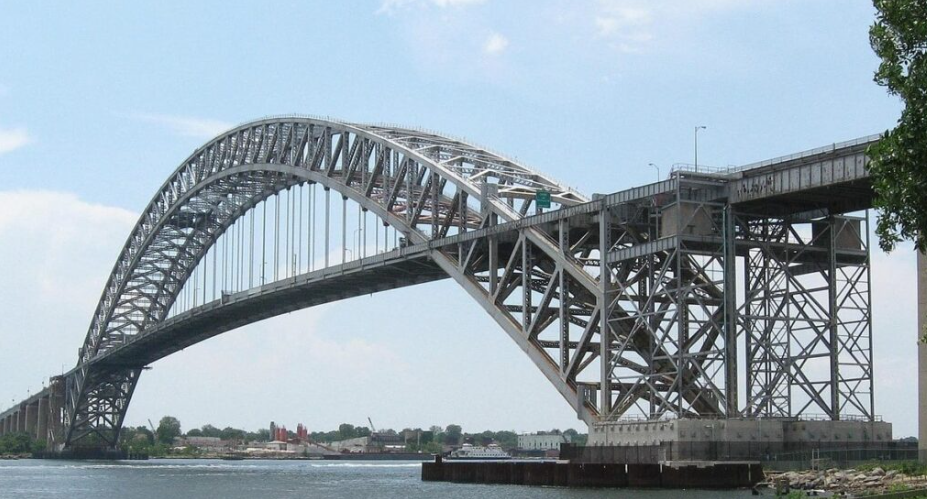
Bridges are among the most iconic and essential structures in human civilization, connecting people, communities, and economies across natural and man-made obstacles. From the simplest log thrown across a stream to soaring cable-supported spans crossing entire bays, bridges represent one of the clearest expressions of human ingenuity applied to the challenge of movement. The history of bridge building stretches back thousands of years, with ancient civilizations in Rome, China, and Mesopotamia constructing stone and timber crossings that, in some cases, still stand today.
The global stock of bridges is staggering in its scale. The United States alone has over 620,000 bridges spanning its roads and highways, while China has invested so heavily in bridge infrastructure over the past three decades that it now holds the records for many of the world’s longest, tallest, and most technically complex crossings. Worldwide, bridges carry billions of people and an incalculable volume of freight every single day, underpinning the movement of goods and people that sustains the modern global economy.
Beyond their practical function, bridges carry deep cultural and symbolic significance. They appear in the mythology, literature, and art of virtually every civilization, representing transition, connection, and the triumph of human will over natural barriers. Cities like San Francisco, Sydney, London, and Prague are defined as much by their famous bridges as by any other feature, and the engineering achievements those structures represent have inspired generations of architects, engineers, and planners.
The diversity of bridge types reflects the enormous range of challenges engineers must solve — the width of the gap to be crossed, the loads the bridge must carry, the nature of the terrain and geology, the available materials, and the budget all shape what kind of bridge gets built. A solution that works beautifully over a narrow mountain gorge may be entirely impractical for a wide, shallow tidal estuary. Understanding the different types of bridges, their structural principles, and their appropriate applications reveals just how rich and varied the engineering of these essential structures truly is.
Beam Bridge
A beam bridge is the simplest and most fundamental type of bridge, consisting of a horizontal beam supported at each end by piers or abutments. The beam bears the load by resisting bending forces — the top of the beam is compressed while the bottom is stretched in tension — and transfers that load down into the supports at either end.
Because of their simplicity, beam bridges are among the most widely used structures in the world, found everywhere from simple concrete highway overpasses to rural timber crossings over small creeks. Their main limitation is span length — the longer the beam, the more it tends to sag under its own weight, which is why very long beam bridges must use multiple spans supported by a series of intermediate piers.
Truss Bridge
A truss bridge uses a framework of interconnected triangles — the truss — to distribute loads efficiently across the structure. The triangle is the only geometric shape that cannot be distorted without changing the length of its sides, making it inherently rigid and exceptionally strong relative to the amount of material used.
Truss bridges became enormously popular during the industrial era when iron and steel became widely available, allowing engineers to build longer spans than wooden beam bridges could achieve. They appear in a remarkable variety of configurations — Pratt, Howe, Warren, and Whipple trusses among them — each named after the engineer who developed it and each distributing forces slightly differently through the network of members.
Arch Bridge
An arch bridge transfers the load of the deck and traffic through a curved arch structure, directing forces outward and downward into the ground at the base of the arch rather than relying on vertical compression alone. The arch is one of the oldest structural forms in engineering, used by ancient Romans to build aqueducts and bridges that have endured for two thousand years.
The key requirement for an arch bridge is strong, stable abutments at each end capable of resisting the significant outward thrust generated by the arch. When that condition is met, the arch form is extraordinarily efficient, allowing bridges of considerable span and grace to be built from materials like stone, brick, or concrete that are strong in compression but weak in tension.
Suspension Bridge
A suspension bridge hangs its deck from large cables that are strung between tall towers and anchored at each end of the bridge in massive concrete foundations called anchorages. The cables carry the weight of the deck and its traffic in tension, transferring the load through the towers into the ground.
Suspension bridges are capable of spanning much greater distances than almost any other bridge type, making them the preferred choice for crossing wide bays, deep fjords, and major river mouths. The elegant catenary curve of their main cables and the soaring height of their towers have made suspension bridges among the most visually celebrated structures in the world, with iconic examples like the Golden Gate Bridge and the Akashi Kaikyō Bridge defining the skylines and coastlines they inhabit.
Cable-Stayed Bridge
A cable-stayed bridge also uses cables and towers to support its deck, but the arrangement differs fundamentally from a suspension bridge. Instead of hanging from large horizontal cables draped between towers, the deck of a cable-stayed bridge is supported directly by straight cables running diagonally from one or more towers down to the deck at various points along its length.
This configuration is more rigid than a suspension bridge, easier and cheaper to build, and requires no anchorages at the ends, making cable-stayed bridges suitable for a wider range of sites. They have become the dominant choice for medium-to-long span crossings built since the 1970s, and their fan-like or harp-like arrays of cables have given them a distinctive visual identity that architects and engineers have used to striking effect in locations around the world.
Cantilever Bridge
A cantilever bridge is built using cantilevers — horizontal structural members anchored at one end and projecting outward without support at the other. In the most common configuration, two cantilever arms extend from opposite banks of the crossing and meet in the middle, sometimes supporting a suspended central span between them.
The cantilever principle allows bridges to be constructed without temporary support falsework beneath the span, which is a significant advantage when crossing deep water, busy shipping channels, or inaccessible gorges. The Forth Bridge in Scotland, completed in 1890, is perhaps the most celebrated cantilever bridge in the world and remains an enduring symbol of Victorian engineering ambition, still carrying rail traffic today.
Tied Arch Bridge
A tied arch bridge, also known as a bowstring arch, uses an arch to carry load just as a conventional arch bridge does, but instead of transferring the outward thrust into heavy abutments, it ties the two ends of the arch together with the bridge deck itself. The deck acts as a tension tie, effectively keeping the arch from spreading outward and eliminating the need for massive anchor foundations.
This makes tied arch bridges far more adaptable to sites with softer ground conditions where large abutments would be impractical. They are a popular choice for urban crossings and railway bridges, where their clean, elegant silhouette and relatively modest foundation requirements make them both an engineering and an aesthetic solution.
Through Arch Bridge
A through arch bridge is designed so that the arch rises above the bridge deck and the traffic travels through the arch rather than over or beneath it. The deck is suspended from the arch by hangers — vertical or diagonal cables or rods — and the arch frames the view of travelers crossing the bridge, creating a distinctive tunnel-like visual effect.
This configuration works well where vertical clearance below the deck is limited but height above is available, and it makes efficient use of steel or concrete in a relatively compact and graceful form. Many through arch bridges have become beloved urban landmarks, including the Sydney Harbour Bridge, whose towering steel arch is one of the most recognizable structures in the world.
Movable Bridge
A movable bridge is one that can change its position or configuration to allow tall ships, barges, or other watercraft to pass through. Rather than providing a fixed span high enough to clear all vessels — which would require extremely long and expensive approach ramps in many urban waterfront settings — movable bridges open on demand, balancing the needs of road or rail traffic against those of marine navigation.
Movable bridges come in several distinct mechanical forms, each with its own engineering logic, and they are most commonly found in low-lying port cities, canal systems, and river crossings where both land and water traffic must be served. Their moving parts require regular maintenance and operational staff, making them more expensive to run than fixed bridges but often far more practical in waterfront locations.
Bascule Bridge
A bascule bridge is a type of movable bridge in which one or two counterweighted leaves pivot upward on a horizontal axis to open a channel for marine traffic below. The word bascule comes from the French for seesaw, and the counterweight on the landward side of the pivot makes the heavy lifting surprisingly energy-efficient, as the weight of the rising leaf is largely balanced by the descending counterweight.
Tower Bridge in London is perhaps the world’s most famous bascule bridge, its Gothic towers and opening leaves having become an enduring symbol of the city since it opened in 1894. Bascule bridges are widely used in harbors, canal locks, and urban waterways around the world because they open relatively quickly, require modest machinery, and leave a wide, unobstructed channel when raised.
Swing Bridge
A swing bridge rotates horizontally about a central pivot point, turning parallel to the waterway to allow vessels to pass on one or both sides. Most swing bridges are center-bearing, meaning the pivot and the majority of the structural weight rest on a central pier in the middle of the waterway, and the bridge swings like a gate around that point.
The main advantage of a swing bridge is that it provides an essentially unlimited channel width when open, as the entire span rotates clear of the waterway rather than lifting a portion of it. However, the central pier occupies space in the navigable channel even when the bridge is closed, which can restrict vessel traffic on busier waterways, making swing bridges better suited to moderate-traffic crossings.
Lift Bridge
A vertical lift bridge raises its central span straight upward between two towers, like an elevator, to create clearance for tall vessels passing below. The span is attached to counterweights running up inside the towers, which balance the weight of the deck and reduce the power needed to raise it to the required height.
Vertical lift bridges can open very quickly, which makes them well-suited to busy rail or road crossings over active shipping channels where delays must be minimized. Their limitation is that the maximum clearance they can provide is constrained by the height of the towers, meaning very tall vessels may still be unable to pass even when the bridge is fully raised.
Pontoon Bridge
A pontoon bridge rests its deck on a series of floating pontoons — buoyant vessels, barges, or hollow chambers — moored across the surface of a body of water rather than being supported by fixed piers reaching down to the riverbed or seabed. The floating supports rise and fall with water levels, and the bridge deck flexes gently with the movement of the pontoons beneath it.
Pontoon bridges have been used since antiquity — armies from Alexander the Great to Napoleon used them to cross rivers rapidly during military campaigns — and they remain in use today for both temporary military crossings and permanent civilian infrastructure in locations where conventional foundations would be impractical or prohibitively expensive. They are particularly well-suited to crossings over very deep water or soft, unstable riverbeds where driving piles would be difficult.
Cable Bridge
A cable bridge is a broad category that encompasses any bridge in which cables play the primary structural role in supporting the deck, most notably suspension bridges and cable-stayed bridges, though the term can also describe simpler rope or wire crossings found in mountainous and remote regions. The use of cables exploits the high tensile strength of steel wire, allowing enormous loads to be carried across long spans with relatively little material.
In pedestrian and rural contexts, simple cable bridges strung across gorges or rivers represent one of the most cost-effective and rapidly deployable crossing solutions available, particularly in developing countries or disaster zones where conventional bridge construction would be logistically challenging. Modern steel cable technology has extended the potential span of cable bridges far beyond what earlier generations of engineers could have imagined possible.
Viaduct
A viaduct is a long bridge-like structure composed of a series of arches or spans carried on tall piers, used to carry a road or railway across a valley, lowland, or other broad depression in the landscape. The term comes from the Latin via meaning road and ducere meaning to lead, and viaducts have been a staple of railway engineering since the earliest days of rail travel in the 19th century.
Many historic railway viaducts built from brick or stone in Britain, France, and Italy remain in service today, their graceful ranks of arches spanning valleys that would otherwise require trains to descend and climb steeply on either side. Modern viaducts are typically built from prestressed concrete or steel and form essential elevated sections of motorways and high-speed rail lines wherever the terrain demands a continuous elevated crossing rather than a single long-span bridge.
Aqueduct Bridge
An aqueduct bridge is a structure built to carry a water channel or pipe across a valley, gorge, or other obstacle, combining the functions of a bridge and a water conduit in a single structure. The Romans perfected this form, constructing massive masonry aqueduct bridges that supplied cities like Rome, Segovia, and Nîmes with fresh water from distant mountain sources, some of which continue to inspire admiration nearly two thousand years after they were built.
Modern aqueduct bridges serve the same fundamental purpose but are typically built from reinforced concrete or steel and carry enclosed pressurized pipes rather than open channels. They form critical links in regional water supply systems, particularly in arid regions where water must be transported long distances across broken terrain, and represent a seamless blend of civil engineering disciplines.
Trestle Bridge
A trestle bridge uses a series of rigid, braced frames — trestles — spaced at regular intervals to support the bridge deck, giving the structure a distinctively open, lattice-like appearance when viewed from the side. Originally built from timber, trestle bridges were an economical and practical solution for early railway construction across North America, where vast quantities of timber were available and speed of construction was paramount.
Steel trestle bridges followed the timber originals and extended the form to greater heights and longer spans, with some spectacular examples crossing deep mountain gorges and coastal inlets. Many iconic railway trestle bridges have become tourist attractions in their own right, celebrated for their combination of functional simplicity and dramatic visual presence in rugged natural landscapes.
Skew Bridge
A skew bridge is one in which the deck crosses the obstacle below — a road, railway, river, or other feature — at an angle other than a right angle, creating a diagonal alignment between the bridge’s supports and the span it carries. This seemingly minor geometric difference creates significant structural challenges, as the forces flowing through the structure are asymmetric, generating twisting and complex stress patterns that require careful engineering to manage.
Skew bridges became necessary as road and rail networks expanded and new crossings had to be threaded into existing landscapes at whatever angle the alignment demanded. The greater the skew angle, the more complex the structural behavior, and historic masonry skew bridges in particular represent remarkable feats of geometric and constructional skill by the craftsmen who built them.
Box Girder Bridge
A box girder bridge uses a hollow, rectangular or trapezoidal cross-section beam — the box girder — as its primary structural element. The enclosed box shape is far more resistant to the twisting forces known as torsion than an open I-beam of similar dimensions, making box girders particularly well-suited to curved bridges, wide decks, and long spans.
Box girder bridges are among the most common forms of modern highway and railway bridge construction, valued for their structural efficiency, smooth appearance, and ease of manufacture in precast concrete or fabricated steel sections. They can be built span-by-span using temporary falsework, launched incrementally from one end, or assembled from large precast segments lifted into position by cranes, giving engineers considerable flexibility in construction method.
Integral Bridge
An integral bridge is one in which the deck and the supporting abutments are built as a single monolithic structure without the expansion joints and bearings that conventional bridges use to accommodate thermal movement and settlement. Instead of allowing the bridge to move freely at its ends, an integral bridge is designed so that the whole structure flexes slightly as temperatures change, with the deck pushing against the soil behind the abutments in a controlled way.
The elimination of expansion joints is a significant practical advantage, as joints are among the most maintenance-intensive and failure-prone elements of conventional bridge design — water and de-icing salts penetrating through joints cause corrosion and deterioration of structural elements below. Integral bridges have become the preferred choice for short to medium span road bridges in many countries, offering lower whole-life costs and greater durability with minimal maintenance requirements.
Pedestrian Bridge
A pedestrian bridge, also called a footbridge, is designed exclusively or primarily for use by people on foot, cyclists, or other non-motorized users, freed from the heavy load requirements of road or rail bridges. This freedom allows pedestrian bridges to be designed with far greater architectural creativity and structural lightness than their utilitarian traffic-carrying counterparts.
From slender suspension footbridges swaying over mountain rivers to bold urban statement pieces crafted from weathering steel and glass, pedestrian bridges have become a canvas for architectural and engineering expression in cities and parks around the world. The famous Millennium Bridge in London, with its elegant slender form spanning the Thames between St. Paul’s Cathedral and Tate Modern, illustrates how a pedestrian crossing can become a destination and a cultural landmark in its own right.
Stress Ribbon Bridge
A stress ribbon bridge is an exceptionally slender and elegant pedestrian bridge form in which the deck hangs in a shallow catenary curve between its supports, with the deck slab itself acting as the load-bearing tension element rather than separate cables or beams. The result is one of the most visually minimal bridge forms possible — the deck appears to float just above the ground in a gentle, sweeping curve.
The deck must be designed to carry high tensile forces, which is achieved using prestressed concrete or steel embedded within the slab. Stress ribbon bridges are admired for their extraordinary lightness and visual refinement, but their low profile means they offer minimal clearance beneath and are best suited to pedestrian crossings over shallow water, ravines, or gentle lowland terrain.
Lenticular Bridge
A lenticular bridge, also called a lens bridge or parabolic truss bridge, uses a truss whose upper and lower chords both curve outward from the center to the ends, creating a lens-shaped or eye-shaped profile when viewed from the side. This double-curved form distributes forces efficiently through both chords simultaneously, making it structurally elegant as well as visually distinctive.
The shape means the upper chord is in compression and the lower chord is in tension, with the two working together in a way that minimizes the overall depth of structure needed for a given span. Lenticular bridges enjoyed a period of popularity in the late 19th century and early 20th century, particularly in Europe and the northeastern United States, and surviving examples are now considered historically significant engineering artifacts.
Covered Bridge
A covered bridge is a timber truss bridge enclosed within a wooden roof and walls, a design developed primarily in 19th century North America and Europe to protect the structural timber of the bridge from rain, snow, and weathering. An unprotected wooden bridge exposed to the elements might last only a decade or two, while a covered bridge with a properly maintained roof could endure for a century or more.
The covered bridge became deeply embedded in rural American culture, particularly in New England and the Midwest, and hundreds of historic examples survive today as beloved landmarks and tourist destinations. Beyond their sentimental appeal, covered bridges represent a practical engineering tradition of considerable ingenuity, with a wide variety of internal truss configurations developed to span different distances using locally available timber.
Extradosed Bridge
An extradosed bridge occupies a structural middle ground between a conventional prestressed concrete box girder bridge and a cable-stayed bridge. Like a cable-stayed bridge, it has towers and cables connecting the tower to the deck, but the towers are much shorter and the cables have a shallower angle, working in combination with internal prestressing within the deck rather than carrying all the load externally.
The result is a bridge that achieves longer spans than a standard box girder while using less material than a full cable-stayed structure, making it an economical option for medium-range spans. Extradosed bridges have gained popularity in Japan, where the form was pioneered, and in other countries seeking visually refined crossings that avoid the visual dominance of tall cable-stayed towers in sensitive landscapes.
Transporter Bridge
A transporter bridge is a rare and unusual type of movable bridge in which a high-level structure carries a suspended gondola or platform across the waterway at low level, moving laterally on cables or bogies to ferry passengers and vehicles across without obstructing river or harbor traffic. The deck of the gondola hangs from a trolley running along the underside of the high bridge structure, and the whole platform is winched back and forth to provide a continuous crossing service.
Transporter bridges were built in the late 19th and early 20th centuries as a solution to crossings where a swing or bascule bridge would have been too slow for traffic but where a high fixed bridge with long approach ramps was considered too expensive. Only a handful survive in working condition today, including the Newport Transporter Bridge in Wales and the Vizcaya Bridge in Spain — the world’s oldest transporter bridge and a UNESCO World Heritage Site.
Living Root Bridge
A living root bridge is an extraordinary organic structure found in the Meghalaya region of northeastern India, where the Khasi and Jaintia peoples have spent generations training the aerial roots of rubber fig trees to grow across rivers and streams and intertwine into natural load-bearing spans. These bridges are not built in the conventional sense but grown, with new roots guided across bamboo scaffolding over years and decades until they thicken, fuse, and form a self-sustaining crossing.
The oldest living root bridges have been growing and strengthening for several hundred years and are capable of supporting the weight of dozens of people simultaneously. Unlike any engineered bridge material, the living roots continue to grow and strengthen over time rather than aging and deteriorating, making living root bridges one of the most genuinely sustainable bridge forms in existence and a profound example of human ingenuity working in harmony with the natural world.
Glass Bridge
A glass bridge uses structural glass panels as the primary material for the walking surface of the deck, creating a transparent floor through which users can see directly down to the ground, water, or void below. While the structural elements — towers, cables, or supports — may be made from steel or concrete, the defining feature is the transparent deck that creates a dramatic and often vertiginous experience for those crossing.
Glass bridges have become major tourist attractions in China, where dozens have been built in dramatic mountain and canyon settings over the past decade, drawing visitors eager to experience the sensation of walking on air above spectacular landscapes. Engineering a glass bridge requires careful attention to the thickness, lamination, and tempering of the glass panels, which must carry dynamic pedestrian loads while resisting impact, thermal stress, and the effects of weathering over many years of use.