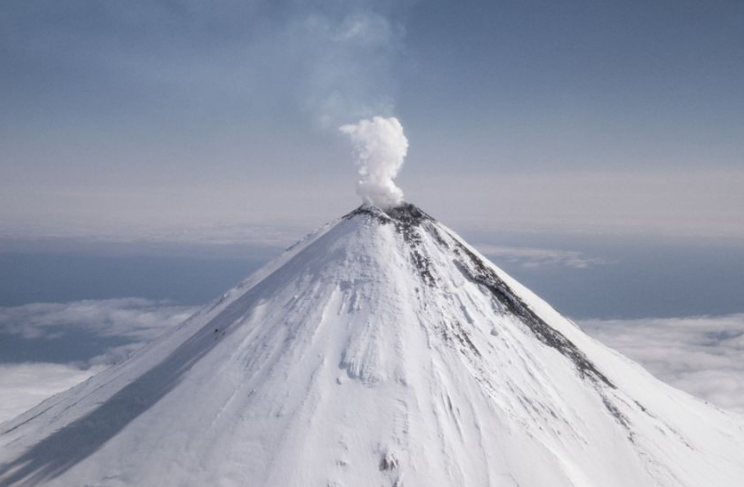
Few natural phenomena command as much awe and respect as volcanoes. These powerful geological structures have shaped the surface of our planet for billions of years, building mountain ranges, creating islands, enriching soils, and periodically altering the course of life on Earth. From the towering snow-capped peaks of the Andes to the bubbling lava fields of Hawaii and the hidden ridges of the ocean floor, volcanoes are found on every continent and beneath every ocean, reminding us that the planet we inhabit is a dynamic, living system driven by forces of extraordinary power operating deep within its interior.
A volcano is, at its most fundamental, an opening in the Earth’s crust through which molten rock, gases, and ash escape from the interior to the surface. This molten rock, known as magma while underground and lava once it reaches the surface, originates in the mantle — the layer of semi-fluid rock lying beneath the rigid outer crust. The movement of tectonic plates, which form the fractured shell of the Earth’s surface, creates the conditions under which magma forms and rises. Where plates pull apart, where they collide, and where hot spots of unusual thermal activity exist in the mantle beneath, volcanoes are born. The result is a global distribution of volcanic activity that mirrors the map of tectonic plate boundaries, with particularly dense concentrations along the Pacific Ring of Fire, the Mid-Atlantic Ridge, and the East African Rift Zone.
Volcanoes have played a profound role in shaping human civilization. The fertile soils produced by volcanic ash and weathered lava have supported agriculture for thousands of years, drawing human settlements to the slopes of potentially dangerous peaks in places like Italy, Indonesia, and Central America. Volcanic materials including obsidian, pumice, and basalt have been used as tools, building materials, and trade goods since prehistoric times. At the same time, volcanic eruptions have buried cities, triggered tsunamis, caused crop failures through atmospheric cooling, and driven mass migrations throughout history. The eruption of Vesuvius in 79 AD that buried Pompeii, the 1815 eruption of Tambora that caused the Year Without a Summer, and the ongoing activity of Kilauea in Hawaii all illustrate the dual nature of volcanoes as both creators and destroyers.
Shield Volcanoes
Shield volcanoes are broad, gently sloping structures built almost entirely from successive flows of low-viscosity basaltic lava that spread widely before cooling and hardening. Their name comes from their resemblance to a warrior’s shield lying flat on the ground — wide, low, and rounded. Because the lava that forms them is highly fluid, it travels great distances from the vent before solidifying, gradually building up a wide dome rather than a steep cone. Shield volcanoes are among the largest volcanic structures on Earth by volume and surface area, though they lack the dramatic pointed profiles of more explosive types. Mauna Loa and Mauna Kea in Hawaii are classic examples, with Mauna Loa considered the largest volcano on Earth by volume. Shield volcanoes tend to erupt frequently but relatively gently, producing spectacular lava flows rather than catastrophic explosive blasts.
Stratovolcanoes (Composite Volcanoes)
Stratovolcanoes, also known as composite volcanoes, are the tall, steep, symmetrical peaks that most people picture when they think of a volcano. They are built up over thousands of years through alternating layers of hardened lava, volcanic ash, and pyroclastic material — the mixture of hot gas, ash, and rock fragments ejected during explosive eruptions. This layered structure gives them their name and contributes to their characteristic steep, conical profile. Stratovolcanoes are associated with some of the most violent and destructive eruptions in recorded history, driven by thick, silica-rich magma that traps gases and builds up enormous pressure before erupting explosively. Mount Fuji in Japan, Mount St. Helens in the United States, Mount Pinatubo in the Philippines, and Mount Vesuvius in Italy are all famous stratovolcanoes. Despite their danger, they are often among the most visually striking landforms on Earth.
Cinder Cone Volcanoes
Cinder cone volcanoes are the simplest and most common type of volcano, formed by the accumulation of volcanic cinders, scoria, and pyroclastic fragments ejected from a single vent during relatively short-lived eruptions. When gas-charged lava is blasted into the air, it breaks into small fragments that cool rapidly and fall back around the vent, building up a steep-sided, roughly circular cone. Cinder cones are typically small compared to other volcano types, rarely exceeding 300 meters in height, and they usually have a bowl-shaped crater at their summit. They can form very quickly — Paricutín in Mexico famously grew out of a cornfield in 1943 and reached a height of over 400 meters within a year. Cinder cones often appear on the flanks of larger volcanoes or in volcanic fields, sometimes numbering in the hundreds within a single region.
Lava Domes
Lava domes are rounded, steep-sided mounds formed when thick, viscous lava is extruded slowly from a volcanic vent and piles up around and over it rather than flowing away. Because the lava is too stiff and sticky to travel far, it accumulates in a bulging mass that can grow over months or years. Lava domes are potentially dangerous structures because the outer surface cools and hardens while the interior remains molten and pressurized, creating conditions for sudden explosive collapse. When the outer crust of a dome breaks apart, it can trigger devastating pyroclastic flows — fast-moving avalanches of hot gas and volcanic debris. Lava domes frequently form within the craters of stratovolcanoes following major eruptions, as occurred at Mount St. Helens after its catastrophic 1980 eruption, where a new dome has been growing intermittently ever since.
Calderas
Calderas are large, basin-shaped depressions formed not by the buildup of volcanic material but by the collapse of a volcano’s summit into an emptied or partially emptied magma chamber following a massive eruption. When a volcano expels an enormous volume of magma in a short period, the ground above the depleted chamber can no longer support itself and collapses inward, creating a vast circular depression that can range from a few kilometers to over 100 kilometers in diameter. Calderas are associated with some of the largest and most catastrophic eruptions in Earth’s history. Yellowstone in the United States sits atop a supervolcano caldera, and the Campi Flegrei caldera in Italy near Naples remains one of the most closely monitored volcanic systems in the world. Crater Lake in Oregon is a caldera that has since filled with water, forming one of the deepest and most beautiful lakes in North America.
Supervolcanoes
Supervolcanoes represent the most extreme category of volcanic system, capable of producing eruptions on a scale so vast that they can alter global climate, trigger mass extinctions, and reshape entire landscapes. A supervolcano is typically defined as a volcanic system capable of producing an eruption with a volume greater than 1,000 cubic kilometers of ejected material — a threshold that dwarfs even the most powerful eruptions in recorded human history. Unlike conventional volcanoes, supervolcanoes often have no prominent cone or peak; instead, they exist as enormous calderas that may span entire regions. The Toba supervolcano in Sumatra produced an eruption approximately 74,000 years ago that is believed to have plunged the Earth into a prolonged volcanic winter and may have severely reduced the global human population. Yellowstone, Long Valley in California, and Taupo in New Zealand are among the active supervolcanic systems being closely monitored today.
Submarine Volcanoes
Submarine volcanoes are volcanic vents and structures located on the ocean floor, and they are far more numerous than their land-based counterparts. The vast majority of Earth’s volcanic activity actually occurs beneath the oceans, primarily along the mid-ocean ridge system — the longest mountain range on Earth — where tectonic plates are constantly pulling apart and magma wells up to fill the gap. Submarine volcanoes erupt differently from surface volcanoes; the immense pressure of deep water suppresses explosive activity and causes lava to form pillow-shaped blobs as it cools instantly upon contact with seawater. Over time, submarine volcanoes can grow tall enough to breach the ocean surface, forming new volcanic islands. The Hawaiian Islands were formed in exactly this way, rising from a hotspot on the ocean floor over millions of years, and the ongoing growth of the newest Hawaiian island, Lōʻihi, is currently taking place entirely beneath the Pacific Ocean.
Fissure Volcanoes
Fissure volcanoes, also known as fissure vents or volcanic fissures, are elongated cracks in the Earth’s surface through which lava erupts in curtains or sheets rather than from a single central vent. Instead of building a cone or dome, fissure eruptions produce vast outpourings of low-viscosity lava that can cover enormous areas relatively quickly. Some of the largest lava fields and flood basalt plateaus on Earth were created by ancient fissure eruptions on a truly colossal scale. Iceland sits directly on the Mid-Atlantic Ridge and experiences frequent fissure eruptions, making it one of the most volcanically active countries on Earth. The 2023 eruptions on the Reykjanes Peninsula dramatically illustrated the nature of fissure activity, with glowing lava fountaining from long linear cracks in the ground and flowing across the landscape in broad, flat sheets.
Mud Volcanoes
Mud volcanoes are geological features that superficially resemble conventional volcanoes but are driven by very different processes. Rather than magma, they erupt mixtures of water, mud, gases — particularly methane — and sometimes hydrocarbons from beneath the surface. They form in regions where pressurized fluids and gases trapped in sedimentary layers find pathways to the surface, building up conical structures of mud and debris as the material accumulates around the vent. Mud volcanoes range in size from small bubbling mounds to large structures hundreds of meters across, and while most are relatively benign, some have produced violent eruptions. The Sidoarjo mud flow in Indonesia, triggered in 2006, released enormous quantities of hot mud that flooded entire towns and displaced tens of thousands of people. Mud volcanoes are found in many parts of the world, with large concentrations in Azerbaijan, Pakistan, Italy, and Trinidad.
Monogenetic Volcanoes
Monogenetic volcanoes are volcanic structures that erupt only once and then become permanently extinct, in contrast to polygenetic volcanoes that erupt repeatedly over long periods. They are typically small and form quickly during a single eruptive episode that may last from days to decades. Cinder cones and maar volcanoes — broad, flat-floored craters formed by explosive interactions between rising magma and groundwater — are the most common types of monogenetic volcanoes. They often occur in clusters known as volcanic fields, where dozens or hundreds of individual vents dot the landscape, each the product of a single eruption at a different point in time. The Auckland Volcanic Field in New Zealand sits beneath one of the country’s largest cities and contains approximately 53 individual monogenetic volcanoes, making urban planning in the region a uniquely complex challenge given that the next eruption could occur at a new location anywhere within the field.