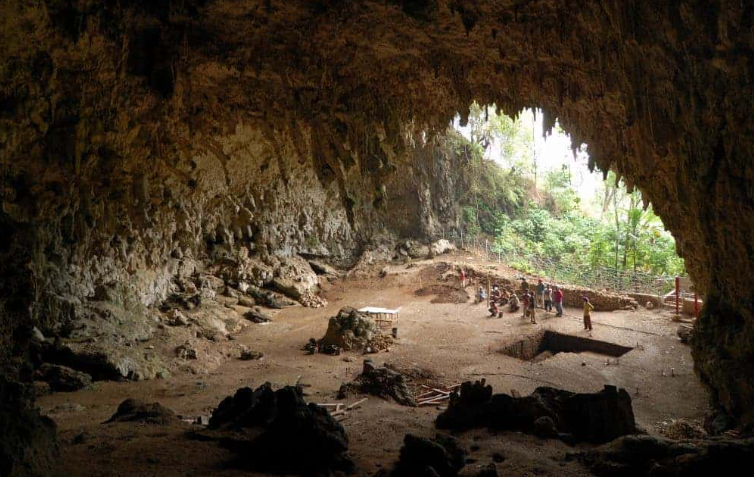
Caves are among the most mysterious and captivating features of the natural world — dark, silent spaces hidden beneath the surface of the Earth, carved and shaped by forces that operate largely beyond human sight and over timescales that dwarf recorded history. A cave is broadly defined as any natural underground void large enough for a human to enter, though the scientific study of caves — speleology — recognizes a far wider range of subsurface voids and passages that extend this definition considerably. From the vast cathedral chambers of the world’s great limestone cave systems to the glowing lava tubes of Hawaii and Iceland, caves represent one of the last genuinely unexplored frontiers on our planet.
The scale of the world’s cave systems is staggering. Mammoth Cave in Kentucky, the world’s longest known cave system, has over 676 kilometers of mapped passages and is believed to extend considerably further into the limestone bedrock of the region. The Veryovkina Cave in Georgia — the country in the Caucasus — is the world’s deepest known cave, plunging 2,212 meters below the surface. Son Doong Cave in Vietnam, discovered by a local farmer in 1991 and first fully explored by British cavers in 2009, is the world’s largest cave by volume, with passages large enough to contain a 40-story skyscraper and their own localized weather systems including clouds and mist forming inside the cave itself.
Caves have played a profound role in human history and culture. They served as shelters for early human populations across hundreds of thousands of years, and the painted walls of caves such as Lascaux in France and Altamira in Spain preserve some of the oldest and most remarkable works of art ever created, dating back over 17,000 years. Caves have been sites of religious ceremony, burial, refuge, and habitation across virtually every human culture that has lived near them. Today they are studied by geologists, biologists, archaeologists, and hydrologists for the extraordinary scientific insights they offer into Earth’s geological history, climate patterns, underground water systems, and the limits of life itself.
Solution Caves (Karst Caves)
Solution caves, also known as karst caves or limestone caves, are by far the most common and widespread type of cave on Earth, formed by the chemical dissolution of soluble rock — most commonly limestone, but also dolomite, marble, and gypsum — by slightly acidic groundwater. Rainwater absorbs carbon dioxide from the atmosphere and soil, forming weak carbonic acid that slowly dissolves calcium carbonate in limestone along joints, fractures, and bedding planes, gradually enlarging these openings into passages, chambers, and cave systems of extraordinary complexity and scale. This process operates over hundreds of thousands to millions of years. Mammoth Cave in Kentucky and the Carlsbad Caverns in New Mexico are classic solution caves, as is the Waitomo Glowworm Cave system in New Zealand. Approximately 10 to 15 percent of the Earth’s land surface is underlain by karst landscapes capable of producing solution caves.
Lava Tubes
Lava tubes are caves formed by volcanic activity, created when the outer surface of a flowing lava stream cools and solidifies while molten lava continues to flow through the interior. When the eruption ends or the lava drains away, it leaves behind a hollow tube-like passage within the solidified lava.
Lava tubes can be remarkably large and extensive — the Kazumura Cave system on the Big Island of Hawaii is the world’s longest and deepest lava tube, stretching 65.5 kilometers and descending 1,101 meters. Lava tubes are found wherever basaltic volcanic activity has occurred, including Hawaii, Iceland, the Canary Islands, and the Galapagos. They also occur on other planets — NASA has identified potential lava tubes on Mars and the Moon that could be hundreds of meters wide, far larger than any on Earth, and has proposed them as potential shelters for future human missions.
Sea Caves
Sea caves are formed by the relentless mechanical erosion of coastal rock by waves, which exploit weaknesses in cliff faces — joints, faults, and bands of softer rock — and gradually hollow them out into caves, arches, and tunnels. The hydraulic action of waves compressing air into rock cracks, combined with the abrasive effect of sand and pebbles carried by the surf, are the primary tools of sea cave formation.
Sea caves are found along coastlines worldwide wherever resistant rock meets powerful wave action. Fingal’s Cave on the uninhabited Scottish island of Staffa is one of the world’s most famous sea caves, its walls formed by striking hexagonal basalt columns that inspired Felix Mendelssohn to compose his Hebrides Overture in 1830. The sea caves of the Channel Islands off California reach lengths of over 400 meters, making them among the longest sea caves in the world.
Glacier Caves
Glacier caves are voids and passages formed within or beneath glaciers and ice sheets, created by a variety of processes including the melting of ice by geothermal heat from below, the flow of meltwater streams through and under the ice, and the movement of the glacier itself over uneven bedrock. They are among the most dynamic and short-lived of all cave types, constantly changing as the glacier moves, melts, and refreezes around them.
Some glacier caves are carved by meltwater streams flowing through the ice in summer, while others — known as moulins — are vertical shafts drilled by surface meltwater plunging down through the glacier to the bedrock below. The glacier caves of Mount Rainier in Washington State and those within the ice cap of Vatnajökull in Iceland are among the most studied. As global temperatures rise and glaciers retreat worldwide, many glacier cave systems are disappearing permanently.
Sandstone Caves
Sandstone caves form through the mechanical and chemical weathering of sandstone rock, a process quite different from the dissolution that creates limestone caves. Wind abrasion, water erosion, freeze-thaw cycles, and the gradual loosening and removal of sand grains from the rock face all contribute to the hollowing out of sandstone cliffs and outcrops into caves, alcoves, and shelters.
Sandstone caves tend to be shallower and less extensive than limestone caves, but they are often of great cultural and archaeological significance because their dry, sheltered interiors have preserved human artifacts, rock art, and organic materials for thousands of years. The ancestral Puebloan cliff dwellings of Mesa Verde in Colorado and Canyon de Chelly in Arizona were built within large sandstone alcoves and overhangs, some of which qualify as caves. The sandstone caves of the Cederberg Mountains in South Africa contain some of the world’s finest collections of San Bushman rock art.
Talus Caves
Talus caves, also known as boulder caves or pseudokarst caves, are voids formed not by erosion or chemical dissolution but by the accumulation of large boulders and rock debris at the base of cliffs or on steep slopes. When large rocks tumble from cliffs and pile up in irregular masses, the spaces between them can form extensive networks of passages and chambers that function as caves, even though no rock has been dissolved or eroded away to create them.
Talus caves are common in mountainous and formerly glaciated regions where frost action, earthquakes, and gravity regularly dislodge large blocks of rock. They are typically cooler than the outside air in summer because cold air sinks into the voids between boulders and is retained there, and some talus caves in temperate regions maintain permanent ice in their lower passages throughout the year, earning the name ice caves.
Anchialine Caves
Anchialine caves are a remarkable and scientifically fascinating cave type — coastal cave systems connected to the sea through submerged underground passages, resulting in cave pools whose water levels fluctuate with the tides even though no direct surface connection to the ocean is visible.
The word anchialine comes from the Greek for “near the sea.” These caves harbor some of the most extraordinary and scientifically significant fauna on Earth — communities of highly specialized crustaceans, fish, and other invertebrates that have evolved in complete darkness and isolation over millions of years, developing remarkable adaptations including the loss of eyes and pigmentation, highly sensitive sensory organs, and extremely slow metabolisms suited to the nutrient-poor cave environment. The Yucatán Peninsula of Mexico contains the world’s most extensive anchialine cave system, with over 1,400 kilometers of underwater passages mapped so far in the Sac Actun system alone.
Ice Caves
Ice caves are natural caves that contain permanent or long-lasting ice formations, maintained by cold air circulation patterns that keep temperatures below freezing throughout the year or for extended periods. They should not be confused with glacier caves, which are formed within glaciers — ice caves are typically solution or lava tube caves in which the specific airflow dynamics trap cold air and allow ice to accumulate and persist.
Dobšinská Ice Cave in Slovakia, a UNESCO World Heritage Site, contains ice deposits up to 26.5 meters thick and maintains temperatures between -3.8°C and -0.4°C throughout the year despite outside summer temperatures well above freezing. Eisriesenwelt in Austria — whose name means “World of the Ice Giants” — is the world’s largest accessible ice cave, extending 42 kilometers into the Austrian Alps and drawing over 200,000 visitors annually. The ice formations within these caves, including frozen waterfalls, ice columns, and crystal floors, create landscapes of breathtaking otherworldly beauty.