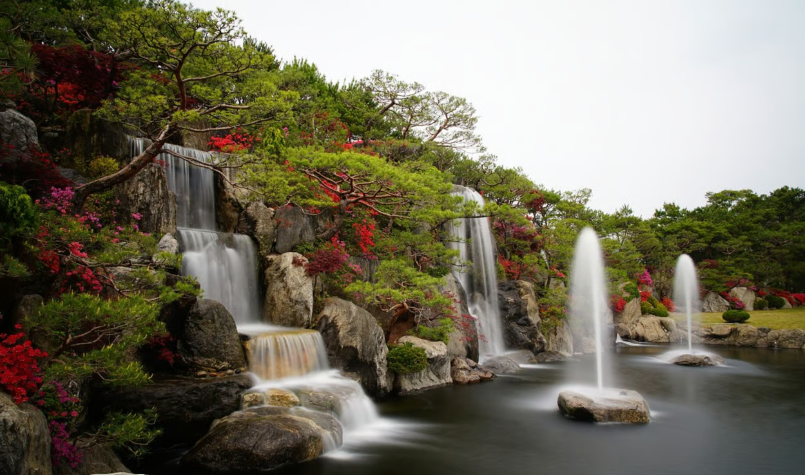
The garden occupies a uniquely powerful position in feng shui philosophy, serving as the primary interface between the home and the natural world and acting as the first filter through which qi enters the living environment. A well-arranged garden gathers, slows, and guides beneficial energy toward the home while gently dispersing or redirecting negative influences before they reach the interior. In classical feng shui, the landscape surrounding a home was always assessed before the interior, because the outdoor environment shapes the quality of energy available to the household in ways that no amount of interior adjustment can fully compensate for.
The principles of garden feng shui draw from the same foundational concepts that govern interior spaces — the flow of qi, the balance of yin and yang, the harmonious interaction of the five elements, and the protective ideal of the four celestial animals that define the classical feng shui landform. But the garden also introduces a living dimension that interior spaces largely lack, as plants, water, soil, light, and wind are constantly changing, growing, and responding to seasonal cycles in ways that make garden feng shui an ongoing, dynamic practice rather than a one-time arrangement. The health and vitality of the garden’s living elements directly reflects and influences the health and vitality of the household.
Water, plants, stone, light, and the shape and movement of pathways are the primary tools of garden feng shui, each carrying specific elemental associations and capable of being arranged to attract, accumulate, and distribute beneficial qi. The classical Chinese garden was designed as a microcosm of the ideal natural landscape — mountain forms represented by rockeries, water meandering through the garden in gentle curves, plants selected for their seasonal beauty and symbolic associations, and pathways designed to guide visitors through a sequence of unfolding experiences. Even a modest contemporary garden can embody these same principles in scaled-down and adapted form.
Applying feng shui to the garden is ultimately about creating an outdoor environment that feels genuinely alive, harmonious, and welcoming — a space where energy moves gently and purposefully, where nourishing natural elements are present in balance, where beauty and abundance signal that the household is flourishing. Many of the principles described here align naturally with good horticultural practice, ecological design, and the accumulated wisdom of garden designers across cultures who have discovered independently that the same arrangements of water, plants, path, and structure tend to produce environments that people find deeply restorative and pleasing.
Keep the Garden Tidy and Well-Maintained
A neglected, overgrown, or debris-strewn garden generates stagnant, heavy qi that accumulates and presses against the home rather than nourishing it, and this deteriorating energy is one of the most direct influences on the household’s overall fortune and wellbeing. Regular maintenance — weeding, pruning, clearing dead material, and keeping surfaces clean — is the foundational feng shui practice for any outdoor space.
Create Curved Pathways
Pathways in a feng shui garden should curve gently rather than running in straight lines directly toward the home’s entrance, as straight paths allow qi to rush too quickly toward the building without meandering, slowing, and gathering the nourishing quality that benefits the household. Gentle curves mimic natural water flow, encourage qi to meander beneficially through the garden, and create a more welcoming and pleasurable approach to the home.
Place Water Features on the Left Side of the Front Garden
The classical feng shui landform associates the left side of the property — when standing at the front door looking outward — with the Green Dragon, which is energized and activated by water. Placing a fountain, pond, or other water feature on this left-hand side attracts wealth energy and activates the auspicious dragon energy of the property.
Ensure Water Flows Toward the Home
Any water feature in the garden should be positioned and directed so that the water flows toward the home rather than away from it, as water flowing toward the house symbolizes wealth and beneficial energy gathering and accumulating at the property. Water flowing away from the home carries the symbolic message of resources and opportunities draining out of the household’s life.
Keep Water Features Clean and Moving
Stagnant, dirty, or algae-filled water in a garden pond or fountain generates sha qi — negative, stagnant energy — that is worse than having no water feature at all. Water in a feng shui garden must be kept clean, clear, and actively moving, as flowing, oxygenated water carries vibrant, nourishing energy that stimulates prosperity and health.
Avoid Dead Trees and Stumps
Dead trees, rotting stumps, and the remnants of vegetation that has died and not been removed introduce decay energy directly into the garden’s living environment, and this energy of endings and decline influences the qi available to the household. Dead wood should be removed promptly and replaced with living plants that carry the upward, growing, vital energy that healthy gardens are meant to provide.
Use Round and Oval Shapes in Garden Design
Circular lawns, oval flowerbeds, and gently rounded planting areas support the smooth, even circulation of qi through the garden without creating the sharp corners and angular projections that generate cutting energy. Rounded forms echo the natural shapes found in healthy landscapes and create a visually harmonious, energetically flowing outdoor environment.
Avoid Pointing Corners Directed at the Home
Sharp architectural corners from neighboring buildings, angular fence posts, or pointed garden structures aimed directly at the home’s walls or entrance generate poison arrows — concentrated beams of cutting qi that create a persistent negative influence on the household. Planting dense evergreen shrubs, installing a fence, or placing a ba gua mirror are the standard remedies for this configuration.
Position Tall Plants and Trees Behind the Home
The classical feng shui landform calls for a Black Tortoise mountain at the rear of the property, providing support, stability, and protection from behind. Tall trees, dense hedging, or substantial trellised planting at the back of the garden fulfills this supportive role, giving the home a sense of solid backing that translates energetically into stability, security, and reliable support in the household’s affairs.
Keep the Front Garden Open and Welcoming
The front garden corresponds to the Red Phoenix position in classical feng shui landform theory, which ideally has open, low, unobstructed space that allows beneficial qi to gather and approach the home freely. A front garden cluttered with large, dense plants, broken equipment, or visual obstacles blocks this gathering of beneficial energy and prevents nourishing qi from reaching the home’s entrance.
Remove Thorny Plants Near Pathways and Entrances
Thorny and spiky plants such as roses, cacti, and hawthorn positioned close to garden pathways, gates, or the home entrance direct sharp, aggressive energy toward anyone approaching the home. Moving thorny plants to the garden’s perimeter or interior beds where their spines point away from pathways and living areas neutralizes this cutting energy while still allowing them to be enjoyed for their beauty.
Incorporate All Five Elements
A feng shui garden achieves its greatest harmony and energetic completeness when all five elements are represented — Wood through living plants and timber structures, Fire through outdoor lighting or red flowering plants, Earth through soil, stone, and terracotta, Metal through metal furniture or ornaments, and Water through a fountain or pond. The balanced presence of all five elements creates a self-sustaining elemental cycle in the garden that continuously generates and renews positive energy.
Use Appropriate Garden Lighting
Outdoor lighting that illuminates the garden and front entrance after dark keeps the property’s yang energy active during evening hours, prevents stagnant shadow energy from accumulating around the home, and ensures that the welcoming quality of the garden extends into the nighttime hours. Solar-powered path lights, warm uplighters on trees, and a well-lit front entrance are simple and effective ways to maintain active, positive energy through the darker hours.
Avoid Overgrown Plants Blocking the Front Door
Plants allowed to grow unchecked across or over the front door create a literal and energetic blockage that prevents beneficial qi from entering the home freely and signals to visitors and to the universe alike that the household is closed, restricted, and unwelcoming of new opportunity. Keeping the entrance clear, open, and unobstructed by overgrowth is among the most immediately impactful garden feng shui corrections.
Plant Fruit Trees for Abundance
Fruit-bearing trees are among the most auspicious plants in feng shui garden practice, as they combine the growing, vital energy of Wood with the visible, tangible production of nourishment and abundance in a form that directly symbolizes the household’s productive capacity and generative prosperity. Regular fruiting and healthy growth are positive indicators of the garden’s overall energetic vitality.
Avoid Planting Large Trees Too Close to the Home
Very large trees positioned close to the home’s walls block sunlight, restrict qi circulation around the building, and in extreme cases generate an oppressive, overhanging energy that presses down on the living space beneath. Trees close to the home should be proportionate to the building’s scale, and any tree large enough to overshadow the roof or block windows from multiple sides requires serious consideration as a feng shui concern.
Create a Balance of Yin and Yang Plants
A feng shui garden balances yin plants — those with soft, rounded, drooping, or dark-colored forms — with yang plants — those with upright, bright, spiky, or light-catching forms — to create an environment that is neither excessively stimulating nor excessively passive. This balance of botanical yin and yang reflects the broader feng shui principle that optimal environments arise from the harmonious interplay of complementary energies rather than the dominance of either extreme.
Keep the Garden Gate Well-Maintained
The garden gate is the primary threshold through which qi enters the property from the street, and its condition directly affects the quality and volume of beneficial energy that enters the household’s domain. A gate that squeaks, sticks, hangs crookedly, or shows signs of rust and decay sends an energetic message of obstruction and decline that begins to shape the household’s fortune before a visitor has even reached the front door.
Place Auspicious Symbols Thoughtfully
Statuary, ornaments, and symbolic objects in the garden — whether a pair of stone lions, a laughing Buddha, a tortoise figure, or decorative wind chimes — carry specific feng shui associations and should be placed with intention and care rather than scattered randomly across the space. Each auspicious symbol has an optimal placement based on its elemental nature and the energy it is meant to attract or protect against.
Avoid Garden Clutter and Abandoned Equipment
Old garden furniture left to rust, broken pots, unused tools stored visibly, coiled hoses, and the general accumulation of abandoned or broken equipment creates exactly the kind of stagnant, neglected energy that suppresses a garden’s qi and communicates decline and inattention to the universe. Everything in the garden that is broken, unused, or deteriorating should be repaired, removed, or properly stored.
Grow Lush, Healthy Lawn or Ground Cover
A well-maintained lawn or ground cover in a healthy, vibrant shade of green represents Wood energy at its most nourishing and expansive, covering the Earth element with a living carpet that simultaneously grounds and vitalizes the garden’s energetic field. Brown, patchy, or struggling grass introduces a note of difficulty and inadequacy that undermines the garden’s capacity to generate and transmit beneficial energy.
Use Pairs of Plants and Ornaments for Relationship Energy
Planting in pairs — two matching topiary forms flanking an entrance, two identical planters on either side of a path, two companion trees at the back of the garden — activates the relationship and partnership energy of the bagua’s southwest sector and creates the visual and energetic message of harmony, balance, and companionable symmetry throughout the outdoor space.
Avoid Locating Compost Bins Near the Entrance
While composting is ecologically beneficial and aligns with feng shui’s broader respect for natural cycles, positioning a compost bin near the garden entrance or in a prominent visible location introduces the energy of decomposition and decay to the part of the property most responsible for attracting and welcoming beneficial qi. Compost bins belong in an inconspicuous corner of the back garden where their decomposing energy does not influence the home’s primary entry points.
Incorporate Fragrant Plants
Fragrant plants — lavender, jasmine, roses, sweet peas, herbs — invite sensory pleasure into the garden and stimulate positive emotional responses that directly support the uplifting, nourishing quality of beneficial qi. Natural fragrance in a garden signals vitality, health, and abundance, and the specific scents of different plants can be selected to support particular intentions, from lavender’s calming properties to jasmine’s associations with romance and optimism.
Keep Edges and Borders Clean and Defined
Clearly defined garden beds with neatly maintained edges communicate an energetic message of order, intention, and care that supports the structured, purposeful flow of qi throughout the outdoor space. Ragged, undefined edges where lawn blurs into planting beds without clear delineation create visual and energetic uncertainty that slowly accumulates into a background sense of disorder.
Avoid Mirrors Facing the Home from the Garden
While mirrors are sometimes used in small gardens to create an illusion of space, positioning a large mirror or highly reflective surface so that it faces directly at the home’s exterior walls can reflect and amplify garden energy back at the building in an uncontrolled way. Reflective surfaces in the garden should be angled to enhance specific views or expand a sense of depth rather than directed straight at the home.
Plant Bamboo for Protection and Prosperity
Bamboo is one of the most auspicious plants in feng shui and one of the most consistently recommended for garden use, carrying associations with resilience, flexibility, rapid growth, prosperity, and the protective energy of a dense, living screen. Planted along a fence line or property boundary, bamboo creates a living green wall that activates Wood energy, provides privacy, and establishes a protective barrier against external negative energies.
Maintain Clear Drainage and Avoid Waterlogging
Poor drainage that leads to waterlogged soil, standing puddles, and stagnant moisture in the garden creates an excess of yin water energy that suppresses the vitality of plants and generates the heavy, stagnant qi associated with illness, lethargy, and financial difficulty. Good drainage that allows water to move freely through the soil and across the garden’s surfaces keeps the water element in its most beneficial, flowing state.
Place a Bird Bath or Bird Feeder to Attract Wildlife
Attracting birds and other beneficial wildlife to the garden introduces living movement, natural sound, and the energy of free, joyful vitality that amplifies the garden’s yang energy and creates a space that feels genuinely alive and teeming with positive natural force. Birds are considered auspicious visitors in feng shui, their presence indicating that the garden’s energy is healthy, welcoming, and capable of sustaining life.
Use Terracotta and Natural Stone for Containers and Structures
Natural, unprocessed materials carry more authentic and grounded Earth energy than synthetic alternatives, and their use in garden pots, paving, walls, and structural elements creates an organic visual and energetic coherence that supports the garden’s role as a bridge between the cultivated home environment and the natural world. Terracotta pots, natural stone paving, and timber structures all contribute to the five-element balance of a well-composed feng shui garden.
Avoid Dying or Diseased Plants
Diseased, pest-ridden, or visibly dying plants in the garden carry a downward, declining energy that is directly contrary to the upward, expansive, generative vitality that living plants are meant to contribute. Any plant showing serious signs of disease, pest damage, or terminal decline should be treated promptly, and if it cannot be saved, removed and replaced without delay.
Create a Seating Area That Faces the Garden
An outdoor seating area positioned so that those sitting in it face the garden with solid backing behind them embodies the commanding position principle in the outdoor context, creating a sense of ease, safety, and expansive forward vision that makes time spent in the garden genuinely restorative. A seating area with open, exposed space behind it and a confusing or uncomfortable outlook in front fails to support the restful, nourishing quality that outdoor spaces are meant to provide.
Incorporate Seasonal Flowering Plants
Maintaining year-round interest through plants that flower or change across the seasons ensures that the garden’s living energy never becomes static or dormant, continuously cycling through renewal, growth, bloom, and rest in a way that mirrors the natural cycles of qi that feng shui seeks to harmonize with. A garden that only shows life for a few months and spends the rest of the year brown and bare loses much of its energetic contribution to the household.
Avoid a Garden That Is All Hard Surfaces
A garden dominated by concrete, paving, gravel, or other hard, impermeable surfaces lacks the Wood and Water energy that living gardens provide, creating an environment that is energetically harsh, dry, and overly Yang in a way that contributes to tension and rigidity in the household atmosphere. Even where practicality demands significant hard surfacing, incorporating planters, raised beds, and green walls ensures that living energy remains present and active.
Keep the Boundaries of the Property Clear and Well-Maintained
Clearly maintained fences, walls, and hedges that define the property’s boundaries establish an energetic container for the household’s qi, preventing it from dissipating into the surrounding environment and providing the clear territorial definition that supports a sense of security, stability, and sovereign domestic energy. Broken fences, collapsing walls, and undefined boundaries allow the household’s energy to leak and merge uncertainly with the energy of neighboring properties.
Use Wind Chimes to Activate Stagnant Areas
Metal wind chimes hung in areas of the garden that receive little sun, air movement, or foot traffic can help activate stagnant qi that accumulates in shadowy, neglected corners. Their sound — gentle and musical rather than harsh or discordant — breaks up energetic stagnation, invites movement into still spaces, and adds the Metal element to areas where it may be needed for five-element balance.
Grow Climbing Plants on Fences Rather Than on the Home’s Walls
Climbing plants trained over garden fences and pergolas rather than directly onto the home’s exterior walls provide the beauty and Wood energy of vigorous, upward-reaching growth without the practical and energetic complications of vegetation growing directly against the building. Plants growing on walls can trap moisture, hide structural problems, and create an energetic entanglement between the garden’s wild growing energy and the home’s structural integrity.
Create a Sense of Journey Through the Garden
A well-designed feng shui garden reveals itself gradually, drawing visitors through a sequence of experiences — a curved path, a change of surface material, a gateway through planting, a view that opens unexpectedly — that keeps qi moving and building as it travels through the space. A garden that can be taken in entirely at a single glance from the entrance offers no journey for the eye or the energy, and the qi rushes through without lingering or gathering.
Avoid Straight Lines and Sharp Angles in Planting Design
Straight rows of plants, rigidly geometric planting patterns, and sharp angular bed shapes create a formal energy that can be attractive in specific design contexts but generally works against the principle of gentle, natural qi flow that feng shui garden design favors. Organic, flowing planting designs that borrow their forms from natural landscapes allow energy to move through the garden as it moves through a healthy natural environment — smoothly, purposefully, and without abrupt redirection.
Celebrate and Respect the Garden as a Living System
The deepest principle underlying all feng shui garden rules is the cultivation of a genuine relationship of respect and attentiveness toward the garden as a living system worthy of care, observation, and thoughtful stewardship. A gardener who tends their outdoor space with consistent attention, responds to its changing needs across the seasons, and treats it as a partner in the household’s wellbeing rather than a static decorative backdrop will naturally generate the conditions for exceptional feng shui without needing to consult a single rule.