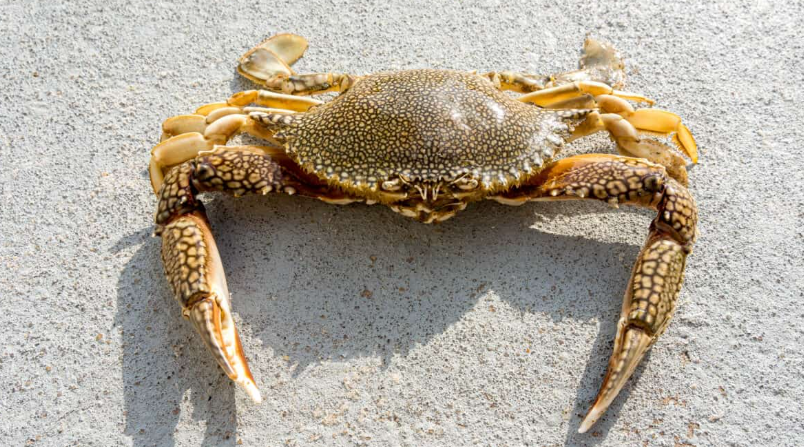
Florida occupies one of the most remarkable and biodiverse coastal positions of any state in the United States, with its unique geography providing an extraordinary range of marine and estuarine habitats that support an exceptional diversity of crab species. Flanked by the Atlantic Ocean to the east and the Gulf of Mexico to the west, with the Florida Keys extending southward into the warm, clear waters of the Caribbean, Florida’s coastline stretches for approximately 1,350 miles — the longest coastline of any contiguous US state — encompassing mangrove forests, seagrass meadows, coral reefs, sandy beaches, saltmarshes, and deep offshore waters, each harboring its own characteristic crab communities.
Crabs belong to the order Decapoda within the class Malacostraca, and the diversity of decapod crustaceans in Florida waters is among the highest of any comparable region in North America. Florida sits at a biogeographic crossroads where the temperate fauna of the US East Coast meets the tropical fauna of the Caribbean, producing a crab community that includes both cold-tolerant temperate species and warm-water tropical species found nowhere else in the continental United States. The state’s extensive coral reef system — the third largest in the world — the vast expanse of Florida Bay and the Everglades, and the relatively undisturbed nature of parts of the Gulf coast all contribute to this exceptional biodiversity.
Commercially, crabs are enormously important to Florida’s economy and food culture. The Florida stone crab fishery is one of the most celebrated and sustainably managed shellfish fisheries in the world, generating approximately $30 million in dockside value annually and supporting thousands of fishing families along both coasts. Blue crabs support both commercial and recreational fisheries valued at tens of millions of dollars per year. The Florida spiny lobster — technically not a true lobster but a large decapod crustacean — and various crab species together make Florida one of the most important seafood-producing states in the nation. The following 24 species represent the remarkable crab diversity found in Florida’s waters and coastal habitats.
1. Blue Crab (Callinectes sapidus)
The blue crab is the most commercially and culturally significant crab in Florida, instantly recognizable by its vivid blue claws, olive-green carapace, and the distinctive paddlelike rear swimming legs that mark it as a member of the swimming crab family Portunidae. Found throughout Florida’s estuaries, bays, rivers, and nearshore coastal waters on both coasts, blue crabs are harvested commercially by thousands of licensed crabbers and are among the most popular targets of recreational crabbers statewide. Florida’s blue crab commercial harvest typically exceeds 20 million pounds annually, making it one of the most valuable shellfish fisheries in the state.
2. Stone Crab (Menippe mercenaria)
The Florida stone crab is one of the most famous and uniquely managed seafood species in the world, harvested exclusively for its remarkably large, powerful claws rather than the whole animal — fishermen remove one or both claws and return the living crab to the water, where it can regenerate the lost limbs over 12 to 18 months. The stone crab season runs from October 15 to May 1 each year, and the fishery is celebrated for its sustainability model, which has maintained healthy populations while supporting a significant commercial industry centered in South Florida, particularly around Everglades City and the Florida Keys.
3. Florida Rock Crab (Menippe adina)
The Florida rock crab is the close western counterpart of the stone crab, occupying similar habitat along the Gulf Coast from the Florida panhandle westward into the Gulf of Mexico. It is nearly identical to the stone crab in appearance and behavior, with the same massive, black-tipped claws and the same preference for rocky, rubble, and shell hash bottom habitats. The two species hybridize where their ranges overlap in the Big Bend region of Florida’s Gulf coast, producing intermediate forms that are managed together with stone crabs under the same harvesting regulations. Rock crabs are harvested commercially and recreationally in similar fashion to stone crabs.
4. Horseshoe Crab (Limulus polyphemus)
Despite its common name, the horseshoe crab is not a true crab or even a crustacean — it is more closely related to scorpions and spiders, belonging to the class Merostomata within the chelicerate arthropods. However, its crab-like appearance and its importance in Florida’s coastal ecology and biomedical industry earn it inclusion here. Horseshoe crabs have existed largely unchanged for over 450 million years, making them one of the most ancient animal lineages on earth. Their blue blood contains a compound called Limulus amebocyte lysate (LAL) that is used to test pharmaceutical products and medical devices for bacterial contamination — a biomedical application worth hundreds of millions of dollars annually.
5. Spider Crab (Libinia emarginata)
The portly spider crab is a common and widely distributed species found throughout Florida’s Atlantic and Gulf coastal waters, immediately recognizable by its roughly triangular, spiny carapace and its long, slender legs that give it a spider-like appearance. Spider crabs are slow-moving scavengers and herbivores that often camouflage themselves by attaching pieces of algae, sponge, and other materials to the hooked setae on their carapace — a behavior called decoration that makes them among the most effectively camouflaged of all marine animals. They are not commercially harvested but are commonly encountered by divers and in bycatch from trawl fisheries.
6. Gulf Stone Crab (Menippe mercenaria × adina hybrid)
The Gulf stone crab represents the hybrid population that occurs where the ranges of the Florida stone crab and the Florida rock crab overlap along the Big Bend coast of Florida — the relatively undeveloped stretch of Gulf coastline from the Suwannee River southward toward Tampa Bay. These hybrids display intermediate characteristics between the parent species and are managed as part of the broader stone crab fishery. The Big Bend coast’s extensive seagrass meadows, oyster reefs, and rocky limestone outcrops provide excellent habitat for stone crab populations, and this region is increasingly recognized as an important area for stone crab conservation and sustainable harvest management.
7. Fiddler Crab (Uca species)
Fiddler crabs are small, semi-terrestrial crabs found in enormous numbers in Florida’s saltmarshes, mangrove forests, and mudflats, where they are among the most ecologically important invertebrates in the intertidal zone. Male fiddler crabs are immediately recognizable by their dramatically asymmetrical claws — one massively enlarged claw used for display and combat, the other small and used for feeding — creating the appearance of a musician holding a fiddle. Several species occur in Florida, including the sand fiddler (Uca pugilator), the mud fiddler (Uca pugnax), and the bracket fiddler (Uca subcylindrica), each occupying slightly different microhabitats within the intertidal zone.
8. Ghost Crab (Ocypode quadrata)
The Atlantic ghost crab is the pale, sand-colored sprinter of Florida’s beaches, a semi-terrestrial crab capable of running at speeds up to 10 miles per hour — making it one of the fastest crustaceans on earth — and disappearing into burrows in the sand with startling speed that inspired its ghostly common name. Ghost crabs are abundant on sandy beaches throughout Florida’s Atlantic and Gulf coastlines, emerging primarily at night to scavenge on beach wrack and prey on sea turtle hatchlings making their way to the ocean. They dig burrows up to 4 feet deep in the dry sand above the high tide line and must periodically return to the water to wet their gills.
9. Mangrove Tree Crab (Aratus pisonii)
The mangrove tree crab is one of Florida’s most unusual crab species, spending the majority of its life not in the water but in the canopy of red mangrove trees, where it feeds primarily on mangrove leaves, algae, and invertebrates attached to the roots and branches. Found throughout the mangrove forests of South Florida and extending northward along both coasts wherever mangroves occur, this small, dark crab is an important component of the mangrove forest food web, contributing to nutrient cycling by processing leaf litter and serving as prey for fish, birds, and larger crabs. Its ability to climb and move through mangrove canopy with agility distinguishes it from virtually all other Florida crab species.
10. Mole Crab (Emerita talpoida)
The Atlantic mole crab — also called the sand crab or sand flea — is a small, barrel-shaped crustacean that burrows in the swash zone of Florida’s sandy beaches, using its feathery antennae to filter suspended organic particles from the water as waves wash over its buried body. Mole crabs are not true crabs but anomuran crustaceans, yet their crab-like appearance and their enormous ecological importance in the beach ecosystem earn them inclusion here. They are the primary prey of many shorebird species including sanderlings, and are widely used as live bait by surf fishermen targeting pompano and other nearshore species along Florida’s beaches.
11. Speckled Swimming Crab (Arenaeus cribrarius)
The speckled swimming crab is a beautiful and relatively large portunid crab found throughout Florida’s nearshore sandy and seagrass bottom habitats, immediately distinguished by the vivid white or cream spots scattered across its brown to olive carapace and legs. Like the blue crab, it has paddlelike rear swimming legs and is an active, aggressive swimmer and predator. The speckled swimming crab is primarily an offshore and nearshore species, less commonly encountered in estuaries than the blue crab, and while it is occasionally harvested recreationally it does not support a significant commercial fishery in Florida.
12. Lady Crab (Ovalipes ocellatus)
The lady crab — also called the calico crab — is a portunid swimming crab found on Florida’s Atlantic coast sandy bottoms from the shallow surf zone to moderate depths offshore. Its carapace is cream to pale gray, beautifully patterned with irregular purple-red spots that give it a calico appearance, and it buries itself in sand with only its eyes and antennae exposed to ambush prey. Lady crabs are notoriously aggressive when handled and will bite readily. They are present primarily along the Atlantic coast rather than the Gulf, and while not commercially significant in Florida, they are a common incidental catch in surf fishing and recreational crabbing.
13. Hairy Crab (Pilumnus sayi)
The hairy crab is a small, densely hairy xanthid crab found throughout Florida’s coastal waters, particularly on hard substrates including oyster reefs, coral rubble, and rocky outcrops where its brown, hair-covered carapace provides excellent camouflage against encrusting organisms. The dense covering of setae — hair-like sensory projections — that gives the crab its common name collects sediment and algae particles, further enhancing camouflage. Hairy crabs are not commercially significant but are commonly encountered by researchers and divers examining hard substrate communities along both Florida coasts.
14. Coral Crab (Carpilius corallinus)
The coral crab is a large, strikingly beautiful xanthid crab found in Florida’s coral reef and hard bottom habitats, particularly in the Florida Keys and the offshore reefs of South Florida. Its smooth, domed carapace is vivid red-orange with white or cream blotching, making it one of the most visually striking crabs in Florida waters. Coral crabs have exceptionally powerful claws capable of crushing the hard shells of mollusks and sea urchins, and they shelter in reef crevices during the day, emerging at night to forage. They are a significant component of the hard substrate community on Florida’s coral reefs and are occasionally observed by divers.
15. Arrow Crab (Stenorhynchus seticornis)
The arrow crab is one of the most distinctive and immediately recognizable crabs on Florida’s coral reefs, with an extraordinarily elongated, triangular body tapering to a sharp rostrum at the front, extraordinarily long spidery legs banded in yellow and brown, and brilliant yellow eyes on long stalks. It is a majid spider crab of small to medium size, found throughout the Florida Keys and offshore reef systems, typically perching on coral heads, sea fans, and sponges in plain view rather than hiding. Arrow crabs are popular subjects for underwater photographers and are well-known to recreational divers on Florida’s reef systems.
16. Sally Lightfoot Crab (Grapsus grapsus)
Sally Lightfoot crabs are spectacular, fast-moving, brightly colored crabs found on rocky shores and jetty structures throughout South Florida and the Florida Keys, their vivid red, orange, and yellow carapace making them among the most visually striking crabs in the state. They are exceptionally agile, moving sideways, forward, and backward with equal ease across wave-splashed rocky surfaces and are famously difficult to catch by hand. Sally Lightfoot crabs are primarily associated with rocky intertidal habitats and man-made structures such as jetties, breakwaters, and dock pilings, where they scavenge algae and organic material from the rock surface.
17. Mud Crab (Panopeus herbstii)
The Atlantic mud crab is a common and ecologically important small xanthid crab found throughout Florida’s estuaries, oyster reefs, saltmarshes, and mangrove habitats, where it plays a significant role in controlling populations of oysters, barnacles, and other shellfish. Mud crabs are abundant beneath oyster shells and within the interstices of oyster reef structure, where they shelter from predators and ambush prey. They are an important prey species for many commercially and recreationally important fish species including red drum, sheepshead, and black drum, making them a significant link in the estuarine food web despite their modest size and lack of direct commercial value.
18. Purse Crab (Persephona mediterranea)
The purse crab — also known as the shame-faced crab or box crab — is an unusual, rounded leucosiid crab found in Florida’s offshore sandy and muddy bottom habitats, recognized by its nearly circular, smooth carapace and its habit of holding its claws folded tightly against the front of its body in a characteristic posture that gives it the appearance of a tightly closed purse or a face with hands covering it. Purse crabs burrow in soft sediments and are primarily nocturnal, spending the day buried with only their antennae exposed. They are not commercially harvested but are commonly brought up as bycatch in shrimp trawl fisheries operating in Florida’s offshore waters.
19. Decorator Crab (Microphrys bicornutus)
The two-horned decorator crab is a small majid spider crab found throughout the seagrass meadows, coral rubble, and shallow reef habitats of South Florida and the Florida Keys, practicing the art of biological camouflage by covering its carapace and legs with pieces of algae, sponge, hydroids, and other sessile organisms attached with tiny hooked setae. The decoration serves both camouflage and chemical defense functions, as some of the materials selected are distasteful or chemically defended themselves. Decorator crabs are fascinating subjects for marine biology research and for underwater photographers who can observe the process of active decoration and material selection in the wild.
20. Swimming Crab (Portunus spinimanus)
The spineback swimming crab — one of several Portunus species found in Florida waters — is a moderately large portunid crab found in offshore sandy and shell hash habitats along both Florida coasts, recognizable by the long lateral spines projecting from the sides of its carapace and the distinctive blue-purple coloration of its claws and legs. Portunus species are important components of Florida’s offshore benthic communities and are occasionally harvested by recreational crabbers, though they do not support a dedicated commercial fishery in Florida as they do in parts of Asia where Portunus species are among the most commercially important crabs in the world.
21. Pea Crab (Pinnotheres ostreum)
The oyster pea crab is one of the smallest and most unusual crabs found in Florida waters, a tiny, soft-bodied symbiotic crab that lives inside the mantle cavity of living oysters, mussels, and other bivalve mollusks. Female pea crabs are pale, almost translucent, and lack the hardened carapace of free-living crabs, an adaptation to their sheltered, parasitic or commensal lifestyle within the host bivalve. They are commonly found when shucking oysters from Florida’s oyster reefs and are occasionally eaten whole as a delicacy — pea crabs were considered a delicacy in colonial American oyster bars and are still occasionally served in that tradition.
22. Land Crab (Cardisoma guanhumi)
The great land crab is a large, terrestrial crab found in coastal areas of South Florida — primarily Miami-Dade, Broward, and Collier counties — as well as the Florida Keys, where it lives in burrows excavated in moist soil in coastal forests, mangrove margins, and suburban areas. Despite being primarily terrestrial, land crabs must return to the sea to release their larvae, and mass migrations of land crabs moving toward the coast to breed are a spectacular natural phenomenon in parts of South Florida, though development has dramatically reduced both habitat and population. Land crabs are harvested for food in Florida and throughout their Caribbean range, where they are a traditional food of considerable cultural significance.
23. Shame-Faced Crab (Calappa flammea)
The flamed box crab — another member of the shame-faced crab group — is found in Florida’s offshore sandy and shell hash bottoms on both coasts, distinguished by its beautifully patterned carapace of cream and orange-red flame-like markings and the characteristic folded-claw posture that covers the front of the face. Like other box crabs, it has specialized claws with a tooth-like projection that can be used to chip open the lip of gastropod shells — a remarkable feeding adaptation that allows it to access the soft bodies of snails that are inaccessible to most other predators. The flamed box crab is a striking species that is occasionally encountered by recreational divers and trawl fishermen.
24. Channeled Duck Crab (Hepatus epheliticus)
The calico box crab — also called the lady crab or calico crab in some references — is a beautiful, medium-sized crab found in shallow sandy and seagrass habitats along both Florida coasts, with a rounded, cream carapace covered in vivid orange and red spots that create a calico pattern reminiscent of the lady crab but on a distinctly different body form. Like other box crabs, it buries itself in sand during the day and emerges at night to feed on mollusks and other invertebrates. The calico box crab is commonly encountered as bycatch in shrimp trawls and recreational cast nets, and while not commercially targeted, it is an attractive and distinctive component of Florida’s diverse nearshore crab fauna.