Yachts represent the pinnacle of recreational and competitive sailing and motorized boating, combining engineering excellence, aesthetic beauty, and the timeless human desire to explore and master the open water. From the sleek, carbon-fiber racing machines that contest the world’s most prestigious offshore races to the palatial superyachts that serve as floating residences for the world’s wealthiest individuals, the yacht world encompasses an extraordinary range of vessels united by their association with leisure, sport, and the sea.
The global yacht market is substantial and growing. The international yacht and superyacht market was valued at approximately $11 billion in 2023, with the superyacht segment — vessels over 24 meters — representing a disproportionately large share of total value. Over 1,000 superyachts are under construction or on order at any given time, with major building yards concentrated in the Netherlands, Italy, Germany, Turkey, and the United Kingdom. The overall recreational boating market, which includes smaller yachts, is valued at over $50 billion annually worldwide, with the United States, Western Europe, and Australia representing the largest consumer markets.
Yachts are broadly divided into two propulsion categories — sailing yachts, which use wind power through sails as their primary means of propulsion, and motor yachts, which rely on engines. Within each category, an extraordinary diversity of hull forms, sizes, configurations, and purposes has evolved over centuries of maritime tradition and decades of modern engineering innovation. The following types represent the full breadth of the yacht world, from intimate daysailers to ocean-crossing superyachts.
1. Sloop
A sloop is the most common and widely recognized sailing yacht configuration, featuring a single mast positioned roughly in the forward third of the boat and carrying two sails — a mainsail attached to the mast and boom, and a headsail (jib or genoa) set forward of the mast on the forestay. The simplicity of the two-sail rig makes the sloop easy to handle with a small crew or singlehanded, and the configuration is highly efficient when sailing upwind — the point of sail at which most racing and performance cruising is evaluated. The vast majority of production cruising and racing sailboats built since the 1960s are sloops, from 20-foot daysailers to 60-foot offshore cruisers.
2. Ketch
A ketch is a two-masted sailing yacht with a taller mainmast forward and a shorter mizzenmast stepped ahead of the rudder post, carrying a mainsail, headsail, and mizzen sail. The divided sail plan of a ketch allows each individual sail to be smaller and more manageable than the equivalent area in a single-masted sloop, making the rig well-suited to offshore cruising where a small crew must handle sail changes in challenging conditions. The mizzen sail can also be used in combination with a headsail while the mainsail is lowered — a useful heavy-weather option — and the mizzen provides a convenient attachment point for a mizzen staysail that improves light-air performance.
3. Schooner
A schooner is a sailing yacht with two or more masts in which the aftermost mast is taller than or equal to the forward mast — the opposite of the ketch arrangement. The traditional gaff schooner, with its characteristic four-cornered gaff sails, is one of the most historically evocative of all sailing vessel types, associated with the working schooners of the American East Coast, the Grand Banks fishing fleets, and the trading vessels of the 19th century. Modern Bermuda-rigged schooners carry triangular sails on both masts and are valued for their spacious deck layout, distinctive profile, and the large sail area between the masts that can be filled with a variety of staysails in light conditions.
4. Yawl
A yawl is a two-masted sailing yacht superficially similar to a ketch but distinguished by the position of the mizzenmast, which is stepped abaft (behind) the rudder post rather than ahead of it. The mizzenmast of a yawl is typically quite small — more of a balancing sail than a significant power source — and the rig was historically popular for offshore racing because the small mizzen area was not counted in handicap calculations under certain rating rules, allowing a generous headsail to be carried. Classic American offshore yawls from the 1950s and 1960s — including many famous ocean racers — are among the most elegant sailing yacht designs ever created.
5. Catamaran Sailing Yacht
A sailing catamaran features two parallel hulls of equal size connected by a bridgedeck structure, offering dramatically greater stability, interior volume, and deck space than a comparable monohull yacht. The wide beam of a catamaran eliminates the heeling that monohull sailors must accommodate and provides a stable, level platform at sea that many sailors — particularly those prone to seasickness — find far more comfortable than a heeling monohull. Catamarans have become increasingly popular for offshore cruising, with the charter yacht industry in the Caribbean and Mediterranean heavily dominated by sailing catamarans. The Lagoon, Leopard, and Fountaine Pajot brands are among the most widely recognized production cruising catamaran manufacturers.
6. Trimaran
A trimaran is a sailing yacht with three hulls — a central main hull flanked by two smaller outrigger hulls called amas, connected to the main hull by crossbeams called akas. The trimaran configuration combines the speed potential of a lightweight, narrow main hull with the stability and righting moment provided by the wide-set outriggers, producing sailing vessels capable of extraordinary speeds — particularly on reaching and downwind points of sail. The fastest sailing vessels in the world are trimarans, with ocean racing trimarans such as Francis Joyon’s IDEC Sport and Thomas Coville’s Sodebo Ultim achieving average speeds over 24-hour periods that were unimaginable just two decades ago.
7. Motor Yacht
A motor yacht is a power-driven pleasure vessel that relies entirely on engine propulsion rather than sails, prioritizing comfort, speed, and range over the sailing experience. Motor yachts range from relatively modest 30-foot cruisers to enormous 300-foot-plus superyachts, encompassing an extraordinary range of hull forms, interior arrangements, and performance characteristics. The distinction between a motor yacht and a mere motorboat is somewhat subjective but generally implies a certain level of refinement, accommodation quality, and equipment sophistication. Motor yachts are the dominant vessel type in the superyacht segment, accounting for approximately 70 percent of all superyachts in operation worldwide.
8. Superyacht
Superyachts are the grandest and most expensive vessels in the recreational boating world, generally defined as motor or sailing yachts exceeding 24 meters (79 feet) in length and characterized by an extraordinarily high level of construction quality, equipment specification, interior luxury, and professional crew operation. The superyacht world is a multi-billion dollar industry encompassing new construction, refit, charter, crew placement, and management services. The largest superyacht currently afloat is the sailing yacht Sailing Yacht A at 142.8 meters, while the largest motor superyacht is Azzam at 180 meters — a vessel representing an investment of approximately $600 million. The superyacht fleet has grown by approximately 5 percent annually over the past decade, driven by global wealth creation.
9. Megayacht
The term megayacht is applied to the very largest superyachts — those exceeding approximately 60 meters (200 feet) in length — representing the absolute pinnacle of private yacht ownership in terms of size, cost, and operational complexity. Megayachts typically carry permanent professional crews of 20 to 60 or more, include amenities such as helipads, submarine garages, swimming pools, cinemas, full spas, and tender garages housing multiple support vessels, and cost between $100 million and $600 million or more to construct. Annual operating costs for a large megayacht — including crew salaries, fuel, insurance, maintenance, and berthing fees — typically run to 10 percent of the vessel’s construction cost per year.
10. Explorer Yacht
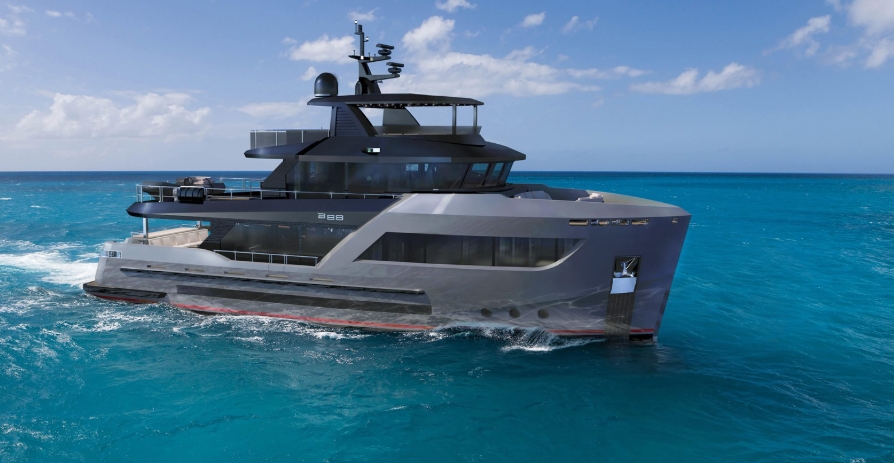
Explorer yachts are motor yachts specifically designed for long-range, self-sufficient ocean voyaging to remote and challenging destinations — the polar regions, uninhabited island groups, ice-filled waters — that conventional luxury motor yachts are not equipped to reach. They prioritize range, seakeeping, structural strength, and self-sufficiency over the sleek profile and interior volume of standard motor yachts, incorporating large fuel tanks for extended passage-making, reinforced hulls for ice navigation, sophisticated stabilization systems, and the equipment and spare parts inventory to conduct significant maintenance without access to professional facilities. The explorer yacht segment has grown substantially in recent years as wealthy owners seek more adventurous and authentic yachting experiences.
11. Racing Yacht
Racing yachts are purpose-built or heavily modified sailing yachts optimized for competitive sailing performance, typically at the expense of the comfort, accommodation quality, and structural robustness that characterize cruising yachts. Every aspect of a racing yacht’s design — hull shape, keel configuration, rig geometry, deck layout, and material specification — is driven by the objective of maximizing speed around a racecourse or across an ocean. High-performance racing yachts use exotic materials including carbon fiber, titanium, and aerospace-grade aluminum to minimize weight while maintaining structural integrity, and cutting-edge computational fluid dynamics modeling to optimize underwater shapes. The Vendée Globe round-the-world solo race and the IMOCA 60 class represent the current pinnacle of offshore racing yacht development.
12. Day Sailer
A day sailer is a small, open or partially decked sailing yacht designed primarily for sailing on sheltered waters close to shore for periods of a few hours rather than overnight or extended passages. They typically range from 14 to 30 feet in length, carry minimal or no accommodation below deck, and are trailerable on a standard road trailer — allowing owners to launch from any suitable ramp rather than maintaining a permanent marina berth. Classic day sailer designs such as the Laser, Sunfish, J/24, and Rhodes 19 have been enormously influential in introducing generations of sailors to the sport and remain widely raced and sailed today.
13. Cruising Yacht
A cruising yacht is a sailing or motor yacht designed and equipped for extended offshore or coastal passages, with comfortable accommodation for the crew, sufficient storage for provisions and equipment for weeks or months at sea, and the structural robustness to handle challenging ocean conditions. The cruising yacht prioritizes seaworthiness, reliability, ease of handling by a small crew, and self-sufficiency over raw performance, and the best offshore cruising designs represent decades of accumulated knowledge about what works — and what fails — in the demanding environment of deep-ocean voyaging. Tens of thousands of cruising yachts are engaged in bluewater sailing at any time, with popular cruising routes including the Atlantic circuit, the Pacific coconut milk run, and circumnavigation.
14. Gulet
A gulet is a traditional wooden motor-sailing vessel originating from the Bodrum region of southwestern Turkey, typically ranging from 20 to 40 meters in length with a rounded stern, broad beam, and a distinctive two-masted schooner or ketch rig complemented by a diesel engine for maneuvering and motoring in calm conditions. Gulets have evolved from traditional Turkish fishing and cargo vessels into the dominant charter yacht type in the Turkish and Greek island cruising market, offering spacious, comfortable accommodation for groups of 6 to 20 guests in an authentically Mediterranean style. The gulet charter industry is centered on the Turkish Turquoise Coast and the Greek Dodecanese islands.
15. Tall Ship (Classic Yacht)
Tall ships and classic yachts represent the historical heritage of sailing, encompassing traditionally built or rigorously restored vessels that preserve the construction methods, sailing rigs, and aesthetic character of earlier eras of maritime history. Classic yachts — defined by most classic yacht associations as vessels built before 1950 or built to traditional designs — are maintained and raced in dedicated classic yacht regattas held at venues including Cowes, Newport, Cannes, and Antigua. Tall ships are the grandest of traditional sailing vessels, carrying square sails on multiple masts in the manner of 18th and 19th century sailing ships, and are operated today primarily as sail training vessels, charter ships, and ambassadors of maritime heritage by organizations worldwide.
16. Pocket Cruiser
A pocket cruiser is a small but fully equipped cruising sailboat — typically ranging from 20 to 28 feet in length — designed to provide genuine offshore cruising capability in the smallest and most affordable package possible. Despite their modest dimensions, well-designed pocket cruisers incorporate sleeping berths, a small galley, a marine toilet, and sufficient storage for extended passages, making them capable of coastal and even offshore voyaging in the hands of a competent skipper. The appeal of pocket cruisers lies in their dramatically lower purchase price, minimal maintenance costs, and the ability to keep the boat on a trailer rather than paying permanent marina fees — making bluewater sailing accessible to enthusiasts who cannot afford larger vessels.
17. Flybridge Yacht
A flybridge yacht is a motor yacht featuring an elevated helm station — the flybridge — located on a raised deck above the main saloon, providing the helmsman with outstanding all-round visibility and an additional outdoor entertaining area with seating, a second helm console, and often a wet bar or barbecue. The flybridge configuration is one of the most popular layouts in mid-range motor yachts from approximately 35 to 80 feet, combining practical navigational advantages with the social appeal of an elevated outdoor deck. The space below the flybridge — the main saloon — benefits from large windows and natural light, and the overall two-level layout creates a generous sense of space and separation between the indoor and outdoor living areas that single-level motor yachts cannot match.
18. Deck Saloon Yacht
A deck saloon yacht is a sailing or motor yacht design in which the main saloon is raised to deck level — or near deck level — with large windows providing panoramic views of the surrounding seascape from the comfort of the interior. This raised saloon arrangement, sometimes called a pilothouse or wheelhouse configuration in motor yachts, dramatically improves the connection between the interior living space and the outside world, transforming the saloon from a below-decks cave into a bright, view-rich living space comparable in outlook to the cockpit. Deck saloon designs are particularly popular among cruising sailors who spend extended time aboard in all weather conditions and value the ability to enjoy the scenery and monitor conditions from a comfortable, sheltered interior.
19. Sports Cruiser
A sports cruiser is a relatively compact, high-performance motor yacht — typically ranging from 25 to 45 feet — designed to combine genuine speed and sporty handling with sufficient accommodation for weekend cruising or short coastal passages. Sports cruisers typically feature powerful twin petrol or diesel engines, a planing or semi-planing hull form optimized for speeds of 25 to 40 knots or more, a streamlined, aggressive exterior profile, and a compact but comfortable cabin arrangement with berths, a small galley, and a marine head. They occupy the market space between pure performance powerboats with minimal accommodation and full-featured cruising motor yachts, appealing to owners who prioritize the excitement of high-speed boating alongside the ability to spend a comfortable night aboard.
20. Liveaboard Yacht
A liveaboard yacht is any sailing or motor yacht specifically configured, equipped, and used as a permanent or semi-permanent full-time residence rather than purely as a recreational vessel used occasionally from a shoreside home. Liveaboard yachts prioritize the comforts and practicalities of daily living — generous storage, efficient galley equipment, comfortable sleeping arrangements, reliable heating and cooling, good insulation, strong ventilation, and robust electrical systems capable of supporting the power demands of full-time habitation — over the performance and lightweight construction priorities of racing or fast cruising vessels. The liveaboard lifestyle has grown significantly in popularity in expensive coastal cities where marina berth costs, though substantial, compare favorably with shoreside rental prices, and a growing community of liveaboard sailors and motorboaters maintain active online communities sharing advice on everything from marina selection to onboard cooking.