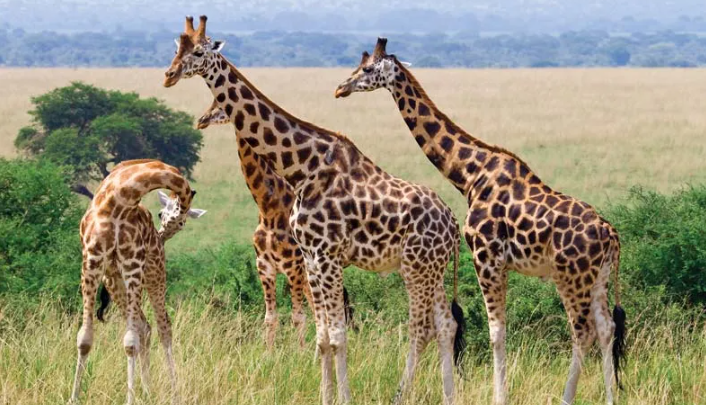
The giraffe is one of the most instantly recognizable and beloved animals on earth — a creature so singular in its appearance that it seems almost improbable, a living testament to the extraordinary diversity that evolution can produce. With its impossibly long neck, towering height, elegantly patterned coat, and unhurried, almost dreamlike gait, the giraffe occupies a unique place in both the African savanna ecosystem and the human imagination. For centuries, naturalists, explorers, and scientists have been fascinated by this remarkable animal, and our understanding of giraffe diversity has evolved considerably in recent years.
For most of the history of zoological science, giraffes were considered a single species — Giraffa camelopardalis — with a number of recognized subspecies distinguished primarily by coat pattern, geographic range, and minor morphological differences. This view began to change significantly in the early 21st century as advances in genetic analysis revealed a level of genetic divergence between giraffe populations that many researchers argued was sufficient to justify recognition as separate species. A landmark 2016 study published in the journal Current Biology by Fennessy and colleagues proposed a four-species model of giraffe taxonomy based on comprehensive genomic analysis, a classification that remains the subject of ongoing scientific debate.
The conservation implications of giraffe taxonomy are profound. The global giraffe population has declined by approximately 40 percent over the past three decades, falling from an estimated 155,000 individuals in 1985 to fewer than 117,000 today according to the Giraffe Conservation Foundation. This dramatic decline — driven by habitat loss, illegal hunting, human-wildlife conflict, and civil unrest in parts of the giraffe’s African range — has led to giraffes being listed as Vulnerable on the IUCN Red List since 2016. If the four-species model is accepted, several of those species would qualify for much more urgent threatened or endangered classifications, significantly strengthening the case for targeted conservation action.
Giraffes are the tallest living terrestrial animals on earth, with adult males reaching heights of up to 5.5 to 6 meters (18 to 20 feet) and weighing up to 1,930 kilograms (4,250 pounds). Their iconic long necks — containing just seven cervical vertebrae, the same number as most mammals including humans, but each enormously elongated — are used for feeding on vegetation beyond the reach of any competing herbivore, for combat between males in a behavior called necking, and for surveying the landscape for predators. The following types represent the full recognized diversity of giraffe populations, from broadly accepted species to the more contentious subspecies classifications.
1. Northern Giraffe (Giraffa camelopardalis)
The northern giraffe is one of the four species recognized under the modern multi-species classification, encompassing several distinct populations across a broad range of West, Central, East, and northeastern Africa. Under the traditional single-species model, the northern giraffe was simply the nominotypical form of Giraffa camelopardalis, but genetic analysis has revealed that northern giraffe populations are sufficiently distinct from southern and Masai giraffes to warrant separate species status. The northern giraffe is the most endangered of the proposed four species, with a total wild population estimated at fewer than 5,700 individuals across all its subspecies combined — a figure that makes it one of the most endangered large mammals in Africa despite the relative public unawareness of its precarious status.
2. Southern Giraffe (Giraffa giraffa)
The southern giraffe is the most numerous of the four proposed giraffe species, with a combined population estimated at approximately 44,000 individuals distributed across southern Africa. It encompasses two distinct subspecies — the South African giraffe and the Angolan giraffe — and is found across a range that includes South Africa, Namibia, Botswana, Zimbabwe, Zambia, and Angola. The southern giraffe has benefited from strong conservation efforts and wildlife management programs in southern Africa, where private game reserves and national parks have provided protected habitat and allowed populations to recover from historical hunting pressure. South Africa in particular has seen giraffe numbers increase substantially in recent decades.
3. Reticulated Giraffe (Giraffa reticulata)
The reticulated giraffe is perhaps the most visually striking of all giraffe types, distinguished by its bold, clearly defined coat pattern of large, polygonal, deep orange-brown patches separated by narrow, crisp white lines that create a network — or reticulation — of geometric shapes across the entire body. The pattern is more sharply defined and the patches more richly colored than in any other giraffe type, giving the reticulated giraffe an almost stained-glass quality that makes it immediately recognizable. Native to northeastern Kenya, southern Ethiopia, and southern Somalia, it is the most commonly seen giraffe in zoos worldwide and was historically the most numerous wild giraffe, though its population has declined dramatically to an estimated 15,000 to 16,000 individuals.
4. Masai Giraffe (Giraffa tippelskirchi)
The Masai giraffe — also spelled Maasai giraffe — is the largest of all giraffe types by body size and the most numerous wild giraffe species, with a population estimated at approximately 32,000 individuals across its range in Kenya and Tanzania. It is distinguished by its irregular, jagged-edged coat patches in dark brown to orange-brown, separated by cream to buff-colored lines, giving the coat a more organic, less geometric appearance than the reticulated giraffe’s precise network pattern. The Masai giraffe is the iconic giraffe of the East African savanna, the species most commonly encountered on safari in the Masai Mara, Serengeti, and Amboseli ecosystems, and the subject of much of the foundational scientific research on giraffe ecology and behavior.
5. South African Giraffe (Giraffa giraffa giraffa)
The South African giraffe is a subspecies of the southern giraffe, found primarily in South Africa, southern Botswana, southern Zimbabwe, and southwestern Mozambique. It has a coat pattern of rounded to irregular, medium-sized patches in pale to medium tan or brown, separated by cream-colored lines, with the patches often becoming lighter and less distinct toward the lower legs — a characteristic that distinguishes it from the more heavily marked Angolan giraffe. The South African giraffe is the best-studied giraffe subspecies in terms of behavior and ecology, as it is the primary giraffe type found in South Africa’s well-funded and extensively researched national parks and private reserves, including Kruger National Park.
6. Angolan Giraffe (Giraffa giraffa angolensis)
The Angolan giraffe, also called the Namibian giraffe, is the second subspecies of the southern giraffe, found across Namibia, southwestern Zambia, Botswana, and the extreme southwestern corner of Zimbabwe. It is distinguished by its large, irregular, notched patches of tan to pale brown on a cream background, with the patterning extending down the legs further toward the hooves than in most other giraffe types. Namibia has one of the most significant Angolan giraffe populations and has been the site of important long-term giraffe research, including studies of desert-adapted giraffes in the arid northwestern regions of the country — a population that has developed behavioral and physiological adaptations to survival in one of the harshest environments occupied by any giraffe.
7. Kordofan Giraffe (Giraffa camelopardalis antiquorum)
The Kordofan giraffe is a subspecies of the northern giraffe found in fragmented, increasingly isolated populations across central Africa — specifically in parts of Cameroon, Central African Republic, Chad, and Sudan. It is one of the most endangered giraffe subspecies, with a total wild population estimated at fewer than 2,000 individuals, and many of its remaining populations are small, isolated, and highly vulnerable to local extinction. The Kordofan giraffe has a pale, relatively faint coat pattern with irregular patches that tend to extend below the knees — an unusual characteristic in giraffes. Civil unrest, habitat loss, and illegal hunting have severely impacted Kordofan giraffe populations across much of their range.
8. Nubian Giraffe (Giraffa camelopardalis camelopardalis)
The Nubian giraffe is the nominate subspecies of the northern giraffe — the form originally described by Linnaeus and thus the name-bearer of the entire giraffe species under the traditional classification. It is found in small, fragmented populations in South Sudan, southwestern Ethiopia, and Kenya’s Rift Valley, with the largest remaining population located in Murchison Falls National Park in Uganda, where conservation efforts have helped stabilize numbers. The Nubian giraffe has large, chestnut-brown, irregularly shaped patches on a pale cream background and is considered one of the most critically endangered giraffe subspecies, with a total wild population estimated at approximately 2,600 individuals.
9. West African Giraffe (Giraffa camelopardalis peralta)
The West African giraffe, also called the Nigerian giraffe or Niger giraffe, is the rarest and most geographically isolated of all giraffe subspecies, with the entire wild population now restricted to a small area of southwestern Niger near the town of Koure — the last giraffe population remaining in West Africa. The West African giraffe was once distributed across a vast range from Senegal to Nigeria, but habitat destruction, drought, and hunting reduced the population to a critical low of fewer than 50 individuals in the late 1990s. Sustained conservation efforts by the Niger government, local communities, and international organizations have allowed the population to recover to approximately 600 to 700 individuals — a remarkable conservation success story, though the population remains dangerously small and geographically confined.
10. Rhodesian Giraffe (Giraffa camelopardalis thornicrofti)
The Rhodesian giraffe, more commonly called Thornicroft’s giraffe after the colonial administrator Harry Scott Thornicroft who collected the first specimens for science, is a geographically isolated subspecies found exclusively in the South Luangwa Valley of eastern Zambia. With a total population estimated at approximately 500 individuals, all confined to a single river valley, Thornicroft’s giraffe is one of the most geographically restricted of all giraffe subspecies and among the most vulnerable to local catastrophe. The coat pattern consists of irregular, star-shaped or jagged patches of dark brown on a cream background, with the patterning not extending to the lower legs. South Luangwa National Park provides critical protected habitat for this unique and isolated population.
11. Rothschild’s Giraffe (Giraffa camelopardalis rothschildi)
Rothschild’s giraffe — named after the zoologist Walter Rothschild — is one of the most endangered giraffe subspecies and the subject of intensive conservation effort, with a wild population estimated at fewer than 1,700 individuals in fragmented populations across Uganda and Kenya. It is sometimes called the Baringo giraffe or Ugandan giraffe and is one of the most distinctive subspecies, with a coat of large, deep brown patches separated by cream lines and, most characteristically, the absence of any patterning below the knees — giving the lower legs a completely pale, unpatterned appearance. Several prominent conservation breeding and reintroduction programs have focused on Rothschild’s giraffe, including well-known projects at Giraffe Centre in Nairobi and at Murchison Falls National Park in Uganda.
12. Cape Giraffe
The Cape giraffe is a regional population of the South African giraffe found in the southernmost portions of the species’ range, historically extending into the Cape Province of South Africa — hence the name — though it has been extirpated from much of its former range in the extreme south and survives today primarily in game reserves and national parks of the Eastern Cape and KwaZulu-Natal. Some authorities treat the Cape giraffe as synonymous with the standard South African giraffe, while others recognize subtle differences in coat pattern and body proportions that justify a degree of taxonomic distinction. It is the southernmost naturally occurring giraffe population and has been the subject of several successful reintroduction programs to areas from which giraffes were historically eliminated.
13. Desert Giraffe
The desert giraffe is not a formally recognized separate subspecies in most taxonomic treatments but rather a distinctive ecological population of Angolan giraffes — and in some classifications, northern giraffes — that have adapted over generations to survival in the extremely arid environment of northwestern Namibia’s Kunene region, one of the harshest deserts on earth. These giraffes have developed remarkable behavioral and physiological adaptations to desert conditions, including the ability to survive for extended periods without drinking water by obtaining moisture from the vegetation they consume, the ability to travel enormous distances between water sources, and a more cryptic coat coloration that blends with the pale, rocky desert landscape. Research on desert-adapted giraffes by the Giraffe Conservation Foundation and Namibian researchers has revealed fascinating insights into giraffe behavioral flexibility.
14. Transvaal Giraffe
The Transvaal giraffe is another regional variant of the South African giraffe historically associated with the Transvaal region of northeastern South Africa — the area now encompassing Limpopo and Mpumalanga provinces — and extending into neighboring Zimbabwe and southern Mozambique. Like other South African giraffe populations, it has a coat of rounded, tan to medium-brown patches on a cream background, with the patches becoming less distinct toward the lower legs. The Transvaal giraffe is well-represented in the extensive private game reserve system of the Limpopo Valley region and in Kruger National Park, where a large, well-studied giraffe population has been the subject of long-term ecological research.
15. Smoky Giraffe
The smoky giraffe is an informal name sometimes applied to unusually pale or washed-out coat variants observed in certain giraffe populations, in which the normal contrast between patches and background lines is significantly reduced, giving the coat an overall smoky, faded appearance. These pale individuals occur sporadically within several subspecies and are not a separately recognized taxonomic unit, but they are of interest to researchers studying the genetic basis of coat patterning in giraffes and to wildlife photographers for whom pale individuals are striking and unusual subjects. The genetic mechanisms underlying coat color variation in giraffes remain an active area of research within the broader field of giraffe biology.