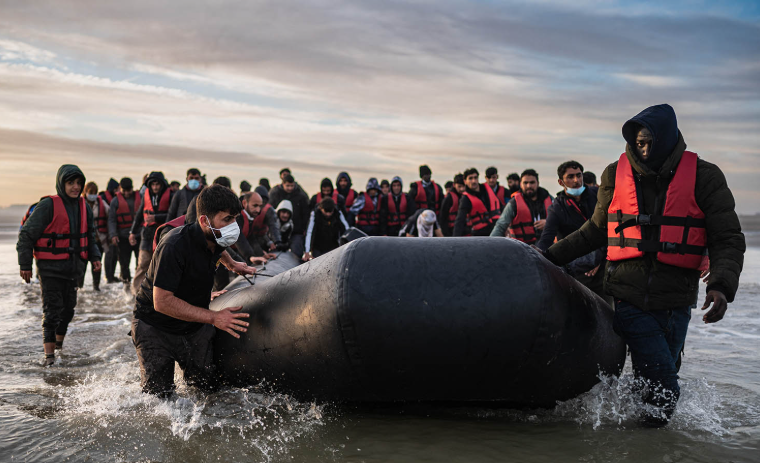
Migration — the movement of people from one place to another with the intention of settling, permanently or temporarily, in a new location — is one of the most fundamental and consequential processes in human geography. It is as old as humanity itself. The first modern humans walked out of Africa approximately 70,000 years ago and over tens of thousands of years spread across every habitable continent on Earth, colonizing environments ranging from tropical rainforests to Arctic tundra in the most extraordinary migration event in the history of any species. Every human population alive today is descended from migrants, and the cultural, genetic, and linguistic diversity of humanity is the direct product of those ancient and more recent movements of people across the landscape.
Migration today operates at a scale and complexity that would have been unimaginable to previous generations. The United Nations estimates that approximately 281 million people — about 3.6 percent of the global population — currently live outside their country of birth, the highest number ever recorded. An additional estimated 740 million people are internal migrants — people who have moved within their own countries, typically from rural to urban areas. Together, these more than one billion migrants represent one of the most significant demographic and geographical phenomena of the modern era, reshaping cities, transforming economies, challenging political systems, and creating the extraordinarily diverse, multicultural societies that characterize the 21st century world.
The causes of migration are as varied as the people who migrate. Geographers and demographers have long used the framework of push and pull factors to understand migration — push factors being the conditions in the place of origin that drive people to leave, and pull factors being the conditions in the destination that attract them. Push factors include poverty, unemployment, conflict, persecution, environmental degradation, natural disasters, and the lack of educational and economic opportunities. Pull factors include higher wages, employment opportunities, political freedom, family reunion, better education and healthcare, and the social networks of established migrant communities. In reality, the decision to migrate is rarely simple or voluntary — most migrants are responding to complex combinations of necessity, opportunity, and aspiration that defy easy categorization.
Internal Migration
Internal migration is the movement of people within the borders of a single country — from one region, province, city, or rural area to another — without crossing an international boundary. It is the most common form of migration worldwide, affecting hundreds of millions of people and reshaping the internal geography of countries across the developing and developed world.
The most significant form of internal migration globally is rural-to-urban migration — the movement of people from villages and farming communities to cities in search of employment, education, and improved living standards. China has experienced the largest internal migration in human history, with an estimated 290 million rural migrants — the floating population — having moved to urban areas since economic reforms began in 1978, transforming the country from a predominantly rural to a predominantly urban society within a single generation.
International Migration
International migration is the movement of people across national borders — from one country to another — either permanently or for extended periods. It encompasses an enormous range of motivations, legal statuses, and circumstances, from highly skilled professionals moving between wealthy countries to asylum seekers fleeing persecution and refugees displaced by conflict.
The United States remains the world’s largest destination for international migrants, with approximately 51 million foreign-born residents — about 15 percent of its total population. Germany hosts approximately 16 million foreign-born residents, making it the second largest destination. The Gulf States of the Middle East — particularly the UAE, Qatar, and Kuwait — have the world’s highest proportions of migrants relative to total population, with migrants making up approximately 88 percent of the UAE’s total population and approximately 95 percent of its workforce.
Rural-Urban Migration
Rural-urban migration is the movement of people from the countryside to cities, driven by the combination of declining agricultural employment, the concentration of economic opportunities in urban areas, and the powerful pull of urban amenities — schools, hospitals, markets, and social life — that rural areas often cannot match. It is the dominant form of migration in the developing world and the primary driver of the extraordinary urbanization of the 21st century.
Sub-Saharan Africa is currently experiencing the fastest rate of rural-urban migration in the world, with its urban population projected to triple from approximately 600 million to 1.8 billion by 2050. Lagos in Nigeria — currently Africa’s largest city with approximately 15 million people in the city proper and over 24 million in the metropolitan area — is growing by approximately 77 people per hour, driven almost entirely by rural-urban migration from across Nigeria and West Africa. This extraordinary pace of urbanization is creating enormous pressures on urban infrastructure, housing, and services.
Urban-Rural Migration (Counterurbanization)
Urban-rural migration — also known as counterurbanization — is the reverse movement of people from cities to rural areas, typically driven by the desire to escape urban congestion, high housing costs, pollution, and the stresses of city life, combined with improved transport and telecommunications that make it increasingly possible to work remotely while living in the countryside.
Counterurbanization became a significant demographic phenomenon in Western Europe and North America from the 1970s onward, as improved motorway networks, rising urban house prices, and environmental concerns drove middle-class families from cities to commuter villages and rural areas. The COVID-19 pandemic dramatically accelerated this trend — the widespread adoption of remote working triggered a significant surge in urban-to-rural migration across the United States, United Kingdom, Australia, and other developed countries, with rural property prices rising sharply as city dwellers sought more space and lower density living.
Seasonal Migration
Seasonal migration is the regular, cyclical movement of people between two or more locations in response to seasonal variations in employment opportunities, climate, or resource availability. It is one of the oldest forms of human mobility, predating permanent settlement, and continues to be practiced by hundreds of millions of people worldwide.
Agricultural seasonal migration is the most widespread form, with workers moving to areas of peak agricultural labor demand — fruit picking, grain harvesting, planting — during the relevant season and returning home when the work is done. Approximately 25 million seasonal agricultural workers migrate within and across international borders annually in Europe alone. The seasonal movement of approximately 10 million harvest workers across India’s agricultural regions — following the ripening of different crops from south to north across the subcontinent — is one of the largest seasonal migration systems in the world.
Forced Migration
Forced migration occurs when people are compelled to move from their homes by circumstances beyond their control — conflict, persecution, natural disasters, environmental degradation, or deliberate government policies of displacement. It is distinguished from voluntary migration by the absence of genuine choice — forced migrants are driven out rather than drawn away.
The United Nations High Commissioner for Refugees reported that the number of forcibly displaced people worldwide reached an unprecedented 108.4 million at the end of 2022 — more than double the figure of a decade earlier. This figure includes approximately 35.3 million refugees who have crossed international borders, 62.5 million internally displaced people who have been forced from their homes but remain within their own countries, and approximately 5.4 million asylum seekers awaiting determination of their status.
Refugee Migration
Refugee migration is a specific category of forced migration in which people have fled their home countries due to a well-founded fear of persecution based on race, religion, nationality, political opinion, or membership of a particular social group — the legal definition established by the 1951 Refugee Convention. Refugees have the right under international law to seek asylum in other countries and cannot be forcibly returned to places where they face serious threats.
The world’s largest refugee populations in recent years have originated from Syria — which has produced approximately 6.5 million refugees since the civil war began in 2011, the largest refugee population from a single country in the world — Afghanistan, South Sudan, Myanmar, and the Democratic Republic of Congo. Turkey hosts the largest refugee population of any country in the world at approximately 3.6 million, followed by Iran, Colombia, Germany, and Pakistan.
Economic Migration
Economic migration is the movement of people primarily motivated by the search for better economic opportunities — higher wages, employment, improved living standards, and greater economic security — rather than by persecution, conflict, or environmental disaster. It is the most numerically significant type of international migration and the primary driver of the large migrant communities found in wealthy destination countries.
Economic migrants follow wage differentials with remarkable precision, moving from low-wage to high-wage economies in patterns that reflect global income inequalities. The remittances sent home by economic migrants — money transferred to family members in the country of origin — represent one of the most significant financial flows in the global economy. In 2022, remittances to low and middle-income countries reached a record 626 billion dollars — nearly three times the total global official development aid of approximately 200 billion dollars and a lifeline for the economies of countries including Tajikistan, Tonga, and El Salvador, where remittances represent 30 to 50 percent of GDP.
Environmental Migration
Environmental migration is the movement of people driven by environmental changes — drought, desertification, flooding, sea level rise, soil degradation, deforestation, and the increasing frequency and severity of extreme weather events — that make their home areas uninhabitable or unable to support their livelihoods. It is one of the fastest-growing categories of migration and is expected to intensify dramatically as climate change accelerates.
The World Bank’s Groundswell report projects that climate change could displace between 216 million and 1 billion people within their own countries by 2050, with sub-Saharan Africa, South Asia, and Latin America most severely affected. Bangladesh alone — a country where approximately 17 percent of land area is at risk of permanent inundation by 2050 — could see 13 to 30 million people displaced by sea level rise and increased flooding. The small island nations of the Pacific — Tuvalu, Kiribati, the Marshall Islands — face the prospect of becoming entirely uninhabitable within decades as rising seas inundate their low-lying atolls.
Chain Migration
Chain migration — also known as network migration — is the process by which established migrants facilitate the movement of friends, family members, and community members from their place of origin to their destination, creating self-reinforcing flows of migrants along well-worn pathways. The established migrant provides information, housing, employment contacts, and social support that dramatically reduces the costs and risks of migration for subsequent movers.
Chain migration is responsible for the distinctive geographic clustering of migrant communities — the concentration of Bangladeshis in Tower Hamlets in London, Mexicans in Los Angeles, Somalis in Minneapolis, and Pakistanis in Bradford — where established communities provide the social infrastructure that attracts subsequent waves of migrants from the same origin. Once established, chain migration networks are remarkably durable and self-sustaining, continuing to channel migrants along the same pathways for generations even as economic and political conditions change. Approximately 63 percent of all legal immigration to the United States is family-based — facilitated by existing residents sponsoring relatives — making chain migration the dominant mechanism of American immigration.
Step Migration
Step migration describes the pattern by which migrants move in a series of stages — from a village to a small town, then to a larger city, and perhaps ultimately to a major metropolitan area or to an international destination — rather than making a single large leap from origin to final destination. Each step typically represents a move to a larger and more economically dynamic settlement, with the migrant accumulating resources, skills, and information at each stage that facilitate the next move.
Step migration was first systematically described by the geographer Ernst Georg Ravenstein in his Laws of Migration published in 1885, based on analysis of British census data, and remains one of the most widely observed patterns in migration geography. In India, step migration typically sees rural migrants move first to district towns, then to state capitals, and finally perhaps to Mumbai, Delhi, or other major metropolitan centers — or onward to Gulf States or Western countries. The pattern is driven by the costs and information requirements of long-distance migration — most people move to the nearest place that offers significantly better opportunities than their origin.
Transhumance Migration
Transhumance is the seasonal movement of people and their livestock between different altitudinal or ecological zones — most commonly between lowland winter pastures and highland summer pastures — following the seasonal availability of grazing. It is one of the oldest forms of human mobility, practiced for thousands of years across mountain regions worldwide.
Transhumance is practiced across the Alps, the Pyrenees, the Himalayas, the Andes, the Atlas Mountains, the Caucasus, and the mountains of East Africa. In Switzerland, approximately 50,000 cattle, sheep, and goats are moved to alpine summer pastures above 1,500 meters each June in the Alpaufzug — the annual alpine ascent — and returned to valley farms in September. The transhumance traditions of the Gaddis herders of the Indian Himalayas involve annual migrations of up to 500 kilometers between winter pastures in the Kangra Valley at approximately 700 meters and summer pastures in Lahoul and Spiti at over 4,000 meters.
Mass Migration
Mass migration refers to the large-scale movement of significant proportions of a population from one place to another over a relatively short period, typically driven by a combination of severe push factors — famine, conflict, persecution, economic collapse — that simultaneously affect large numbers of people.
The Great Famine migration from Ireland between 1845 and 1852 is one of history’s most dramatic mass migrations — approximately 1 million people died and another 1 million emigrated within a single year in 1847, with a total of approximately 2 million emigrating during the famine years, reducing Ireland’s population from approximately 8 million to 6 million. The partition of India and Pakistan in 1947 triggered the largest mass migration in human history — approximately 14 to 20 million people crossed the newly created borders between India and Pakistan in both directions within months, accompanied by catastrophic communal violence that killed between 200,000 and 2 million people.
Return Migration
Return migration is the movement of migrants back to their place of origin — their home country, region, or community — after a period of residence elsewhere. It completes the migration cycle and is one of the most numerically significant but least studied forms of migration.
Return migration can be voluntary — driven by the achievement of economic goals, homesickness, family obligations, retirement, or improved conditions in the origin country — or involuntary, driven by the expiration of work visas, deportation, or the deterioration of conditions in the destination country. Studies suggest that approximately 20 to 30 percent of all international migrants eventually return to their countries of origin. The return migration of skilled professionals from diaspora communities — the so-called brain gain — has been an important contributor to economic development in countries including India, China, Taiwan, and Ireland, where returning migrants have brought capital, skills, networks, and entrepreneurial experience accumulated abroad.
Asylum Seeker Migration
Asylum seeker migration occurs when individuals leave their country of origin and apply for refugee status or protection in another country, claiming that they face persecution or serious harm if returned home. Asylum seekers occupy a legally uncertain position — they have not yet been recognized as refugees and their claims are subject to determination by the receiving country’s asylum system.
The number of new asylum applications globally reached approximately 2.6 million in 2022 — the highest level ever recorded — with Germany, the United States, Spain, France, and Austria receiving the largest numbers. Asylum seekers face extraordinarily difficult circumstances — often having fled violence or persecution with minimal resources, undertaking dangerous journeys, and then facing months or years of uncertainty while their claims are processed in often overwhelmed and underfunded asylum systems. The Mediterranean Sea migration route from North Africa to Europe has been one of the world’s most deadly migration corridors — the International Organization for Migration estimates that over 25,000 people have died attempting to cross the Mediterranean since 2014.
Diaspora Migration
Diaspora migration refers to the dispersion of people from their original homeland to multiple destinations across the world, creating geographically dispersed communities that maintain strong cultural, emotional, economic, and sometimes political connections to their place of origin. The term originates from the Greek for “scattering” and was first applied to the dispersal of Jewish communities from ancient Israel.
The Indian diaspora — approximately 32 million people — is the world’s largest diaspora by population, spread across over 200 countries with particularly large communities in the UAE, the United States, Saudi Arabia, Malaysia, Myanmar, and the United Kingdom. The Chinese diaspora numbers approximately 60 million people across Southeast Asia, North America, and Australia. Diaspora communities are significant economic actors — the Indian diaspora remitted approximately 100 billion dollars to India in 2022, making India the world’s largest recipient of remittances — and have historically played important roles in the political independence movements, cultural preservation, and economic development of their homelands.