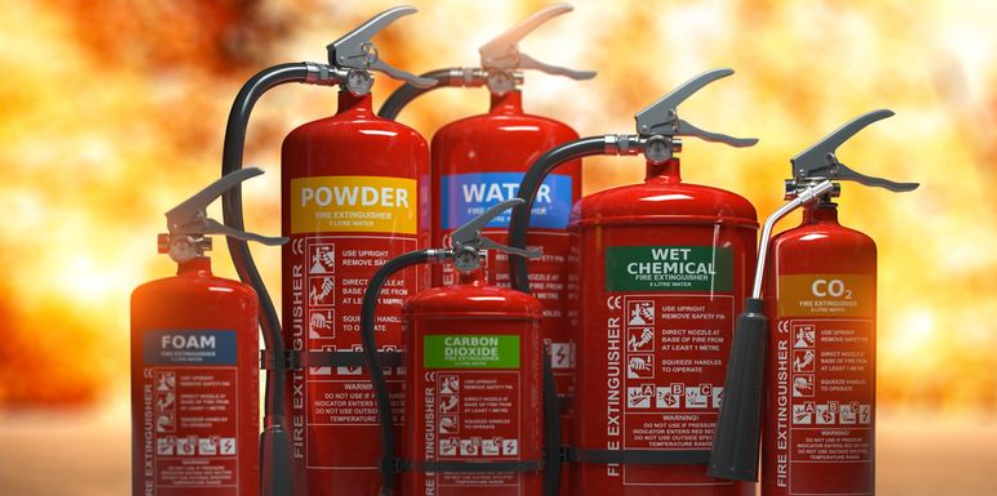
Fire extinguishers are among the most important and widely deployed safety devices in the world, providing the critical first line of defense against fires in homes, workplaces, vehicles, and public spaces. The ability to suppress a small fire before it grows into a life-threatening and property-destroying blaze depends entirely on having the right type of extinguisher available, in working condition, and used correctly by someone who understands its operation. Understanding fire extinguisher types is not merely academic — it is a genuine life safety skill with real consequences.
Fire causes enormous human and economic damage worldwide. According to the National Fire Protection Association (NFPA), fire departments in the United States respond to an average of one fire every 23 seconds. In 2022 alone, US fire departments responded to approximately 1.5 million fires, resulting in 2,520 civilian deaths, 11,500 injuries, and an estimated $18.9 billion in direct property damage. Globally, fire kills an estimated 180,000 people annually according to the World Health Organization, with millions more injured and hundreds of billions of dollars in economic losses recorded each year. Properly deployed fire extinguishers are credited with preventing a significant portion of these losses.
The fundamental principle underlying all fire extinguisher design is the fire tetrahedron — the four elements that must be present simultaneously for fire to exist and sustain itself: fuel, heat, oxygen, and a chain chemical reaction. Different extinguisher types work by attacking one or more of these elements — removing oxygen through smothering, absorbing heat to cool the fuel below ignition temperature, chemically interrupting the chain reaction, or physically separating fuel from the other elements. No single extinguisher type is effective against all fire classes, and selecting the wrong type can be ineffective or actively dangerous.
Fire classes provide the essential framework for understanding extinguisher selection. Class A fires involve ordinary solid combustibles — wood, paper, fabric, and plastics. Class B fires involve flammable liquids and gases. Class C fires involve energized electrical equipment. Class D fires involve combustible metals. Class K fires involve cooking oils and fats in commercial kitchen environments. Some classification systems used outside North America use slightly different letter designations, but the underlying fire categories are broadly consistent internationally. The following 15 extinguisher types cover the full range of technologies and applications in contemporary fire suppression.
1. Water Extinguisher
Water extinguishers are the simplest, oldest, and most widely recognized fire suppression devices, using plain water expelled under pressure to cool burning fuel below its ignition temperature and suppress fire. The cooling mechanism is highly effective against Class A fires — ordinary solid combustibles such as wood, paper, fabric, cardboard, and many plastics — where the fire is sustained by the heat generated from burning solid material. Water absorbs substantial heat energy as it converts from liquid to steam at the fire surface, rapidly reducing the temperature of the burning material.
Standard water extinguishers operate by storing water under pressure — either stored-pressure designs where the entire cylinder is pressurized, or cartridge-operated designs where a separate CO₂ cartridge provides the propellant gas. Stored-pressure models are more common in commercial applications. The discharge range is typically 30 to 40 feet for large models, and discharge time varies from approximately 55 to 95 seconds depending on the cylinder size and operating pressure.
Water extinguishers must never be used on Class B fires (flammable liquids), as water can spread burning liquid across a wider area, dramatically worsening the fire. They are absolutely contraindicated on Class C fires (electrical equipment), as water conducts electricity and creates a serious risk of electrocution to the operator. They are also ineffective against Class D and Class K fires. In cold environments, standard water extinguishers must be protected from freezing, as a frozen extinguisher will not discharge and the expansion of frozen water can rupture the cylinder.
2. Water Mist Extinguisher
Water mist extinguishers represent a significant technological advancement over standard water extinguishers, using a specially designed nozzle to discharge water as an extremely fine mist of microscopic droplets rather than a solid stream or coarse spray. The fine mist dramatically increases the total surface area of water exposed to the fire, enhancing the cooling efficiency of the water substantially. The mist also displaces oxygen around the fire, adding a second suppression mechanism not present in conventional water extinguishers.
The key practical advantage of water mist technology is that the fine droplets are non-conductive at the distances at which the extinguisher is operated, making water mist extinguishers safe for use on Class C fires involving energized electrical equipment — a significant capability improvement over standard water extinguishers. They are rated for Class A and Class C fires, and some formulations are also effective against Class B fires. Water mist extinguishers have become particularly popular in environments such as hospitals, libraries, museums, and data centers where the use of chemical or foam extinguishants would cause significant collateral damage to sensitive equipment, books, artworks, or medical equipment.
The water mist technology also reduces the water damage associated with fire suppression compared to standard water extinguishers, an important consideration in environments with valuable contents. The fine mist evaporates more completely and leaves less residual water than a conventional water stream, reducing secondary damage from suppression activities. Water mist extinguishers are more expensive to manufacture than standard water models but offer superior versatility and safety across a broader range of fire scenarios.
3. Foam Extinguisher (AFFF)
Foam extinguishers use aqueous film-forming foam (AFFF) — a mixture of water and a foaming agent concentrate — to suppress fires through two simultaneous mechanisms: the foam blanket smothers the fire by excluding oxygen from the fuel surface, and the water content of the foam cools the burning fuel. The foam forms a stable, coherent blanket across the surface of liquid fuels that seals vapors below the surface, preventing re-ignition even after the initial fire has been extinguished — an important advantage over suppression methods that only cool or dilute without sealing.
Foam extinguishers are rated for Class A and Class B fires, making them more versatile than pure water extinguishers for environments where both solid fuel and liquid fuel fires are possible hazards. They are particularly valuable in garages, workshops, fuel storage areas, and commercial and industrial facilities handling flammable liquids. The foam discharge range is typically 20 to 25 feet, and the foam blanket remains in place after discharge, providing continued protection against re-ignition of flammable liquid surfaces.
Foam extinguishers must not be used on Class C fires, as the water content creates electrocution risks. They also must not be used on Class D or Class K fires. A critical application technique for Class B fires is to avoid directing the foam jet directly onto the liquid surface, which can splash burning liquid and spread the fire — instead, the foam should be directed against a vertical surface adjacent to the burning liquid and allowed to flow across the surface, or arced into the air to fall gently across the fuel. Modern AFFF concentrates have faced significant regulatory scrutiny and legal challenges due to the presence of per- and polyfluoroalkyl substances (PFAS) — persistent environmental contaminants — in traditional AFFF formulations, driving development of fluorine-free foam alternatives.
4. Dry Powder Extinguisher (ABC Powder)
Dry powder extinguishers — specifically the ABC multipurpose variety using monoammonium phosphate as the active agent — are the most widely sold and deployed portable extinguishers in the world, valued for their ability to suppress Class A, Class B, and Class C fires from a single unit. The fine powder works primarily by chemically interrupting the chain reaction component of the fire tetrahedron, disrupting the free-radical chain reactions that sustain combustion, while also providing some oxygen exclusion and cooling effect. The “ABC” rating makes these extinguishers the most versatile of all common types.
The discharge of dry powder produces a dense cloud of fine particles that can penetrate into difficult-to-reach burning areas and suppress three-dimensional fires — fires involving burning liquids that are not contained in a vessel — with an effectiveness that foam extinguishers cannot match. The range and speed of discharge make ABC powder extinguishers effective against rapidly developing fires. They are widely used in vehicles, light aircraft, offices, retail premises, and homes.
The significant practical limitation of dry powder extinguishers is the extreme messiness of discharge. The fine monoammonium phosphate powder is corrosive to metals and electronics and penetrates into every crevice of the affected area, causing substantial secondary damage to equipment, machinery, and furnishings. In enclosed spaces, the powder cloud severely reduces visibility and can cause respiratory distress to occupants. For these reasons, dry powder extinguishers are generally inappropriate for use in occupied buildings, server rooms, laboratories, kitchens, and other sensitive environments despite their broad fire class coverage. They do not cool the fuel and provide no protection against re-ignition once the powder cloud disperses.
5. Carbon Dioxide (CO₂) Extinguisher
Carbon dioxide extinguishers suppress fire by displacing oxygen around the burning fuel — CO₂ is approximately 1.5 times denser than air and settles around the base of the fire, reducing the oxygen concentration below the level required to sustain combustion. A secondary cooling effect occurs as the CO₂ expands dramatically upon discharge from its liquid state in the pressurized cylinder, though this cooling effect is less significant than the oxygen displacement mechanism. CO₂ extinguishers leave absolutely no residue — the gas simply dissipates after discharge — making them the preferred choice for environments where secondary damage from extinguishant residue is unacceptable.
CO₂ extinguishers are rated for Class B and Class C fires. They are the standard choice for data centers, server rooms, electrical switchgear rooms, laboratories, and precision manufacturing environments where the value of the equipment and data being protected far exceeds the cost of the extinguisher and the inconvenience of the discharge process. The complete absence of residue means that equipment suppressed with CO₂ can often be restored to service relatively quickly after an incident, whereas equipment suppressed with powder or foam may require extensive cleaning or replacement.
The limitations of CO₂ extinguishers include their ineffectiveness on Class A fires — the gas dissipates quickly and provides no cooling, meaning solid fuel fires can re-ignite readily after CO₂ discharge — and the significant risk of oxygen depletion in enclosed spaces. Discharging a large CO₂ extinguisher in a small, poorly ventilated room can reduce oxygen concentrations to levels immediately dangerous to human life, and operators must evacuate promptly after discharge. The solidified CO₂ that forms at the horn during discharge — dry ice at -78.5°C (-109.3°F) — can also cause cold burns if the horn is touched directly. CO₂ cylinders are also significantly heavier than equivalent-capacity powder extinguishers.
6. Wet Chemical Extinguisher
Wet chemical extinguishers were specifically developed to address Class K fires — fires involving cooking oils and fats in commercial kitchen environments — where the extremely high ignition temperatures of cooking oils (typically 340°C to 370°C / 644°F to 698°F) and the phenomenon of re-ignition make other extinguisher types inadequate or dangerous. The wet chemical agent — typically a solution of potassium acetate, potassium citrate, or potassium carbonate — suppresses Class K fires through two simultaneous mechanisms: saponification and cooling.
Saponification is a chemical reaction between the alkaline potassium solution and the hot cooking oil that converts the surface of the oil into a soapy, non-flammable foam layer. This foam layer seals the oil surface, excluding oxygen and preventing re-ignition — a critical quality, as cooking oil fires have a very strong tendency to re-ignite after apparent suppression due to the enormous thermal mass of the heated oil. The water content of the solution simultaneously cools the oil, and the fine mist discharge pattern of the specialized nozzle is designed to apply the agent gently without splashing hot oil onto the operator or surrounding surfaces.
Wet chemical extinguishers are mandatory equipment in commercial cooking facilities in most jurisdictions and are a standard component of commercial kitchen fire suppression systems. They are also rated for Class A fires. Their use is restricted to Class A and Class K fires — they must not be used on Class B fires (the water content can cause boilover and fireball with some fuels) or Class C fires (electrocution risk from the conductive aqueous solution). The Ansul R-102 and similar commercial hood suppression systems use wet chemical agents delivered automatically through fixed nozzles over cooking equipment.
7. Dry Chemical Extinguisher (BC Powder)
BC powder extinguishers use sodium bicarbonate or potassium bicarbonate as the active dry chemical agent, specifically formulated for Class B and Class C fires rather than the multipurpose ABC coverage of monoammonium phosphate powder. Sodium bicarbonate (ordinary baking soda) and potassium bicarbonate (Purple-K) both suppress fire by decomposing in the heat of the fire to release carbon dioxide and water vapor, and by disrupting the chemical chain reactions of combustion through free-radical scavenging. Potassium bicarbonate (Purple-K) is approximately twice as effective as sodium bicarbonate on a weight basis against flammable liquid fires.
BC powder extinguishers were historically common in industrial, marine, and aviation applications where Class B and Class C fire risks predominated, but have been largely supplanted by multipurpose ABC powder in many applications where their more limited fire class coverage is a disadvantage. They retain advantages in specific situations — particularly where the non-corrosive, non-destructive nature of potassium bicarbonate relative to monoammonium phosphate is important for protecting sensitive equipment, and where Class A fire risk is genuinely absent. Purple-K (potassium bicarbonate) extinguishers remain the preferred dry chemical type for aircraft rescue and firefighting (ARFF) applications at airports worldwide.
8. Class D Dry Powder Extinguisher
Class D extinguishers are highly specialized devices designed exclusively for fires involving combustible metals — a category of fire that is genuinely dangerous, poorly understood by most people, and completely resistant to suppression by any of the common extinguisher types. Combustible metals include magnesium, titanium, zirconium, sodium, lithium, potassium, and certain metal powders and shavings, particularly when in finely divided form such as filings, turnings, or powder. These materials can burn at extraordinarily high temperatures — magnesium burns at approximately 3,100°C (5,600°F) — and some react violently and explosively with water, foam, CO₂, and standard dry chemical agents.
The active agent in Class D extinguishers varies depending on the specific metal hazard addressed. Common agents include sodium chloride powder (Met-L-X), copper powder (for lithium fires), graphite powder, and dry sand. These agents work by smothering the burning metal — covering it with a crust that excludes oxygen and absorbs heat — without reacting with the burning material. Application technique is critical: the agent must be gently applied to flow over and cover the burning metal rather than being blasted at high velocity, which can scatter burning metal and worsen the fire.
Class D extinguishers are essential equipment in research laboratories working with alkali metals, manufacturing facilities processing titanium or magnesium components, pyrotechnics manufacturers, and facilities handling lithium or other reactive metals. The growth of lithium-ion battery use in electric vehicles and energy storage has created new Class D fire scenarios that existing suppression strategies are still being adapted to address — lithium-ion battery fires are complex, multi-phase events that combine elements of Class B, Class C, and Class D fires.
9. Halon Extinguisher
Halon extinguishers use halogenated hydrocarbon gases — primarily Halon 1211 (bromochlorodifluoromethane) and Halon 1301 (bromotrifluoromethane) — to suppress fires through highly effective chemical chain reaction interruption. Halon agents were for decades considered the gold standard of fire suppression in sensitive environments, offering rapid, complete suppression of Class A, B, and C fires with absolutely no residue and no oxygen depletion hazard comparable to CO₂. Their effectiveness is so high that relatively small quantities are required compared to other agents.
Halon was widely deployed in aircraft, computer rooms, telecommunications facilities, museums, and military applications through the 1970s and 1980s. However, halon compounds are extremely potent ozone-depleting substances — approximately three to ten times more destructive to atmospheric ozone than chlorofluorocarbons (CFCs) — and their production was banned under the Montreal Protocol in 1994. New halon extinguisher production ceased in developed countries, though existing equipment could continue to be used, maintained, and recharged with recovered halon. A global halon reclamation and redistribution infrastructure maintains existing critical applications — particularly aviation, where halon’s performance characteristics have proven difficult to replicate with alternative agents.
Halon 1301 fixed flooding systems in aircraft engine nacelles and cargo holds remain standard equipment on commercial aircraft worldwide, maintained with reclaimed halon. The aviation industry has worked with regulators and researchers for decades to find viable halon alternatives for aircraft use, as the current reclaimed halon supply is finite and will eventually be exhausted. Several candidate replacement agents — including Halotron, FE-36, and various HFC-based agents — have been developed and certified for specific applications.
10. Clean Agent Extinguisher (HFC/FK-5-1-12)
Clean agent extinguishers were developed specifically to provide effective fire suppression for sensitive environments — data centers, telecommunications facilities, museums, medical equipment rooms, and aircraft — while addressing the environmental concerns that led to the halon ban. Clean agents are electrically non-conductive, leave no residue upon evaporation, and are effective against Class A, B, and C fires, making them functionally similar to halon for most suppression applications.
The most widely used clean agents include HFC-227ea (heptafluoropropane, marketed as FM-200), FK-5-1-12 (dodecafluoro-2-methylpentan-3-one, marketed as Novec 1230), and various HFC-blended agents. These compounds suppress fire primarily through heat absorption — they have very high heat capacity and vaporize rapidly in the fire environment, absorbing substantial thermal energy and cooling the flame — as well as some degree of chemical chain reaction interruption. FK-5-1-12 (Novec 1230) has a particularly low global warming potential compared to HFC agents and has become increasingly preferred for new installations as environmental regulations tighten.
Clean agent portable extinguishers are significantly more expensive than powder or CO₂ alternatives and are deployed primarily in situations where the value of the protected assets — critical IT infrastructure, irreplaceable archives, precision instruments — justifies the premium. The global clean agent suppression market has grown substantially as data center proliferation has accelerated, with the number of hyperscale data centers worldwide exceeding 700 by 2023 and continuing to grow rapidly.
11. Inert Gas Extinguisher
Inert gas fire suppression systems and extinguishers use naturally occurring atmospheric gases — primarily nitrogen (IG-100), argon (IG-01), or blends of nitrogen, argon, and CO₂ (IG-55 Argonite, IG-541 Inergen) — to suppress fires by reducing the oxygen concentration in the protected space to below the level required to support combustion, typically around 12 to 15 percent oxygen by volume compared to the normal atmospheric level of approximately 21 percent. Unlike CO₂, which suppresses fire at oxygen concentrations potentially lethal to humans, inert gas systems are designed to achieve suppression at oxygen levels that remain survivable for a short period — an important safety distinction in occupied spaces.
Inert gas agents are completely natural, environmentally benign, and leave absolutely no residue, making them an excellent choice for occupied spaces such as control rooms, telecommunications facilities, and archives where both human safety and equipment protection are priorities. The gases are stored as highly compressed gases rather than liquefied agents, requiring larger and heavier cylinder banks than equivalent halon or HFC systems — a practical limitation that restricts inert gas systems primarily to fixed installation applications rather than portable extinguisher use. The zero global warming potential and zero ozone depletion potential of inert gas agents have made them increasingly attractive as environmental regulations tighten around HFC-based clean agents.
12. Condensed Aerosol Extinguisher
Condensed aerosol fire suppression is a relatively recent fire suppression technology that generates a dense cloud of extremely fine solid particles and gases through the combustion of a solid aerosol-forming compound, typically potassium-based. The aerosol particles — with mean diameters in the submicron range — are far finer than dry powder agents and behave more like a gas than a powder in terms of their ability to penetrate into enclosed spaces and reach fires in hard-to-access locations. The fine particles suppress fire primarily through catalytic interruption of chemical chain reactions, similar to halon but through a physical rather than molecular mechanism.
Condensed aerosol systems are particularly effective in enclosed spaces — engine bays, electrical cabinets, shipping container fire protection, and similar confined volume applications — where the aerosol can achieve a suppression concentration throughout the protected volume rapidly. They are rated for Class A, B, and C fires and leave relatively small amounts of fine potassium salt residue compared to dry powder agents. Condensed aerosol technology has found growing application in vehicle fire suppression systems, particularly for protecting the engine compartments of heavy goods vehicles, buses, and construction equipment where the combination of effectiveness, compact installation, and low system cost is attractive.
13. Foam Branchpipe and Compressed Air Foam (CAF)
Compressed Air Foam (CAF) systems represent an evolution of conventional foam fire suppression, mixing water, foam concentrate, and compressed air in precise proportions to generate a foam with dramatically different characteristics from conventional AFFF applied through standard aspirating nozzles. CAF produces a drier, more stable, more adherent foam with a smaller bubble structure that clings to vertical surfaces, penetrates into burning structures more effectively, and provides longer-lasting protection against re-ignition than conventional foam. The compressed air propulsion also allows CAF to be projected farther with less water consumption.
CAF technology has been widely adopted in wildland-urban interface firefighting, where its ability to be applied to structures and vegetation in advance of approaching fires — creating a flame-retardant foam blanket that persists for extended periods — provides a suppression and protection capability not possible with water alone. Water usage in CAF operations can be reduced by 80 to 90 percent compared to equivalent plain water operations while maintaining superior suppression effectiveness, a critical advantage in remote wildland firefighting where water supply is limited. Several major fire departments in the western United States and in Australia have adopted CAF-equipped apparatus for wildland fire response.
14. Water Additive Extinguisher
Water additive extinguishers use water combined with small quantities of chemical additives — typically wetting agents, viscosity modifiers, or antifreeze compounds — to modify the performance characteristics of the water in specific ways for particular applications. Wetting agents reduce the surface tension of water, dramatically improving its ability to penetrate into Class A fuels — particularly tightly packed materials such as baled cotton, hay, or wood chip piles — where plain water tends to run off the surface without penetrating to the seat of the fire. The improved penetration allows the cooling effect of water to reach burning material deep within the fuel load.
Antifreeze additives allow water extinguishers to operate effectively in sub-zero environments where plain water extinguishers would freeze and fail — important for outdoor applications, unheated storage buildings, and cold climate installations. Viscosity-modifying additives can produce a gel-like water agent that adheres to vertical and overhead surfaces better than plain water, improving suppression effectiveness on Class A fires involving vertical structures. Water additive extinguishers maintain the essential environmental and residue advantages of plain water while extending performance capabilities for specific challenging fire scenarios.
15. Vortex Extinguisher (Liquid Nitrogen Vortex)
The vortex fire extinguisher is one of the most innovative and recently developed fire suppression technologies, using liquid nitrogen discharged through a specially designed nozzle to generate a powerful rotating vortex of extremely cold, oxygen-displacing gas. As the liquid nitrogen rapidly vaporizes upon discharge, it expands approximately 700 times in volume, generating a high-velocity vortex of cold, dense nitrogen gas that simultaneously cools the fire, displaces oxygen, and physically disrupts the flame through the mechanical force of the vortex. The technology was originally inspired by research into using sound waves to extinguish flames and has been developed by DARPA and several commercial research organizations.
Vortex extinguishers using liquid nitrogen leave no residue whatsoever, are completely non-toxic, non-conductive, and environmentally neutral, making them theoretically ideal for sensitive environments such as data centers, aircraft, and occupied buildings. The cooling effect is exceptionally rapid and the oxygen displacement is immediate within the vortex zone. While the technology has demonstrated impressive results in laboratory and demonstration settings — DARPA’s acoustic fire suppression research demonstrated flame extinguishment in seconds — commercial portable vortex extinguisher products remain in early development and adoption stages, and the technology has not yet achieved the broad commercial deployment of the more established extinguisher types described in this guide. It represents, however, a compelling direction for the next generation of fire suppression technology.