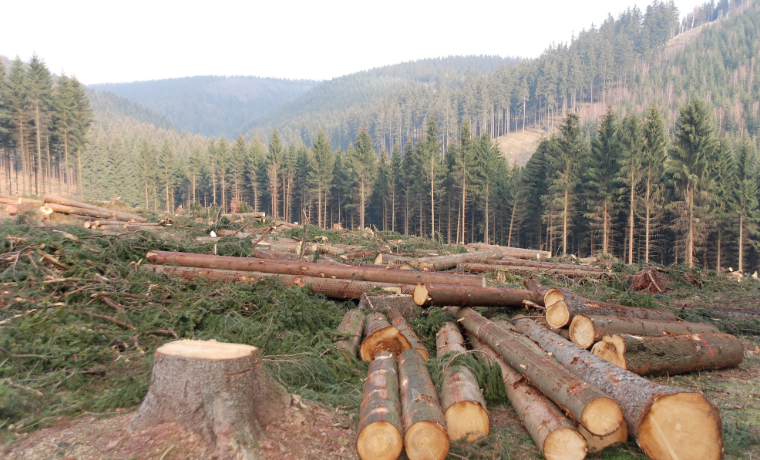
Deforestation — the permanent or long-term removal of forest cover from land that is subsequently converted to non-forest use — is one of the most significant and consequential environmental transformations occurring on the surface of the Earth today. Forests cover approximately 31 percent of the Earth’s total land surface — roughly 4.06 billion hectares — but this represents a reduction of approximately 1.8 billion hectares from the forest cover that existed before the widespread expansion of human agriculture and settlement. Humanity has already cleared nearly one third of the forest that once covered the planet, and the process continues at a rate that alarms scientists, conservationists, and policymakers worldwide.
The scale of ongoing deforestation is staggering. The world loses approximately 10 million hectares of forest every year — an area roughly equivalent to the size of Iceland — though net forest loss, accounting for regrowth and new plantations, is approximately 4.7 million hectares annually. Between 1990 and 2020, the world lost approximately 178 million hectares of forest — an area larger than Libya. Tropical forests, which contain the majority of the world’s terrestrial biodiversity and store enormous quantities of carbon, have suffered the most severe losses — the Amazon rainforest alone has lost approximately 18 percent of its original extent, an area larger than France and Spain combined.
The consequences of deforestation extend far beyond the immediate loss of trees. Forests regulate regional and global climates, anchor soils against erosion, filter and store freshwater, harbor the majority of the world’s terrestrial species, and store approximately 662 billion tons of carbon in their biomass and soils — more than twice the total carbon currently in the atmosphere. When forests are cleared, this carbon is released, making deforestation responsible for approximately 10 to 15 percent of global greenhouse gas emissions annually. Understanding the different types of deforestation — their causes, their geographic patterns, and their consequences — is essential to developing effective strategies to halt and reverse one of the most destructive processes of the modern era.
Agricultural Deforestation
Agricultural deforestation is the most widespread and volumetrically significant type of deforestation globally, occurring when forests are cleared to make way for croplands, pastures, and plantation agriculture. It accounts for approximately 73 percent of all tropical deforestation worldwide, driven by the expansion of both subsistence farming and large-scale commercial agriculture.
Cattle ranching is the single largest driver of deforestation in the Amazon, responsible for approximately 80 percent of Amazon forest clearing. Brazil’s cattle herd — the world’s largest commercial cattle herd at approximately 214 million animals — requires enormous areas of pasture, and the frontier of cattle expansion continues to push into previously intact forest, particularly in the states of Pará, Mato Grosso, and Rondônia.
Soy cultivation is the second largest agricultural driver of Amazon deforestation, with Brazil now the world’s largest soy producer at approximately 135 million tons per year. Approximately 70 percent of Amazon soy is used as animal feed in the global livestock industry, creating a complex supply chain that links deforestation to meat consumption in distant markets.
Palm oil expansion has driven catastrophic deforestation across Southeast Asia, particularly in Indonesia and Malaysia — which together produce approximately 85 percent of the world’s palm oil. Indonesia lost approximately 9.4 million hectares of primary forest between 2002 and 2019, much of it converted to palm oil plantations, with devastating consequences for orangutans, Sumatran tigers, and thousands of other endemic species.
Subsistence Farming Deforestation
Subsistence farming deforestation occurs when small-scale farmers clear forest to grow food for their own consumption and local sale, typically using slash-and-burn techniques in which forest is cut and burned to release nutrients into the soil for farming. It is driven primarily by poverty, population growth, and the lack of alternative livelihoods rather than by commercial profit.
Slash-and-burn agriculture — known as swidden or shifting cultivation — has been practiced for thousands of years and in its traditional form was broadly sustainable, with farmers clearing small patches of forest, farming them for two to three years, and then abandoning them to forest regrowth for decades before returning. The problem arises when population pressure shortens the fallow period to the point where the forest cannot regenerate, or when farmers must clear new primary forest rather than returning to previously farmed land.
Subsistence deforestation is responsible for approximately 27 percent of tropical deforestation globally, concentrated primarily in sub-Saharan Africa — where it is the dominant driver of forest loss — and in parts of Southeast Asia and the Amazon periphery. In the Democratic Republic of Congo — home to the world’s second largest tropical rainforest — subsistence agriculture and charcoal production for urban cooking fuel account for the vast majority of forest loss.
The drivers of subsistence deforestation are deeply embedded in issues of poverty, land tenure insecurity, and lack of access to agricultural inputs — fertilizers, improved seeds, irrigation — that would allow farmers to intensify production on existing land rather than expanding onto new forest land. Addressing subsistence deforestation requires addressing the underlying social and economic conditions that make forest clearance the most rational option available to millions of impoverished rural households.
Commercial Logging Deforestation
Commercial logging deforestation occurs when forests are cleared or heavily degraded by the harvesting of timber for construction, furniture, paper, and other wood products, either through selective extraction of high-value species or through clear-cutting of all commercially viable timber in an area. It is a major driver of deforestation and forest degradation across tropical Asia, Africa, and Latin America.
The global timber trade is enormous — the world produces approximately 3.8 billion cubic meters of wood per year, with tropical hardwoods — mahogany, teak, rosewood, and ebony among them — commanding the highest prices and driving the most damaging selective logging. Illegal logging is estimated to account for approximately 15 to 30 percent of global timber production, generating revenues of approximately 30 to 100 billion dollars per year.
Even where logging does not directly result in permanent deforestation, it causes severe forest degradation — opening up the forest canopy, disrupting soil structure, removing the largest and oldest trees that are critical for forest ecosystem function, and creating road networks that allow subsequent agricultural encroachment. Studies in the Amazon have found that logging roads are associated with approximately 75 percent of subsequent deforestation in the surrounding areas.
Indonesia and Papua New Guinea have been particularly severely affected by commercial logging deforestation, with vast areas of old-growth forest cleared for timber concessions, often through legally questionable arrangements that transfer forest land from communities to corporations. The forests of the Congo Basin and the remaining old-growth forests of Southeast Asia face ongoing and intensifying pressure from commercial timber extraction.
Mining Deforestation
Mining deforestation occurs when forests are cleared to extract mineral resources — gold, iron ore, bauxite, copper, coal, and other minerals — lying beneath the forest surface. It encompasses both the direct clearing of forest for mine pits, processing facilities, and waste dumps, and the indirect deforestation driven by roads, energy infrastructure, and the influx of workers and settlers that typically accompanies major mining projects.
Gold mining is one of the most destructive forms of mining deforestation in tropical forests, particularly artisanal and small-scale gold mining — known as garimpo in Brazil — which uses hydraulic equipment and mercury to extract gold from river sediments and floodplain soils. Between 2001 and 2021, artisanal gold mining destroyed approximately 3,000 square kilometers of Amazon rainforest, with the rate of destruction accelerating significantly after 2019. Mercury used in gold processing has contaminated river systems across the Amazon basin, with devastating consequences for Indigenous communities and aquatic ecosystems.
The Carajás iron ore mine complex in the Brazilian state of Pará — the world’s largest iron ore mine — has driven significant deforestation in one of the Amazon’s most biodiverse regions, both through direct clearing and through the charcoal production that historically fueled its pig iron smelters, which consumed approximately 6 million cubic meters of wood annually at its peak. Bauxite mining in Guinea, Jamaica, and Australia has also driven significant forest loss in each of these countries.
Infrastructure Deforestation
Infrastructure deforestation occurs when forests are cleared for the construction of roads, highways, dams, reservoirs, power lines, pipelines, and urban and industrial development. Roads are particularly significant because they serve as conduits for subsequent deforestation — once roads penetrate previously inaccessible forest, they provide access for loggers, miners, and farmers who clear the forest on either side.
Studies in the Brazilian Amazon have consistently found that deforestation is concentrated within approximately 50 kilometers of roads, with the intensity of forest loss decreasing with distance from road networks. The construction of BR-163 — the Cuiabá-Santarém highway cutting 1,754 kilometers through the heart of the Amazon — has been associated with the deforestation of millions of hectares of previously intact forest in its corridor.
Dam construction has been a significant driver of deforestation in tropical regions, both through the direct inundation of forest by reservoirs and through the infrastructure and development that accompanies large hydropower projects. Brazil’s Belo Monte Dam on the Xingu River flooded approximately 500 square kilometers of Amazon forest and river floodplain. The Tucuruí Dam, completed in 1984 on the Tocantins River, created a reservoir of approximately 2,430 square kilometers, inundating one of the most biodiverse sections of the eastern Amazon.
Urban expansion is an increasingly significant driver of deforestation in developing countries, as rapidly growing cities spread into surrounding forest land. Greater Jakarta in Indonesia, Kinshasa in the Democratic Republic of Congo, and numerous rapidly growing cities across tropical Africa and Asia are expanding into forest land at accelerating rates driven by population growth and rural-urban migration.
Wildfire Deforestation
Wildfire deforestation occurs when forests are destroyed by fires — both natural fires ignited by lightning and anthropogenic fires set deliberately for land clearing or accidentally through negligence — that burn with sufficient intensity and extent to kill trees and convert forest to non-forest vegetation. While fire has always been a natural component of many forest ecosystems, the frequency, intensity, and geographic extent of forest fires has increased dramatically in recent decades as a result of climate change and human activity.
The 2019-2020 Amazon fire season was one of the most catastrophic in recorded history, with approximately 906,000 fires detected by Brazil’s National Institute for Space Research — an 84 percent increase from 2018. The majority of these fires were deliberately set to clear land for agriculture and cattle ranching, taking advantage of drought conditions that made the normally wet rainforest unusually flammable.
Australia’s 2019-2020 Black Summer bushfires burned approximately 18.6 million hectares — including approximately 8 million hectares of temperate and subtropical forest — killing an estimated 3 billion animals and pushing several species toward extinction. Climate change contributed directly to the unprecedented fire conditions through record high temperatures and severe drought across southeastern Australia.
Indonesia’s peatland fires — driven by the drainage and burning of carbon-rich peat swamp forests for oil palm and pulpwood plantation development — release extraordinary quantities of greenhouse gases. The 2015 Indonesian fire season released approximately 1.6 billion tons of carbon dioxide equivalent — more than Germany’s entire annual emissions — from peat fires burning across Sumatra and Kalimantan.
Urban Expansion Deforestation
Urban expansion deforestation occurs when growing cities and towns spread outward into surrounding forest land, converting forest to residential, commercial, and industrial uses. It is driven by population growth, rural-urban migration, and the development of urban fringes and peri-urban areas in countries experiencing rapid economic development.
The world’s urban population has grown from approximately 751 million in 1950 to approximately 4.4 billion today — an increase of nearly 600 percent — and is projected to reach approximately 6.7 billion by 2050. This extraordinary urbanization has consumed enormous areas of forest, particularly in tropical developing countries where urban growth rates are highest and planning and land use controls are often weakest.
The Atlantic Forest of Brazil — one of the world’s most biodiverse forest biomes — has been reduced to approximately 12 percent of its original extent largely through the expansion of São Paulo, Rio de Janeiro, and hundreds of smaller cities across its original range. Less than 12.4 percent of the Atlantic Forest’s original 1.5 million square kilometers remains, making it one of the world’s most threatened biomes and one of the 35 globally recognized biodiversity hotspots.
Peri-urban deforestation — the conversion of forest in the areas immediately surrounding rapidly growing cities — is a particularly insidious form of urban expansion deforestation because it occurs in a fragmented, incremental way that is difficult to monitor and regulate. Informal settlements expanding onto forest land on the urban fringe are a major driver of deforestation around cities across tropical Africa, Asia, and Latin America.
Charcoal and Fuelwood Deforestation
Charcoal and fuelwood deforestation occurs when forests are cleared or degraded by the harvesting of wood for use as cooking and heating fuel, either as fuelwood burned directly or as charcoal produced by the slow combustion of wood in covered kilns. It is driven primarily by energy poverty — the lack of access to modern energy sources such as gas and electricity — and affects forests across sub-Saharan Africa, South Asia, and parts of Latin America.
Approximately 2.4 billion people worldwide — nearly one third of the global population — rely on wood, charcoal, or other solid biomass as their primary cooking fuel. This enormous demand places severe pressure on forests in the vicinity of cities and villages, with charcoal in particular driving deforestation because its production requires large quantities of wood — approximately 6 to 12 kilograms of wood to produce 1 kilogram of charcoal — and because charcoal is traded commercially over long distances.
Sub-Saharan Africa is the region most severely affected by charcoal deforestation, with the continent’s charcoal consumption estimated at approximately 62 million tons per year and growing as urban populations expand. The miombo woodlands of eastern and southern Africa — covering approximately 2.7 million square kilometers across ten countries — are under severe pressure from charcoal production, with annual losses estimated at hundreds of thousands of hectares.
The Democratic Republic of Congo — home to the world’s second largest tropical rainforest — loses approximately 500,000 hectares of forest per year, with charcoal production for the urban population of Kinshasa — a city of approximately 15 million people — identified as one of the primary drivers.
Plantation Deforestation
Plantation deforestation occurs when natural forests are cleared to establish monoculture plantations of trees — typically fast-growing species such as eucalyptus, acacia, pine, or teak — grown for timber, paper pulp, or other industrial purposes. While plantations are technically forests in the narrow sense of being tree-covered land, they are ecologically far less valuable than the natural forests they replace.
The global plantation forest estate covers approximately 294 million hectares — approximately 7 percent of total forest area — and is concentrated in China, the United States, Sweden, Finland, Brazil, and Indonesia. Eucalyptus plantations are the most widespread, particularly in Brazil, where approximately 7.5 million hectares of eucalyptus are grown for pulp and paper production, much of it on land originally cleared from native Cerrado savanna and Atlantic Forest.
The conversion of natural forest to plantation is particularly damaging in tropical regions, where naturally diverse forests supporting thousands of species are replaced by monocultures supporting a tiny fraction of that biodiversity. Acacia and eucalyptus plantations in Indonesia have replaced some of the world’s most biodiverse lowland rainforest, particularly on Sumatra and Kalimantan, with the wood chips exported primarily to China and Japan for paper production.
Rubber plantations — covering approximately 13 million hectares globally, with the majority in Southeast Asia — have driven significant deforestation in southern China, Laos, Cambodia, Vietnam, Thailand, and Indonesia, particularly at higher elevations where traditional rubber cultivation was previously impossible but new cold-tolerant varieties have allowed expansion into montane forest areas.
Climate-Induced Deforestation
Climate-induced deforestation occurs when forests are killed or severely degraded by climate-related stresses — drought, heat, bark beetle outbreaks amplified by warming, and sea level rise inundating coastal forests — without any direct human cutting or burning. It represents a category of forest loss driven primarily by climatic change rather than by direct human land use decisions.
Bark beetle outbreaks, supercharged by warming temperatures that allow beetle populations to complete multiple life cycles per year and eliminate the cold winters that previously controlled their numbers, have killed approximately 47 million hectares of forest across western North America since the 1990s. The mountain pine beetle alone has killed over 18 million hectares of pine forest in British Columbia, Canada — an area larger than England — creating a vast pulse of dead timber that has itself fueled catastrophic wildfires.
Drought-induced forest dieback is becoming increasingly significant as climate change intensifies and prolongs droughts across major forest regions. The Amazon rainforest has experienced three unprecedented droughts — in 2005, 2010, and 2015-2016 — each killing billions of trees and converting parts of the forest from a carbon sink to a carbon source. Scientists warn that continued climate change could push the Amazon past a tipping point beyond which large portions convert permanently to savanna through a process of self-reinforcing dieback.
Sea level rise is inundating coastal forests worldwide, particularly the freshwater forested wetlands of the US Southeast — the pocosins and Atlantic white cedar swamps — and the mangrove forests of low-lying tropical coasts. Studies have documented extensive “ghost forests” — stands of dead trees killed by saltwater intrusion — advancing inland along the US Atlantic and Gulf Coasts as sea levels rise, with the Chesapeake Bay region estimated to be losing approximately 970 hectares of coastal forest to saltwater intrusion per year.
Illegal Deforestation
Illegal deforestation occurs when forests are cleared in violation of national laws and regulations — without legal authorization, inside protected areas, on indigenous lands, or exceeding permitted clearing limits. It is pervasive across tropical forest regions and represents one of the most difficult forms of deforestation to address because it operates outside formal regulatory frameworks.
Illegal deforestation is estimated to account for approximately 50 to 90 percent of all tropical deforestation in some countries, driven by weak governance, corruption, inadequate enforcement capacity, and the high economic returns available from cleared land or extracted timber relative to the penalties for violation. Brazil, Indonesia, the Democratic Republic of Congo, and several Central African countries have been consistently identified as having significant levels of illegal forest clearing.
Brazil’s Amazon deforestation monitoring system — PRODES — using satellite imagery has been one of the world’s most effective tools for detecting and publicizing illegal deforestation. Between 2004 and 2012, Brazil reduced Amazon deforestation by approximately 84 percent through a combination of improved monitoring, enforcement, financial incentives, and international pressure — one of the most successful conservation interventions in history. However, deforestation rates increased again sharply after 2019 following changes in environmental enforcement policy.
The role of organized crime in illegal deforestation is increasingly recognized, with criminal networks involved in land grabbing, timber laundering — mixing illegally sourced timber with legal timber to obscure its origin — and the violent intimidation and murder of environmental defenders. Global Witness documented 212 killings of land and environmental defenders in 2019 alone, with the majority occurring in forest-frontier regions of Latin America and Southeast Asia.