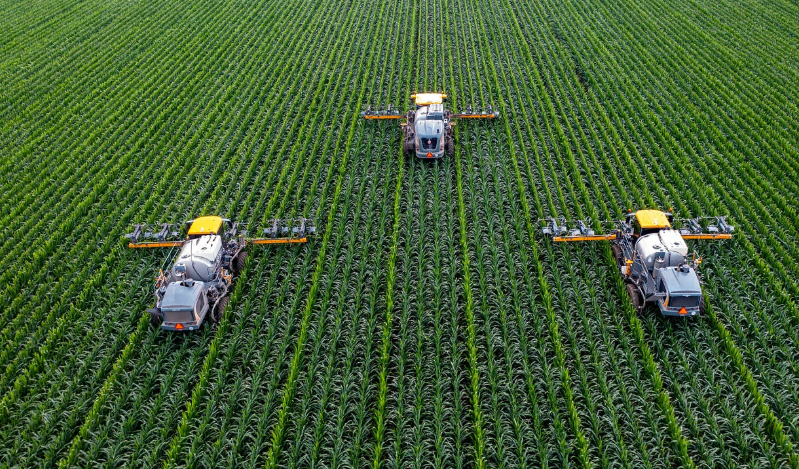
Agriculture is one of humanity’s oldest and most essential practices, forming the backbone of civilizations for over 10,000 years. From the fertile river valleys of ancient Mesopotamia to the high-tech vertical farms of modern cities, the methods humans use to grow food and raise animals have evolved dramatically. Today, agriculture accounts for roughly 4% of global GDP and employs nearly 1 billion people worldwide, making it the single largest source of employment on Earth.
The diversity of agricultural systems reflects the vast differences in climate, culture, soil, and economic conditions across the globe. No single method suits every landscape or community — what thrives in the flooded paddies of Southeast Asia differs entirely from what sustains the arid farms of sub-Saharan Africa. Understanding the different types of agriculture helps illuminate how food systems work, where they succeed, and how they can be made more sustainable for future generations.
Subsistence Agriculture
Subsistence agriculture is the most basic form of farming, in which families or small communities grow just enough food to feed themselves, with little or no surplus for sale or trade. It is practiced by an estimated 500 million smallholder farming households globally, particularly across sub-Saharan Africa, South Asia, and parts of Latin America.
This system relies heavily on manual labor and simple tools, with farmers working small plots of land using traditional knowledge passed down through generations. While it provides food security at the household level, subsistence farming leaves communities vulnerable to droughts, floods, and crop failures, with no financial buffer to absorb losses.
Commercial Agriculture
Commercial agriculture is large-scale farming specifically aimed at producing crops and livestock for sale in markets, both domestic and international. It is driven by profit, efficiency, and market demand, and accounts for the vast majority of food sold in supermarkets and exported around the world.
This system makes extensive use of mechanization, chemical fertilizers, pesticides, and advanced irrigation techniques to maximize yields per acre. While highly productive — commercial farms in the United States, for example, produce enough food to feed the entire country and still export over $196 billion worth of agricultural goods annually — it has raised concerns about soil degradation, water use, and biodiversity loss.
Shifting Cultivation
Shifting cultivation, also known as slash-and-burn farming, involves clearing a patch of forest or land, farming it for a few seasons, and then moving on to a new area once soil fertility declines. It is one of the oldest agricultural systems in the world and is still practiced by approximately 300 to 500 million people in tropical regions of Africa, Asia, and South America.
The cleared land is typically left to regenerate for several years while farmers work other plots, creating a rotation system that allows soils to recover naturally. Though effective in low-population environments, increasing population pressure has shortened fallow periods, reducing effectiveness and contributing to deforestation in some regions.
Plantation Agriculture
Plantation agriculture involves the large-scale cultivation of a single cash crop — such as tea, coffee, rubber, sugarcane, or cotton — on a vast estate, typically in tropical or subtropical regions. Historically tied to colonial economies, plantations now produce a significant share of the world’s most traded agricultural commodities.
These farms are characterized by heavy capital investment, organized labor forces, and production geared almost entirely toward export markets. Brazil’s coffee plantations, for instance, supply around 37% of the world’s coffee, illustrating the enormous scale and global reach that plantation agriculture can achieve.
Mixed Farming
Mixed farming is an agricultural system in which crops and livestock are raised together on the same farm, creating a mutually beneficial cycle. Animal waste provides natural fertilizer for crops, while crop residues and byproducts serve as feed for animals, reducing input costs and improving soil health.
This approach offers farmers greater economic stability, as income is diversified across multiple products rather than depending on a single harvest. Mixed farming is widely practiced across Europe, parts of Asia, and Africa, and is increasingly recognized as a more resilient and environmentally sustainable alternative to monoculture systems.
Intensive Agriculture
Intensive agriculture is a system designed to achieve the highest possible output from a given area of land through heavy investment in labor, machinery, fertilizers, and irrigation. It is the dominant model in industrialized nations and is largely responsible for the dramatic increases in food production seen over the last century.
Modern intensive farming can yield extraordinarily high outputs — irrigated wheat farms, for example, can produce up to 8 metric tons per hectare, compared to under 1 ton in traditional rain-fed systems. However, its reliance on chemical inputs and deep tillage has been linked to soil erosion, water pollution, and a significant decline in farmland biodiversity.
Extensive Agriculture
Extensive agriculture involves farming large areas of land with relatively low inputs of labor, capital, and technology per unit of land, accepting lower yields per hectare in exchange for lower costs. It is common in regions with abundant land but sparse populations, such as the Great Plains of North America, the Australian outback, and the Pampas of Argentina.
Cattle ranching across the American West is a classic example, where vast herds graze over millions of acres with minimal human intervention. Though less productive per acre than intensive systems, extensive agriculture typically has a lower environmental footprint per farm and is well-suited to marginal lands that cannot support intensive cropping.
Organic Agriculture
Organic agriculture is a farming approach that avoids synthetic chemicals, artificial fertilizers, and genetically modified organisms, relying instead on natural processes, composting, crop rotation, and biological pest control. The global organic food market exceeded $130 billion in 2022 and continues to grow rapidly as consumer demand for healthier and more sustainable food rises.
Certified organic farms must meet strict standards set by national and international bodies, ensuring that produce is grown without prohibited substances throughout the entire supply chain. Research consistently shows that organic systems support significantly higher levels of biodiversity — studies have found up to 30% more species on organic farms — while also improving long-term soil structure and water retention.
Agroforestry
Agroforestry is an integrated land-use system that deliberately combines trees and shrubs with crops or livestock on the same plot of land. By blending agriculture with forestry, this approach mimics natural ecosystems and offers a wide range of benefits including improved soil fertility, carbon sequestration, and enhanced water regulation.
It is practiced on an estimated 1 billion hectares worldwide and is especially prevalent in Central America, West Africa, and Southeast Asia. Systems like shade-grown coffee — where coffee plants are cultivated beneath a canopy of forest trees — not only preserve bird habitat and reduce erosion but often produce beans of superior quality compared to sun-grown monocultures.
Aquaculture
Aquaculture, commonly known as fish or seafood farming, involves the controlled cultivation of fish, shellfish, seaweed, and other aquatic organisms in freshwater or marine environments. It is the fastest-growing food production sector in the world, now supplying more than 50% of all seafood consumed globally.
From salmon farms in Norwegian fjords to shrimp ponds in Vietnam and oyster beds along the coasts of France, aquaculture takes many forms adapted to local conditions and species. As wild fish stocks continue to decline due to overfishing, aquaculture is increasingly viewed as a critical tool for meeting global protein demand — though its environmental sustainability depends heavily on how operations are managed.
Vertical Farming
Vertical farming is a modern agricultural innovation in which crops are grown in stacked layers inside controlled indoor environments, using artificial lighting, hydroponics or aeroponics, and precise climate management. This technology allows food to be produced in urban centers, drastically reducing transportation distances and the amount of water and land required.
Vertical farms use up to 95% less water than conventional outdoor agriculture and can produce crops year-round regardless of weather conditions. The global vertical farming market was valued at approximately $5.5 billion in 2023 and is projected to grow significantly as urbanization increases and climate change puts pressure on traditional farming systems.
Pastoral Farming
Pastoral farming focuses primarily or exclusively on raising livestock — including cattle, sheep, goats, and camels — rather than growing crops. It is practiced across a wide range of climates and landscapes, from the temperate grasslands of New Zealand, which is home to nearly 10 sheep for every person, to the semi-arid savannahs of East Africa.
Nomadic pastoralism, a subtype practiced widely across the Sahel, the Arabian Peninsula, and Central Asia, involves moving herds seasonally to follow rainfall and fresh pasture. Pastoral systems play a vital role in food security for millions of people in marginal environments where crops cannot reliably be grown, converting grass and scrubland into meat and dairy products that sustain entire communities.