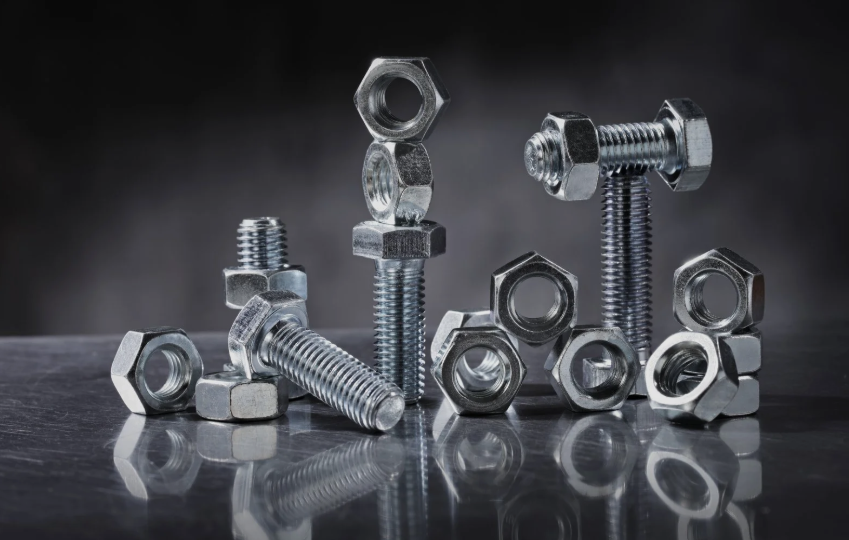
Nuts and bolts are fundamental fasteners used to mechanically join two or more components together. A bolt is a threaded fastener with an external thread, usually designed to pass through aligned holes in the workpieces, while a nut is an internally threaded component that secures the bolt in place. Together, they form a strong, removable connection that is widely used in construction, machinery, automotive, furniture, and many other industries.
Bolts come in a variety of shapes, sizes, and head types, each designed for specific applications. Common bolt types include hex bolts, carriage bolts, lag bolts, and machine bolts. They can be made from steel, stainless steel, brass, or other alloys depending on the strength and corrosion resistance required. The choice of bolt type and material depends on factors like load, environment, and the type of material being joined.
Nuts complement bolts by providing the clamping force needed to hold components securely together. Standard nuts, lock nuts, flange nuts, wing nuts, and cap nuts are examples that cater to different requirements, such as resisting loosening, distributing load, or enabling easy hand tightening. Proper selection of nuts ensures the joint remains safe, stable, and durable under various operational conditions.
Nuts and bolts work together to provide versatile, adjustable, and strong mechanical connections. Unlike welding or adhesives, they allow disassembly and maintenance, which is important in machinery, vehicles, and equipment. Correct installation, including proper torque application, is crucial to prevent loosening, stripping, or failure under load, especially in high-stress or vibration-prone environments.
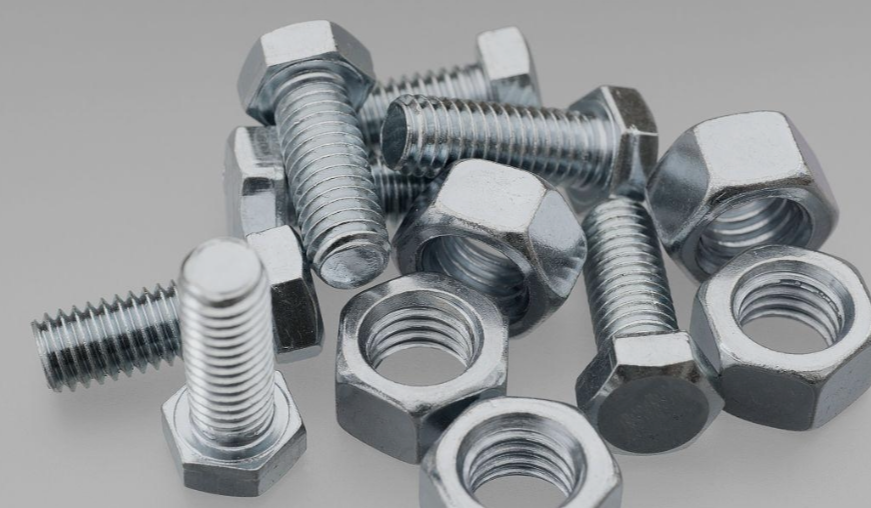
Types of Nuts and Bolts
Hex Bolts
Hex bolts have a hexagonal head and are one of the most commonly used fasteners. They are designed to be tightened with a wrench or socket and are used in construction, machinery, and automotive applications. Hex bolts are ideal for joining wood, metal, and other structural components securely.
Carriage Bolts
Carriage bolts feature a rounded head with a square neck beneath it to prevent rotation when tightened. They are commonly used in wood-to-wood or wood-to-metal connections, such as in decking, fencing, and furniture assembly.
Lag Bolts
Lag bolts, also called lag screws, have coarse threads and a pointed end, allowing them to be driven directly into wood. They are widely used for heavy-duty wooden structures, including timber framing, beams, and large wooden furniture.
Eye Bolts
Eye bolts have a loop or eye at one end instead of a head. They are used to attach ropes, chains, or cables for lifting or securing loads. Eye bolts are commonly applied in rigging, marine, and industrial lifting operations.
U-Bolts
U-bolts are shaped like the letter “U” with threaded ends, making them ideal for clamping pipes, tubing, or round objects to a surface. They are widely used in plumbing, automotive suspension systems, and structural applications.
Anchor Bolts
Anchor bolts are used to attach structural components to concrete or masonry. They are commonly used in construction to secure columns, beams, and heavy machinery to concrete foundations.
Flange Bolts
Flange bolts have a built-in washer-like flange beneath the head to distribute load and prevent damage to surfaces. They are widely used in automotive assemblies, machinery, and pipe flanges to provide strong, stable connections.
Shoulder Bolts
Shoulder bolts, also called stripper bolts, have an unthreaded cylindrical section between the head and threaded portion. They are used in machinery as a pivot, shaft, or guide pin where precise alignment and movement are required.
Socket Head Cap Screws
Socket head cap screws have a cylindrical head with an internal hex socket for tightening with an Allen key or hex wrench. They are used in machinery, automotive, and industrial equipment where a compact head and precise fastening are needed.
Wing Nuts
Wing nuts have two large “wings” for hand-tightening without tools. They are used in applications that require frequent assembly and disassembly, such as clamps, jigs, and temporary fixtures.
T-Bolts
T-bolts have a T-shaped head that fits into a slot or channel, commonly used in machine tables, tracks, or fixtures. They allow adjustable positioning and secure fastening in modular setups.
Flange Nuts
Flange nuts feature a wide flange under the hexagonal head that acts like a built-in washer to distribute pressure evenly. They are used in automotive, machinery, and structural applications to reduce surface damage and increase fastening strength.
Lock Nuts
Lock nuts are designed to resist loosening under vibration or torque. They often feature nylon inserts, distorted threads, or metal locking mechanisms. Lock nuts are widely used in automotive assemblies, machinery, and equipment that experience continuous vibration or movement.
Cap Nuts
Cap nuts, also known as acorn nuts, have a domed end that covers the exposed threaded end of a bolt. They provide a finished appearance and protect threads from damage or corrosion. Cap nuts are commonly used in furniture, automotive applications, and decorative assemblies.
Square Nuts
Square nuts have four sides instead of the usual hex shape. Their large surface area allows for better grip and easier tightening with a wrench. Square nuts are often used in furniture, machinery, and heavy structural applications.
Coupling Nuts
Coupling nuts are long, cylindrical nuts used to connect two threaded rods or bolts together. They are commonly used in construction, scaffolding, and structural assemblies to extend threaded rods or join parts over a distance.
Jam Nuts
Jam nuts are thin nuts used as a locking mechanism against a standard nut to prevent loosening. They are commonly used in mechanical assemblies, automotive applications, and instrumentation where vibration could cause fasteners to back off.
Acorn Nuts
Acorn nuts are similar to cap nuts with a closed, domed end that covers the exposed threads of a bolt. They provide both aesthetic appeal and protection against corrosion or injury from exposed threads. They are widely used in furniture, automotive trim, and decorative hardware.
Slotted Nuts
Slotted nuts have slots cut into the top surface to accommodate a cotter pin or wire, preventing rotation after tightening. They are commonly used in automotive, machinery, and heavy equipment applications where a secure, vibration-resistant fastening is required.
Castle Nuts
Castle nuts are a type of slotted nut with a castellated top that works with a cotter pin to lock the nut in place. They are widely used in automotive axles, steering components, and aerospace assemblies where secure fastening under vibration is critical.
Wing Bolts
Wing bolts feature wings similar to wing nuts, allowing hand tightening without tools. They are commonly used in adjustable fixtures, clamps, and temporary assemblies where frequent removal or adjustment is required.
Eye Nuts
Eye nuts have a loop or eye at the top, similar to eye bolts, and are used to attach lifting hooks, ropes, or chains. They are commonly used in rigging, marine applications, and lifting or securing heavy loads.
Tension Control Bolts
Tension control bolts, also called TC bolts, are used for high-strength structural applications. They provide precise tensioning using a special nut and require a power tool for installation. They are widely used in steel structures, bridges, and heavy industrial assemblies.
Square Head Bolts
Square head bolts have a four-sided head instead of the usual hex shape, providing more surface contact and easier gripping with a wrench. They are commonly used in construction, wooden structures, and machinery assemblies where strong fastening is required.