Overview
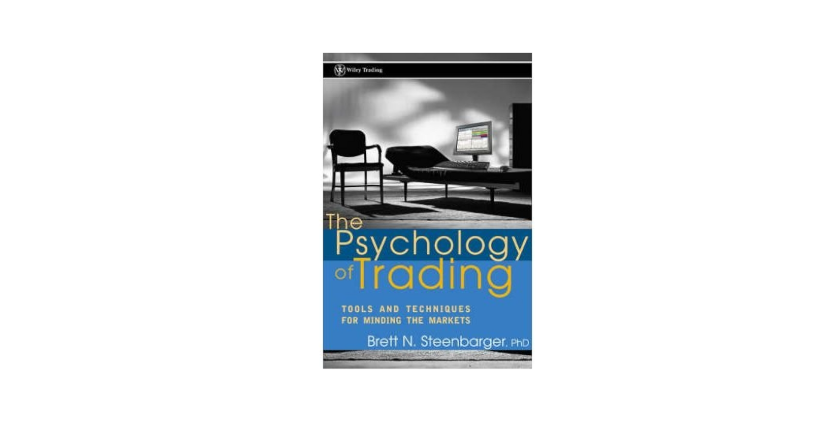
Author: Brett N. Steenbarger, Ph.D. Published: 2003 Genre: Trading Psychology / Behavioral Finance Pages: 368 Publisher: Wiley Trading
The Psychology of Trading: Tools and Techniques for Minding the Markets stands as one of the most clinically rigorous, intellectually sophisticated, and practically grounded books ever written at the intersection of psychology and financial markets. Unlike Mark Douglas, who approached trading psychology as a self-taught practitioner, Brett Steenbarger brings something rare and genuinely invaluable to the field — the dual perspective of a licensed psychotherapist and active trader.
Steenbarger is not theorizing from the outside. He is a clinical psychologist who has spent decades working with traders at hedge funds and proprietary trading firms, and who has traded his own account throughout that time. This combination gives the book a depth, precision, and clinical authority that separates it from virtually everything else in its genre.
It is not merely a book about thinking positively or controlling emotions. It is a systematic psychological manual for identifying, diagnosing, and treating the specific mental and behavioral patterns that derail trading performance — written by someone who has spent a professional lifetime doing exactly that work with real traders.
Context & Background
Brett Steenbarger spent his academic and clinical career as a psychiatry professor at SUNY Upstate Medical University while simultaneously coaching traders at major financial institutions. His unique access to professional traders across all asset classes and experience levels gave him an unparalleled empirical foundation for understanding what psychological factors actually differentiate consistently profitable traders from chronic underperformers.
What he found — and what forms the intellectual backbone of this book — was that trading problems are not random. They are patterned, classifiable, and treatable using the same evidence-based psychological frameworks applied to other high-performance domains. The book is his attempt to make those frameworks accessible to self-directed traders who do not have a performance psychologist on speed dial.
Core Premise
Steenbarger’s central argument departs meaningfully from the Douglas school of trading psychology. While Douglas focuses primarily on beliefs and the acceptance of risk, Steenbarger operates from a more clinically grounded premise:
Trading performance problems are symptoms of deeper psychological patterns — and like all symptoms, they cannot be permanently resolved by willpower alone. They require genuine psychological insight and structured behavioral change.
He argues that most trading psychology books offer surface-level advice — “control your emotions,” “follow your rules,” “think probabilistically” — without ever addressing the underlying psychological structures that generate the problematic emotions and rule-breaking behaviors in the first place. His book attempts to go deeper, offering not just a diagnosis of what goes wrong, but a genuine clinical framework for why it goes wrong and how to fix it.
Structure of the Book
The book is organized into four major sections that build methodically from theory to application:
- Part One: The Psychological Roots of Trading Problems
- Part Two: Psychological Patterns and Their Impact on Trading
- Part Three: Tools and Techniques for Psychological Change
- Part Four: The Spirituality of Trading — Finding Your Edge Within
This structure is deliberate and clinically sound. Steenbarger first establishes the theoretical framework, then maps specific psychological patterns onto specific trading problems, then provides concrete therapeutic tools, and finally addresses the deepest dimension of sustained performance — meaning, purpose, and identity.
Key Themes & Concepts
1. Trading as a Mirror of the Self
The book opens with one of its most powerful and enduring ideas: the market does not create your psychological problems — it reveals them. The intense, high-stakes, real-time pressure of trading acts as a psychological amplifier, magnifying existing emotional patterns, behavioral tendencies, and unresolved conflicts that might remain hidden in lower-stakes environments.
This means that a trader who becomes impulsive under stress is not developing impulsivity in the market — they are expressing an impulsivity that already exists in their psychology and that trading conditions are uniquely suited to expose. A trader who cannot accept losses is not creating a fear of failure in the market — they are bringing an existing relationship with failure and self-worth into an environment where that relationship has immediate financial consequences.
The practical implication is profound: you cannot fix your trading without fixing yourself. And fixing yourself requires understanding yourself — which is what the book is primarily about.
2. The Clinical Taxonomy of Trading Problems
One of the most distinctive and valuable contributions of the book is Steenbarger’s systematic classification of trading problems using clinical psychological frameworks. Rather than treating all trading dysfunction as a single undifferentiated problem of “bad psychology,” he identifies specific categories:
State-Based Problems
These are problems rooted in emotional states — anxiety, frustration, overconfidence, boredom — that temporarily hijack rational decision-making. State-based problems are relatively common and relatively treatable. They include:
- Performance anxiety — freezing at the moment of entry
- Frustration trading — revenge trading after losses
- Overconfidence — oversizing after a winning streak
- Boredom trading — entering setups that don’t meet criteria simply to be in the market
Steenbarger distinguishes these from more deeply rooted problems because they are situationally triggered — the trader functions well in normal conditions but deteriorates under specific emotional pressures.
Pattern-Based Problems
These are problems rooted in stable psychological patterns — recurring ways of thinking, feeling, and behaving that consistently interfere with trading performance regardless of market conditions. They include:
- Perfectionism — inability to tolerate the ambiguity and imperfection inherent in trading
- Need for excitement — unconsciously seeking the stimulation of high-risk trades rather than sound trades
- Avoidance — refusing to enter valid setups due to deep-seated risk aversion
- Approval-seeking — making trading decisions based on what others think rather than what the market says
These pattern-based problems are harder to resolve because they are structural features of personality, not just situational emotional reactions. They require deeper psychological work.
Conflict-Based Problems
The deepest category. These are problems rooted in unresolved psychological conflicts — typically originating in early life experience — that play out destructively in the trading environment:
- Unconscious self-sabotage near profit targets
- Fear of success that prevents traders from pressing winning trades
- Money as a loaded symbol tied to family dynamics, self-worth, or survival
- Identity conflicts between self-image and the trader’s role
Steenbarger argues these require the most intensive psychological work — often including formal therapy — and cannot be resolved through discipline, positive thinking, or better systems alone.
3. The Role of Emotional Intelligence in Trading
Steenbarger draws heavily on the concept of emotional intelligence — the ability to recognize, understand, and manage one’s own emotional states — and argues that it is a more reliable predictor of trading success than analytical intelligence or technical knowledge.
He makes a crucial distinction between:
- Emotional suppression — trying to eliminate or ignore emotions (the approach most trading books implicitly recommend)
- Emotional processing — understanding and integrating emotions as useful information signals
His clinical experience taught him that traders who suppress emotions don’t eliminate them — they drive them underground, where they continue to influence behavior invisibly. Traders who develop genuine emotional intelligence, by contrast, learn to use their emotional responses as market data — noticing, for example, that unusual anxiety before a trade might signal that the position size is too large, or that the setup doesn’t fully meet their criteria.
4. Solution-Focused Brief Therapy Applied to Trading
One of the book’s most original and practically useful contributions is Steenbarger’s application of Solution-Focused Brief Therapy (SFBT) to trading performance problems. SFBT is a clinically validated psychotherapeutic approach that focuses not on analyzing problems in depth but on identifying and amplifying existing strengths and exceptions.
In the trading context, this translates to a set of powerful diagnostic questions:
- When are you trading at your best? What conditions, emotional states, and thought patterns are present during your best trading?
- What is different about those periods? Can those differences be replicated deliberately?
- What small steps would represent progress? Rather than seeking complete psychological transformation, what incremental changes would move performance in the right direction?
This framework is refreshingly practical. Rather than spending months in self-analysis trying to understand all the ways you are psychologically broken, SFBT directs your attention toward what is already working and how to do more of it — a subtle but powerful reframe.
5. Cognitive-Behavioral Techniques for Traders
Steenbarger introduces several Cognitive-Behavioral Therapy (CBT) techniques adapted specifically for trading performance:
Cognitive Restructuring
The process of identifying and challenging automatic negative thoughts that arise during trading. For example:
- “I always give back my profits” → Is this literally true? What evidence contradicts it? What is a more accurate and useful belief?
- “The market is out to get me” → How does this belief affect my decision-making? What belief would serve me better?
He provides structured journaling exercises for developing this skill, emphasizing the importance of written self-examination over purely mental reflection.
Exposure Therapy for Trading Fears
For traders who experience performance anxiety — freezing at entry, inability to pull the trigger — Steenbarger adapts graduated exposure therapy: systematically approaching feared situations in increasingly intense steps until the anxiety response is extinguished. Applied to trading, this might mean:
- Paper trading the feared setup without financial stakes
- Trading the setup with minimal position size
- Gradually increasing size as comfort builds
Behavioral Activation
For traders struggling with avoidance — passing on valid setups — Steenbarger recommends structured behavioral activation: committing to specific actions regardless of emotional state, building evidence that feared outcomes (loss, being wrong) are survivable and manageable.
6. The Trading Journal as a Therapeutic Tool
Steenbarger is one of the most persuasive advocates in trading literature for the trading journal — but his vision of what a journal should contain goes far beyond the conventional trade log.
He argues that a truly therapeutic trading journal should capture:
- Emotional state before, during, and after each trade — not just the technical rationale
- The quality of decision-making process, not just the outcome
- Patterns across time — recurring emotional triggers, recurring mistakes, recurring conditions for best performance
- Narrative self-reflection — writing about trading experience in story form to access insights unavailable through purely analytical review
He introduces the concept of process journaling — focusing on the quality of the trading process rather than the financial result. This is clinically sophisticated advice: outcomes in trading are partly random; process quality is not. Evaluating yourself on process rather than outcome is both more psychologically healthy and more useful for genuine skill development.
7. The Peak Performance Framework
Drawing on the extensive literature on peak performance psychology in sports, music, and other high-performance domains, Steenbarger applies established performance enhancement frameworks to trading. Key concepts include:
- Flow states — the psychological conditions under which peak performance occurs spontaneously, and how to create those conditions deliberately
- Deliberate practice — the structured, feedback-rich practice methodology that separates experts from experienced non-experts
- Mental rehearsal — using visualization techniques before the trading session to prime optimal psychological states
- Pre-performance routines — establishing consistent pre-market rituals that reliably produce the desired mental state
His treatment of deliberate practice is particularly valuable. He argues that most traders do not improve with experience because they are not practicing deliberately — they are simply repeating the same behaviors without structured feedback and intentional skill development. True expertise requires designing your practice to target specific weaknesses with immediate feedback — a principle he shows how to apply to trading skill development.
8. The Spirituality of Trading
The book’s final section ventures into territory that most trading books avoid entirely — the existential and spiritual dimensions of the trading experience. Steenbarger argues that sustained peak performance in any demanding field ultimately requires a deep sense of:
- Meaning — why does this work matter to you beyond financial reward?
- Values alignment — is your trading consistent with your deeper values and sense of self?
- Identity — who are you as a trader, and is that identity genuinely yours or a performance you’re putting on?
- Acceptance — the ability to fully accept the uncertainty and impermanence that are fundamental to the trading experience
This section will not resonate with all readers — some will find it too abstract or philosophical. But for traders who have experienced the existential dimension of serious trading — the confrontation with one’s own limitations, the experience of genuine loss, the questions about identity that sustained adversity provokes — this section offers genuinely rare and valuable perspective.
9. Working with Professional Traders — Clinical Insights
Throughout the book, Steenbarger draws on his extensive clinical experience working with professional traders at institutional levels, sharing anonymized case studies that illustrate his frameworks in action. These cases are among the most valuable parts of the book because they demonstrate:
- How the same underlying psychological pattern can manifest differently across different trading styles
- How brief, focused psychological interventions can produce significant performance improvements
- How professional traders — despite their experience and resources — struggle with the same fundamental psychological challenges as retail traders
- How distinguishing between skill deficits and psychological interference is critical for choosing the right intervention
These cases give the book a clinical credibility that no amount of abstract theorizing can replicate.
Comparison to Other Major Trading Psychology Books
| Dimension | Steenbarger | Douglas (Zone) | Douglas (Disciplined) |
|---|---|---|---|
| Clinical foundation | Deep — licensed psychotherapist | None — practitioner insight | None — practitioner insight |
| Practical tools | Extensive — CBT, SFBT, journaling | Moderate — 20-trade exercise | Limited |
| Psychological depth | Clinical taxonomy of problems | Belief systems and risk | Childhood origins of dysfunction |
| Accessibility | Moderate — requires engagement | High — accessible prose | Lower — dense philosophy |
| Best for | Identifying and treating specific problems | Building probabilistic mindset | Deep self-examination |
| Unique contribution | Clinical framework + performance tools | Probabilistic thinking | Psychological origins |
Strengths of the Book
- Clinical authority: The only major trading psychology book written by a licensed psychotherapist with direct trader coaching experience
- Taxonomic precision: The classification of trading problems into state-based, pattern-based, and conflict-based categories is an enormously useful diagnostic framework
- Evidence-based tools: CBT, SFBT, exposure therapy, and deliberate practice are all clinically validated approaches adapted thoughtfully for trading
- Case study richness: Real clinical cases give the concepts practical grounding and narrative accessibility
- Integrative scope: Combines psychology, performance science, philosophy, and clinical practice into a coherent whole
- Intellectually honest: Steenbarger acknowledges the limits of self-help and recommends professional therapeutic support where appropriate
Weaknesses & Criticisms
- Density: The clinical terminology and theoretical framework, while precise, can be demanding for readers without psychology backgrounds
- Less accessible than Douglas: Readers seeking simple, actionable principles may find the clinical depth overwhelming
- Technical trading content is minimal: Steenbarger deliberately avoids specific trading strategies, which may frustrate readers who want a more complete trading education
- Some sections feel academic: Particularly in Part One, the theoretical scaffolding can feel removed from the trading floor
- The spirituality section: While valuable to some, the final section’s philosophical and existential content will feel abstract or irrelevant to more pragmatically oriented readers
Who Should Read This Book?
| Reader | Verdict |
|---|---|
| Traders who know what to do but consistently fail to do it | Essential — this book explains why |
| Traders experiencing recurring self-sabotage patterns | Absolutely essential |
| Traders who have tried discipline-based approaches without success | Highly recommended — a different paradigm |
| Performance-oriented traders seeking systematic improvement tools | Highly recommended |
| Traders interested in the scientific basis of performance psychology | Excellent resource |
| Complete beginners with no trading experience | Read after building market foundations |
| Traders seeking quick fixes or simple rules | Wrong book — this requires genuine engagement |
Standout Quotes
“The market is the ultimate psychological test. It finds your weaknesses with ruthless efficiency and exploits them without mercy.”
“We do not trade the markets. We trade our beliefs about the markets.”
“The best traders are not those who eliminate emotion from their trading. They are those who have learned to use emotion as information.”
“You cannot separate who you are from how you trade. The market is a mirror, and what you see in it is yourself.”
“Performance problems are not character flaws. They are habits — and habits can be changed with the right understanding and the right tools.”
Steenbarger’s Broader Legacy
It is worth noting that The Psychology of Trading was only the beginning of Steenbarger’s contribution to trading literature. He went on to write several additional books that extend and deepen the framework introduced here:
| Book | Focus |
|---|---|
| Enhancing Trader Performance (2006) | Deliberate practice and skill development |
| The Daily Trading Coach (2009) | 101 structured self-coaching lessons |
| Trading Psychology 2.0 (2015) | Updated framework integrating positive psychology |
| Radical Renewal (2019) | Spirituality and purpose in trading |
Each subsequent book builds meaningfully on the foundation laid in The Psychology of Trading. For serious students of trading psychology, the complete Steenbarger library represents the most comprehensive and clinically grounded body of work available in the field.
Final Verdict
Rating: 9.5 / 10
The Psychology of Trading is, in this reviewer’s assessment, the most clinically complete and intellectually rigorous book ever written on trading psychology. It occupies a unique position in the trading literature that no other book has successfully claimed: the intersection of professional psychotherapy, evidence-based performance science, and direct trading experience.
Where Douglas gives you a philosophy of mind for trading, Steenbarger gives you a clinical methodology. Where Douglas tells you what to believe, Steenbarger shows you how to identify why you believe what you believe, how those beliefs are creating your performance problems, and what specific, structured interventions are most likely to change them.
The half-point deduction from a perfect score reflects only the book’s occasional density and the fact that some of its clinical frameworks require genuine psychological sophistication to apply independently. For many traders, the concepts will point clearly toward the need for professional psychological support — which Steenbarger, to his credit, acknowledges directly rather than overselling the self-help potential of the book.
For the serious, self-reflective trader who is willing to engage with the material at full depth — this book has the power to change not just your trading, but your understanding of yourself. And in the long run, those two things may be inseparable.
For the complete trading psychology education, pair this book with Douglas’s Trading in the Zone for the philosophical mindset framework, and Steenbarger’s own Enhancing Trader Performance for the deliberate practice methodology. Together, these three books address every dimension of the psychological challenge that separates good traders from great ones.