
A gearbox is a mechanical system that transmits power from an engine or motor to the driven components of a machine by altering speed, torque, and direction of rotation. In vehicles, the gearbox sits between the engine and the wheels, ensuring that the engine operates within an efficient speed range while providing the appropriate amount of force needed for acceleration, cruising, or climbing hills.
In general operation, a gearbox works by using intermeshing gears of different sizes. Smaller gears rotate faster but deliver less torque, while larger gears rotate more slowly but provide greater torque. By selecting different gear ratios, the gearbox allows a machine or vehicle to adapt to varying load and speed requirements without overworking the engine.
There are several types of gearboxes, including manual, automatic, continuously variable (CVT), dual-clutch, and automated manual systems. Each type uses different mechanisms—such as clutches, torque converters, belts, or electronic controls—but all serve the same fundamental purpose: to manage power efficiently and deliver smooth, controlled motion.
Beyond vehicles, gearboxes are widely used in industrial machinery, wind turbines, elevators, and marine equipment. In these applications, gearboxes help match motor output to operational needs, reduce mechanical stress, improve energy efficiency, and protect components from damage caused by excessive speed or torque.
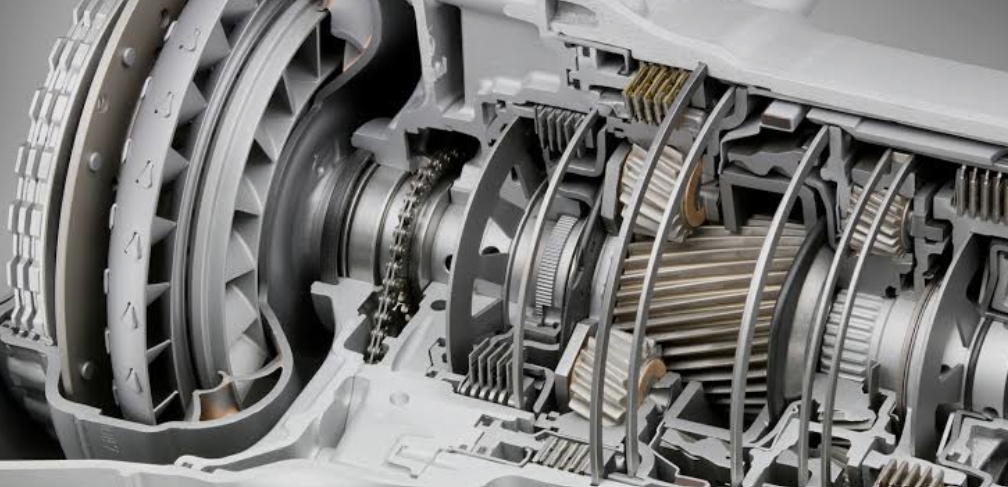
Automatic Gearboxes
Traditional Automatic Transmission (Torque Converter Automatic)
This is the most common and long-established type of automatic gearbox. It uses a torque converter instead of a clutch to transfer power from the engine to the transmission, along with planetary gear sets to provide different gear ratios. Gear changes are handled smoothly by hydraulic pressure and electronic control units.
Key features:
- Very smooth gear shifts
- Excellent for city driving and comfort
- Proven reliability
Commonly found in: Toyota, Lexus, Ford, GM vehicles, luxury sedans and SUVs.
Continuously Variable Transmission (CVT)
A CVT does not have fixed gears. Instead, it uses a belt or chain and variable-diameter pulleys to provide an infinite number of gear ratios. This allows the engine to stay at its most efficient speed for a wide range of driving conditions.
Key features:
- Seamless acceleration (no shift shock)
- Improved fuel efficiency
- Simpler mechanical design
Commonly found in: Nissan, Subaru, Honda, Toyota hybrids.
Dual-Clutch Transmission (DCT)
A DCT uses two separate clutches—one for odd gears and one for even gears. While one gear is engaged, the next gear is pre-selected, allowing extremely fast gear changes. This design blends the efficiency of a manual gearbox with the convenience of an automatic.
Key features:
- Very fast gear shifts
- Sporty driving feel
- High efficiency
Commonly found in: Volkswagen (DSG), Audi, BMW, Porsche, performance cars.
Automated Manual Transmission (AMT)
An AMT is essentially a manual gearbox with automated clutch and gear actuation. The driver does not use a clutch pedal, but the internal mechanism is similar to a manual transmission.
Key features:
- Lower cost than other automatics
- Better fuel economy than torque converter automatics
- Gear shifts can feel slower or jerky
Commonly found in: Budget cars, small hatchbacks, entry-level vehicles.
Tiptronic / Manumatic Transmission
This is a torque-converter automatic that allows the driver to manually select gears using the gear lever or paddle shifters. While it still operates as a full automatic, it offers more driver involvement when desired.
Key features:
- Manual control option
- Smooth automatic operation
- Popular in premium vehicles
Commonly found in: BMW, Mercedes-Benz, Porsche, Audi.
Electric Vehicle (Single-Speed Automatic)
Most electric vehicles use a single-speed reduction gearbox rather than a multi-gear transmission. Because electric motors produce instant torque across a wide speed range, multiple gears are unnecessary.
Key features:
- Extremely smooth power delivery
- Minimal maintenance
- Simple and efficient
Commonly found in: Tesla, Nissan Leaf, most modern EVs.
Hybrid Automatic Transmission
Hybrid vehicles often use specialized automatic gearboxes such as e-CVT systems, which combine electric motors and planetary gear sets to manage power between the engine and electric motor efficiently.
Key features:
- Optimized fuel economy
- Seamless transition between electric and engine power
- Complex but highly efficient
Commonly found in: Toyota Prius, Lexus hybrid models.
Planetary Gear Automatic Transmission
This type relies heavily on planetary (epicyclic) gear sets to achieve different gear ratios. By locking or releasing different components (sun gear, planet carrier, ring gear), multiple speeds are produced efficiently within a compact space.
Key features:
- Compact and strong design
- Smooth shifting
- Handles high torque well
Commonly found in: Most conventional automatic transmissions in passenger cars and heavy vehicles.
Hydramatic Transmission
Hydramatic was one of the earliest fully automatic gearbox designs, originally developed by General Motors. It combines fluid coupling and planetary gears to deliver automatic shifting without a clutch pedal.
Key features:
- Historically important design
- Durable and reliable
- Foundation of modern automatics
Commonly found in: Classic GM vehicles and early military vehicles.
Powershift Transmission
Powershift is a branded dual-clutch transmission developed by Ford. It uses electronically controlled clutches to deliver faster shifts and improved fuel economy compared to traditional automatics.
Key features:
- Quick gear changes
- Improved efficiency
- Automatic and manual modes
Commonly found in: Ford Focus, Fiesta, and other Ford models.
Sequential Automatic Transmission
A sequential automatic allows gears to be changed only in order (up or down), rather than skipping gears. Though often automated, it is commonly used in motorsport and high-performance applications.
Key features:
- Precise gear control
- Fast shifts
- Strong mechanical design
Commonly found in: Racing cars, motorcycles, and some high-performance sports cars.
Semi-Automatic Transmission
A semi-automatic transmission eliminates the clutch pedal but still allows the driver to manually choose gears. Clutch engagement and disengagement are handled automatically.
Key features:
- Manual gear control without a clutch pedal
- More driver involvement
- Reduced driver fatigue
Commonly found in: Sports cars, motorcycles, and some older luxury vehicles.
Electrohydraulic Automatic Transmission
This type uses electronic control units (ECUs) combined with hydraulic actuators to manage gear shifts. Sensors monitor speed, load, and throttle position to optimize shifting.
Key features:
- Intelligent gear selection
- Smooth performance
- Adaptive driving behavior
Commonly found in: Modern automatic and semi-automatic transmissions.
Truck Automatic Transmission
Designed for heavy-duty use, truck automatic gearboxes are built to handle high torque and heavy loads. They may use torque converters, automated manuals, or advanced electronic controls.
Key features:
- High durability
- Load-sensitive shifting
- Improved fuel efficiency for long hauls
Commonly found in: Commercial trucks, buses, and construction vehicles.
Motorcycle Automatic Transmission
Motorcycle automatic transmissions vary widely and may include CVTs, DCTs, or semi-automatic systems. These systems remove the need for manual clutch control while retaining performance.
Key features:
- Easy operation
- Lightweight design
- Smooth power delivery
Commonly found in: Scooters, touring motorcycles, and adventure bikes like Honda’s DCT-equipped models.