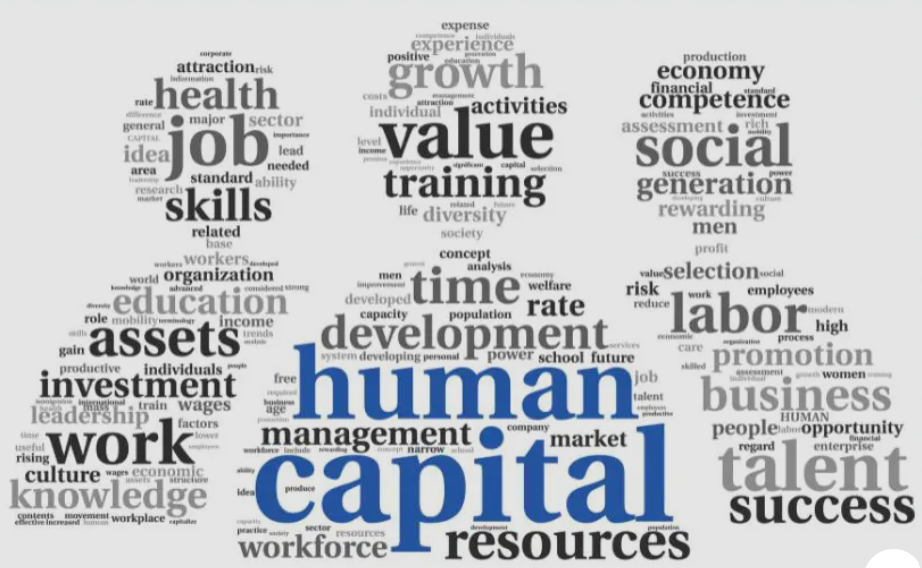
Human Capital Theory is an economic framework that emphasizes the value of investing in people’s skills, knowledge, and abilities to enhance productivity and economic outcomes. Developed most notably by economists like Theodore Schultz and Gary Becker in the 1960s, the theory suggests that education, training, and health can be viewed as forms of capital, similar to machinery or financial assets, because they generate returns over time. Essentially, individuals who invest in their human capital are expected to earn higher incomes and contribute more effectively to the economy.
At its core, the theory treats human capabilities as measurable and economically productive. Education is considered the primary avenue for accumulating human capital, while training and professional experience further refine skills. Employers, too, are encouraged to invest in employee development, as a more skilled workforce can improve efficiency, innovation, and competitiveness. This approach reframes human development not only as a personal benefit but also as an economic necessity.
One of the main strengths of Human Capital Theory is its clear link between investment and expected return. By quantifying the costs of education or training against potential increases in earnings, policymakers and individuals can make decisions grounded in economic logic. For example, pursuing a degree or vocational training can be seen as a strategic investment, with future wages serving as a form of “interest” on that investment. This cost-benefit perspective has influenced labor economics, education policy, and workforce planning.
However, Human Capital Theory has limitations and has faced criticism. It tends to simplify the complex relationship between skills and productivity, assuming a direct correlation between education and earnings. Real-world factors—such as labor market conditions, discrimination, access to resources, and social networks—also play a crucial role in determining economic outcomes. Furthermore, the theory often overlooks informal learning, creativity, and interpersonal skills, which can be difficult to quantify but are essential for many professions.
Despite these criticisms, Human Capital Theory remains influential in understanding economic growth and labor dynamics. Governments and organizations use it to justify investments in education, vocational programs, and employee development initiatives. It also provides a framework for evaluating the economic impact of health, nutrition, and lifelong learning, recognizing that human capabilities are not static and can be enhanced over time.

Criticism of Human Capital Theory
Overemphasis on Education
Human Capital Theory assumes that formal education directly translates into higher productivity and income. Critics argue this oversimplifies the relationship, as many skills acquired outside formal education—like social skills, creativity, and informal learning—also significantly affect productivity but are ignored by the theory.
Ignores Structural Inequalities
The theory largely treats individuals as equal participants in the labor market, overlooking systemic inequalities such as gender, race, or class discrimination. These factors can prevent highly educated individuals from achieving returns proportional to their human capital.
Assumes Rational Decision-Making
Human Capital Theory assumes that individuals make rational choices about investing in education or training to maximize future earnings. Critics point out that decisions are often influenced by imperfect information, social pressures, and cultural expectations, making the rationality assumption unrealistic.
Neglects External Economic Factors
The theory focuses on individual attributes while largely ignoring macroeconomic conditions like recessions, unemployment rates, and industry demand, which can drastically affect the returns to education regardless of an individual’s human capital.
Reductionist View of Skills
It reduces complex human abilities to quantifiable economic inputs, such as years of schooling or training costs. Critics argue this narrow view overlooks the multidimensional nature of human talent, including emotional intelligence, creativity, and adaptability.
Overlooks Social and Cultural Capital
Human Capital Theory emphasizes individual investment but ignores the role of social networks, cultural background, and community resources, which can have a significant influence on career success and income potential.
Ignores On-the-Job Learning
The theory assumes that the primary site of human capital development is formal education, neglecting the substantial learning and skill acquisition that occur through work experience, mentoring, and informal training.
Measurement Challenges
Quantifying human capital is inherently difficult. Critics argue that education, skills, and experience are often measured simplistically (like years of schooling), which may not accurately reflect an individual’s productivity or potential contributions to the economy.
Assumes Linear Returns
The theory assumes a linear relationship between investment in human capital and economic returns. In reality, returns can plateau or even decrease after a certain level of education or skill, making the relationship more complex than the theory suggests.
Neglects Motivation and Personal Factors
Human Capital Theory assumes that higher skills always translate to higher productivity, overlooking intrinsic motivation, health, work ethic, and personal circumstances that significantly affect performance and earnings.
Promotes Individual Responsibility Over Collective Responsibility
The theory tends to place the burden of economic success on the individual while ignoring the role of government policies, labor market structures, and corporate practices in shaping opportunities. This can lead to unfair judgment of those who do not succeed economically.
Potentially Justifies Inequality
Critics argue that the theory can be used to legitimize social and economic inequalities, implying that low earnings are solely the result of insufficient human capital rather than systemic barriers or discrimination.
Ignores Job Market Saturation
Human Capital Theory assumes that investing in education or skills will always yield higher returns. Critics point out that in oversaturated job markets, even highly skilled individuals may struggle to find employment, limiting the practical benefits of human capital investments.
Underestimates the Role of Technology
The theory does not adequately account for how technological changes can render skills obsolete. Rapid automation and AI developments can reduce the value of certain forms of human capital, meaning past investments may not guarantee future economic returns.
Assumes Universal Access to Education
Human Capital Theory presumes that everyone has equal access to education and training opportunities. In reality, socioeconomic barriers, geographic location, and political constraints often prevent many individuals from acquiring human capital, making the theory less universally applicable.
Overlooks Team and Organizational Effects
The theory treats productivity as an individual trait, ignoring that many outcomes depend on teamwork, organizational culture, and collaboration. Even highly skilled individuals may not achieve high productivity if the organizational environment is weak.
Simplifies Career Paths
Human Capital Theory assumes linear career progression where more education or training leads directly to higher earnings. In reality, careers are often nonlinear, influenced by luck, networking, personal choices, and unexpected events, which the theory fails to capture.
Potentially Encourages Credentialism
By focusing heavily on formal education as a measure of human capital, the theory can encourage “credentialism,” where individuals accumulate degrees or certificates for status rather than actual skills, which may not improve productivity or economic outcomes.