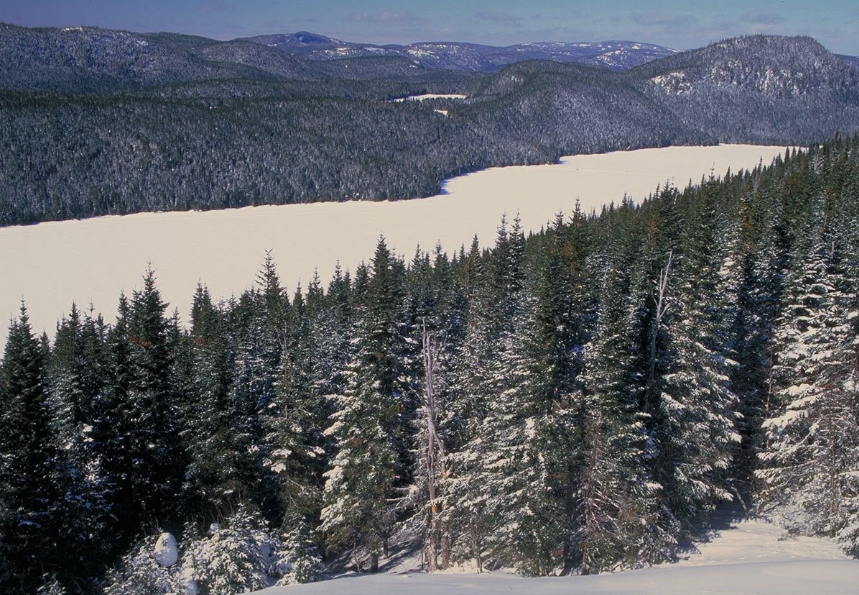
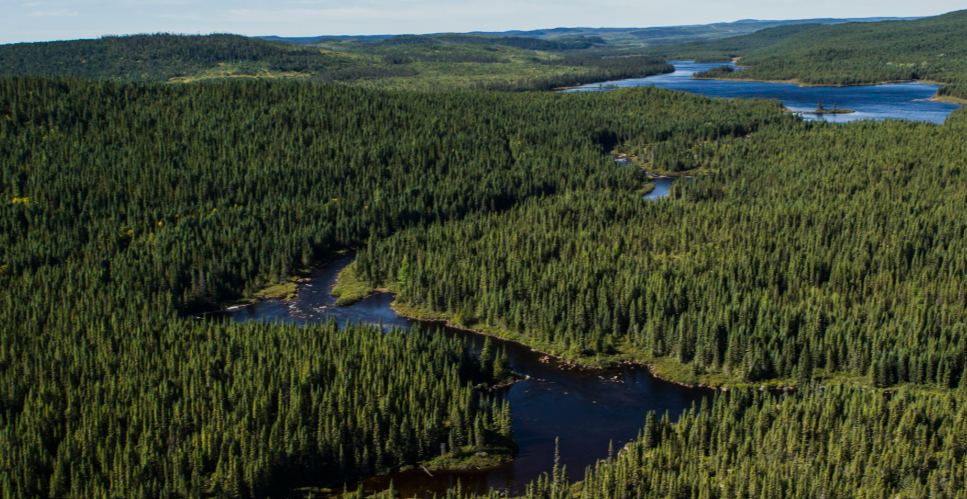
Boreal forests, also known as taiga, form one of the largest terrestrial biomes on Earth, stretching across vast regions of the Northern Hemisphere. They span northern North America, Europe, and Asia, creating a nearly continuous green belt below the Arctic tundra. This biome is defined by long, cold winters and short, mild summers, with precipitation falling mostly as snow. These harsh climatic conditions strongly shape the structure and life forms found in boreal forests.
The vegetation of boreal forests is dominated by hardy coniferous trees such as spruce, pine, fir, and larch. These trees have needle-like leaves that reduce water loss and allow them to withstand heavy snow loads. Their dark green color helps absorb sunlight efficiently during short growing seasons. Mosses, lichens, and low shrubs cover the forest floor, thriving in the acidic, nutrient-poor soils typical of this biome.
Boreal forests support a wide range of wildlife adapted to cold environments. Common animals include moose, caribou, wolves, lynx, bears, and numerous small mammals such as hares and voles. Many bird species migrate to boreal forests in summer to breed, taking advantage of abundant insects. Survival strategies such as thick fur, seasonal camouflage, hibernation, and migration are essential for life in this ecosystem.
Ecologically, boreal forests act as major carbon sinks, storing vast amounts of carbon in both vegetation and soil, especially in frozen layers known as permafrost. These forests also influence atmospheric circulation and freshwater systems, as they are the source of many major rivers. Disturbances like wildfires and insect outbreaks are natural and important processes that help renew the forest.
Animals That Live In Boreal Forests (Taiga)
Moose
The moose is the largest deer species in the world and a defining animal of the boreal forest. It has long legs, a bulky body, and broad antlers in males, which help it move through deep snow and dense vegetation. Moose are mainly browsers, feeding on shrubs, twigs, and aquatic plants. They are widely distributed across the boreal forests of Canada, Alaska, Scandinavia, and northern Russia, especially near wetlands, lakes, and slow-moving rivers.
Gray Wolf
The gray wolf is a highly social predator known for its pack structure and long-distance travel. Wolves hunt large prey such as moose and caribou, playing a vital role in maintaining healthy ecosystems. They communicate through howls, scent marking, and body language. Gray wolves inhabit boreal forests throughout Canada, Alaska, and parts of northern Europe and Siberia, preferring large, undisturbed territories.
Woodland Caribou
Woodland caribou are well adapted to cold climates, with thick fur and wide hooves that help them walk over snow and marshy ground. They feed primarily on lichens, mosses, and grasses, especially in winter. Unlike many deer species, both males and females grow antlers. These caribou are found mainly in Canada’s boreal forest, particularly in remote northern regions with old-growth forest cover.
Brown Bear
Brown bears are large, powerful omnivores that consume berries, roots, insects, fish, and small mammals. They build up fat reserves during summer and fall before entering hibernation in winter. Brown bears help shape forest ecosystems by spreading seeds and recycling nutrients. They are found in boreal regions of Alaska, western Canada, Scandinavia, and eastern Siberia, often near rivers and forest edges.
Canada Lynx
The Canada lynx is a medium-sized wild cat with long legs, large padded paws, and tufted ears. These features allow it to hunt efficiently in snowy environments, mainly preying on snowshoe hares. Lynx populations fluctuate with hare numbers. The species lives across the boreal forests of Canada and Alaska, extending into parts of the northern United States.
Snowshoe Hare
The snowshoe hare is a small mammal famous for changing its fur color from brown in summer to white in winter for camouflage. Its large hind feet help it travel quickly across snow. Snowshoe hares feed on grasses, leaves, bark, and twigs. They are widespread throughout the boreal forests of Canada and Alaska, and are a key prey species for many predators.
American Beaver
The American beaver is a keystone species known for building dams that create wetlands and slow-moving water systems. These structures provide habitats for many other plants and animals. Beavers feed on bark, twigs, and aquatic vegetation. They are found in boreal forests across Canada, Alaska, and northern parts of the United States, especially along rivers, streams, and lakes.
Wolverine
The wolverine is a stocky, muscular carnivore known for its strength and solitary nature. It feeds on small animals, carrion, and occasionally larger prey, using its powerful jaws to crush bones. Wolverines require large territories and are sensitive to habitat disturbance. They inhabit remote boreal forests of Canada, Alaska, Scandinavia, and Russia.
Boreal Owl
The boreal owl is a small, nocturnal bird of prey with excellent hearing and vision. It hunts mainly small rodents such as voles and mice and nests in tree cavities. Boreal owls prefer mature forests with plenty of old trees. They are found throughout boreal regions of North America, northern Europe, and northern Asia.
Red Fox
The red fox is an adaptable and intelligent mammal with a slender body and bushy tail. It hunts rodents, birds, and insects and also eats berries and other plant matter. Its adaptability allows it to survive in varied environments. In the boreal forest, red foxes are found across Canada, Alaska, Scandinavia, and Russia, often near forest edges and open areas.
Marten
The marten is a small carnivorous mammal belonging to the weasel family, with a long body and thick fur for warmth. It is an excellent climber and feeds on small mammals, birds, insects, and berries. Martens depend on dense forests with fallen logs and tree cavities. They are common in boreal forests of Canada, Alaska, Europe, and northern Asia.
Great Gray Owl
The great gray owl is one of the largest owl species and is easily recognized by its large facial disc and piercing yellow eyes. It hunts primarily small rodents, locating prey beneath the snow by sound. Despite its size, it is a quiet and efficient hunter. Great gray owls live in boreal forests of Canada, Alaska, Scandinavia, and parts of northern Asia.
Musk Ox
The musk ox is a large, shaggy herbivore well adapted to extreme cold, with a thick double-layered coat that provides insulation. It feeds mainly on grasses, mosses, and lichens and uses its strong hooves to dig through snow for food. Musk oxen are social animals that form defensive circles when threatened. They are found in the northern boreal and tundra regions of Canada, Greenland, Alaska, and parts of northern Siberia, often near the forest–tundra transition zone.
Arctic Fox
The Arctic fox is a small, resilient carnivore with thick fur that changes color with the seasons, turning white in winter and brown or gray in summer. It feeds on rodents, birds, eggs, and carrion. Although more common in tundra environments, it also inhabits the northern edges of the boreal forest. Arctic foxes are found in northern Canada, Alaska, Scandinavia, and Russia.
Black Bear
The black bear is a medium-to-large omnivore with strong climbing ability and an excellent sense of smell. Its diet includes berries, nuts, insects, fish, and small mammals. Black bears hibernate during winter months and are generally shy and solitary. They are widely distributed throughout boreal forests of Canada and Alaska, often living in forested areas with abundant food sources.
Northern Goshawk
The northern goshawk is a powerful bird of prey with broad wings and a long tail, allowing it to maneuver skillfully through dense forests. It preys on birds and small mammals and is known for its aggressive defense of nesting territories. Goshawks prefer mature forests for nesting. They are found across boreal regions of North America, Europe, and Asia.
Fisher
The fisher is a medium-sized carnivorous mammal in the weasel family, known for its agility and fierce hunting skills. It feeds on small mammals, birds, and occasionally porcupines. Fishers require large tracts of continuous forest for survival. They inhabit boreal forests of Canada and the northern United States, especially in areas with dense tree cover.
River Otter
The river otter is a playful, semi-aquatic mammal with a streamlined body and webbed feet. It feeds primarily on fish, amphibians, and invertebrates. Otters are excellent swimmers and rely on clean waterways. In the boreal forest, river otters are found along rivers, lakes, and wetlands across Canada and Alaska.
Spruce Grouse
The spruce grouse is a forest-dwelling bird closely associated with coniferous trees. It feeds on needles, buds, berries, and insects. Spruce grouse are well camouflaged and tend to rely on stillness rather than flight to avoid predators. They are found throughout boreal forests of Canada and Alaska, especially in spruce-dominated areas.
Northern Flying Squirrel
The northern flying squirrel is a small nocturnal mammal capable of gliding between trees using a flap of skin called a patagium. It feeds on fungi, seeds, nuts, and insects and plays a role in spreading fungal spores important for forest health. This species inhabits boreal forests of Canada, Alaska, and parts of the northern United States.
Pine Marten
The pine marten is a slender, agile carnivore with soft brown fur and a bushy tail. It hunts small mammals, birds, and insects and also eats berries. Pine martens are skilled climbers and prefer dense, mature forests. They are found across boreal forests of Europe, northern Asia, and parts of Canada.
Whooping Crane
The whooping crane is a tall, elegant bird known for its white plumage and loud calls. It feeds on insects, small fish, and plants in wetlands. Boreal forests provide important breeding habitat for this endangered species. Whooping cranes breed in remote boreal wetlands of northern Canada and migrate south during winter.
Woodland Bison
The woodland bison is larger and darker than plains bison and is well adapted to forested environments. It feeds on grasses, sedges, and shrubs and uses its massive head to push aside snow when foraging. Woodland bison inhabit boreal forest regions of northwestern Canada, particularly in protected areas.
Northern Leopard Frog
The northern leopard frog is an amphibian with distinctive dark spots on a green or brown body. It feeds on insects and other small invertebrates and relies on both land and water habitats. In boreal forests, it is found near wetlands, ponds, and slow-moving streams across Canada and Alaska.