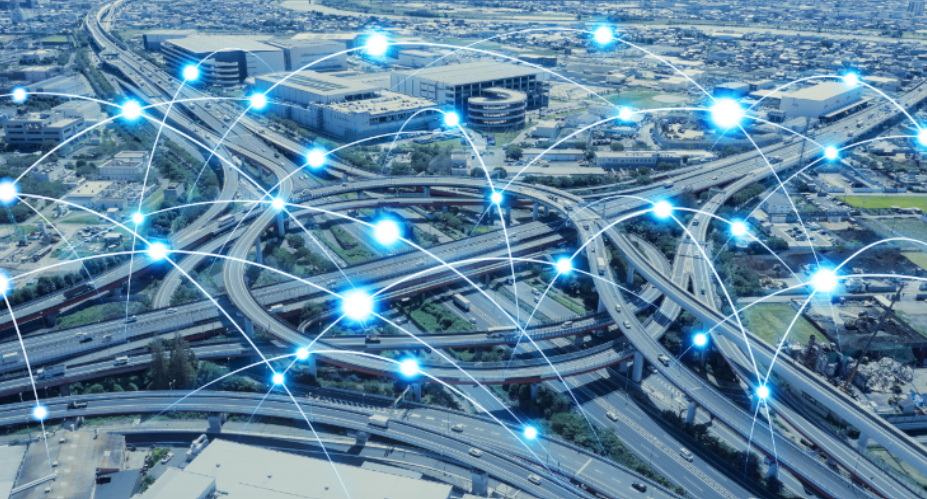
A transportation network is the organized system of routes, infrastructure, vehicles, and services that enables the movement of people, goods, and information from one place to another. These networks form the circulatory system of modern civilization, connecting farms to markets, workers to offices, raw materials to factories, and families to one another across vast distances. Without functioning transportation networks, the complex interdependencies that define modern economies and societies would simply collapse.
The scale of global transportation infrastructure is almost impossible to comprehend in full. The world’s road networks stretch for tens of millions of kilometers, its railways cross continents, its shipping lanes link every inhabited coastline, and its air routes form an invisible web above the entire planet. In 2023, global trade — almost all of it dependent on transportation networks — exceeded $23 trillion in value, a figure that illustrates just how thoroughly the movement of goods underpins human prosperity.
Transportation networks have shaped history as profoundly as any political or military force. The Roman road system allowed an empire to govern and supply itself across three continents. The railways of the 19th century opened interiors of continents to settlement and commerce, transforming economies and redrawing social geographies almost overnight. The interstate highway systems of the 20th century restructured entire nations around the automobile, creating new patterns of urban growth, suburban development, and economic activity that persist to this day.
Today, transportation networks face a new set of challenges and transformations driven by urbanization, climate change, digitalization, and the demand for greater efficiency and sustainability. The rise of electric vehicles, autonomous transport, high-speed rail, drone delivery, and hyperloop concepts is beginning to reshape networks that in many cases were designed for a different era entirely. Understanding the different types of transportation networks — their structures, strengths, vulnerabilities, and appropriate applications — is essential for anyone seeking to grasp how the modern world moves and how it might move better in the future.
Road Network
A road network is the most extensive and universally accessible type of transportation infrastructure, consisting of interconnected highways, arterial roads, local streets, and rural tracks that allow vehicles to travel between virtually any two points in a settled landscape. Roads are the foundation of daily mobility for billions of people and the primary means by which goods are distributed from major transport hubs to their final destinations.
The flexibility of road networks is their greatest strength — motor vehicles can reach locations that no other mode of transport can serve, and road infrastructure can be built incrementally to match growing demand. However, roads are also associated with significant congestion in urban areas, high carbon emissions, land consumption, and substantial maintenance costs, challenges that have driven growing investment in alternative transport modes in many parts of the world.
Rail Network
A rail network uses fixed steel tracks to guide trains carrying passengers or freight between stations and terminals, offering a mode of transport that is far more energy-efficient per ton-kilometer than road transport and capable of moving very large volumes of people or goods at high speed. Rail networks range from dense urban metro systems and regional commuter lines to long-distance intercity railways and vast freight networks spanning entire continents.
The defining characteristic of rail is its efficiency at scale — a single freight train can carry the equivalent load of hundreds of trucks while consuming a fraction of the fuel, and a high-speed passenger train can move thousands of people per hour along a corridor far more efficiently than the same corridor served by cars or aircraft. Rail networks require enormous upfront investment in fixed infrastructure but deliver long-term capacity and efficiency that few other transport modes can match.
Air Transport Network
An air transport network consists of airports, airways, navigation infrastructure, and airline services that connect cities, countries, and continents through flight. Air travel is the fastest mode of long-distance transport available, compressing journeys that once took weeks by sea or days by land into a matter of hours, and it has fundamentally transformed global commerce, tourism, and human mobility.
The modern air network is one of the most complex logistical systems ever created, with thousands of aircraft in the air at any given moment, each following carefully managed routes through controlled airspace coordinated by national and international aviation authorities. Despite its extraordinary reach, air transport is the most carbon-intensive mode of travel per passenger kilometer, and the aviation sector faces growing pressure to decarbonize through sustainable fuels, improved aircraft efficiency, and in the longer term, the development of electric and hydrogen-powered aircraft.
Maritime Shipping Network
The maritime shipping network comprises ocean shipping lanes, ports, inland waterways, canals, and the vessels — container ships, bulk carriers, tankers, and ferries — that use them to move goods and people across seas and rivers. Shipping is the backbone of international trade, carrying by volume the vast majority of everything that crosses a national border, from crude oil and iron ore to consumer electronics and clothing.
The efficiency of large ocean-going vessels is unmatched for bulk cargo over long distances — a modern container ship can carry tens of thousands of containers using proportionally far less fuel per unit than any land-based alternative. The maritime network is therefore indispensable to the global supply chains that make the modern economy function, though its concentration through a small number of critical chokepoints — the Suez Canal, the Strait of Malacca, the Panama Canal — makes it vulnerable to disruptions that can ripple across the entire global trading system.
Urban Transit Network
An urban transit network is the collection of public transportation services operating within a city or metropolitan area, typically including buses, metro or subway systems, light rail, trams, commuter rail, and increasingly, shared mobility services such as bike-share and ride-hailing. These networks are designed to move large numbers of people efficiently within a dense urban environment where the alternative — mass private car use — would generate catastrophic congestion and air quality problems.
The quality of urban transit networks has a profound effect on the livability, equity, and economic productivity of cities. Cities like Tokyo, Singapore, Zurich, and Hong Kong have developed transit systems of such coverage, frequency, and reliability that the majority of residents can live comfortably without owning a car, while cities that have underinvested in transit struggle with congestion, pollution, and unequal access to employment and services for those who cannot afford or operate private vehicles.
Pipeline Network
A pipeline network is a system of buried or surface-level pipes used to transport liquids or gases — most commonly crude oil, refined petroleum products, natural gas, and water — over long distances with minimal energy expenditure and no requirement for vehicles or moving parts along the route. Pipelines are invisible to most people yet form a critical layer of infrastructure beneath the landscapes of industrialized nations.
Once built, pipelines are extraordinarily efficient and cost-effective, operating continuously with relatively small crews and low energy inputs compared to the volumes they transport. Their major limitations are their inflexibility — a pipeline can only carry what it was designed for, between fixed origin and destination points — and the environmental risks associated with leaks or ruptures, which can cause significant damage to soils, waterways, and ecosystems if not detected and repaired quickly.
Cycling Network
A cycling network is the system of dedicated cycle lanes, protected cycle tracks, shared paths, and supporting infrastructure such as bike parking, repair stations, and crossing signals that enables cyclists to move safely and efficiently through a city or region. Where well-developed, cycling networks provide a cheap, zero-emission, and space-efficient mode of urban transport that also delivers significant public health benefits through physical activity.
Cities like Amsterdam, Copenhagen, and Utrecht have invested decades in building cycling networks of such quality that bicycles account for a majority of urban trips, demonstrating that with sufficient infrastructure, cycling can be a mainstream transport mode rather than a niche activity. In contrast, cities that lack safe cycling infrastructure see very low cycling uptake despite growing interest, highlighting how directly the quality of the network determines the viability of the mode.
Pedestrian Network
A pedestrian network encompasses the sidewalks, footpaths, pedestrian streets, crossings, bridges, and public spaces that allow people to move through urban and rural environments on foot. Walking is the most fundamental form of human mobility and the mode that connects every other transport system — virtually every journey begins and ends on foot, making the quality of pedestrian infrastructure critical to the effectiveness of the entire transport system.
Well-designed pedestrian networks make cities safer, healthier, and more equitable, as walking requires no vehicle, fuel, or fare and is accessible to a broad range of ages and abilities. Conversely, cities that prioritize vehicle movement over pedestrian comfort — with wide arterial roads, minimal crossings, and discontinuous footpaths — create environments that are hostile to walking and that force car dependency even for short trips that could easily be made on foot.
Waterway Network
An inland waterway network consists of navigable rivers, canals, lakes, and reservoirs connected in a system that allows vessels to transport goods and passengers through the interior of a landmass without using the open sea. Inland waterways were among the first engineered transport infrastructure in history, with canal systems playing a transformative role in the industrialization of Britain, France, the Netherlands, and other European nations in the 18th and 19th centuries.
Today, inland waterway transport remains economically important in Europe, China, and North America, where major river systems carry significant volumes of bulk freight — grain, coal, aggregates, and chemicals — at very low cost and with minimal road or rail congestion. Waterway transport is slow compared to road or rail, making it unsuitable for time-sensitive cargo, but its low fuel consumption per ton-kilometer and minimal infrastructure maintenance requirements make it a compelling option for heavy, non-perishable goods moving over medium to long distances.
Logistics and Freight Network
A logistics and freight network is the integrated system of warehouses, distribution centers, transport links, and information systems that manages the physical movement of goods from producers to consumers. Modern logistics networks are extraordinarily complex, coordinating multiple transport modes — ocean shipping, rail, road, and air freight — in carefully sequenced chains that can move a product from a factory in one country to a doorstep in another within days.
The rise of e-commerce has dramatically intensified the demands placed on last-mile logistics networks — the final leg of delivery from a local depot to the customer’s door — driving rapid growth in urban delivery fleets, automated sorting facilities, and new models such as parcel lockers and drone delivery. Efficient freight networks are a prerequisite for competitive manufacturing and retail economies, and the disruptions caused by events like the COVID-19 pandemic exposed how fragile even highly optimized global supply chains can be when multiple links are stressed simultaneously.
High-Speed Rail Network
A high-speed rail network is a specialized subset of the rail network in which trains travel at speeds typically exceeding 250 kilometers per hour on dedicated tracks engineered to much tighter standards than conventional railways, including gentle curves, level gradients, and sophisticated signaling systems. High-speed rail fundamentally changes the competitive relationship between rail and air travel on corridors up to around 800 to 1,000 kilometers, offering city-center to city-center journey times that rival or beat flying once airport procedures are factored in.
Japan’s Shinkansen, launched in 1964, pioneered the concept and demonstrated that high-speed rail could combine exceptional punctuality, safety, and passenger comfort with high commercial viability, inspiring the development of networks across Europe, China, and beyond. China in particular has built the world’s largest high-speed rail network at extraordinary speed, connecting virtually all its major cities in a system that has profoundly reorganized economic geography and patterns of migration across the country.
Cable Transport Network
A cable transport network uses moving cables to pull or carry vehicles — gondolas, cabins, chairs, or trams — along fixed routes, most commonly up steep terrain that wheeled vehicles cannot easily negotiate. Originally developed to serve ski resorts and mountain tourist destinations, cable transport systems have increasingly been recognized as a viable urban transit solution in cities with challenging topography.
Cities like Medellín in Colombia and La Paz in Bolivia have integrated aerial gondola systems into their urban transit networks, connecting hillside communities that were previously isolated from the city center by steep slopes and poor road access. Cable systems offer a unique combination of low land footprint, moderate construction cost compared to metro systems, and the ability to climb steep gradients effortlessly, making them a compelling option for specific urban mobility challenges that conventional transit cannot easily solve.
Digital and Information Network
A digital and information network, while not a physical transport system in the traditional sense, has become an essential layer of modern mobility infrastructure, enabling the real-time data flows that coordinate every other transportation network. Traffic management systems, airline reservation platforms, port logistics software, navigation applications, and ride-hailing services all depend on digital networks to function, and the intelligence embedded in transport infrastructure is growing rapidly.
The integration of digital networks with physical transport systems is giving rise to concepts like the smart city and connected mobility, in which sensors, data analytics, and artificial intelligence optimize the flow of vehicles, transit services, and freight in real time. As autonomous vehicles, drone delivery, and demand-responsive transit services mature, the digital network will become increasingly inseparable from the physical network, with the management of information flows becoming as important to transport efficiency as the management of the roads, rails, and airways themselves.
Intermodal Transport Network
An intermodal transport network is one designed to facilitate the seamless transfer of passengers or freight between different modes of transport — such as from ship to rail to truck, or from metro to bus to bicycle — within an integrated system. The goal of intermodal design is to combine the strengths of multiple transport modes while minimizing the friction, delay, and cost associated with transfers between them.
For freight, the standardized shipping container has been the single most important enabler of intermodal transport, allowing goods to be loaded once and transferred between ships, trains, and trucks without unpacking or rehandling. For passengers, intermodal hubs such as well-designed airport rail links, combined bus and metro stations, and mobility hubs offering bike-share and car-share alongside public transit make it possible to complete complex journeys smoothly, reducing dependence on any single mode and improving the overall resilience and efficiency of the transport system as a whole.
Space Transport Network
A space transport network encompasses the launch facilities, orbital infrastructure, spacecraft, and ground control systems that enable the movement of payloads — and increasingly, people — beyond the Earth’s atmosphere. Once the exclusive domain of a handful of government space agencies, space transport is rapidly becoming a commercial sector with a growing number of private operators launching satellites, resupply missions, and crewed flights.
The development of reusable launch vehicles by companies like SpaceX has dramatically reduced the cost of reaching orbit, opening the possibility of a more connected and commercially active space transport ecosystem in the coming decades. As plans advance for permanent infrastructure on the Moon and eventually Mars, the concept of a space transport network is evolving from science fiction toward an engineering and logistical challenge that the current generation of aerospace engineers is actively working to solve.
Drone and Unmanned Aerial Network
A drone and unmanned aerial network is an emerging layer of transport infrastructure in which autonomous or remotely piloted aerial vehicles operate designated routes and corridors to deliver packages, conduct inspections, provide emergency medical supplies, or carry out surveillance. Urban air mobility — the use of drones and eventually small electric air taxis in and around cities — represents one of the most actively developing frontiers in transportation planning today.
Regulatory frameworks, air traffic management systems, and public acceptance are all still catching up with the technical capabilities of modern drone technology, but trials of drone delivery services are already operating in parts of Africa, the United States, and Europe. If the infrastructure, regulation, and economics align as proponents expect, drone networks could eventually form a third layer of urban transport alongside ground-level road networks and underground or elevated transit, handling small, time-sensitive deliveries with remarkable efficiency and minimal land use.
Hyperloop Network
A hyperloop network is a proposed ultra-high-speed transport system in which passenger or freight pods travel through low-pressure tubes at speeds potentially approaching or exceeding 1,000 kilometers per hour, using magnetic levitation and linear electric motors to eliminate friction and air resistance. First articulated as a concept by Elon Musk in 2013, hyperloop has attracted significant investment and engineering effort from multiple companies seeking to make it a commercial reality.
If successfully developed and deployed, hyperloop networks could transform the competitive landscape of medium and long-distance transport, making city pairs up to several hundred kilometers apart effectively as accessible as adjacent neighborhoods, and potentially absorbing large volumes of both short-haul air traffic and intercity road travel. Significant technical, regulatory, and financial challenges remain before hyperloop becomes operational at scale, but prototype testing has advanced sufficiently that several countries and regions are actively evaluating it as a component of future transport infrastructure planning.