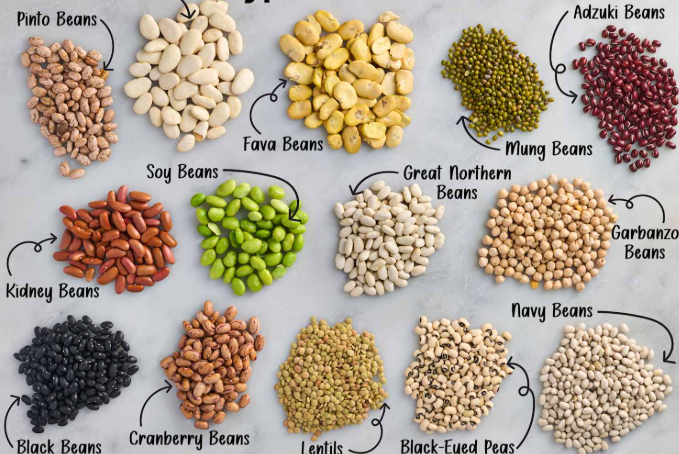
Beans are among the most ancient, versatile, and nutritionally significant food crops in the entire history of human agriculture. Archaeological evidence places bean cultivation in the Andes of South America and in the ancient agricultural civilizations of Mexico and Central America at least 7,000 years ago, and in the Old World — where broad beans and lentils were grown alongside wheat and barley — at least 10,000 years before the present. From these multiple centers of origin, beans have spread across every inhabited continent, becoming staple foods in an extraordinary range of culinary traditions and a cornerstone of sustainable agriculture worldwide.
The term “bean” is applied broadly to the seeds of numerous leguminous plants within the family Fabaceae, encompassing species from several genera including Phaseolus, Vicia, Glycine, Vigna, Lens, and Cajanus, among others. This botanical diversity translates into an astonishing range of shapes, sizes, colors, textures, and flavors, from the tiny, jet-black beluga lentil to the enormous, cream-colored corona bean, from the vivid scarlet of a cranberry bean to the glossy midnight purple of a black turtle bean. No other food crop family offers quite the same combination of diversity and global importance.
The global significance of beans as a food source is difficult to overstate. World production of dry beans and pulses exceeds 90 million tonnes annually, with major producing countries including Brazil, India, Myanmar, China, the United States, Mexico, and Tanzania. Beans and legumes provide the primary source of dietary protein for an estimated 300 to 400 million people worldwide, particularly in regions of sub-Saharan Africa, South Asia, and Latin America where animal protein is less accessible or affordable. The protein content of dried beans typically ranges from 20 to 25 percent by weight — comparable to many animal proteins and significantly higher than most other plant foods.
Beyond their nutritional value, beans play an irreplaceable role in sustainable agricultural systems. As nitrogen-fixing legumes, they form symbiotic relationships with Rhizobium bacteria in their root nodules, converting atmospheric nitrogen into bioavailable soil nitrogen that enriches the growing medium for subsequent crops. This quality has made beans a valued component of crop rotation and intercropping systems for millennia, reducing dependence on synthetic nitrogen fertilizers and improving long-term soil health. In an era of increasing concern about the environmental impact of agriculture, beans and legumes are increasingly recognized as essential components of more sustainable food systems.
The culinary importance of beans across world cuisines is equally remarkable. From the black beans of Mexican cuisine to the chickpeas of Middle Eastern cooking, from the kidney beans of Indian rajma to the white beans of Italian ribollita, from the soybeans of East Asian fermentation traditions to the split peas of Scandinavian pea soup, beans appear in virtually every culinary tradition on earth. They are eaten fresh, dried, sprouted, fermented, ground into flour, pressed for oil, and processed into an extraordinary range of food products. The following 70 types represent the extraordinary breadth and diversity of the bean world.
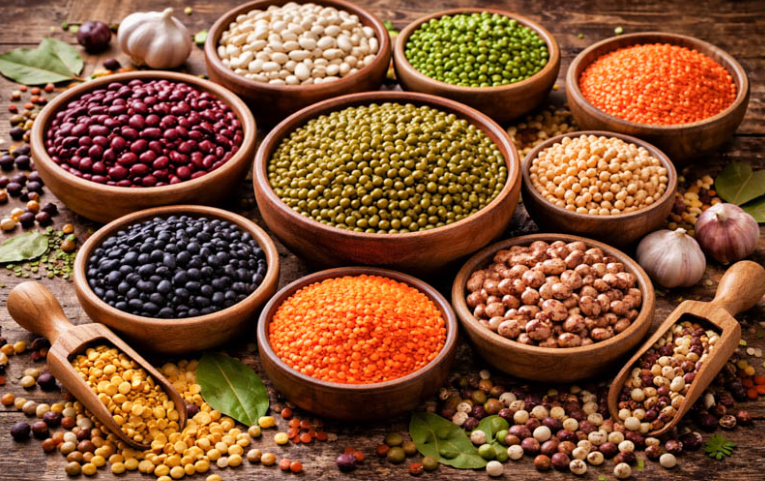
1. Black Bean (Phaseolus vulgaris)
Black beans, also called black turtle beans, are small, shiny, jet-black legumes with a dense, meaty texture and a rich, earthy flavor that makes them one of the most versatile and beloved beans in world cuisine. They are a cornerstone of Latin American, Caribbean, and Southwestern American cooking, appearing in dishes from Cuban black bean soup and Brazilian feijoada to Mexican tacos and Texan chili. Black beans are exceptionally nutritious, with a half-cup serving providing approximately 7 grams of protein and 8 grams of fiber. Brazil and the United States are among the world’s leading black bean producers.
2. Kidney Bean (Phaseolus vulgaris)
Kidney beans are large, deep red, kidney-shaped legumes with a firm texture, hearty flavor, and the ability to absorb surrounding flavors during cooking. They are one of the most widely consumed beans in the world, fundamental to dishes including American chili con carne, Indian rajma curry, and the Creole red beans and rice of Louisiana. The global kidney bean market is valued at several billion dollars annually, with India, Myanmar, Brazil, and the United States among the leading producers. Kidney beans contain lectins that can cause illness if the beans are not properly soaked and boiled before consumption.
3. Pinto Bean (Phaseolus vulgaris)
Pinto beans are medium-sized, beige beans streaked with reddish-brown mottling that fades to a uniform pinkish-brown during cooking — the name pinto meaning “painted” in Spanish, a reference to the striking raw bean coloring. They are the most widely consumed bean in the United States and Mexico, the essential ingredient in refried beans, burritos, and countless other dishes of Mexican and Tex-Mex cuisine. The United States produces over 500,000 tonnes of pinto beans annually, making them the dominant dry bean crop in American agriculture. Colorado’s San Luis Valley is one of the most important pinto bean growing regions in the country.
4. Navy Bean (Phaseolus vulgaris)
Navy beans are small, oval, white beans with a mild flavor, smooth texture, and remarkable ability to absorb flavors from surrounding ingredients during slow cooking. They earned their common name from their extensive use as a staple food in the United States Navy during the 19th century. Navy beans are the classic ingredient in traditional American baked beans and in the tinned baked beans in tomato sauce that are a beloved British institution — the United Kingdom consumes over 400 million tins of baked beans annually, the vast majority made from navy beans. They are also the base of the classic Boston baked beans of New England.
5. Chickpea (Cicer arietinum)
Chickpeas, also known as garbanzo beans, are round, beige legumes with a nutty flavor and firm, slightly grainy texture that makes them extraordinarily versatile across a vast range of culinary applications. They are the most widely consumed legume on earth, forming the basis of hummus, falafel, chana masala, and dozens of other beloved dishes across Middle Eastern, South Asian, Mediterranean, and North African cuisines. World chickpea production exceeds 15 million tonnes annually, with India alone producing over 70 percent of the global supply. Chickpea consumption has grown significantly in Western markets over the past decade, driven by the popularity of hummus and plant-based eating.
6. Lentil (Lens culinaris)
Lentils are small, lens-shaped legumes available in a range of colors including green, brown, red, orange, black, and yellow, each with slightly different flavor and texture characteristics. They are among the oldest cultivated legumes, with evidence of lentil consumption in the Middle East dating back over 9,000 years. World lentil production exceeds 6 million tonnes annually, with Canada, India, and Australia being the world’s leading producers. Canada alone produces approximately 35 percent of the world’s lentils. Lentils are exceptional among legumes in not requiring soaking before cooking, making them one of the most convenient and quick-cooking of all dried pulses.
7. Soybean (Glycine max)
The soybean is the most economically significant legume crop on earth, with global production exceeding 350 million tonnes annually — a figure that dwarfs all other legume crops combined. The United States, Brazil, and Argentina account for the vast majority of world soybean production. Soybeans are processed into an enormous range of products including tofu, tempeh, miso, soy sauce, soy milk, edamame, soybean oil, and soy flour, as well as being used extensively in animal feed and industrial applications. The soybean’s extraordinary protein content — approximately 36 to 40 percent by dry weight — makes it the most protein-dense of all major food crops.
8. Black-Eyed Pea (Vigna unguiculata)
Black-eyed peas, also called cowpeas, are cream-colored beans with a distinctive small black spot — the “eye” — at the hilum. They have a smooth, slightly earthy flavor and a creamy texture when cooked. They are a staple crop across sub-Saharan Africa, South Asia, and the southern United States, where eating black-eyed peas on New Year’s Day for good luck is a cherished tradition, particularly in the Deep South. Black-eyed peas are exceptionally drought-tolerant, making them a critical food security crop in semi-arid regions of Africa where other legumes struggle to produce reliable yields.
9. Lima Bean (Phaseolus lunatus)
Lima beans, named after the capital of Peru where they have been cultivated for thousands of years, are large, flat, pale green to cream-colored beans with a starchy, buttery texture and a distinctive, slightly rich flavor. They are also commonly called butter beans, particularly in the United Kingdom and the American South, where large, dried lima beans are a beloved component of traditional Southern cooking. Lima beans are native to the Americas, with two distinct domestication events recognized — one in the Andes and one in Mesoamerica — each producing distinct gene pools still reflected in modern varieties.
10. Broad Bean (Vicia faba)
Broad beans, called fava beans in American English and many other world languages, are large, flat, green beans with a thick, often tough outer skin enclosing a vivid green, creamy-textured seed with a distinctive, robust, earthy flavor. They are one of the oldest cultivated plants in the world, with evidence of broad bean cultivation in the ancient Near East and Mediterranean dating back at least 8,000 years. In the United Kingdom, broad beans are one of the most beloved and widely grown vegetable crops in home gardens, and the first broad beans of spring are a genuinely anticipated culinary event for many British food lovers.
11. Cannellini Bean (Phaseolus vulgaris)
Cannellini beans are large, white, kidney-shaped Italian beans with a creamy, smooth texture and mild, slightly nutty flavor that makes them one of the most versatile white beans in European cooking. They are the essential ingredient in the classic Tuscan dishes ribollita and fagioli all’uccelletto, and appear throughout Italian cuisine in soups, stews, salads, and pasta dishes. Cannellini beans are the most widely consumed bean variety in Italy, where regional bean dishes are considered an important element of culinary heritage. They hold their shape well during cooking while developing an exceptionally creamy interior texture.
12. Great Northern Bean (Phaseolus vulgaris)
Great Northern beans are medium-sized white beans slightly smaller than cannellini but larger than navy beans, with a mild, delicate flavor and a slightly grainy texture that holds its shape well during extended cooking. They are widely used in American cooking for soups, casseroles, and baked beans, and are the bean of choice in many traditional New England and Midwestern recipes. Great Northern beans are a significant commercial crop in the northern United States, particularly in Nebraska, Michigan, and Colorado, and are widely available dried and canned across North American supermarkets.
13. Borlotti Bean (Phaseolus vulgaris)
Borlotti beans — also called cranberry beans in North America — are beautiful, medium-to-large beans with cream to pale pink pods and seeds dramatically streaked and speckled with deep red and crimson markings that fade to a uniform pinkish-brown during cooking. They have a rich, creamy texture and a full, somewhat chestnut-like flavor that makes them highly prized in Italian and Portuguese cuisine. Borlotti beans are the traditional ingredient in pasta e fagioli and minestrone in northern Italy, and their attractive coloring makes them one of the most visually appealing of all bean varieties in both the garden and the kitchen.
14. Adzuki Bean (Vigna angularis)
Adzuki beans are small, dark red beans with a white ridge along one side, cultivated primarily in East Asia where they are of enormous culinary importance. In Japan, China, and Korea, adzuki beans are cooked with sugar to make sweet red bean paste — anko in Japanese — the most widely used filling in traditional East Asian confectionery, including mochi, dorayaki, and red bean buns. Japan alone consumes several hundred thousand tonnes of adzuki beans annually. In traditional Chinese medicine, adzuki beans are considered to have health-promoting properties, and they are used in both sweet and savory preparations across the region.
15. Mung Bean (Vigna radiata)
Mung beans are small, round, green legumes with a thin skin and a mild, slightly sweet flavor. They are one of the most widely consumed legumes in South and Southeast Asia, eaten whole, split, or sprouted — mung bean sprouts being the most commonly consumed bean sprout worldwide. In India, split mung beans are used to make dal, one of the most fundamental dishes in Indian cuisine. Mung beans are exceptionally nutritious and easy to digest, making them a recommended food in Ayurvedic medicine. They can be sprouted in as little as two to three days, requiring no soil or garden space.
16. Red Lentil (Lens culinaris var. microsperma)
Red lentils are small, salmon-red to orange lentils that have had their outer hull removed, exposing the vivid interior color. Unlike green and brown lentils, they disintegrate during cooking to form a smooth, thick, creamy puree — a quality that makes them ideal for soups, stews, and the thick dal dishes of South Asian cuisine. Red lentil dal is one of the most widely eaten dishes in India, Bangladesh, and Pakistan, providing affordable, high-quality protein to hundreds of millions of people daily. Canada is the world’s largest exporter of red lentils, supplying markets across South Asia and the Middle East.
17. Green Lentil (Lens culinaris)
Green lentils are the most common lentil variety in Western markets, with a robust, peppery, slightly earthy flavor and firm texture that holds its shape during cooking. They are used widely in European cooking — the small, dark green Puy lentil of France’s Auvergne region is among the most prized, having received Protected Designation of Origin status that restricts the use of the name to lentils grown in the volcanic soils around Le Puy-en-Velay. Green lentils are an excellent source of folate, iron, and protein, with a cooked half-cup providing approximately 9 grams of protein and 8 grams of dietary fiber.
18. French Green Lentil (Lens culinaris ‘Puy’)
Puy lentils, the most celebrated of all lentil varieties, are small, dark, slate-green lentils grown in the volcanic soil of the Le Puy basin in the Auvergne region of France. The unique mineral composition of this volcanic soil, combined with the specific microclimate of the region, is credited with giving Puy lentils their distinctive peppery flavor, firm texture, and their remarkable ability to remain intact after cooking without becoming mushy. They received France’s prestigious AOC designation in 1996 and are considered by many chefs and food writers to be the finest lentil in the world, commanding premium prices in markets worldwide.
19. Beluga Lentil (Lens culinaris var. pilifera)
Beluga lentils are tiny, jet-black lentils named for their resemblance to beluga caviar — small, shiny, and perfectly round. They have a rich, earthy, slightly peppery flavor and hold their shape beautifully during cooking, making them ideal for salads, grain bowls, and dishes where visual elegance is important. Beluga lentils are among the most nutritionally dense of all lentil varieties, with particularly high levels of antioxidants — the black color indicates high concentrations of anthocyanin pigments associated with numerous health benefits. They have become increasingly popular in restaurant and fine food settings over the past decade.
20. Split Pea (Pisum sativum)
Split peas are dried garden peas that have been processed to remove their outer skins and split along their natural seam, available in green and yellow varieties. Green split peas have a stronger, more robust flavor, while yellow split peas are milder and slightly sweeter. Both varieties disintegrate during extended cooking to form a smooth, thick, nutritious soup — split pea soup being a beloved dish in Dutch, British, Scandinavian, and North American cooking traditions. Split peas are extremely shelf-stable, maintaining nutritional quality for one to two years when stored in cool, dry conditions.
21. Pigeon Pea (Cajanus cajan)
Pigeon peas are small, round legumes of enormous importance in the food systems of the tropics and subtropics, particularly in India, the Caribbean, and sub-Saharan Africa. In India, they are the source of toor dal — yellow split pigeon peas — one of the most widely consumed dal varieties and a daily staple for hundreds of millions of people. World pigeon pea production is approximately 7 million tonnes annually, with India producing around 90 percent of the global supply. Pigeon pea plants are remarkably drought-tolerant perennials in warm climates, capable of producing crops for three to five years from a single planting.
22. Urad Dal (Vigna mungo)
Urad dal, also called black gram or black lentil, is a small legume of enormous importance in South Asian cuisine. The whole, unprocessed seeds are black, while split and hulled urad dal is white and creamy. Urad dal is the essential ingredient in dal makhani — one of the most beloved dishes of North Indian cuisine — and in idli and dosa batter in South Indian cooking, where its starchy quality helps create the characteristic fermented batter texture. India produces the vast majority of the world’s urad dal and is by far the largest consumer of this nutritionally important pulse.
23. Moth Bean (Vigna aconitifolia)
Moth bean is a drought-resistant legume native to the Indian subcontinent, cultivated primarily in the arid and semi-arid regions of Rajasthan and Gujarat in India, where it is one of the most important food crops in areas receiving very limited annual rainfall. The small, brown seeds are consumed as dal, sprouted, or ground into flour, and the whole plant is valued as cattle fodder and green manure. Moth bean’s extraordinary tolerance of dry, hot conditions makes it an increasingly important crop in the context of climate change and food security in vulnerable arid regions.
24. Horse Bean (Vicia faba var. equina)
Horse beans are a large-seeded variety of the broad bean species (Vicia faba) historically grown primarily as animal feed — particularly for horses, as the common name suggests — though they are also edible for humans. They are larger and starchier than the garden broad bean varieties grown for human consumption and have a tougher skin and more robust flavor. Horse beans have been cultivated in Europe and the Middle East for thousands of years and are among the most historically significant of all legume crops, with records of their cultivation in ancient Egypt, Greece, and Rome.
25. Runner Bean (Phaseolus coccineus)
Runner beans are a vigorous, tall-climbing bean species from the mountains of Central America, producing long, flat, dark green pods containing large, brightly patterned seeds in purple and black. In the United Kingdom, runner beans are one of the most widely grown and deeply beloved of all vegetable garden crops — surveys consistently show them among the top five most popular homegrown vegetables. The striking scarlet flowers that precede the pods are highly ornamental, and runner beans are grown on decorative wigwams and trellises as much for their visual contribution to the kitchen garden as for their culinary value.
26. French Bean (Phaseolus vulgaris)
French beans — called green beans or string beans in North America — are the most widely grown fresh bean in Europe, eaten as a whole pod vegetable harvested before the seeds develop significantly. They have a crisp, clean flavor and a tender texture that makes them one of the most versatile and universally appealing vegetables in Western cuisine. World production of green beans for fresh consumption exceeds 20 million tonnes annually, with China being by far the largest producer, accounting for over 75 percent of global output. The finest French varieties — including the slender haricot vert — are regarded as among the best vegetables in the entire European culinary tradition.
27. Haricot Vert (Phaseolus vulgaris)
Haricot verts are the slender, elegant French variety of green bean, harvested when the pods are very young and no more than a quarter inch in diameter — considerably more slender than standard green beans. Their fine texture, tender snap, and delicate, clean flavor have made them a prestige vegetable in French cuisine and in fine dining restaurants worldwide. They require careful, regular harvesting to prevent the pods from maturing beyond the ideal stage and are considered one of the most labor-intensive of all vegetable crops, a quality that reflects in their premium market price compared to standard green beans.
28. Dragon Tongue Bean (Phaseolus vulgaris)
Dragon tongue is a Dutch heirloom bean variety producing striking, flat, pale yellow pods dramatically streaked with purple markings that fade during cooking to a uniform yellow-green. The pods are harvested young as snap beans and have a crisp texture and mild, sweet flavor. The dramatic streaking pattern makes dragon tongue beans one of the most visually attractive of all vegetable garden plants and an appealing ingredient in fresh salads where the color can be appreciated before cooking. They are popular with heritage vegetable growers and farmers’ market vendors who value their unusual appearance and reliably good flavor.
29. Rattlesnake Bean (Phaseolus vulgaris)
Rattlesnake bean is an American heirloom pole bean variety producing long, green pods streaked with purple — similar in appearance to a rattlesnake pattern — on vigorous, tall-climbing plants. The pods are harvested young as snap beans and have an excellent, rich flavor. The dried seeds are tan with dark brown streaks, maintaining the attractive patterning even when dried. Rattlesnake beans are among the most heat-tolerant of all snap bean varieties, continuing to produce well in summer conditions that cause many other varieties to drop flowers without setting pods — a very useful quality in warm-climate gardens.
30. Scarlet Runner Bean (Phaseolus coccineus)
Scarlet runner bean is both one of the most productive and one of the most ornamentally beautiful of all climbing vegetables, producing masses of vivid scarlet flowers on vigorous vines that can reach 10 to 12 feet in a single season. The flowers are followed by large, flat pods of excellent flavor, and the dried seeds are dramatically marked in purple-black on a deep magenta background. The scarlet flowers are attractive to hummingbirds and bumblebees, making the scarlet runner a valuable wildlife plant as well as a productive food crop. It is the most widely grown climbing bean in British kitchen gardens.
31. Tepary Bean (Phaseolus acutifolius)
Tepary bean is a small, drought-resistant legume native to the Sonoran Desert of northwestern Mexico and the American Southwest, where it has been cultivated by indigenous peoples — particularly the Tohono O’odham — for at least 5,000 years. It is the most drought-tolerant of all domesticated bean species, capable of producing reasonable crops from as little as 8 to 10 inches of annual rainfall — a feat impossible for most other cultivated legumes. Tepary beans are experiencing a significant revival of interest among sustainable agriculture researchers and indigenous food sovereignty movements as both a food security crop and a connection to traditional foodways.
32. Yardlong Bean (Vigna unguiculata subsp. sesquipedalis)
Yardlong beans, also called asparagus beans or Chinese long beans, produce pods of extraordinary length — typically 12 to 30 inches, though the name slightly exaggerates the maximum — on vigorous, heat-loving climbing vines. They are a staple vegetable crop across Southeast Asia, southern China, and parts of South Asia, where they are stir-fried, braised, pickled, and eaten in a wide variety of preparations. Unlike most snap beans, yardlong beans prefer hot, humid conditions and are among the most productive bean crops for tropical and subtropical gardens. The pods have a slightly more robust, nuttier flavor than conventional green beans.
33. Winged Bean (Psophocarpus tetragonolobus)
Winged bean is a remarkable tropical legume from Papua New Guinea and Southeast Asia, producing strikingly four-winged, frilled pods unlike those of any other bean species. Almost every part of the plant is edible — the young pods, leaves, flowers, and starchy tubers — making it one of the most completely utilizable food plants known. The seeds contain approximately 34 percent protein and 17 percent fat, giving the plant a nutritional profile remarkably similar to the soybean. The winged bean has attracted significant attention from food security researchers as a potential high-protein food crop for tropical developing regions where protein deficiency is a significant public health concern.
34. Hyacinth Bean (Lablab purpureus)
Hyacinth bean is a fast-growing, ornamental climbing legume from Africa and Asia producing stunning purple pods, purple-tinged leaves, and vivid purple-pink flowers that make it one of the most beautiful of all edible climbing plants. The young pods and seeds are edible and widely consumed across Africa, South Asia, and Southeast Asia, though mature dried seeds must be cooked thoroughly to deactivate potentially harmful compounds. As an ornamental, hyacinth bean has become extremely popular in North American and European gardens, where its striking purple coloring and vigorous growth make it a spectacular summer climber on fences, trellises, and pergolas.
35. Fenugreek (Trigonella foenum-graecum)
Fenugreek occupies an unusual position straddling the categories of bean, herb, and spice — the seeds are used as a spice in Indian, Middle Eastern, and North African cuisine, the fresh leaves are used as a vegetable and herb, and the sprouted seeds are eaten as a nutritious microgreen. The slightly bitter, maple-like flavor of fenugreek seeds is immediately recognizable as a component of curry powder and many Indian spice blends. India is the world’s largest producer and consumer of fenugreek, and the crop has been used in traditional Ayurvedic medicine for thousands of years for its purported health-promoting properties.
36. Cowpea (Vigna unguiculata)
Cowpeas are a group of drought-tolerant, heat-loving legumes of enormous importance in the food systems of sub-Saharan Africa, where they are among the most important sources of dietary protein for rural populations. Black-eyed peas are the most familiar cowpea variety in Western markets, but the cowpea group encompasses a wide range of seed colors, sizes, and culinary types. Africa produces over 6 million tonnes of cowpeas annually — more than 85 percent of world production — and the crop is a critical food security resource in the Sahel and semi-arid regions of the continent where few other food crops can produce reliable yields.
37. Chickpea (Desi Type) (Cicer arietinum)
Desi chickpeas are the smaller, darker, rough-coated chickpea variety primarily grown in India, Pakistan, Ethiopia, and Mexico. They are distinct from the larger, cream-colored kabuli chickpeas familiar in Western markets and have a more intense, earthier flavor and a thicker, darker seed coat. Desi chickpeas account for approximately 80 percent of total world chickpea production and are the primary chickpea type consumed in South Asia, where they are split and hulled to make chana dal — one of the most widely eaten dal varieties in Indian cuisine, providing affordable protein to a significant portion of the world’s population.
38. Chickpea (Kabuli Type) (Cicer arietinum)
Kabuli chickpeas are the large, pale, smooth-coated chickpeas most familiar in Western markets, used in hummus, salads, stews, and roasted as snacks. They are believed to have originated in Afghanistan — Kabul being the capital of that country — before spreading westward through the Middle East and into Mediterranean cuisine. Kabuli chickpeas command higher market prices than desi varieties due to their larger size, more attractive appearance, and milder flavor, and they are the variety most commonly found in tinned and dried form in European and North American supermarkets. The global hummus market alone is valued at over $800 million annually.
39. Romano Bean (Phaseolus vulgaris)
Romano beans, also called Italian flat beans or pole beans, are a traditional Italian snap bean variety producing wide, flat pods — rather than the round pods of most snap bean varieties — with a rich, full flavor that many cooks consider superior to conventional green beans. They are harvested and eaten whole as snap beans when young, the pods having a tender, slightly meaty quality that suits braising and slow cooking particularly well. Romano beans are a staple of Italian summer cooking, appearing in preparations ranging from simple sautés with olive oil and garlic to elaborate Roman-style braised bean dishes.
40. Calypso Bean (Phaseolus vulgaris)
Calypso beans, also called yin yang beans or orca beans, produce a striking bicolor seed divided almost exactly in half between jet black and pure white, the pattern reminiscent of the yin-yang symbol. The dramatic appearance makes them one of the most visually distinctive of all bean varieties and a standout ingredient at farmers’ markets and specialty food stores. The flavor is mild and creamy, somewhat similar to a navy bean, and the beans hold their shape well during cooking. The dramatic coloring makes them a popular choice for salads and dishes where visual appeal is important.
41. Anasazi Bean (Phaseolus vulgaris)
Anasazi beans are an ancient American heirloom variety with a history of cultivation stretching back over 1,500 years among the ancestral Puebloan peoples of the American Southwest — the word “Anasazi” being a Navajo term for “ancient ones.” The seeds are dramatically marked in deep red and white in a mottled, swirling pattern that makes them among the most beautiful of all bean varieties. They have a sweet, mild flavor, cook more quickly than most dried beans, and are said to cause less digestive discomfort than common beans. They are closely associated with the food sovereignty and cultural heritage movements of Southwestern Native American peoples.
42. Appaloosa Bean (Phaseolus vulgaris)
Appaloosa beans take their name from the spotted Appaloosa horse breed, the seed coloring — cream with irregular dark brown and black mottling — resembling the distinctive coat pattern of that breed. They are an American heirloom variety with roots in the indigenous agricultural traditions of the American West and Southwest. Appaloosa beans have a meaty, earthy flavor and hold their shape well during cooking, making them excellent for soups, stews, and slow-cooked dishes. They are maintained primarily through the efforts of heirloom seed organizations and farmers committed to preserving traditional crop genetic diversity.
43. Christmas Lima Bean (Phaseolus lunatus)
Christmas lima beans are a large, flat, heirloom lima bean variety with beautiful chestnut-red and cream marbling that fades during cooking to a more uniform creamy color. The seeds are exceptionally large — among the biggest of all lima bean varieties — and have a rich, starchy, slightly sweet flavor with an almost chestnut-like quality. Christmas limas are considered a premium heirloom variety and are prized by specialty food lovers and heritage seed enthusiasts. The striking appearance of the dried seeds makes them as decorative as they are delicious, and they are a popular choice at specialty farmers’ markets.
44. Jacob’s Cattle Bean (Phaseolus vulgaris)
Jacob’s Cattle bean is a beautiful American heirloom variety producing kidney-shaped seeds in white boldly marked with deep maroon-red spots and blotches, said to resemble the spotted cattle described in the Biblical story of Jacob. It is one of the most historically significant heirloom beans in New England, where it has been cultivated by both Native American and European farming communities for centuries. The beans have a rich, full flavor and creamy texture that makes them excellent for traditional New England baked beans, soups, and stews. They are maintained by several prominent heirloom seed organizations as an important element of North American agricultural heritage.
45. Tongue of Fire Bean (Phaseolus vulgaris)
Tongue of Fire is a beautiful Italian heirloom bean variety producing cream to tan pods and seeds dramatically streaked with vivid red-orange flames — a coloring perfectly captured by the evocative common name. The pods can be harvested young as snap beans, at mid-maturity as shell beans, or allowed to dry fully for use as a dried bean. The flavor at the shell bean stage — when the seeds are plump and starchy but not yet fully dried — is particularly fine, with a creamy, rich quality that makes this variety a favorite of Italian chefs and heritage food enthusiasts. The coloring fades during cooking but the flavor fully compensates.
46. Tiger Eye Bean (Phaseolus vulgaris)
Tiger Eye beans are a South American heirloom variety producing beautiful, rounded seeds in golden-tan streaked with wavy brown markings that strongly resemble the chatoyant mineral from which they take their name. They have a rich, smooth, bacony flavor with an almost mushroom-like depth that distinguishes them from blander commercial bean varieties. Tiger Eye beans cook to a creamy, velvety texture and are highly regarded by specialty food enthusiasts and heirloom seed advocates. They are available primarily through specialty seed companies and farmers’ markets rather than mainstream supermarkets.
47. Scarlet Emperor Bean (Phaseolus coccineus)
Scarlet Emperor is one of the most widely grown runner bean varieties in the United Kingdom, celebrated for its vigorous growth, heavy cropping, and excellent flavor. Like all runner beans, it produces vivid scarlet flowers of considerable ornamental value before the large, flat pods develop. The pods are best harvested regularly when young and tender — at around 6 to 8 inches — to maintain quality and encourage continued production. Scarlet Emperor is a kitchen garden classic in Britain, and few home-grown vegetables are more eagerly anticipated than the first harvest of fresh runner beans in midsummer.
48. Purple Queen Bean (Phaseolus vulgaris)
Purple Queen is a bush snap bean variety producing straight, round pods of vivid, deep purple that turn green during cooking. The dramatic pod coloring makes them an outstanding ornamental vegetable garden plant, and the color change during cooking is a source of delight — particularly to children discovering the transformation for the first time. The flavor is excellent — sweet, tender, and clean — comparable to the best green snap bean varieties. Purple Queen is an All-America Selections winner and has become one of the most popular novelty snap bean varieties for home gardens across North America and Europe.
49. Blue Lake Bean (Phaseolus vulgaris)
Blue Lake is one of the most important and widely grown snap bean varieties in American horticulture, developed in the early 20th century in the Blue Lake region of California and considered the standard of excellence for green snap bean quality. Both bush and pole versions are available, the pole form being particularly valued for its extended, heavy cropping season. Blue Lake beans are round, straight, meaty, and virtually stringless, with a clean, sweet, classically green bean flavor that has made them the benchmark variety for snap bean quality in American commercial canning and processing as well as home garden growing.
50. Kentucky Wonder Bean (Phaseolus vulgaris)
Kentucky Wonder is one of the most celebrated and historically significant heirloom snap bean varieties in American vegetable gardening, a tall pole bean variety that has been continuously grown since at least the 1860s. The large, flat pods have a full, rich, old-fashioned snap bean flavor that many experienced gardeners consider superior to modern, more uniform commercial varieties. Kentucky Wonder has been a consistent presence in American kitchen gardens for over 150 years and is maintained by numerous heirloom seed organizations as an important element of American agricultural heritage. Both green and yellow-podded wax bean forms are available.
51. Wax Bean (Phaseolus vulgaris)
Wax beans are yellow-podded varieties of the common snap bean (Phaseolus vulgaris), with a flavor and texture essentially identical to green snap beans but with a golden-yellow pod color that adds visual interest to the garden and the plate. The yellow color results from the absence of chlorophyll in the pod tissue. Wax beans have a long history in American vegetable gardening and are popular both in home gardens and in commercial production, where the yellow pods can be easily distinguished from foliage during harvesting. They are eaten in the same ways as green beans — raw, steamed, sautéed, or pickled.
52. Fava Bean (Vicia faba)
Fava beans — the American English name for broad beans — are large, meaty legumes deeply embedded in the culinary traditions of the Mediterranean, Middle East, and North Africa. In Egypt, ful medames — a slow-cooked fava bean dish — is the national dish and one of the most ancient continuously prepared foods in human history, with records of its consumption stretching back to pharaonic times. In Italy, fresh fava beans eaten raw with young pecorino cheese are a celebrated spring ritual. Globally, fava beans are among the top ten most produced legume crops, with China, Ethiopia, Australia, and Morocco among the leading producers.
53. Edamame (Glycine max)
Edamame are immature soybeans harvested while still green and sweet, before the sugars have converted to starch. They are one of the most beloved snack foods in Japanese cuisine and have become enormously popular globally over the past two decades, driven by the growth of sushi restaurant culture and increasing interest in Japanese food traditions. The global edamame market has grown significantly, with fresh and frozen edamame now available in supermarkets across North America, Europe, and Australia. A single cup of edamame provides approximately 17 grams of complete protein, making it one of the most protein-dense plant snack foods available.
54. Garbanzo Bean (Cicer arietinum)
Garbanzo bean is the preferred name for chickpeas in Spanish-speaking countries and widely used in the United States, particularly in the context of Mexican, Tex-Mex, and Spanish cuisine where the Spanish nomenclature predominates. The chickpea — by any name — is the world’s most widely consumed legume, with global production consistently exceeding 15 million tonnes annually. The versatility of the garbanzo in both whole and ground form — from whole beans in stews and salads to chickpea flour in socca, panisse, and pakora — makes it one of the most culinarily important legumes in world cuisine.
55. Azuki Bean (Vigna angularis)
Azuki — an alternate spelling of adzuki — represents the traditional Japanese orthography for this beloved East Asian legume. In Japan, azuki beans hold deep cultural significance beyond their culinary importance, associated with celebration, good fortune, and ritual purity. Red rice (sekihan) — glutinous rice cooked with azuki beans to turn it a festive red — is prepared for birthdays, weddings, and other celebratory occasions. The Japanese azuki bean industry supports thousands of small-scale farmers, particularly in Hokkaido, which produces the majority of Japan’s domestic supply.
56. Gigante Bean (Phaseolus coccineus)
Gigante beans — from the Greek word for giant — are the largest-seeded cultivated beans in the world, enormous white beans grown primarily in Greece where they are the essential ingredient in the beloved dish gigantes plaki — giant beans baked in tomato sauce with herbs. The beans can reach an inch or more in length when dried and expand further during soaking and cooking, developing a remarkably creamy, buttery interior while maintaining their shape. Greek gigante beans have gained international recognition among food enthusiasts and specialty ingredient lovers, and exports have grown substantially as global appreciation of Greek cuisine has increased.
57. Lupini Bean (Lupinus albus)
Lupini beans are large, flat, yellow legumes that have been a traditional food in Mediterranean, Andean, and North African cuisines for thousands of years. They have an exceptionally high protein content — among the highest of any legume, at 35 to 40 percent dry weight — and are also rich in fiber and low in starch. Fresh lupini beans contain bitter alkaloids that must be removed by prolonged soaking and rinsing before consumption, a process taking several days. In Portugal, Italy, and parts of Latin America, brined lupini beans sold in jars are a popular street food and bar snack, eaten by squeezing the seed out of its skin directly into the mouth.
58. Corona Bean (Phaseolus coccineus)
Corona beans are a very large, oval white Italian bean closely related to the gigante bean but with a slightly different shape — wider and more rounded rather than kidney-shaped. They are grown primarily in the Lamon region of Veneto and in Calabria, where several traditional bean varieties including the Fagiolo di Lamon and Fagiolo di Sarconi have received Protected Geographical Indication status — a recognition of their unique terroir and cultural heritage value. Corona beans have a luxuriously creamy texture and mild, delicate flavor that makes them a premium ingredient in the finest Italian legume cooking.
59. Mottled Calypso Bean (Phaseolus vulgaris)
Mottled Calypso, sometimes called the “Halloween bean” for its dramatic black and orange coloring, is a visually striking heirloom variety whose seeds display strong orange-yellow and black bicolor patterns. Like other calypso-type beans, it has a mild, creamy flavor and holds its shape well during cooking. The dramatic coloring fades during cooking to a more uniform brownish tone, but the raw seeds are among the most ornamentally beautiful of any bean variety, making this a popular choice for decorative dried bean displays as well as culinary use. It is available primarily through specialist heirloom seed suppliers.
60. Pea Bean (Phaseolus vulgaris)
Pea beans are very small white beans — smaller than navy beans — with a particularly mild, delicate flavor and tender texture. They are traditional in the cooking of New England and the Maritime provinces of Canada, where their small size and quick cooking time made them particularly practical for the era before modern kitchen equipment. Pea beans are used in traditional baked bean recipes across New England, and some food historians argue that the original Boston baked beans were made with pea beans rather than the navy beans that became standard in commercial production. They are maintained primarily through small-scale and heritage seed production.
61. Black Calypso Bean (Phaseolus vulgaris)
Black Calypso is a variant of the calypso bean group in which the standard black-and-white bicolor pattern is more heavily weighted toward black, giving the seed a predominantly dark appearance with white patches and markings. Like other calypso types, the flavor is mild and creamy and the beans hold their shape well during cooking. Black calypso beans have ornamental value when used in dried bean displays and craft projects — their striking appearance makes them a popular subject for the artistic arrangements of dried legumes and grains that have become fashionable in contemporary home décor.
62. Rattlesnake Pole Bean (Phaseolus vulgaris)
Rattlesnake pole bean is an American heirloom climbing bean from the South, where it has been cultivated in Appalachian mountain communities for generations. The long, green pods are streaked with purple, the dried seeds are tan with dark streaking, and the plants are notably heat-tolerant — continuing to produce through warm summers that cause many other snap bean varieties to fail. Rattlesnake pole beans are among the most heat-tolerant snap beans available, making them an essential variety for Southern and hot-climate gardeners. They are maintained through the Seed Savers Exchange and numerous Appalachian seed saving organizations.
63. Bonavist Bean (Lablab purpureus)
Bonavist bean, also known as lablab or hyacinth bean in its edible form, is a tropical legume of African origin that has become an important food crop across South Asia, East Africa, and the Caribbean, where it is known by a range of local names. The young pods, fresh seeds, and dried seeds are all consumed, and the leaves are eaten as a vegetable in parts of Africa. In the Caribbean and particularly in Trinidad and Tobago, where it is called bonavist, it is cooked in soups and stews as a traditional comfort food with deep cultural resonance. The plant is highly productive in tropical conditions.
64. Velvet Bean (Mucuna pruriens)
Velvet bean is a tropical legume native to India and Africa, covered in dense, irritating hairs that cause intense itching on contact with skin — a defensive adaptation that gives the plant its common name and its alternate name, “cowhage.” Despite this inhospitable exterior, the beans are edible when properly prepared and are an important food crop in parts of Africa and Asia, where they provide affordable protein in food-insecure regions. Velvet beans are also gaining significant attention as a source of L-DOPA — a precursor to the neurotransmitter dopamine used in the treatment of Parkinson’s disease — making them of considerable pharmaceutical interest.
65. Jack Bean (Canavalia ensiformis)
Jack bean is a robust, drought-tolerant tropical legume producing large, tough, white seeds in exceptionally long pods — up to 14 inches. While the mature seeds require careful processing to remove antinutritional compounds before they are safe for consumption, young pods and young seeds can be cooked and eaten. Jack beans are grown primarily as a green manure, cover crop, and animal feed in tropical agricultural systems, where their vigorous growth, drought tolerance, and nitrogen-fixing ability make them a valuable soil improvement crop. They are among the most drought-resistant of all cultivated legumes.
66. Guar Bean (Cyamopsis tetragonoloba)
Guar bean, also called cluster bean, is a drought-tolerant legume from the semi-arid regions of India and Pakistan, cultivated primarily for guar gum — a natural thickening agent extracted from the seed endosperm with an extraordinary range of industrial and food applications. Guar gum is used in ice cream, bread, pasta, pet food, cosmetics, pharmaceuticals, paper production, textiles, and, significantly, in hydraulic fracturing (“fracking”) fluids in the oil and gas industry. India produces approximately 80 percent of the world’s guar gum. The young pods are also eaten as a vegetable in South Asian cuisine, particularly in Gujarat and Rajasthan.
67. Grass Pea (Lathyrus sativus)
Grass pea is an ancient legume cultivated primarily in South Asia, the Horn of Africa, and parts of southern Europe, valued for its extreme drought and waterlogging tolerance and its ability to produce crops in conditions that defeat virtually all other legume species. It is a critical famine food crop — consumed extensively when other crops have failed — but contains a neurotoxin, BOAA, that causes a paralyzing neurological condition called lathyrism when consumed as a major portion of the diet over extended periods. Despite this risk, grass pea continues to play an important food security role in vulnerable regions, and researchers are actively working to develop low-toxin varieties.
68. Moth Dal (Vigna aconitifolia)
Moth dal — the split and hulled form of moth bean — is a nutritious, earthy-flavored pulse widely consumed in Rajasthan and other arid regions of northwestern India. It is particularly associated with the Rajasthani dish moth dal khichdi — a comforting preparation of dal and rice seasoned with spices — and with the sprouted moth bean preparations that are a nutritious street food staple in Indian cities. Moth dal sprouts exceptionally quickly and easily, making sprouted moth bean one of the most accessible and nutritious home-sprouted foods available. It is high in protein, iron, and folate and exceptionally digestible when sprouted.
69. Asparagus Bean (Vigna unguiculata subsp. sesquipedalis)
Asparagus bean — another common name for the yardlong bean — emphasizes the vegetable’s use as an asparagus substitute in cuisines where asparagus is not available or affordable. The young pods have a flavor and texture when briefly cooked that bears some resemblance to asparagus — tender, slightly grassy, and clean-flavored — justifying the comparison. Asparagus beans are extensively grown in Vietnam, Thailand, and the Philippines, where they appear in stir-fries, curries, and salads. They are heat-loving plants that produce prodigious quantities of pods throughout the hot summer months, making them one of the most productive summer bean crops in tropical gardens.
70. Tonka Bean (Dipteryx odorata)
Tonka bean occupies a fascinating and controversial position at the boundary between food ingredient, spice, and luxury flavoring. The large, wrinkled, jet-black seeds of the South American Dipteryx odorata tree have an intense, complex aroma combining notes of vanilla, almond, cherry, and hay, derived from high concentrations of coumarin — a naturally occurring aromatic compound. Tonka beans are used by chefs to flavor desserts, chocolates, and spirits in much of Europe, where they are considered a gourmet ingredient. In the United States, however, the Food and Drug Administration has banned tonka beans as a food additive since the 1950s, citing concerns about high doses of coumarin, though the ban is rarely enforced at the consumer level.