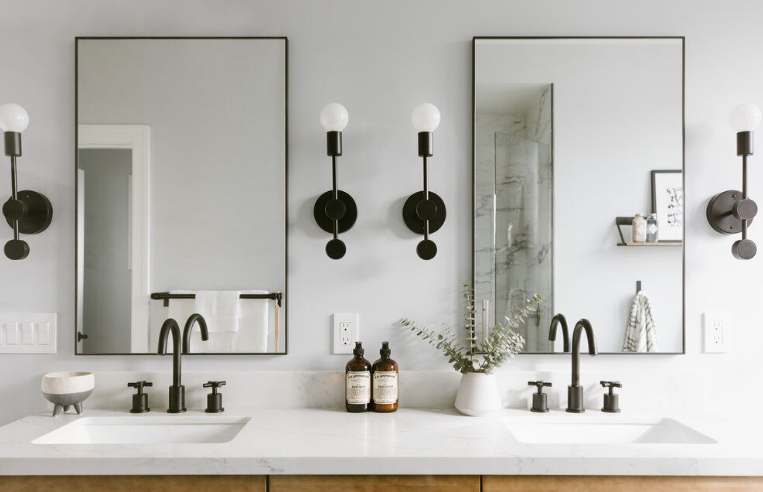
Mirrors hold a position of exceptional power and complexity in feng shui practice, regarded simultaneously as some of the most potent energetic tools available to the practitioner and as some of the most easily misused elements in the home. No other decorative object combines the capacity to expand space, multiply beneficial energy, redirect negative influences, activate specific bagua sectors, and introduce light into dark corners with the versatility and immediacy that a well-placed mirror provides. This extraordinary range of potential effects makes mirrors indispensable in the feng shui toolkit while demanding that they be used with genuine knowledge and care.
The feng shui understanding of mirrors draws on several distinct principles that operate simultaneously. As reflective surfaces, mirrors double whatever they face — a quality that can be powerfully auspicious when a mirror reflects abundance, beauty, natural light, or a nourishing view, and deeply problematic when it reflects a toilet, a staircase, clutter, or a bed. As activators of energy, mirrors stimulate and amplify the qi of whatever sector of the bagua they occupy, making their placement in relation to the home’s energetic map a matter of considerable importance. As redirectors of sha qi, strategically placed mirrors can deflect the concentrated negative energy of poison arrows before it reaches the interior living spaces.
The history of mirror use in feng shui is ancient and rich, with the octagonal ba gua mirror — a small mirror surrounded by the eight trigrams of the I Ching — representing one of the most iconic and widely recognized feng shui protective tools in the world. These specialized mirrors are used exclusively on the exterior of buildings to deflect incoming negative energy and are never placed indoors, a distinction that illustrates the importance of understanding not just that mirrors are powerful but precisely how and where specific types of mirrors should be deployed. The misuse of ba gua mirrors indoors is one of the most common feng shui mistakes made by practitioners unfamiliar with their specific function.
In the contemporary home, mirrors have multiplied beyond their original functional role as dressing aids into design statements, space-expanding devices, and decorative features used in virtually every room. This proliferation makes feng shui mirror awareness more relevant than ever, as the casual placement of large mirrors without consideration of what they reflect, where they are positioned in relation to the bagua, and what energetic effects they generate in specific rooms can inadvertently create significant energetic disturbances. Understanding the following principles allows mirrors to be used with the intentionality and precision that transforms them from potentially disruptive elements into powerful allies in the creation of a harmonious, prosperous, and vital home.
Never Place a Mirror Directly Facing the Front Door
A mirror facing directly opposite the front door reflects incoming beneficial qi straight back out of the home the moment it enters, creating an energetic configuration in which the home’s primary opening simultaneously admits and immediately expels the nourishing energy it needs. This is one of the most consistently and emphatically cautioned against mirror placements across virtually all schools of feng shui.
Avoid Mirrors Facing the Bed
A mirror that reflects the bed during sleep is considered one of the most disruptive feng shui configurations in the bedroom, believed to introduce restless, activating energy into a space that requires stillness and yin restoration, and in some traditions to invite a third-party influence into intimate relationships. Where mirrors are needed in the bedroom for practical purposes, positioning them on walls not visible from the bed or inside wardrobe doors keeps their activating energy contained.
Use Mirrors to Reflect Beautiful Views and Natural Light
The most auspicious mirror placement in any room is one that reflects something genuinely beautiful — a garden view, a vase of fresh flowers, a well-composed artwork, or a source of natural light — effectively doubling the positive energy of that beautiful element and distributing it more widely through the space. When selecting where to hang a mirror, the first question should always be what it will reflect.
Never Use a Ba Gua Mirror Indoors
The octagonal ba gua mirror, featuring the eight trigrams surrounding a central reflective surface, is designed exclusively for exterior use as a protective deflector of incoming sha qi and should never be placed inside the home under any circumstances. Used indoors, the ba gua mirror’s powerful deflecting energy disrupts the beneficial qi of the interior space rather than protecting it, creating the energetic equivalent of placing a defensive weapon inside the sanctuary it was meant to protect from outside.
Avoid Mirrors That Cut Off the Head or Body
A mirror hung too low that cuts off the top of the head, or positioned at a height that reflects only the torso or lower body, creates an energetic fragmentation of the self-image that feng shui associates with diminished confidence, unclear thinking, and a subtle but persistent sense of being incomplete or unseen. Mirrors should be hung at a height that reflects the full body — or at minimum, the entire head and shoulders — of the tallest person who regularly uses them.
Use Mirrors in the Dining Room to Double Abundance
The dining room is one of the most auspicious locations for a large mirror in the entire home, as a mirror that reflects the dining table and its food symbolically doubles the abundance, nourishment, and prosperity that the table represents. This is one of the few rooms where a large, prominently placed mirror that reflects the primary activity of the space is actively encouraged in feng shui rather than treated with caution.
Avoid Mirrors Facing Each Other
Two mirrors positioned directly opposite each other create an infinite regression of reflections that generates an unsettling, disorienting, and energetically chaotic quality in the space between them — a visual and energetic tunnel that traps and cycles qi in an endless loop rather than allowing it to move purposefully through the room. Even partial facing between two mirrors should be avoided wherever possible.
Ensure Mirrors Are Always Clean and Uncracked
A dirty mirror reflects a distorted, dimmed, and energetically muted version of whatever it faces, undermining its capacity to distribute light and beneficial energy effectively through the space. A cracked or broken mirror carries the energy of fragmentation and should be replaced immediately, as its fractured reflection introduces the energetic quality of brokenness into whatever aspect of life it influences.
Use Mirrors to Activate the Wealth Corner
Placing a clean, well-positioned mirror in the southeast sector of a room or the home — the bagua area associated with wealth and abundance — activates and amplifies the financial energy of that sector by symbolically multiplying whatever prosperity-related objects or enhancements are placed there. The mirror should reflect something that represents abundance rather than an empty wall or a drainage point.
Avoid Mirrors in the Kitchen Reflecting the Stove
While a mirror behind the stove is sometimes recommended to give the cook a reflected view of the room and symbolically double the burners, this remedy requires careful implementation — the mirror must specifically reflect the stove’s burners to double the household’s prosperity energy, and not be positioned in a way that reflects cluttered countertops, the sink, or other problematic kitchen elements. When in doubt about the exact placement, other commanding position remedies are safer.
Use Convex Mirrors for Protective Exterior Use
A small convex mirror placed on the exterior wall of a home — above the front door, on a wall facing an incoming road, or directed toward a sharp corner pointing at the building — creates a wide-angle deflection of incoming sha qi, dispersing the negative energy before it reaches the home’s interior. Convex mirrors used externally are a gentler alternative to the ba gua mirror for deflecting mild to moderate external negative influences.
Keep Mirrors Out of the Home Office or Minimize Their Use
Mirrors in the workspace are generally cautioned against in feng shui, as their doubling and activating energy can amplify work pressure and mental agitation in a space that already demands sustained focused effort. Where a mirror in a workspace is functionally necessary, ensuring that it does not reflect the desk, computer screen, or any representation of work in progress minimizes its potentially doubling effect on workload and stress.
Use Round or Oval Mirrors for Gentle Energy
Round and oval mirrors introduce the Metal element’s qualities of clarity, completion, and gentle circulation without the sharp corners of rectangular and square frames that can generate mild cutting energy in their surroundings. Their soft, uninterrupted perimeters allow energy to circulate smoothly around them, making round and oval mirrors the safest and most universally applicable shapes for general use throughout the home.
Avoid Multiple Small Fragmented Mirrors as a Single Display
Decorative arrangements of multiple small mirror pieces, mosaic mirrors, and fragmented mirror tiles that together create a single reflective surface introduce the energy of fragmentation and discontinuity rather than the coherent, unified reflection that feng shui mirrors are meant to provide. Each fragmented surface breaks the reflection into pieces, creating a fragmented self-image and a scattered rather than coherently amplified energetic effect.
Use Mirrors to Correct Missing Bagua Corners
When a home’s floor plan is irregular and one or more bagua sectors fall outside the building’s footprint, creating a missing corner in the home’s energetic map, a large mirror placed on the interior wall adjacent to the missing area can symbolically extend the home’s energetic boundary outward to include the missing sector. This is one of the most sophisticated and specific applications of mirrors in classical feng shui space correction.
Avoid Mirrors in Children’s Bedrooms
Children’s bedrooms benefit from the same yin, restorative quality that adult bedrooms require for good sleep, and mirrors in children’s sleeping spaces introduce the same activating, reflective energy that disturbs adult sleep — with the additional consideration that children may be more energetically sensitive to environmental influences than adults. Where a mirror is practically necessary in a child’s room, positioning it inside a wardrobe door or on a wall not visible from the bed addresses the most significant concerns.
Position Mirrors to Make Narrow Spaces Feel Expansive
A mirror placed on the end wall of a narrow corridor, on the side wall of a small entrance hall, or along one wall of a cramped room visually and energetically expands the space, preventing the constriction of qi flow that narrow, enclosed spaces create and making the transition through tight spaces feel more open, welcoming, and energetically alive. This spatial expansion function is one of the most practically valuable applications of mirrors in feng shui.
Use Mirrors With Frames That Complement the Room’s Elements
The frame of a mirror contributes its own elemental energy to the mirror’s overall feng shui effect — wooden frames activate Wood energy, metal frames introduce Metal element qualities, and stone or ceramic frames ground the mirror’s energy in Earth. Choosing a frame material that complements and supports the elemental balance of the room in which the mirror is placed adds a layer of elemental intentionality to the mirror’s placement that enhances its overall contribution to the room’s harmony.
Avoid Placing Mirrors at the End of Long Straight Corridors
A mirror placed directly at the end of a long, straight corridor amplifies the rushing, linear qi that straight corridors already generate, creating an intensified shaft of energy that bounces back and forth between the corridor’s length and the mirror’s reflective surface. The result is an energetically over-charged axis within the home rather than the gently meandering flow that harmonic feng shui seeks to create throughout the living environment.
Use Mirrors Intentionally, Not Decoratively
The most important overarching principle of feng shui mirror use is that every mirror in the home should be placed with conscious intention and awareness of what it reflects, what energetic effect it creates, and how it contributes to or detracts from the overall harmony of the space. A mirror hung casually for decorative purposes without consideration of its energetic function is a powerful tool deployed randomly — and randomly deployed powerful tools are as likely to create problems as to solve them.
Regularly Reassess Mirror Placements as the Home Changes
As furniture is rearranged, new objects are introduced, and the home’s energetic needs evolve, mirrors that were once appropriately placed can shift into problematic configurations — a mirror that previously reflected a beautiful plant now reflecting a new television, or a corridor mirror that previously expanded a narrow space now reflecting a storage area that has crept into its view. Regular, conscious reassessment of every mirror’s reflection ensures that these powerful energetic tools continue to serve their intended purpose as the living environment around them changes.